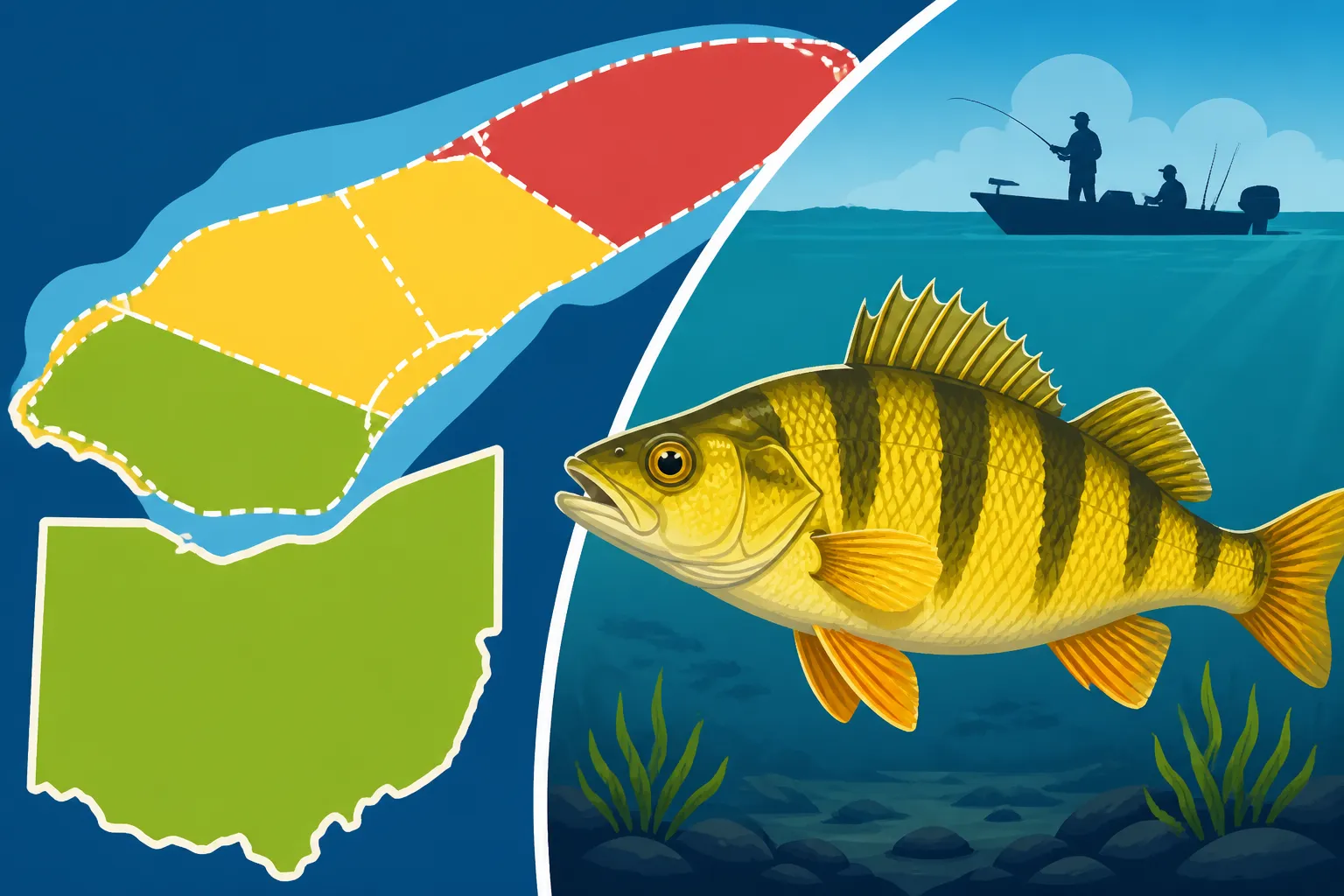
Lake Erie Yellow Perch Zone Limits
It can be incredibly frustrating to head out to Lake Erie, ready for a fantastic day of yellow perch fishing, only to realize you’re not entirely sure about the daily catch limits, especially when you cross into different parts of the lake. Ohio’s Lake Erie is vast, and its yellow perch regulations aren't one-size-fits-all across all sections. This comprehensive guide will meticulously break down the specific daily bag limits and length requirements for yellow perch across Lake Erie's distinct Ohio zones, ensuring you're always fishing within the rules and can focus on reeling in those tasty panfish.
Understanding Lake Erie's Yellow Perch Zones in Ohio
Lake Erie, a true gem for Ohio anglers, isn't a monolithic body of water when it comes to fish management. For species like yellow perch, the Ohio Department of Natural Resources (ODNR) has divided the lake into distinct zones, each with its own specific regulations. This zonal approach is crucial for effective fisheries management, allowing for tailored conservation efforts based on local fish populations, habitat conditions, and angler pressure.
Why Zonal Regulations Exist
The primary reason for having different zonal regulations for yellow perch on Lake Erie stems from the ecological diversity and varying fish populations across the lake. The western basin, central basin, and eastern basin of Lake Erie are not identical. They differ significantly in depth, substrate, water temperature, nutrient levels, and the abundance of forage fish, all of which impact yellow perch populations. For example, the western basin is generally shallower and warms up faster, often leading to different spawning patterns and growth rates compared to the deeper, cooler central and eastern basins. Managing the entire lake with a single regulation might lead to overharvest in one area or underutilization in another, ultimately undermining the health of the fishery. By implementing specific limits per zone, the ODNR can react more nimbly to scientific data collected from each area, ensuring sustainable fishing for generations to come.
Overview of the Three Ohio Zones
For yellow perch, Ohio’s portion of Lake Erie is clearly delineated into three primary management zones: the Western Basin, the Central Basin, and the Eastern Basin. Each of these zones has a distinct daily bag limit that anglers must adhere to. The differences are significant, and misunderstanding them can quickly lead to a violation. These zones represent a calculated effort to balance conservation with recreational and commercial fishing opportunities. When you're planning your trip to the lake, it’s not enough to simply know you're fishing Lake Erie; you absolutely need to know which basin you'll be in to understand your legal take. These distinctions are clearly outlined in the annual Ohio Fishing Regulations Every Angler Should Know booklet, which is an invaluable resource for any serious angler.
Key Geographic Markers for Each Zone
Knowing where one zone ends and another begins is paramount for staying compliant. The Western Basin stretches from the Michigan-Ohio state line east to a line extending due north from Huron, Ohio. This area includes popular fishing hubs like Port Clinton, Sandusky, and the Lake Erie Islands. This basin is generally shallower and often experiences earlier ice-out and warmer water temperatures.
The Central Basin picks up where the Western Basin leaves off, running from that imaginary line north of Huron eastward to a line extending due north from Fairport Harbor in Lake County, Ohio. This vast section encompasses significant shoreline areas near Cleveland and Lorain. It’s deeper than the western basin and presents different fishing challenges and opportunities. Understanding where the Lake Erie Yellow Perch Central Zone Starts and Ends is critical for anglers traversing these waters, especially those launching from marinas near these dividing lines.
Finally, the Eastern Basin covers the area from Fairport Harbor to the Ohio-Pennsylvania state line. While a smaller portion of the entire Lake Erie Eastern Basin falls within Ohio's jurisdiction, it’s still an important fishing ground, particularly for those launching from Ashtabula. Each basin offers unique characteristics, and the ODNR carefully monitors the perch populations within each to set appropriate regulations.
Navigating the Western Basin Yellow Perch Limits
The Western Basin of Lake Erie is often hailed as a mecca for walleye, but it's also a fantastic destination for yellow perch, particularly earlier in the season. However, understanding and adhering to the specific yellow perch limits for this area is crucial for a smooth and legal fishing experience. This basin's productivity often means it's under intense fishing pressure, necessitating clear and enforceable regulations.
Western Basin Daily Bag Limit Explained
For anglers targeting yellow perch in the Ohio waters of the Western Basin, the daily bag limit is quite generous, especially compared to the other zones. Currently, the Lake Erie Yellow Perch Daily Limit in the West Zone allows for 30 yellow perch per angler per day. This limit reflects the typically robust and thriving perch population found in the westernmost parts of the lake. It's important to remember that this is a daily limit, meaning it resets at midnight. You cannot keep 30 perch one day, then another 30 the next day if you haven't disposed of or consumed the previous day's catch from your possession. The limit applies to each licensed angler on board the vessel, or fishing from shore, not to the boat as a whole. Always verify the most current regulations, as they can change season to season based on stock assessments by the ODNR.
Common Misconceptions About Western Basin Fishing
One common misconception among anglers new to Lake Erie is that all regulations apply uniformly across the entire lake. This is simply not the case, especially for species like yellow perch. Another frequent misunderstanding involves the minimum size limit for yellow perch. Unlike some other species, yellow perch in Lake Erie do not have a minimum length limit. This means that any legal-sized perch you catch, regardless of its length, counts towards your daily bag limit. However, ethical anglers often choose to release smaller fish to allow them to grow and contribute to future spawns. Some anglers also mistakenly believe that if they are fishing from a charter, the captain handles all the limits for the group. While a good captain will certainly keep you informed, ultimately, each individual angler is responsible for knowing and adhering to their own personal bag limit. It's your license on the line, after all!
Best Practices for Perch Anglers in the West
To maximize your success and ensure compliance while fishing for yellow perch in the Western Basin, adopting a few best practices can make a world of difference. First and foremost, always carry a copy of the current Ohio fishing regulations, or at least have access to the digital version on your phone. This way, if there's any doubt, you can quickly verify the rules. When it comes to gear, many Western Basin anglers find success using lighter tackle. A medium-light spinning rod paired with a sensitive tip is perfect for detecting those subtle perch bites. For bait, live emerald shiners are a perennial favorite, often outperforming artificial lures. If you're looking to stock up on reliable tackle and bait rigs, an online retailer like Amazon offers a wide selection of perch rigs, sinkers, and bait holders that can be delivered right to your door before your trip. Drifting with minnow rigs near structure or over deep mud flats is a highly effective technique. Furthermore, actively monitoring local fishing reports can provide invaluable insights into where the perch are biting and what depths they are holding at, helping you locate the fish more efficiently.
The Central Basin Yellow Perch Regulations
Moving eastward from the Western Basin, the Central Basin of Lake Erie presents its own unique challenges and, of course, different yellow perch regulations. This section of the lake is generally deeper and wider, offering diverse habitats for various fish species, including a healthy population of yellow perch. However, due to ecological factors and fishing pressure, the limits here are managed differently.
Central Basin Daily Bag Limit Detailed
For those casting lines in the Ohio waters of the Central Basin, the daily bag limit for yellow perch is 20 yellow perch per angler per day. This is a noticeable decrease from the Western Basin's limit and reflects the nuanced management strategies employed by the ODNR to maintain healthy perch stocks across different parts of the lake. It's designed to ensure sustainable harvest while still allowing anglers to enjoy productive fishing trips. Just like in the Western Basin, this limit is per individual licensed angler, and there is no minimum length limit for yellow perch caught in this zone. Paying close attention to the number of fish you've already kept is vital, especially on days when the bite is hot. Overlooking this detail can lead to accidental violations and potential fines.
Identifying the Central Basin Boundaries
Accurately identifying the boundaries of the Central Basin is paramount for anglers who frequently move across Lake Erie or launch their boats from marinas located near the transitional areas. As discussed earlier, the Central Basin begins at a line extending due north from Huron, Ohio, which marks its western boundary. It then stretches eastward to a line extending due north from Fairport Harbor, Ohio, which serves as its eastern boundary. These are geographical points that experienced captains and local anglers are usually well aware of. For those who rely on GPS or mapping software, it’s a good idea to mark these coordinates or refer to nautical charts that clearly delineate these management zones. Confusion about these lines can easily lead to an angler unintentionally exceeding the bag limit for the zone they are actually in, thinking they are still in a different zone. For precise details, anglers should consult the official Lake Erie Fishing Regulations in Ohio provided by the ODNR, which includes detailed maps and descriptions of these boundaries.
How These Limits Impact Your Fishing Strategy
The 20-perch daily limit in the Central Basin can certainly influence an angler's strategy. While it's still a respectable number, it might encourage a more selective approach compared to the 30-perch limit in the Western Basin. You might find yourself being more judicious about which perch you keep, perhaps releasing smaller fish in favor of larger, more desirable ones, even without a formal minimum length limit. This practice not only helps you maximize the quality of your cooler but also contributes to the overall health of the perch population by allowing smaller fish to grow. Techniques for perch fishing in the Central Basin often involve deeper water, sometimes requiring heavier sinkers to reach the bottom effectively. Drift fishing with minnow rigs, similar to the Western Basin, remains a popular and effective method. Keeping a mental count, or even a physical tally, of your catch throughout the day becomes even more important in this zone to avoid inadvertently going over the limit.
Eastern Basin Yellow Perch Rules and Considerations
While Ohio's portion of Lake Erie's Eastern Basin is smaller than the other two, it still offers excellent yellow perch fishing, particularly for anglers who prefer to launch from ports further east, such as Ashtabula. The unique characteristics of this basin, combined with its specific fishing pressure, result in yet another set of yellow perch regulations.
Eastern Basin Daily Bag Limit Specifications
For yellow perch anglers in the Ohio waters of the Eastern Basin, the daily bag limit is the most restrictive of the three zones, set at 10 yellow perch per angler per day. This lower limit is a direct reflection of the ODNR's careful management of perch populations in this section of Lake Erie, which may experience different population dynamics or environmental factors compared to the central and western parts. As with the other zones, this is a per-person, per-day limit, and there is no minimum length requirement for yellow perch. Anglers fishing this zone should be particularly vigilant about their catch count, as it's easy to exceed this limit if the fishing is hot and you're not paying close attention. This regulation underscores the principle that why Lake Erie Yellow Perch has three different bag limits is rooted in scientific assessment and a commitment to long-term sustainability.
What Makes the Eastern Basin Unique
The Eastern Basin of Lake Erie, especially the parts within Ohio's jurisdiction, differs considerably from its western counterparts. It's generally the deepest and coolest section of the lake, with a more irregular bottom contour and often clearer water. This can influence perch behavior, making them sometimes harder to locate but often larger when found. The fishing pressure in this specific Ohio stretch might also vary compared to the heavily trafficked Western Basin, leading to different management approaches. Furthermore, the Eastern Basin is known for its excellent steelhead fishing in the tributaries, and anglers might sometimes target perch as a secondary species. The different environment often means that perch here might be found in different depths or relate to structure differently than in the shallower, warmer western waters, requiring a slight adjustment in fishing techniques.
Tips for Fishing Perch in the Eastern Zone
When heading to the Eastern Basin for yellow perch, a few targeted tips can enhance your success while ensuring you stay within the 10-perch daily limit. Given the deeper water, a quality fish finder becomes an even more invaluable tool for locating schools of perch. Look for them hovering near drop-offs, underwater humps, or scattered debris. Presentation can be critical; sometimes a slower retrieve or a more subtle jigging motion is more effective in these deeper, clearer waters. While live minnows are always a top choice, don't shy away from experimenting with small jigs tipped with scent or soft plastics, especially if the perch are a bit finicky. Maintaining awareness of your catch count is paramount; consider using a clicker or a small whiteboard to keep an accurate tally throughout the day. And, as always, having a current copy of the Lake Erie Fishing Regulations in Ohio accessible is a smart move.
General Yellow Perch Regulations and Best Practices
Beyond the specific zonal bag limits, there are overarching principles and best practices that apply to all yellow perch fishing on Lake Erie. These aren't just about avoiding penalties; they're about ensuring the health of the fishery for future generations and making your own fishing experience more enjoyable and responsible.
Understanding Minimum Length Requirements
One of the most straightforward aspects of yellow perch regulations on Lake Erie for Ohio anglers is the absence of a minimum length limit. This means that, legally, you can keep any size of yellow perch as long as it contributes to your daily bag limit for the specific zone you are fishing. However, many experienced and conservation-minded anglers choose to practice selective harvest. This often means releasing the smallest perch, allowing them to grow larger and contribute to the spawning population. While not legally mandated, this practice is a great way to ensure quality fishing for years to come. It’s a common courtesy among anglers to only keep what they will realistically consume, letting the smaller ones go. This contrasts sharply with species like walleye or bass, which often have strict minimum length requirements in Ohio waters.
Responsible Harvest and Conservation
Responsible harvest is more than just following the rules; it's an angler's ethical commitment to the resource. When fishing for yellow perch, this includes understanding and respecting the established bag limits for each zone – 30 in the Western Basin, 20 in the Central Basin, and 10 in the Eastern Basin. It also means handling fish properly, whether you intend to keep them or release them. If you’re keeping perch, dispatch them quickly and humanely. If you’re releasing them, do so gently, minimizing their time out of water. Avoiding "high-grading" (catching more fish than your limit and then releasing smaller ones to keep only the largest) is also a crucial part of responsible angling ethics, although enforcement can be challenging. The ODNR invests heavily in monitoring perch populations and setting these limits, and our adherence is key to their success.
Essential Gear for Perch Fishing
Having the right gear can make all the difference in your yellow perch fishing success. First, a good quality medium-light to light action spinning rod and reel combo is ideal. This setup provides the sensitivity needed to feel the often subtle perch bites and the backbone to handle multiple fish at once. Spool your reel with 6-8 pound monofilament or fluorocarbon line; some anglers even prefer a braided mainline with a fluorocarbon leader for added sensitivity.
For tackle, the classic "perch spreader" rig is a staple. This typically consists of a main line with two short leaders extending horizontally, each with a hook, and a sinker at the bottom. The weight of the sinker will vary based on current and depth, but 1 to 2 ounces is a common starting point for Lake Erie. Live emerald shiners are almost always the best bait, but fathead minnows or even pieces of nightcrawler can work. Artificial baits like small plastic grub tails or Gulp! minnows can also be effective, especially when tipped with a piece of real bait for scent. You can easily find a wide array of perch rigs, sinkers, and hooks on platforms like Amazon, making it convenient to stock up before your next outing. Don’t forget a good cooler with ice to keep your catch fresh, and a fillet knife for cleaning your hard-earned dinner!
Here’s a quick overview of the Ohio yellow perch zone limits:
| Lake Erie Zone (Ohio) | Daily Bag Limit (per angler) | Minimum Length Limit |
|---|---|---|
| Western Basin | 30 Yellow Perch | None |
| Central Basin | 20 Yellow Perch | None |
| Eastern Basin | 10 Yellow Perch | None |
Staying Compliant and Informed
Navigating the nuances of fishing regulations can sometimes feel like a puzzle, but staying compliant on Lake Erie is straightforward once you know where to look and what to understand. Your responsibility as an angler extends beyond simply casting a line; it includes being informed and respectful of the rules put in place to protect Ohio’s valuable natural resources.
Where to Find Official Ohio Regulations
The absolute best and most authoritative source for current Ohio fishing regulations is the Ohio Department of Natural Resources (ODNR), Division of Wildlife. They publish an annual "Ohio Fishing Regulations" booklet, which is available both in print at license vendors, bait shops, and ODNR offices, and as a downloadable PDF on their official website. This booklet details everything from Lake Erie Yellow Perch Zone Limits to general statewide bag and size limits for all species, as well as Ohio fishing license types and options. It's crucial to consult the most recent version, as regulations can be updated annually. Relying on outdated information or hearsay from other anglers can lead to unintentional violations. Always double-check, especially if you haven't fished Lake Erie in a while, or if you plan to venture into an unfamiliar zone.
The Role of Wildlife Officers
Ohio Wildlife Officers are the frontline guardians of the state's natural resources, and their role is critical in enforcing fishing regulations. These dedicated professionals are not just there to issue tickets; they are also a fantastic resource for information and education. They patrol Lake Erie, its tributaries, and inland waters to ensure compliance with all fishing laws, including bag limits, length limits, and licensing requirements. If you encounter a wildlife officer on the water or at a boat ramp, always be courteous, cooperative, and have your valid Ohio fishing license readily accessible. They are empowered to check your catch, your fishing methods, and your license. Understanding that they are performing an essential duty for conservation helps foster a positive relationship between anglers and law enforcement. Ignoring their commands or providing false information can lead to serious penalties.
Penalties for Non-Compliance
Fishing without adhering to the regulations, whether it’s exceeding the Lake Erie Yellow Perch Daily Limit in the East Zone or fishing without a valid license, carries real consequences. Penalties for fishing violations in Ohio can range significantly depending on the severity of the offense and whether it's a first-time or repeat infraction. Minor violations might result in a citation and a fine, while more serious offenses could lead to higher fines, confiscation of fishing gear, and even suspension of fishing privileges. For instance, being over the bag limit for yellow perch could result in fines per fish over the limit, plus court costs. The Ohio Wildlife Officer Violation Fines in Ohio vary but are designed to deter illegal activity and protect fish populations. It's always a much better experience to understand the rules and follow them than to face the legal and financial repercussions of non-compliance. A little homework before you hit the water goes a long, long way in ensuring a legal and enjoyable trip.
Disclaimer
Please note that fishing regulations, including bag and size limits, are subject to change. Always consult the most current Ohio Department of Natural Resources (ODNR) Division of Wildlife fishing regulations before heading out. This guide provides general information and should not be considered a substitute for official legal documentation.