Ohio Muskie Minimum Length Limit on Inland Lakes
It can be incredibly frustrating to head out to your favorite Ohio fishing spot, hoping to land that elusive muskie, only to realize you’re not entirely sure about the exact size limits. You’ve heard whispers of different rules for different lakes, and honestly, who has time to pore over every page of the regulations booklet before every trip? This guide is here to cut through the confusion and give you the definitive lowdown on the minimum length limits for muskellunge in Ohio’s inland lakes, ensuring you're compliant and confident on the water.
Understanding Ohio’s Statewide Muskie Minimum Length Limit
Let's get straight to the point: for most of Ohio’s inland lakes, the minimum length limit for muskellunge is a hefty 48 inches. That's a significant fish, and it speaks volumes about Ohio’s commitment to growing truly trophy-sized muskie. When you hook into one that big, you know you've accomplished something special. This statewide rule applies pretty broadly, from popular muskie waters like Alum Creek Lake to many other reservoirs across the state that are known for their toothy residents. It's designed to give these apex predators ample time to mature and contribute to the population before they can be legally harvested.
However, and this is where some of the confusion often creeps in, there is a notable exception to this rule. Leesville Lake, a renowned muskie destination in Carroll County, operates under a different set of guidelines. On Leesville Lake, the minimum length limit for muskellunge is 40 inches. This difference is often due to specific management strategies for that particular body of water, perhaps aiming for a different size class or addressing unique ecological factors. So, if Leesville Lake is your chosen battlefield for muskie, remember that 40-inch benchmark. Always double-check where you're fishing – a quick peek at the Ohio Fishing Regulations Every Angler Should Know can save you a lot of headaches, and potential fines.
The Philosophy Behind Muskie Length Limits
It might seem like a simple number, but those minimum length limits for muskie are anything but arbitrary. They are carefully crafted by wildlife biologists and fisheries managers within the Ohio Department of Natural Resources (ODNR) Division of Wildlife, all with a clear goal in mind: conservation and trophy management. Muskie are not just any fish; they are a truly special species, often called the "fish of 10,000 casts" for good reason. They're slow-growing, long-lived, and notoriously difficult to catch.
Protecting Immature Fish and Future Generations
One of the primary reasons for a high minimum length limit, especially the 48-inch rule, is to protect muskie until they've had a chance to spawn multiple times. Muskie don't typically reach sexual maturity until they are several years old and often well over 30 inches, or even closer to 40 inches, depending on their growth rate and sex. By setting the bar at 48 inches for most lakes, the state ensures that a significant portion of the breeding population remains untouched, able to reproduce and sustain healthy future populations. Harvesting smaller, younger muskie could severely impact the natural reproduction cycle, leading to fewer fish for everyone in the long run. It's a long-term investment in Ohio's muskie fishery. Understanding their growth patterns, like those discussed in Muskie Growth Rate in Ohio Lakes, helps appreciate these regulations.
Fostering a Trophy Fishery
Ohio has rightfully earned a reputation for its excellent muskie fishing, and part of that comes from its commitment to producing trophy-sized fish. A 48-inch minimum isn't just about conservation; it's about giving these fish the opportunity to grow truly massive, providing anglers with the chance to catch the fish of a lifetime. Think about it: a muskie pushing four feet in length is an absolute beast, a testament to its survival skills and the rich aquatic environment it lives in. These larger fish are also what draw anglers from all over, boosting local economies and creating incredible fishing stories. If you’re curious about just how big these fish can get, you might want to read up on How Big Muskie Get in Ohio Lakes. These regulations help ensure those impressive sizes aren't just a dream, but a real possibility in Ohio waters.
Locating Official Muskie Regulations
Navigating fishing regulations can sometimes feel like a treasure hunt, but the good news is that the Ohio Department of Natural Resources (ODNR) makes it relatively straightforward to find the most current and comprehensive information. It’s crucial to have the correct regulations at your fingertips, not just for muskie, but for all species you might encounter. Fishing without knowing the rules isn't just risky, it can lead to penalties, and nobody wants their fishing trip ruined by a run-in with a wildlife officer.
The Official Ohio Fishing Regulations Booklet
Every year, the ODNR publishes a comprehensive fishing regulations booklet. This little gem is your go-to source for all things legal and fishing-related in Ohio. You can pick up a physical copy for free at most bait and tackle shops, Walmart locations with sporting goods departments, or any ODNR Division of Wildlife office. It’s small enough to keep in your tackle box or boat console, making it super convenient for quick reference on the water. Inside, you'll find detailed maps of different zones, specific rules for different bodies of water, and, of course, the statewide and exception-based length and bag limits for all game fish, including muskie.
Online Resources and Digital Access
For those who prefer digital access or need information on the fly, the ODNR Division of Wildlife website is an invaluable resource. They typically have a downloadable PDF version of the current year's fishing regulations, which you can easily save to your smartphone or tablet. This means you have the entire booklet in your pocket, always updated (check the date, of course!), and searchable. It’s incredibly handy when you're planning a trip to a new lake or just need to confirm a rule before casting out. Many anglers find this the easiest way to stay informed, especially since they can quickly jump to sections like Ohio Statewide Bag and Size Limits or Ohio Muskie Daily Bag Limit with just a few clicks.
Here’s a quick overview of how to check general muskie regulations:
| Category | Statewide (Most Inland Lakes) | Leesville Lake (Exception) |
|---|---|---|
| Minimum Length Limit | 48 inches | 40 inches |
| Daily Bag Limit | 1 fish | 1 fish |
| Effective Dates | Year-round | Year-round |
| Primary Goal | Trophy management, conservation | Specific lake management |
This table provides a snapshot, but remember, there's always more to learn about a specific species, such as its habitat and behaviors. For instance, knowing the difference between a muskie and a northern pike can be crucial, as outlined in Ohio Muskie vs Northern Pike Identification, because their regulations can differ.
Practical Tips for Measuring and Handling Muskie
Okay, so you've hooked into a massive muskie. Congratulations! Now comes the critical part: correctly measuring it and, more importantly, safely releasing it. Remember, given those high length limits, most muskie you catch will need to go back into the water. Proper handling is paramount to ensure these magnificent fish survive to fight another day and continue to grow into true giants.
Accurate Measurement on the Water
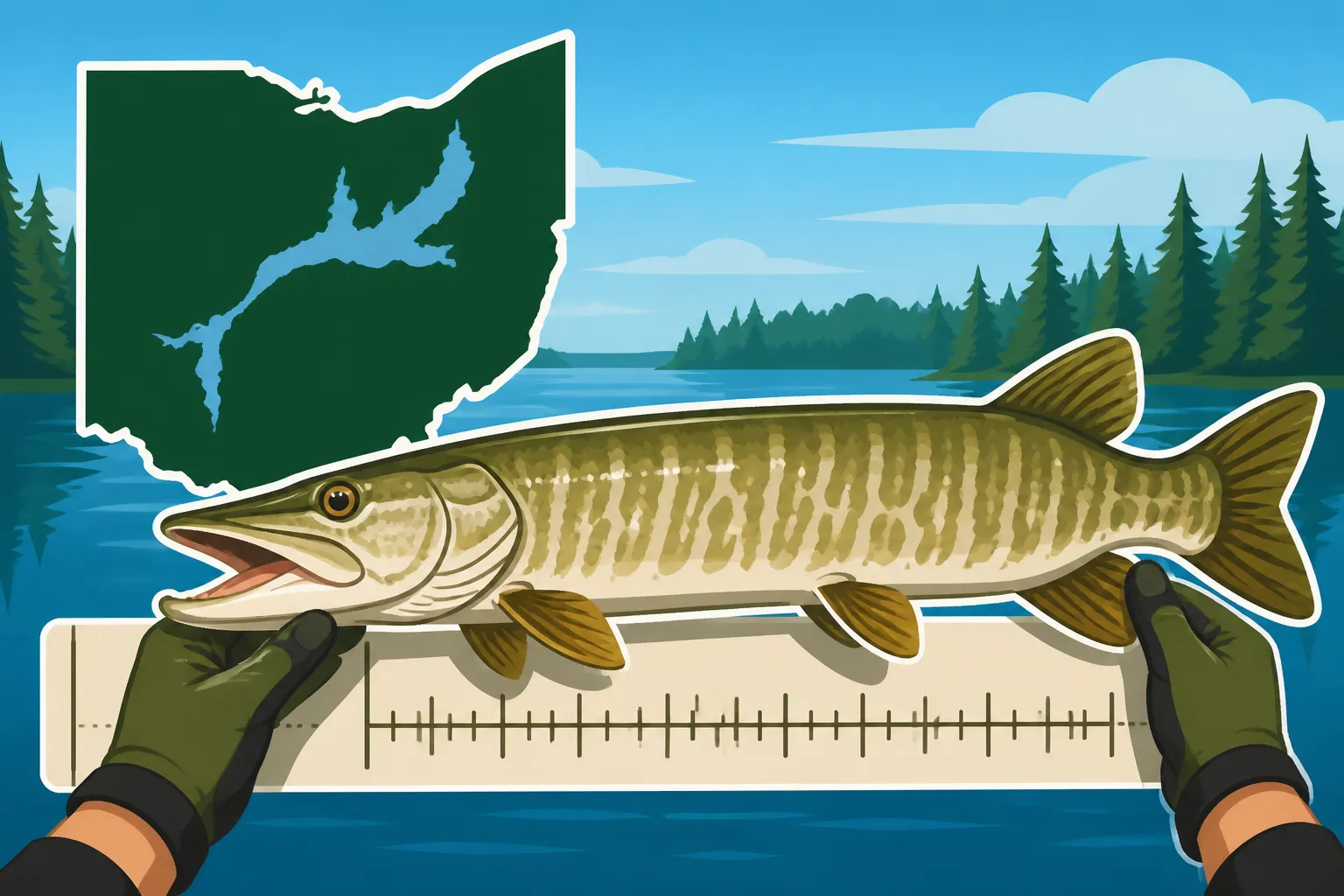
Measuring a writhing, powerful muskie in a boat can be a challenge. First, always have a good, solid measuring board or tape readily available. Many experienced muskie anglers prefer bump boards that have a solid end to "bump" the fish's nose against, ensuring an accurate measurement from tip to tail. Make sure your measuring device is clearly marked and easy to read. You can find excellent, durable measuring boards and tapes on platforms like Amazon, often specifically designed for muskie or large game fish. When you measure, lay the fish flat on its side on the board, ensuring its mouth is closed against the bump and its tail is compressed to get the longest possible reading. Speed and efficiency are key here.
Safe Handling for Release
Muskie are tough, but they are also delicate in certain ways, especially their internal organs and slime coat. Never, ever handle a muskie by the gills or vertically by the jaw. These actions can cause severe, often fatal, internal damage. Instead, use a large, rubberized landing net – again, many excellent options are available through online retailers like Amazon – or a large cradle to bring the fish aboard. Keep the fish in the water as much as possible while you prepare for measurement and a quick photo.
Once in the net or cradle, handle the fish with wet hands, supporting its body horizontally. Use long-nosed pliers or jaw spreaders to remove hooks quickly and gently. If the hooks are too deep or difficult to remove, consider cutting the line as close to the hook as possible. Muskie have incredible recuperative powers, and a small hook left in place is often less damaging than a prolonged struggle to remove it. A thoughtful guide like How to Handle and Release an Ohio Muskie provides even more detailed instructions. Aim for minimal out-of-water time – ideally less than 30 seconds.
The Importance of a Good Net and Tools
A large, knotless, rubberized landing net is non-negotiable for muskie fishing. These nets protect the fish's delicate fins and slime coat, preventing injury and aiding in quick release. A quality net designed for muskie will have a large hoop and a deep bag to fully cradle the fish. Similarly, having the right tools like long-nosed pliers, bolt cutters (for cutting hooks in extreme cases), and a sturdy measuring device can make all the difference. Investing in these items, easily found on Amazon and other reputable fishing tackle sites, is investing in the health of the muskie population and your success as an angler. Don't skimp on a good net; it's as important as your rod and reel for a responsible muskie angler. For more on essential gear, check out Best Landing Net for Ohio Muskie Fishing.
The world of Ohio muskie fishing offers incredible rewards, and by understanding and respecting these regulations, you're doing your part to keep it thriving for years to come. Tight lines!
Disclaimer
The information provided in this guide is for general informational purposes only and is subject to change. While we strive to provide accurate and up-to-date details, it is the angler's responsibility to consult the official Ohio Department of Natural Resources (ODNR) Division of Wildlife regulations for the current year before fishing. Always refer to the most recent official ODNR fishing guide for precise and legally binding information.