Do Columbus Metroparks Require a Separate Fishing Permit?
It can be incredibly frustrating to plan a peaceful fishing trip, only to wonder if you've got all your ducks in a row with permits and licenses. Ohio's fishing regulations can sometimes feel like a maze, especially when you factor in different bodies of water, state parks, and local metroparks. This guide is here to clear up the confusion specifically around fishing permits in the Columbus and Franklin County Metroparks, so you can focus on enjoying your time on the water.
The General Rules for Fishing Licenses in Ohio
Before we dive into the specifics of Columbus Metroparks, it's really important to understand the baseline for fishing throughout the Buckeye State. Just like driving a car, if you're going to cast a line in Ohio's public waters, you generally need to have a valid fishing license. This isn't just a suggestion; it's a legal requirement designed to help fund conservation efforts and manage fish populations across the state. Trust me, the last thing you want is a chat with a wildlife officer that ends with a fine instead of a fish story!
Who Needs a Fishing License in Ohio
The rules around who needs a license are fairly straightforward, but there are some crucial age exemptions that often trip people up. Generally speaking, anyone 16 years of age or older needs to possess a valid Ohio fishing license to fish in any public waters. This applies whether you're a resident or a nonresident of Ohio. For those younger than 16, they're typically exempt from needing a license, which is fantastic for getting kids hooked on fishing without an extra hurdle. It's a great way to introduce the next generation to the joys of angling, and you can find more detailed information on Ohio Youth Fishing License Rules.
There are also specific considerations for those who are considered Ohio residents versus nonresidents, and the costs associated can vary quite a bit. It’s always a good idea to confirm your residency status, especially if you’ve recently moved to the state or are an out-of-state college student. Certain exemptions might also apply to disabled veterans or active military personnel, so it's worth checking if you qualify for any discounts or special provisions.
Where to Get Your Ohio Fishing License
Getting your fishing license in Ohio is pretty easy these days, which is a relief because nobody wants to jump through hoops just to go fishing. You have several convenient options to choose from, catering to different preferences. The most popular method for many anglers is to purchase their license online through the Ohio Department of Natural Resources (ODNR) website. This allows you to buy it from the comfort of your home, anytime, day or night, and often print it right away or save it to your phone. It’s quick, efficient, and means you can make a last-minute decision to hit the water without scrambling.
If you prefer a more traditional approach, you can also purchase your license in person at various authorized vendors across the state. These typically include bait shops, sporting goods stores like Cabela's or Fin Feather Fur, and even some local Walmart locations. Buying in person allows you to ask questions, grab some bait, and maybe even get a quick fishing report from a fellow angler. No matter how you choose to purchase it, remember that your license needs to be readily accessible while you're fishing. For more details on all the options, check out our guide on Where and How to Buy an Ohio Fishing License.
Columbus and Franklin County Metroparks: Do You Need a Separate Permit?
Now, let's get to the heart of the matter for those of you who love to fish the beautiful waters within the Columbus and Franklin County Metroparks system. This question comes up a lot, and it's totally understandable why there might be some confusion. After all, different parks and recreational areas sometimes have their own unique rules, leading anglers to wonder if a state license is truly enough.
The Simple Answer: Generally No, But With Caveats
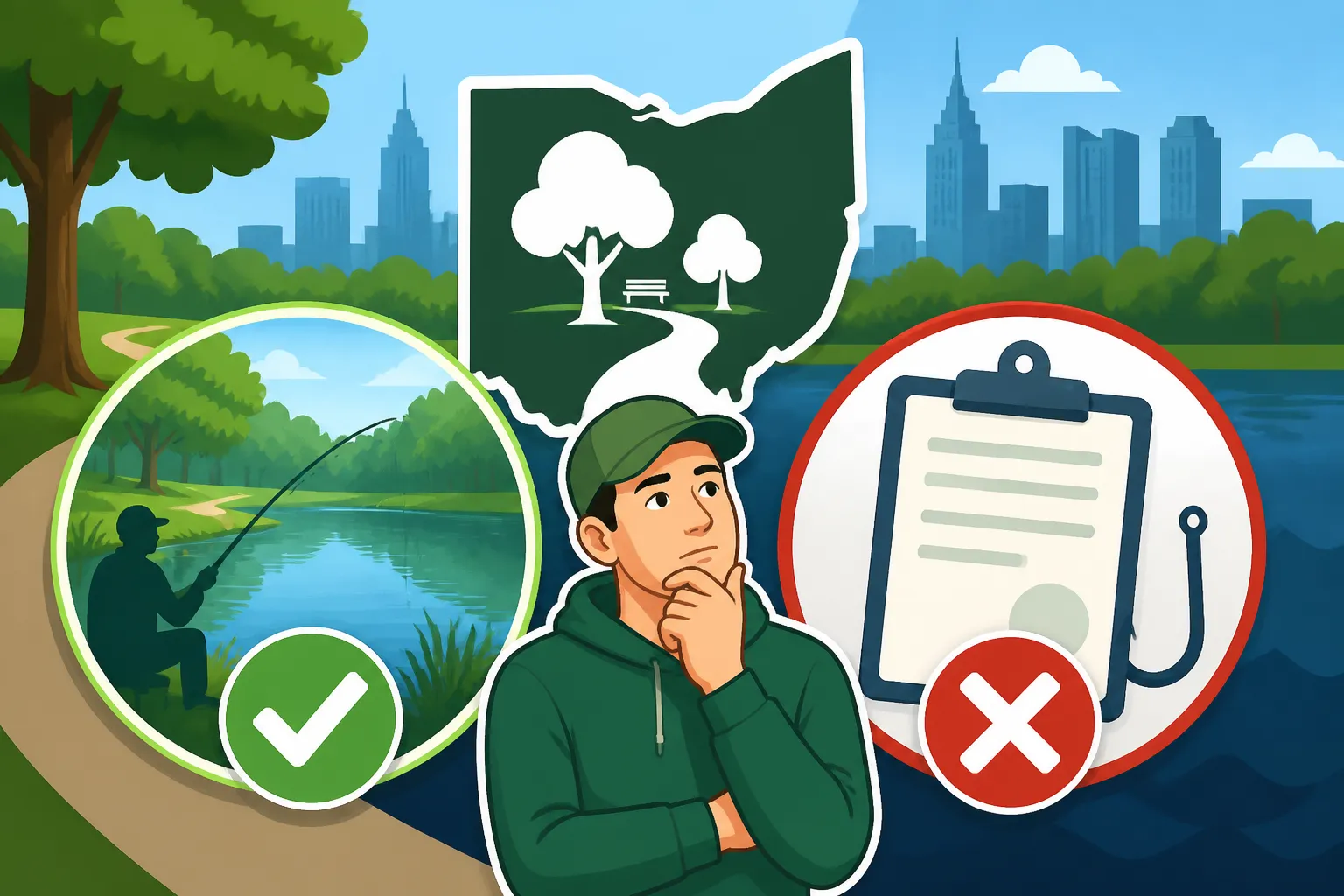
For the vast majority of fishing spots within the Columbus and Franklin County Metroparks, the simple answer is no, you do not need a separate permit in addition to your valid Ohio state fishing license. This is great news for local anglers! If you've got your state license, you're usually good to go for casting a line in their lakes, ponds, and rivers that are open to public fishing. The Metroparks system generally operates under the statewide fishing regulations set by the ODNR. This means your Ohio Fishing License Guide for Residents and Nonresidents is your primary document.
However, like most things in life, there can always be a few rare exceptions or special circumstances. It's not about trying to trick you; it's more about specific management needs or unique events that might pop up.
Specific Metropark Rules and Potential Exceptions
While a statewide license covers most situations, it's always wise to be aware of any specific nuances that could arise within certain Metroparks. Currently, Columbus and Franklin County Metroparks do not require a separate park-specific fishing permit. For example, popular spots like Hoover Reservoir (partially managed by Columbus Recreation and Parks, but still falls under state regulations for fishing licenses), Blendon Woods, or Sharon Woods generally only require your standard Ohio fishing license. These parks offer fantastic opportunities for anglers, from catching largemouth bass to crappie and even some bluegill for the kids. If you're looking for specific spots, our guide on Best Metropark Lakes for Fishing Near Columbus might be helpful.
However, there could theoretically be future situations where a temporary or specialized permit might be introduced for a very specific reason. This might be for a designated fishing tournament, a special youth fishing derby on a particularly managed pond, or if a very specific body of water within the park is leased out to a private entity that then implements its own access rules. These scenarios are rare, but it's why the "always check" rule is so important. Similarly, while state parks like those managed by the Ohio Department of Natural Resources generally follow the same state license rule, it's good to distinguish between park systems. For instance, you won't typically find additional fees to fish in state parks like you might for camping or other activities, as detailed in Ohio State Park Fishing Rules.
Understanding Park Regulations Beyond Fishing
Even though a separate fishing permit isn't usually required, remember that Metroparks have a host of other rules and regulations that anglers must follow. These aren't about your license, but about how you conduct yourself and respect the park environment. These often include:
- Boating Regulations: If you plan to fish from a kayak, canoe, or small boat, there will be rules about motor types (electric only, no gas motors), speed limits, and where you can launch. Some lakes within Metroparks, like those at Blendon Woods or Sharon Woods, are restricted to electric motors or no motors at all. Always check the specific park's boating rules.
- Bait Restrictions: While less common for general fishing, some areas might have restrictions on live bait, particularly if they're trying to prevent the introduction of invasive species or manage specific fish populations. Always check the signage.
- Park Hours: Metroparks typically have set operating hours, and fishing outside these hours might not be permitted. Don't be that angler trying to sneak in a sunrise cast before the gates open!
- Trash and Litter: This should go without saying, but pack out everything you pack in. Leaving behind fishing line, bait containers, or food wrappers is a surefire way to get parks to implement stricter rules.
- Fish Cleaning: Most Metroparks do not permit cleaning fish on site. Plan to take your catch home to clean, or use designated cleaning stations if they happen to be available elsewhere.
- Conservation: Follow all statewide bag and size limits for species like bass, crappie, and catfish, which you can learn more about in the Ohio Statewide Bag and Size Limits guide. Practice catch and release responsibly if you're not keeping fish.
These rules are in place to ensure everyone can enjoy the parks safely and to protect the natural resources for years to come. It’s about being a good steward of the environment and a respectful park user.
Why the Confusion About Metropark Permits?
It's completely understandable why anglers might get a little confused about whether Columbus Metroparks require a separate fishing permit. You're not alone in wondering! This isn't just a random question; it stems from a valid concern about navigating different bureaucratic layers and the varied rules you encounter in other places. It's a testament to anglers wanting to do things by the book, which is commendable.
Different Rules in Other Jurisdictions
One of the biggest reasons for this confusion is that many other cities, counties, or even private recreational areas do have their own specific permit requirements on top of a state license. For example, if you travel to a different state or even another large city in Ohio, you might find that their local park system requires a small annual fee or a daily permit to fish in their ponds or lakes. Imagine fishing in a county park elsewhere and being asked for a "park fishing pass" after you've already bought your state license. It happens! This creates a natural expectation that Columbus Metroparks might operate similarly.
This patchwork of regulations can be a real headache, especially if you're someone who enjoys exploring new fishing spots. You might have friends who fish in other parts of the country where this is common practice, or you might have encountered it yourself on past travels. It makes perfect sense to double-check when you're in a new area, or even in your home territory if you haven't fished a particular spot before.
Special Events or Designated Waters
Another source of potential confusion could arise from specific scenarios like fishing derbies or areas that are temporarily managed differently. While rare in Columbus Metroparks for general fishing, some special events, particularly those geared towards children or specific species, might have their own entry fees or registration requirements. These aren't "fishing permits" in the traditional sense, but rather event participation fees.
Sometimes, a park might have a small, very specific pond that is managed uniquely, perhaps stocked specifically for a children's program, and for a short period, access or fishing might be restricted or require a special pass. Again, these are not the norm for general fishing throughout the Metropark system, but the possibility can contribute to the overall uncertainty. When planning a fishing outing, especially if it's during a known event, it's always best to quickly confirm with the Metroparks directly.
Practical Advice for Fishing Columbus Metroparks
So, you've got your state fishing license, you know you likely don't need an extra permit for the Metroparks, and you're ready to hit the water. Excellent! To ensure your trip is as enjoyable and hassle-free as possible, here's some practical advice.
Always Check Before You Go
Even with all this information, the single best piece of advice I can give any angler is to always check the specific Metropark's website or call their main office before you head out. Park rules and regulations, while generally stable, can change. Weather conditions, special events, construction, or even temporary closures can impact your plans. A quick glance at the Columbus and Franklin County Metroparks website for the specific park you plan to visit (e.g., Highbanks Metropark, Battelle Darby Creek, etc.) will give you the most up-to-date information on fishing access, boating rules, and any other pertinent details. This small step can save you a lot of disappointment.
Essential Gear for Metropark Fishing
Fishing in Metroparks is often about accessibility and enjoying the natural surroundings, making it perfect for bank fishing or smaller watercraft. You don't usually need a huge boat or fancy electronics to have a successful day. Here's a rundown of essential gear, much of which you can easily find:
- Rod and Reel Combo: A medium-light or medium action spinning combo is incredibly versatile for most Metropark species like bass, crappie, and bluegill. You can find excellent options on online retailers like Amazon that cater to all skill levels.
- Tackle Box Basics: Stock up on hooks (sizes 6-10 for panfish, 1/0-3/0 for bass), split shot weights, bobbers (slip bobbers are great for precise depth), and swivels.
- Lures/Bait: Live bait like nightcrawlers, minnows, or wax worms are perennial favorites and often effective. For artificials, consider small jigs (1/16 to 1/8 oz) in various colors, small crankbaits, spinnerbaits, and soft plastics like worms or grubs.
- Pliers/Forceps: Essential for safely removing hooks.
- Net: A small landing net can be invaluable for landing larger bass or keeping your hands away from toothy critters (though rarer in Metroparks).
- Sun Protection: Hat, sunglasses, and sunscreen are a must, even on cloudy days.
- Chair/Bucket: If you plan on bank fishing for extended periods, a comfortable chair or a bucket (which can also double as a livewell for bait) is a game-changer.
- Water and Snacks: Stay hydrated and keep your energy up!
- Small Cooler: For keeping your catch fresh if you plan to harvest fish. Remember to check Ohio Fishing Regulations Every Angler Should Know for bag limits.
For those interested in exploring different approaches, especially if you're bank fishing, our guide on Bank Fishing Techniques for Ohio Anglers offers some great tips.
Respecting Park Rules and Fellow Anglers
Fishing in a Metropark means sharing the space with hikers, birdwatchers, picnickers, and other park visitors. Being respectful of others is paramount. Keep noise levels down, clean up your area, and give other anglers plenty of space. If a trail runs close to the water, be mindful of casting lines where they might interfere with walkers. These parks are truly gems, providing easy access to nature for everyone in the Columbus area. By being considerate, we ensure that fishing remains a welcome activity in these beautiful public spaces.
Columbus Metroparks Fishing Permit Summary
To give you a quick overview, here's a table summarizing the general permit situation for fishing in the Columbus and Franklin County Metroparks.
| Metropark | Fishing Permitted? | Separate Park Permit Required (Beyond State License)? | Common Species | Notes |
|---|---|---|---|---|
| Blendon Woods | Yes | No | Bluegill, Crappie, Bass | Electric motors only on ponds. |
| Highbanks | Yes | No | Smallmouth Bass, Catfish | Access to Olentangy River. |
| Sharon Woods | Yes | No | Bluegill, Crappie, Bass | Small lake, good for kayaks/canoes. |
| Prairie Oaks | Yes | No | Bass, Catfish, Panfish | Several lakes and ponds. |
| Battelle Darby Creek | Yes | No | Smallmouth Bass, Catfish | Access to Darby Creek. |
| Hoover Reservoir | Yes | No | Walleye, Saugeye, Bass | Larger reservoir, some areas managed by City of Columbus. |
| Scioto Audubon | Yes | No | Bass, Catfish, Panfish | Urban fishing opportunities. |
Remember, this table summarizes the general rule. Always check the official Metroparks website for any specific or temporary changes.
Disclaimer
The information provided in this guide is for general informational purposes only and is not intended as legal advice. Fishing regulations and park rules can change, and it is the angler's responsibility to verify all current requirements with the Ohio Department of Natural Resources (ODNR) and the Columbus and Franklin County Metroparks before engaging in any fishing activities. Always adhere to all posted signage and official regulations.