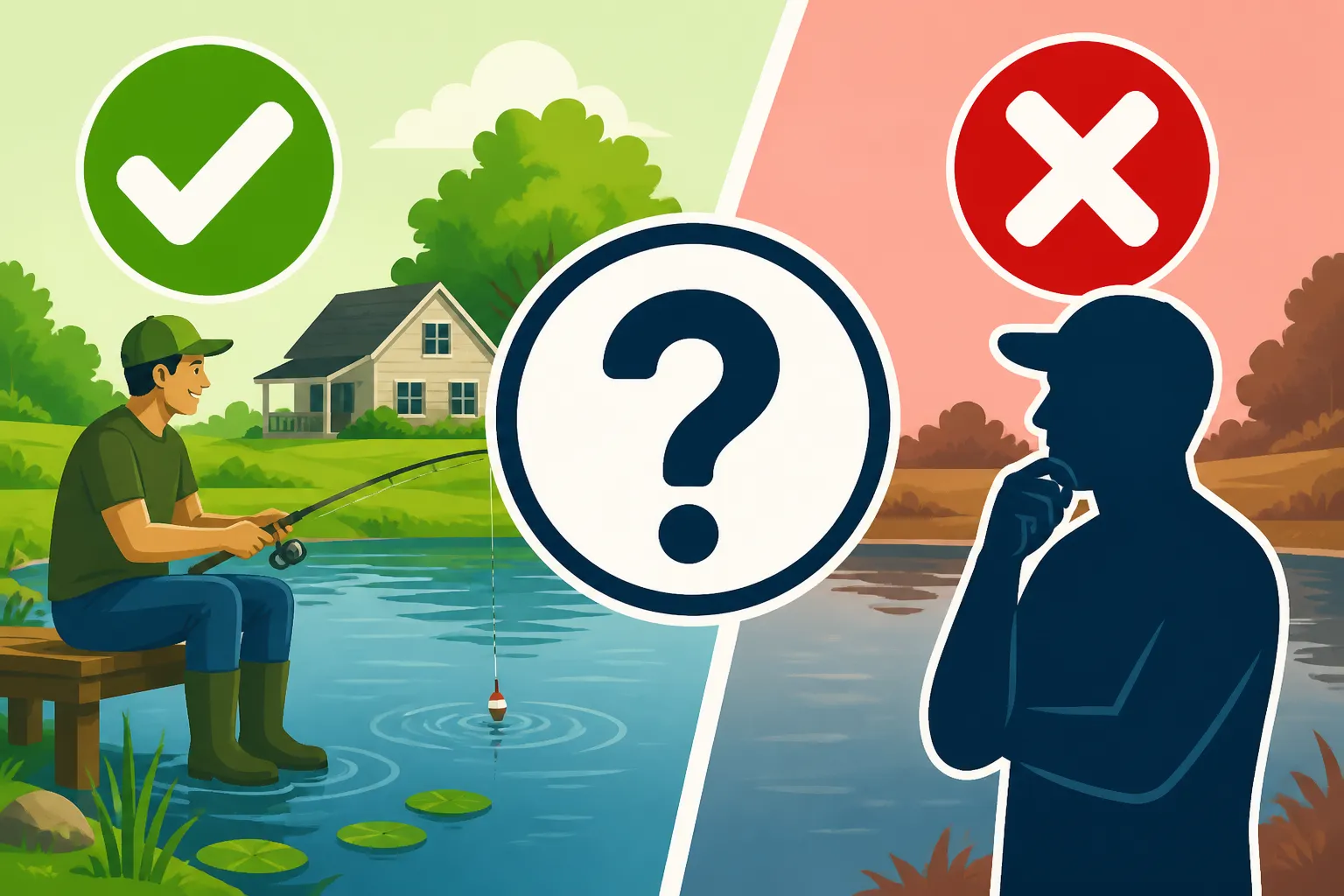
Is a License Required to Fish Your Own Pond in Ohio?
Many Ohio anglers, especially those lucky enough to own a piece of land with a pond, often wonder if they still need to jump through the hoops of getting a fishing license just to cast a line in their own backyard. It's a common point of confusion, and frankly, it feels a bit silly to need a permit for your water, right? This guide will dive deep into Ohio's fishing regulations to clarify exactly when a license is required for fishing on private property, and when you can cast away worry-free.
The Golden Rule for Private Pond Owners in Ohio
Let's cut right to the chase because this is the question most people have: generally speaking, if you are the legal owner of a parcel of land in Ohio that contains a wholly private pond – meaning a pond entirely enclosed within your property lines and with no direct connection to public waters – you and your immediate family residing on that property are typically exempt from needing a fishing license to fish in that pond. It sounds straightforward, but as with all regulations, the devil is in the details.
When You Are Absolutely Exempt
The Ohio Department of Natural Resources (ODNR) makes a specific exemption for landowners. If you own the land, and the pond is completely on your property, a fishing license isn't required for you or your children, grandchildren, or spouse when they are fishing there with your permission. This exemption is designed to allow property owners to enjoy their own resources without additional bureaucratic hurdles. The key here is "wholly private." Think of it as your own personal fishing hole that isn't connected to the broader public waterway system. This means no streams flowing in from outside your property, and no outflows that connect to a public ditch, creek, or river. It’s a self-contained body of water.
This landowner exemption is a huge relief for many folks. Imagine the frustration of having a beautiful pond right outside your back door and still needing to buy a license just to enjoy a peaceful afternoon casting a line! So, if your pond fits the bill – entirely on your deeded property, no public connections – then you, your spouse, and your kids and grandkids living with you are good to go without a license. It’s important to understand this specific detail because many assume any private property means no license needed, but that's not always the case, especially for guests.
When a License is Still Required
While the landowner exemption is fantastic, it has limits. Many folks get tripped up when they invite others to share their slice of fishing paradise. If you're a guest fishing on someone else's private pond, even with the owner's permission, you generally do need an Ohio fishing license. The exemption is tied to the landowner and their immediate, resident family, not just the private nature of the water. So, if your buddy Joe invites you over to fish his amazing bass pond, make sure you've picked up your license first. You can always check out the various options for an Ohio Fishing License Guide for Residents and Nonresidents to ensure you're covered.
Furthermore, if your pond, while on private land, has a direct connection to public waters, the exemption usually doesn't apply to anyone, including the landowner. This could be a pond that's fed by a public stream, or one that overflows into a public ditch that leads to a larger river. The moment there's a connection that allows fish to move between your "private" water and public waters, the state's jurisdiction and licensing requirements often kick in for everyone. These scenarios are designed to ensure responsible resource management across all connected water systems. If you're ever unsure about the precise requirements, it's always best to err on the side of caution and get a license, or directly contact the ODNR.
Defining "Private Pond" and Public Connection
The distinction between a truly private pond and one that still falls under state licensing requirements often comes down to one critical factor: connectivity to public waterways. It's not just about who owns the land; it's about the water itself and its relationship to the broader aquatic ecosystem.
The Critical Factor: Public Access and Connectivity
Many people think "private pond" just means it's on private land. While that's part of it, the Ohio Department of Natural Resources (ODNR) looks a bit deeper. A pond is considered "wholly private" for the license exemption only if it's completely enclosed within your property lines and has no physical connection to any public stream, river, lake, or even a public drainage ditch.
Think about it this way: if a fish can swim from public water into your pond, or from your pond into public water, then that pond is considered part of the public waterway system for regulatory purposes. This means:
- Direct Inflows/Outflows: If a creek runs into your pond from off your property, or if your pond drains into a stream that eventually leads off your property, it's likely not considered wholly private.
- Seasonal Connections: Even if the connection is only present during heavy rains or high water, it can still trigger the requirement.
- Underground Connections: While harder to prove, if there's a known subsurface connection allowing fish passage, the same rules apply.
This is where things can get confusing, especially for ponds created years ago or those in areas with complex drainage patterns. It's not about whether you allow public access, but whether the water itself is part of a larger, public-facing system. You can gain a deeper understanding of these nuances by reviewing the official Ohio Fishing Regulations Every Angler Should Know.
Understanding Riparian Rights and Easements
Beyond direct physical connections, there are legal frameworks that can impact the "private" nature of your pond, even if it seems isolated. This brings us to riparian rights and easements.
-
Riparian Rights: These are rights that landowners have when their property borders or contains a natural body of water, like a stream or a river. These rights often involve the use of the water, but they don't necessarily grant exemption from fishing license requirements if that water is part of a public system. For example, if you own land along the Scioto River, you have riparian rights to the riverbank, but you certainly need a license to fish the river.
-
Easements: An easement is a legal right to use another person's land for a specific purpose. While less common for small private ponds, public easements (like for utilities or drainage) could potentially create a situation where your pond, or access to it, is deemed to have a public component. For instance, if there's a public utility easement running through your property that includes a stream that feeds your pond, that stream's public nature might override your pond's perceived privacy for fishing license purposes. It's crucial for landowners to be aware of any easements on their property, as they can sometimes impact seemingly private activities.
So, while your deed might say you own the land, the flow of water and any pre-existing legal rights can sometimes alter the regulatory status of your pond, making it essential to understand the specifics of your property and local water systems.
Common Scenarios and Navigating the Gray Areas
The general rule is a great starting point, but real life is full of unique situations. Let's explore some common scenarios where the private pond license exemption might get a little fuzzy.
Inviting Friends or Family to Fish Your Pond
This is perhaps the most common source of confusion regarding private pond fishing. You've got this great pond, teeming with bluegill and bass, and you want to share the joy with your friends, your cousins from out of state, or even your adult kids who don't live on your property. It's only natural, right? You'd think that since it's your pond, anyone you invite is covered by your exemption.
Unfortunately, that's generally not the case in Ohio. The exemption for fishing a private pond without a license specifically applies to the landowner, their spouse, and their children and grandchildren under the age of 18 (or living on the property). If your adult children live elsewhere, or if you invite friends, neighbors, or other relatives, they are typically considered guests, and guests need an Ohio fishing license.
It feels a bit strict, I know. You're the host, they're your invitees, and it's your land. But the state's view is that the license helps fund fish management and conservation efforts across all waters, and allowing broad exemptions for guests on private ponds would undermine that system. So, while you're being a gracious host, also be a responsible one by gently reminding your guests that they need to secure their own license before wetting a line. It’s also a good opportunity for them to learn about Ohio Fishing License Types and Options available.
Here's a quick reference table for clarity:
| Angler Status | Pond Connected to Public Waters | Wholly Private Pond (No Public Connection) |
|---|---|---|
| Landowner (and spouse) | License Required | License NOT Required |
| Landowner's Children/Grandchildren (under 18 or residing on property) | License Required | License NOT Required |
| Landowner's Adult Children (not residing on property) | License Required | License Required |
| Friends, Neighbors, Other Guests | License Required | License Required |
| Anglers under 16 | License NOT Required | License NOT Required |
Note: Anglers under 16 generally do not need a license in Ohio, regardless of where they are fishing. See Do Kids Need a Fishing License in Ohio? for more details.
Ponds on Leased Land or Shared Property
Another common gray area involves ponds on leased property or those shared among multiple owners or a community.
-
Leased Land: If you lease a piece of land that includes a pond, are you considered the "owner" for fishing license purposes? In most cases, no. The ODNR exemption is typically for the legal, deeded owner of the property. While you might have rights to use the pond as part of your lease agreement, it doesn't automatically grant you the license exemption that the actual landowner enjoys. It's always best to assume you need a license if you're leasing property with a pond, unless your lease agreement explicitly states otherwise and you have confirmed this with the ODNR.
-
Shared Community Ponds or HOA Ponds: Many housing developments or communities have shared ponds for residents. While these ponds might feel "private" to the community members, they are usually owned by the Homeowners Association (HOA) or a similar entity, not by individual residents. In such scenarios, individual residents generally do need a fishing license to fish in these community ponds. The HOA is the "owner," and unless the HOA itself somehow qualifies for a rare group exemption (which is highly unusual for individual recreational fishing), the individual anglers still need licenses.
These situations highlight the importance of understanding the precise legal ownership and connectivity of the water body. When in doubt, it’s always better to purchase a license to avoid any potential fines or legal issues. After all, the cost of an Ohio Resident One-Year Fishing License Cost is much less than a potential penalty from a wildlife officer.
Stocking Your Pond and Its Implications
For many pond owners, the idea of stocking their pond with fish is part of the fun. You want a thriving fishery, and maybe even a shot at a trophy bass! But does the act of stocking affect the license requirement?
If you purchase fish from a private, state-certified hatchery or fish farm to stock your pond, this generally has no bearing on the license requirement. As long as your pond remains wholly private and unconnected to public waters, you (the landowner) and your immediate family are still exempt. This is a common and perfectly legal practice for enhancing a private fishery. You might even find yourself on Amazon looking for pond aerators or fish food to keep your new stock healthy.
However, there's a crucial distinction:
- Taking fish from public waters to stock your private pond: This is generally illegal and strongly discouraged. Removing fish from public lakes and rivers to put them in your private pond can disrupt natural ecosystems, spread diseases, and violate specific regulations. It definitely won't grant you any special exemptions or negate the need for a license if one was already required.
- Ponds stocked by the state: Very rarely, the state might stock certain public-access ponds that happen to be on private land (e.g., through an agreement for public fishing access). In these cases, the pond is clearly no longer "wholly private" for fishing purposes, and a license would certainly be required for everyone. However, for the typical private landowner with their own pond, this isn't a concern.
The takeaway here is that stocking fish from legitimate, private sources is fine and won't change your license status for a truly private pond. Just don't go scooping fish out of Lake Erie to put in your backyard!
Best Practices for Ohio Pond Owners
Owning a private pond is a fantastic asset, offering countless hours of relaxation and recreation. To ensure you and your guests can enjoy it responsibly and without legal headaches, here are some best practices.
Clarifying Property Lines and Posting Signage
One of the simplest yet most effective ways to manage your private pond is to ensure your property lines are clear and well-marked. This prevents accidental trespassing and helps establish the private nature of your pond.
- Clear Boundaries: Regularly check and maintain your property markers. If there's any ambiguity about where your land ends, consider having a survey done. Knowing exactly where your property begins and ends is fundamental to asserting your rights as a landowner.
- Appropriate Signage: While you don't have to post signs, it can be incredibly helpful. "No Trespassing" signs are standard for keeping unwanted visitors out. For your pond, you might consider signs that clearly state "Private Property – Fishing By Owner/Permitted Guests Only" or even "Private Pond – Ohio Fishing License Required for Guests." This preemptively educates visitors and casual passersby, reducing misunderstandings. This is particularly useful if your pond is visible from a public road or adjacent property, or if you ever have questions about Ohio State Park Fishing Rules compared to your own.
Clear communication through signage can save you a lot of hassle and help maintain the sanctity of your private fishing haven.
Educating Guests and Managing Expectations
Since the license exemption doesn't extend to most guests, open and honest communication is key. It's much easier to have a quick chat upfront than to deal with a potential situation down the line, especially if a wildlife officer happens to be in the area.
- Pre-Fishing Conversation: Before your friends or extended family even cast a line, have a brief conversation about the rules. Politely explain that while you don't need a license, Ohio law typically requires guests to have one, even on private ponds.
- Encourage Preparedness: Encourage your guests to purchase an Ohio fishing license online through the ODNR website, or at a local bait shop. The process for Buying an Ohio Fishing License Online is pretty straightforward these days. It’s a small investment for the peace of mind and the enjoyment of a day on the water.
- Lead by Example: If you fish other public waters, ensure your own license is up-to-date. This shows you respect the regulations, which can make your request to guests more understandable.
- Consider a "Catch and Release" policy for guests: If you're hesitant about guests potentially keeping fish without a license, or if you simply want to preserve your pond's population, implement a strict catch-and-release policy for anyone fishing your pond. While this doesn't negate the license requirement for guests, it's a responsible management practice.
By being clear and helpful, you ensure everyone has a fun, worry-free fishing experience. You can also make sure you have all the necessary gear, like a good tackle box or a comfortable fishing chair, which are readily available on Amazon too, making their visit even better.
Responsible Pond Management and Resource Stewardship
Even if you don't need a license to fish your own pond, the principles of responsible angling and environmental stewardship still apply. A private pond is a mini-ecosystem, and its health directly impacts your fishing enjoyment.
- Population Management: Just because it's your pond doesn't mean you should overfish it. Removing too many large fish can lead to an overpopulation of smaller, stunted fish. Conversely, not removing enough can also lead to an imbalance. Consider consulting with local fisheries experts or extending your research into topics like Ohio Walleye Fishing Guide for tips that might be applicable to managing other predator species.
- Water Quality: Ponds are susceptible to issues like algae blooms, oxygen depletion, and aquatic weed overgrowth. Regularly monitor your pond's water quality and consider methods like aeration (easily found on Amazon), managing runoff from your lawn, and controlling excessive vegetation. Healthy water means healthy fish.
- Habitat Enhancement: Providing structure (sunken trees, artificial habitat) and varying depths can create excellent fishing opportunities and promote a diverse ecosystem.
- Adhering to General Fishing Ethics: Even without state oversight for your specific pond, practicing catch-and-release thoughtfully, properly disposing of any waste, and respecting the wildlife around your pond are just good habits. While rules like How Many Fishing Lines You Can Use in Ohio might not apply strictly to your private pond, adhering to general ethical guidelines enhances the overall experience.
A well-managed pond provides years of enjoyment, not just for you but for the entire ecosystem it supports. For those essential pond management tools, from water quality test kits to small predator control items, Amazon can be a useful resource.
Disclaimer
Please note that fishing regulations can change. While this guide provides a comprehensive overview based on current Ohio laws, it is always recommended to consult the official Ohio Department of Natural Resources (ODNR) website or their most recent fishing regulations booklet for the most up-to-date and definitive information. This content is for informational purposes only and should not be considered legal advice.