Best Ohio Lakes for Crappie
Few things are more frustrating than heading out to your favorite fishing spot, full of anticipation, only to spend hours without a single bite, especially when you're targeting those delicious crappie. We've all been there, scratching our heads, wondering if the fish have simply vanished. This comprehensive guide is designed to cut through that frustration, revealing the best lakes across Ohio where you can consistently find crappie, along with the strategies to put more of them in your cooler.
The Allure of Crappie Fishing in Ohio
Crappie fishing holds a special place in the hearts of many Ohio anglers, and for good reason. These feisty panfish offer a fantastic combination of engaging fight, delicious table fare, and accessibility, making them a popular target for everyone from seasoned veterans to families introducing their kids to the joys of fishing.
Why Crappie are a Favorite Target for Anglers
Crappie, whether black crappie or white crappie, are simply a blast to catch. They're known for their distinctive "papermouths" and their tendency to school up, meaning when you find one, you're often in for a flurry of action. There's nothing quite like dropping a jig into a brush pile and feeling that characteristic thump, followed by the spirited tug of a crappie. Their abundance across the state also means that, with a little know-how, you can often find a productive bite even on tougher days.
Beyond the thrill of the catch, crappie are widely regarded as one of the best-tasting freshwater fish. Their flaky, white meat is perfect for pan-frying, baking, or even turning into delicious fish tacos. This makes them not just a fun pursuit but also a rewarding one, providing a wonderful meal to share with family and friends after a successful day on the water. For many, it’s not just about the numbers, but the quality of the experience and the supper that follows.
What's more, crappie fishing is incredibly versatile. You can target them from the bank with a simple bobber and minnow, drift across open water, spider rig from a boat, or even brave the ice in winter. This adaptability means there's a crappie fishing style for nearly every angler and every season, ensuring that the pursuit of these speckled beauties remains a year-round passion for many in Ohio.
Understanding Ohio's Crappie Population Dynamics
Ohio boasts robust crappie populations in many of its lakes and reservoirs, a testament to effective fisheries management by the Ohio Department of Natural Resources (ODNR) and the inherent resilience of the species. Both black crappie and white crappie are common, though their distribution and dominant populations can vary depending on water clarity and habitat. Black crappie tend to prefer clearer, more vegetated waters, while white crappie are more tolerant of turbid conditions and often thrive in larger reservoirs and rivers.
The health of crappie populations is heavily influenced by factors like spawning success, forage availability, and angler harvest. ODNR regularly conducts surveys to monitor crappie numbers, growth rates, and age structures, often adjusting regulations like daily limits or minimum size limits to ensure sustainable fishing for future generations. Knowing these dynamics helps anglers understand why certain lakes produce bigger crappie or more abundant numbers at different times of the year.
While many lakes have strong crappie fisheries, some lakes stand out for their consistent production of quality fish. These are typically waters with ample submerged structure like fallen trees, brush piles, rock formations, and healthy aquatic vegetation, which provide both ambush points for crappie and protection from predators. Coupled with a plentiful food supply of baitfish and insect larvae, these conditions create ideal habitats for crappie to thrive and grow to impressive sizes.
Essential Factors for Finding Top Crappie Lakes
Before you even launch your boat or set up your bank chairs, understanding what makes a lake great for crappie can drastically improve your chances of success. It’s not just about showing up; it’s about understanding the underwater world these fish inhabit.
Water Clarity and Forage Availability
Crappie are sight feeders, which means water clarity plays a crucial role in their ability to hunt for food. In general, black crappie prefer clearer water with better visibility, which allows them to ambush their prey effectively. White crappie, while more adaptable, also benefit from water that isn't excessively muddy, though they can tolerate higher turbidity than their black crappie cousins. When scouting a new lake, take note of the water color and clarity; this can give you an immediate clue as to which species might dominate.
But clarity is only half the battle; forage availability is paramount. Crappie primarily feed on small baitfish like shad, minnows, and juvenile bluegill, as well as insects and their larvae. A thriving crappie fishery almost always corresponds with a robust population of these prey species. Lakes that support healthy populations of gizzard shad, for instance, often produce larger crappie because of the abundant, high-protein food source. Without ample forage, even the clearest water won't hold many crappie.
Therefore, when evaluating potential crappie lakes, consider the overall health of the ecosystem. Lakes that manage nutrient levels effectively, preventing extreme algal blooms, and maintain diverse aquatic life, tend to provide the stable food chains necessary for crappie to flourish. Keep an eye out for signs of baitfish activity—nervous schools on the surface or flickers on your fish finder—as these are strong indicators that crappie are likely nearby.
Depth, Structure, and Cover
Crappie are intimately tied to structure and cover. They are ambush predators and also seek protection from larger fish, so they will congregate around anything that provides shade, concealment, or a break in the current. This means everything from natural features to man-made additions becomes a potential crappie hotspot.
Structure refers to changes in the lake bottom's contours, such as old creek channels, humps, points, drop-offs, and ledges. Crappie will often position themselves along these features, especially where a distinct depth change provides an easy path for them to move up and down the water column as light conditions or prey movements dictate. An old riverbed winding through a reservoir is often a prime crappie highway, particularly if it's dotted with submerged timber.
Cover, on the other hand, refers to objects resting on the lake bed or floating in the water column. This includes sunken brush piles, standing timber, docks, bridge pilings, rock piles, submerged aquatic vegetation, and even discarded Christmas trees. These are the classic "honey holes" where crappie will suspend, waiting to dart out and snatch a passing meal. Anglers often create their own brush piles, and many state agencies, including the ODNR, strategically place fish attractors in public waters, so check their maps and resources.
Seasonal Movements and Spawning Habits
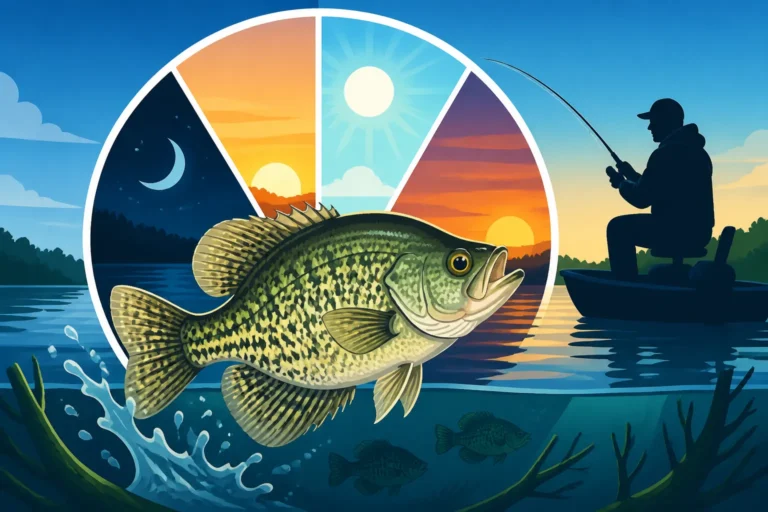
Crappie are notorious for their seasonal movements, which are largely dictated by water temperature and their reproductive cycle. Understanding these patterns is key to locating them throughout the year.
- Spring: This is prime time! As water temperatures climb into the 50s and 60s Fahrenheit (around 10-18 degrees Celsius), crappie move from their deeper wintering holes into shallower, warmer waters to spawn. They'll seek out protected coves, brushy shorelines, and areas with submerged vegetation, often in just 2-6 feet of water. This is when they are most accessible to bank anglers and easy to locate. Learn more about Best Spring Fishing Techniques in Ohio to maximize your chances.
- Summer: After the spawn, crappie often disperse and move to deeper, cooler water, though they'll still relate heavily to structure. You'll find them suspended over brush piles, around deep weed edges, or along creek channels. Early morning and late evening bites are often best as they move shallower to feed.
- Fall: As water temperatures begin to drop, crappie become more active again, feeding heavily in preparation for winter. They'll often school up again, moving between shallow and deep water, frequently found around the same types of structure they used in summer, just perhaps at different depths.
- Winter (Ice Fishing): For dedicated ice anglers, crappie can provide excellent action through the ice. They typically suspend in deeper water over humps, creek channels, or significant brush piles. Locating these schools with electronics is crucial for success. Check out our Ohio Ice Fishing Guide for more insights.
| Season | Typical Location | Preferred Depth (Approx.) | Key Strategy |
|---|---|---|---|
| Spring | Shallow coves, brushy banks, submerged timber | 2-10 feet | Jigs/minnows under bobbers, casting, spider rigging |
| Summer | Deeper brush, channels, main lake points | 10-25 feet (suspended) | Trolling, vertical jigging, deep spider rigging |
| Fall | Transition areas, deep brush, creek channels | 8-20 feet | Vertical jigging, slow trolling, slip bobbers |
| Winter | Deep holes, main lake humps, brush piles | 15-30 feet (suspended) | Ice jigging, tip-ups with minnows |
Understanding these movements allows you to adapt your approach and find where the crappie are holding, no matter the time of year.
Top Crappie Lakes in Central Ohio
Central Ohio offers some fantastic crappie fishing opportunities, often just a short drive from major metropolitan areas like Columbus. These reservoirs provide diverse habitats and consistent action for anglers.
Hoover Reservoir: A Columbus-Area Gem
Hoover Reservoir, located northeast of Columbus, is a beloved spot for many local anglers, and it consistently produces good numbers of crappie. It's a large reservoir known for its many fingers, submerged timber, and a prominent old creek channel that winds through its depths. This combination of features creates ideal crappie habitat.
Anglers often find success around the bridge pilings, particularly the Sunbury Road bridge, and in the numerous coves that dot the shoreline. During the spring spawn, the shallower backs of these coves, especially those with some brush or woody debris, become magnets for spawning crappie. Later in the year, crappie will move to suspend over the deeper creek channel or around submerged brush piles and standing timber in the main lake basin. It’s also a great spot for Fishing Hoover Reservoir Near Columbus for other species.
While Hoover can get busy, especially on weekends, its sheer size and complex structure mean there's usually plenty of water to explore. Trolling small jigs or minnow-tipped jigs along contour lines or vertical jigging around known brush piles are effective strategies here. Don't overlook the potential for a great ice fishing bite on Hoover if conditions allow, as crappie will school up over deep structure.
Alum Creek Lake: Diverse Habitats for Crappie
Just north of Columbus, Alum Creek Lake is another excellent choice for crappie, offering a different character than Hoover with its deeper, clearer waters and extensive main lake basin. This large reservoir is known for its steep rocky banks, numerous coves, and significant areas of standing timber, particularly in its northern reaches.
For crappie, Alum Creek shines during the spring spawn in its many shallower coves. Anglers target the flooded timber and brushy shoreline pockets using jigs or minnows under a bobber. As the water warms into summer, the crappie often move to suspend over the deeper timber stands, particularly in the northern half of the lake, or relate to the main lake points and rock piles. It's a great spot for Alum Creek Lake Muskie Fishing Tips, but don't let the muskie overshadow the excellent crappie!
Finding crappie on Alum Creek often involves covering water with a fish finder to locate schools suspended over deeper structure. Spider rigging with multiple rods, presenting various depths, can be very effective in this lake's diverse environment. Also, keep an eye on the many boat docks; they often hold crappie seeking shade and cover during warmer months.
Deer Creek Lake: Consistent Action and Good Size
Deer Creek Lake, located southwest of Columbus near Mount Sterling, is renowned for its consistent crappie population and the potential for catching some good-sized slabs. This lake features a mix of open water, extensive submerged timber, and a well-defined creek channel that makes it a crappie angler's paradise.
Springtime crappie fishing at Deer Creek is typically excellent, with fish moving into the abundant shallow brush and flooded timber in the coves. Areas around the causeways and bridges are also prime locations as crappie stage to spawn. Anglers often report catching limits of nice-sized crappie during this period.
In warmer months, crappie retreat to the deeper submerged timber and the main creek channel. Vertical jigging or slow trolling small crankbaits and jigs through these areas can be very productive. The extensive timber in Deer Creek provides ample habitat, ensuring that even when the fish aren't shallow, they have plenty of places to hide and feed, making it a reliable destination year-round for those who know how to work deeper structure.
Premier Crappie Destinations in Northern Ohio
Northern Ohio, particularly around the Lake Erie region and its tributaries, might be famous for walleye and steelhead, but it also holds some exceptional crappie fishing. These lakes offer varied environments, from large flood control reservoirs to expansive shallow-water bodies.
Mosquito Creek Lake: Northeast Ohio's Crappie Powerhouse
Mosquito Creek Lake in Cortland is arguably one of Ohio's very best crappie lakes, especially for those seeking both numbers and size in the northeastern part of the state. This large flood control reservoir is relatively shallow overall, but it boasts a massive amount of standing timber and numerous brush piles, making it an ideal crappie haven.
The lake's vast expanses of submerged timber are literally teeming with crappie. During the spring, crappie move into the shallower portions of these timber fields and brushy coves to spawn. Anglers often fish small jigs, tubes, or minnows around the bases of trees and in the open lanes between timber. If you're looking for Fishing Mosquito Creek Lake, you'll quickly discover why it's a crappie mecca.
Throughout the summer and fall, crappie simply retreat to deeper sections of the timber or suspend over brush piles along the old creek channels. Spider rigging, slow trolling jigs, or vertically jigging small spoons and minnows are highly effective. The sheer amount of habitat means you can often find your own private crappie hole, and the fish here grow large, with many reaching impressive slab sizes.
Lake Erie's Tributaries and Nearshore Areas
While not typically thought of as a crappie destination, Lake Erie and its connecting rivers can surprisingly offer good crappie fishing, especially in sheltered bays and the lower stretches of its tributaries. The protected marinas, harbors, and stagnant backwaters off the main lake provide ideal conditions for crappie to thrive away from the turbulent main lake.
Areas like the Sandusky Bay, the lower sections of the Maumee River, the Portage River, and even some of the small harbors around Port Clinton and Marblehead can hold good numbers of crappie, particularly in spring and fall. These spots often have abundant docks, bridge pilings, and submerged vegetation, which are classic crappie hangouts.
Anglers often target these areas with simple jig-and-bobber setups or by slowly working small jigs tipped with minnows around the available cover. It's a different kind of crappie fishing than the inland reservoirs, but it can be surprisingly productive, especially when the main lake is too rough for other pursuits. Check out our guide on Lake Erie Fishing Guide for Ohio Anglers for overall strategies.
Grand Lake St. Marys: Western Ohio's Shallow Water Haven
Grand Lake St. Marys, located in west-central Ohio, is the largest inland lake in the state by surface area. It's a shallow, nutrient-rich lake known for its excellent panfish populations, including crappie. While it can experience issues with algal blooms in summer, its extensive shallow flats, channels, and ample structure make it a consistent crappie producer.
The crappie fishing at Grand Lake St. Marys is particularly strong in the spring when fish move into the shallower channels, around bridge pilings, and into any available brush or docks. The lake's many man-made channels and protected areas offer perfect spawning habitat. Vertical jigging or drift fishing with minnows or small jigs are popular and effective methods here.
Even in summer, despite the potential for heavy weed growth and lower oxygen levels, crappie can be found in deeper channels or areas with better circulation. Fall sees a resurgence in activity as fish feed up before winter. The shallow nature of this lake means crappie are often accessible from shore or small boats, making it a great family-friendly option.
Southern Ohio's Hidden Crappie Treasures
Southern Ohio, with its rolling hills and deeper reservoirs, offers a different crappie fishing experience, often characterized by clearer waters and deeper structural fishing. These lakes can be less pressured than their northern counterparts and hold some true trophy crappie.
Caesar Creek Lake: Deep Water Crappie Strategies
Caesar Creek Lake, near Waynesville, is a deep, clear reservoir known for its excellent saugeye and muskie, but don't overlook its impressive crappie fishery. The lake's deep channels, numerous coves, and abundant standing timber provide ample habitat for crappie to thrive, especially in the clearer water.
Spring crappie fishing is strong in the shallower coves and along the brushy banks, particularly those with flooded timber. Anglers often work jigs and minnows around structure in 5-15 feet of water. As the season progresses, crappie move deeper, suspending over the main creek channel or congregating around significant standing timber, which can be found at considerable depths.
Finding crappie at Caesar Creek often requires good electronics to locate schools suspended over deeper structure. Trolling with small crankbaits or deep-diving jigs, or vertical jigging over brush piles, are effective strategies for targeting these deeper fish. The lake can also be excellent for Caesar Creek Lake Saugeye Fishing, providing a diverse angling experience.
Paint Creek Lake: Structure-Rich Opportunities
Paint Creek Lake, located in Ross and Highland Counties, is another southern Ohio gem that offers fantastic crappie fishing. This reservoir is characterized by its steep, rocky banks, significant standing timber, and a winding old creek channel, all of which are magnets for crappie.
The spring spawn sees crappie moving into the shallower coves and brushy areas along the shoreline. Anglers often find success by casting small jigs or minnow-tipped rigs around flooded timber and downed trees. The clear water here means crappie can be a bit more finicky, so subtle presentations are often key.
Throughout the summer and fall, crappie at Paint Creek retreat to deeper water, often suspending over the extensive standing timber in the main lake or along the creek channel. Drift fishing with minnows, vertical jigging, or slow trolling jigs at various depths are excellent ways to locate these deeper fish. The lake's abundant cover ensures a healthy crappie population and plenty of spots to explore.
Rocky Fork Lake: Abundant Panfish Action
Rocky Fork Lake, in Highland County, is a popular destination known for its diverse fishing opportunities, including a very strong crappie fishery. This lake features a good mix of shallow coves, deeper main lake areas, and a fair amount of natural and man-made structure.
Crappie fishing at Rocky Fork is consistently good, particularly during the spring. Fish move into the shallow brush, stumps, and docks in the coves to spawn. Bank anglers and boaters alike find success using small jigs, live minnows, or a combination of both under a bobber. The lake's layout makes many areas accessible for shore fishing.
As the weather warms, crappie transition to deeper water, often relating to the creek channel, submerged brush piles, and the shaded areas beneath docks and pontoons. The lake benefits from ongoing efforts to create fish habitat, so look for marked brush piles or inquire with local bait shops about productive areas. Rocky Fork often produces good numbers of crappie, offering plenty of action throughout the seasons.
Eastern Ohio's Productive Crappie Waters
Eastern Ohio, characterized by its Appalachian foothills and numerous reservoirs, provides a beautiful backdrop for some excellent crappie fishing. These lakes often feature clear waters, significant depth changes, and plenty of natural cover.
Piedmont Lake: Trophy Crappie Potential
Piedmont Lake, part of the Muskingum Watershed Conservancy District (MWCD), is a fantastic crappie lake with a reputation for producing large slabs. Located in Belmont and Harrison counties, Piedmont is a deep, clear lake with steep banks, extensive standing timber, and a very irregular shoreline, all contributing to prime crappie habitat. It's also known for Piedmont Lake Muskie Fishing Guide, showcasing its diverse fishery.
Spring is the time to target crappie in the shallow coves and around the numerous fallen trees and brushy areas. The clearer water of Piedmont means fish can be spooky, so a stealthy approach is beneficial. Small jigs in natural colors or live minnows are go-to baits. Anglers often find larger crappie here than in some other Ohio lakes.
Throughout the warmer months, crappie will suspend over the deep standing timber, along creek channels, and around sharp drop-offs. Trolling small crankbaits or spider rigging with minnows at varying depths are excellent techniques for locating these deeper, larger crappie. Piedmont is a lake where patience and a good fish finder can truly pay off with some impressive catches.
Seneca Lake: Consistent Catches in the Rolling Hills
Seneca Lake, another MWCD lake situated in Guernsey and Noble counties, is a popular destination that offers consistently good crappie fishing. It's a large, deep lake with a mix of main lake areas, numerous coves, and plenty of submerged timber and brush.
Seneca Lake is particularly known for its consistent spring crappie bite. Anglers flock to the shallower coves and brushy areas, especially those with some protection from wind. Jigs, minnows, and small soft plastics fished under a bobber are highly effective. The crappie here are generally abundant and provide plenty of action.
As the lake warms up, crappie transition to deeper water, suspending over the main creek channel, around large submerged humps, and in the deep timber stands. Slow trolling jigs or minnows, and vertical jigging around known structure, are key summer and fall tactics. Don't forget to check out Seneca Lake Ohio Fishing Report for up-to-date information on fishing conditions.
Atwood Lake: Family-Friendly Crappie Fishing
Atwood Lake, located in Carroll and Tuscarawas counties, is a beautiful MWCD lake that provides an excellent and often family-friendly crappie fishing experience. It's a slightly smaller lake compared to some of the others, but it consistently produces good numbers of crappie and offers good access.
Atwood's numerous coves, points, and areas with submerged brush and timber are fantastic crappie magnets, especially in the spring. The lake is generally well-maintained, and its many access points make it easy for anglers of all skill levels to enjoy. Using lightweight spinning gear with small jigs or minnows is a popular and effective approach.
During the summer, crappie at Atwood will move to deeper areas but often remain accessible around main lake points, significant brush piles, and bridge pilings. The lake is a great place to introduce kids to crappie fishing, as the action can be steady, keeping young anglers engaged. It’s a wonderful spot for a relaxed day on the water, maybe even combining it with Tappan Lake Fishing for Bass and Crappie if you're exploring the region.
Crappie Fishing Techniques for Ohio Waters
Knowing where the crappie are is just the beginning; knowing how to catch them is the next crucial step. There are many effective techniques for crappie, but some stand out as particularly productive in Ohio's diverse waters.
Jigs, Minnows, and Spider Rigging
These three elements form the backbone of successful crappie fishing for many Ohio anglers.
- Jigs: Small jigs, ranging from 1/32 oz to 1/8 oz, are incredibly versatile. They can be tipped with a variety of soft plastic bodies, such as tubes, grubs, or small paddle tails. The color can be critical; chartreuse, white, black, and various greens are common producers. Experiment with retrieve speeds and jigging actions until you find what the fish prefer on any given day. Jigs are excellent for casting to visible cover or vertical jigging in deeper water.
- Minnows: Live minnows, particularly small shiners or fatheads, are often irresistible to crappie. They can be fished under a bobber near cover, tipped on a bare hook, or used to sweeten a small jig. The natural movement and scent of a live minnow can often entice bites when artificials fail, especially in colder water or when fish are less active.
- Spider Rigging: This technique involves using multiple long rods (often 8-16 feet) spread out from the front of the boat, presenting jigs or minnows at various depths and distances simultaneously. The boat is typically moved very slowly, either with a trolling motor or by drifting. This allows anglers to cover a wide swath of water, experimenting with depths and presentations until crappie are located. It's particularly effective for finding scattered schools of crappie in open water or along deep channel edges.
Seasonal Strategies: Spring Spawns to Winter Ice
Adapting your technique to the season is paramount for consistent crappie success.
- Spring: As mentioned, crappie move shallow for the spawn. Focus on casting small jigs or bobber-fishing minnows into protected coves, around brush, and near docks. Work slowly and thoroughly, as fish may be holding tight to cover. The key is to present your bait right in their face.
- Summer: Crappie disperse and move deeper. This is when spider rigging, slow trolling with crankbaits or jigs, and vertical jigging over deep brush piles become highly effective. Use your fish finder to locate schools suspended at specific depths and target those zones precisely.
- Fall: Crappie become more aggressive as water temperatures drop, feeding heavily. They'll often be found in transition areas between shallow and deep water, such as points or creek channel edges. Jigs, minnows, and even small blade baits can be effective as fish fatten up for winter.
- Winter (Ice Fishing): For ice anglers, crappie fishing involves vertical jigging small spoons, tungsten jigs, or minnows under tip-ups directly over deep-water structure like humps or brush piles. Portability and good electronics are essential for finding and staying on schools. Learn more about Ice Fishing Techniques for Ohio Crappie.
Reading Your Electronics for Crappie Schools
Modern fish finders are invaluable tools for crappie anglers, especially when fish are suspended or holding in deeper water. Learning to interpret what you see on your screen can be the difference between a slow day and a banner day.
Crappie often appear as distinct arcs or groups of dots, sometimes forming dense schools, especially in open water or over deep structure. Look for "Christmas tree" shapes when targeting standing timber, as fish will stack up around the branches. Pay close attention to the depth at which the fish are holding, as well as the presence of baitfish, which often appear as a cloudy layer on the screen.
Understanding your depth contours, identifying submerged brush piles, and marking waypoint "honey holes" are all critical uses for your electronics. Side imaging and down imaging technologies can help you visualize structure and fish away from directly under your boat, greatly enhancing your ability to locate and target crappie effectively.
Maximizing Your Ohio Crappie Fishing Experience
Fishing is more than just catching fish; it's about the experience, the preparation, and respecting the resource. A few considerations can make your crappie trips even more enjoyable and successful.
Gear Essentials and Tackle Tips
You don't need a massive investment to get started with crappie fishing, but having the right gear certainly helps.
- Rods and Reels: Lightweight spinning outfits are ideal. Opt for sensitive rods in the 5-7 foot range with a light or ultralight action. Pair them with small spinning reels (500-1000 size) spooled with 4-6 lb monofilament or fluorocarbon line. The sensitivity of the rod allows you to feel those subtle crappie bites, and the light line helps with casting small jigs.
- Terminal Tackle: A variety of small jigs (1/32 to 1/8 oz), assorted soft plastic bodies (grubs, tubes, swimbaits), live minnows (when applicable), small bobbers (slip bobbers are versatile), and appropriate hooks (size 4-8 Aberdeen or Khale hooks) are essential. Don't forget small split shot weights if needed to get your bait down.
- Tools: A pair of needle-nose pliers for hook removal, a small net with rubberized mesh (gentler on fish and less prone to tangles), and a cooler with ice to keep your catch fresh are practical necessities. If fishing from a boat, a good quality fish finder is almost indispensable, as is a reliable anchor or trolling motor.
Respecting Limits and Conservation Practices
The excellent crappie fishing in Ohio is a result of sound management and responsible angling. It's crucial for all of us to do our part to ensure these fisheries remain healthy for years to come.
Always be aware of and adhere to the current Ohio fishing regulations, including daily bag limits and any minimum size limits for crappie on specific bodies of water. These limits are in place to prevent overharvest and maintain sustainable populations. The Ohio Fishing Regulations Every Angler Should Know guide provides full details. If you're unsure, consult the latest ODNR fishing regulations booklet or website.
Consider practicing selective harvest. While crappie are delicious, taking only what you'll eat and releasing the larger breeding stock can help maintain a healthy size structure in the lake. Handle released fish gently and return them to the water quickly. By being responsible stewards of our natural resources, we contribute to thriving fisheries for everyone to enjoy.
Planning Your Crappie Trip: Guides and Resources
Sometimes, the best way to jumpstart your crappie fishing success, especially on an unfamiliar lake, is to tap into local knowledge.
- Local Bait Shops: These are often goldmines of information. The folks behind the counter usually have the latest scoop on where the fish are biting, what baits they prefer, and current water conditions. Don't be shy about asking for tips!
- FishingBooker and Local Guides: For a truly immersive and educational experience, consider booking a trip with a local fishing guide specializing in crappie. Platforms like FishingBooker can help you find experienced guides who know the ins and outs of specific lakes. A good guide can teach you techniques, reveal productive spots, and drastically shorten your learning curve. Many guides offer services for species like crappie, especially if you're interested in Ohio Crappie Fishing Guide.
- ODNR Resources: The Ohio Department of Natural Resources website is an invaluable resource. They provide detailed lake maps, fishing reports, fish population survey results, and information on fish attractor locations. Using these resources, combined with local insights, will significantly boost your chances of finding those crappie honey holes.
No matter if you're exploring the Central Ohio reservoirs, targeting the vast timber of Mosquito Creek, or venturing into the deeper waters of Southern Ohio, the pursuit of crappie offers endless excitement and delicious rewards. With a little planning, the right techniques, and respect for the resource, you'll be well on your way to filling your cooler with those speckled beauties.
Disclaimer
Please note that fishing conditions, regulations, and fish populations can change. Always check the latest Ohio Department of Natural Resources (ODNR) fishing regulations before heading out. This guide provides general information and recommendations, but local conditions can vary significantly.