What a Longnose Gar Is
You're out on a tranquil Ohio lake, maybe somewhere like Lake Erie's calmer bays or a quiet backwater slough on the Ohio River, casting your line, enjoying the peace. Suddenly, you see a long, slender form breach the surface, its snout like a spear. You might think, "What in the world was that?" Or perhaps you hook something that feels incredibly strong, yet when you reel it in, you're faced with a prehistoric-looking fish with a mouth full of needle-sharp teeth that seems impossible to get a hook into. Chances are, you've just encountered a longnose gar. These incredible creatures are often misunderstood, sometimes even seen as a nuisance, but they're a truly fascinating and ancient part of Ohio's aquatic ecosystem. This guide is here to shed some light on what exactly a longnose gar is, where you can find them in our great state, and how to approach these unique fish.
Unmasking the Longnose Gar: A Primitive Ohio Predator
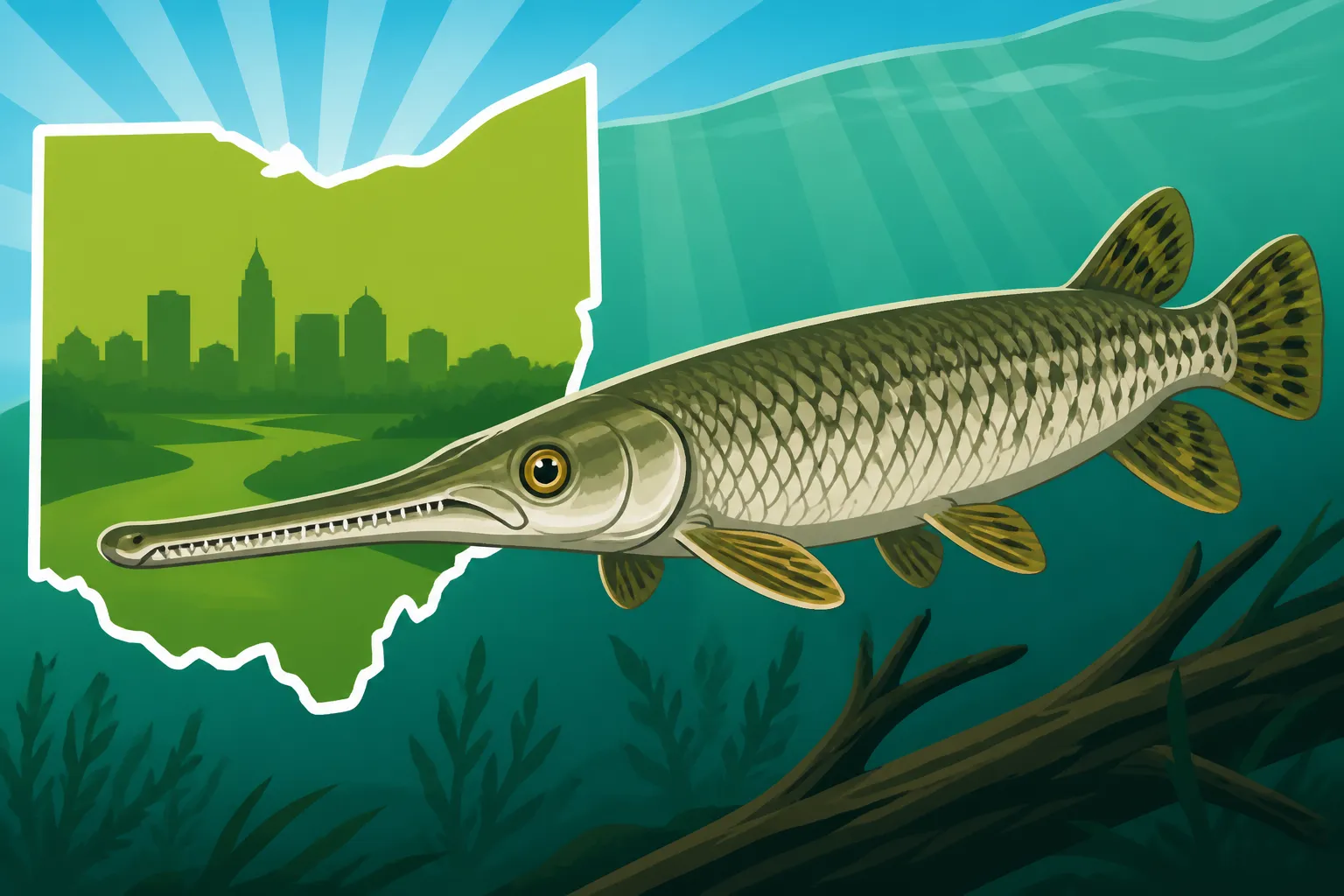
The longnose gar is one of Ohio's most distinctive fish species, immediately recognizable by its elongated body and, of course, its incredibly long, narrow snout. They truly look like something out of a dinosaur age, and in many ways, they are. These fish have retained many primitive characteristics that make them stand out in any body of water.
Identifying the Distinctive Features of a Longnose Gar
The first thing that strikes you about a longnose gar is that unmistakable snout. It’s incredibly long and slender, almost like a pair of forceps, and it’s absolutely packed with rows of very sharp, conical teeth. Unlike many predatory fish that have a wide, gaping maw, the gar uses its narrow jaws to snap sideways at prey, grabbing them with those numerous teeth. This unique mouth structure is perfectly adapted for ambushing smaller fish.
Beyond the snout, their bodies are equally unique. Longnose gar are covered in tough, diamond-shaped ganoid scales, which are incredibly hard and provide an armored plating that protects them from predators. These scales aren't like the flexible, overlapping scales of most fish; they're more akin to bone or enamel, making them feel almost rough to the touch. Their bodies are typically olive or brown on top, fading to a lighter belly, often with dark spots along their sides and fins. They can grow quite large in Ohio, with some specimens exceeding three feet in length, making them a significant presence in the waters they inhabit. Their dorsal and anal fins are set far back on their bodies, close to their tail, which helps them make quick, powerful bursts for attacking prey.
The Gar's Ancient Lineage and Unique Biology
Longnose gar aren't just primitive-looking; they are considered "living fossils," having changed very little over millions of years. Their lineage dates back to prehistoric times, and they share many traits with their ancient ancestors. One of the most remarkable biological features of the longnose gar, and all gar species, is their modified swim bladder. This organ isn't just for buoyancy; it's highly vascularized and can function almost like a lung, allowing them to gulp air from the surface when oxygen levels in the water are low. This adaptation gives them a distinct advantage in stagnant or warm, oxygen-depleted waters where other fish might struggle to survive. You’ll often see them break the surface to "roll" and take a gulp of air, especially on hot summer days.
This ability to breathe atmospheric air makes them incredibly resilient and allows them to thrive in conditions that would be fatal to many other fish. Their tough, armored scales are another ancient trait, offering protection against predators like larger fish, birds, and even alligators in southern states. In Ohio, it mainly serves as a defense against larger raptors or other opportunistic predators. This combination of hardy scales, air-breathing capability, and their ambush predator tactics makes the longnose gar a true survivor and a testament to evolutionary success. It’s a remarkable fish to observe, especially when you consider its deep roots in history.
Where Longnose Gar Roam in Ohio Waters
If you're an angler in Ohio, particularly one who spends time on larger river systems or expansive lakes, there's a good chance you've either seen a longnose gar or heard tales of them. They are quite widespread throughout the state, favoring specific types of environments that cater to their unique hunting style and survival adaptations.
Preferred Habitats: From Rivers to Reservoirs
Longnose gar are generally found in slow-moving or stagnant waters, preferring areas with abundant aquatic vegetation, submerged timber, or other forms of cover where they can lie in wait for unsuspecting prey. In Ohio, this means you're likely to encounter them in several key locations. The mighty Ohio River and its larger tributaries are prime gar territory, particularly in backwaters, oxbow lakes, and slower pools where the current isn't too strong. These areas offer the perfect blend of cover and a steady supply of smaller fish.
Lake Erie's warmer, shallower western basin and its tributaries, especially around marshy areas and river mouths, also host healthy populations of longnose gar. You might spot them in places like the Maumee River or the Sandusky River, often lurking near weed lines or fallen trees. Larger inland lakes and reservoirs across the state, such as Indian Lake, Buckeye Lake, and even some of the deeper reservoirs with significant shallow arms, can also be home to longnose gar. They tend to stick to the shallower edges, bays, and coves where they can ambush their meals. So, whether you're fishing a quiet slough on the Muskingum River or exploring a weed bed on a larger reservoir, keep an eye out for these elongated predators. They aren't usually found in fast-flowing, clear trout streams, for instance, but thrive in the slower, warmer parts of our diverse waterways. For more details on species habitats, you might want to read our Ohio Gar and Bowfin Identification guide.
Understanding Their Behavior and Feeding Habits
Longnose gar are primarily ambush predators. They are incredibly patient, often lying perfectly still just beneath the surface or nestled within dense vegetation, waiting for a small fish to swim within striking distance. When a hapless prey item gets close, the gar will execute a swift, sideways snap of its head, impaling the fish on its numerous teeth. They don't typically "bite" in the traditional sense; instead, they grab and hold. Their diet consists almost exclusively of other fish, though they might occasionally take crustaceans or insects if the opportunity arises. This predatory nature helps keep populations of smaller, prolific fish in check within their ecosystems.
You'll often see them "basking" near the surface on sunny days, appearing almost log-like. This behavior, combined with their air-breathing ability, allows them to conserve energy and stay in optimal ambush positions. Despite their fierce appearance and predatory prowess, they are generally not aggressive towards humans. They are fascinating to observe, a true testament to nature's efficiency. They are most active during warmer months and can be quite a challenge to catch due to their unique mouth structure. If you're looking to target them, understanding their preference for still, vegetated waters is key. You'll often find them lurking where schools of minnows or sunfish are abundant, making those areas prime spots for anglers seeking a unique challenge.
Fishing for Longnose Gar in Ohio: A Unique Challenge
If you've ever tried to catch a longnose gar with traditional hooks, you likely know the frustration of repeatedly missing strikes or having the fish throw the hook almost immediately. Their bony, tooth-filled snout makes them notoriously difficult to hook effectively. But don't despair! Targeting gar can be an incredibly rewarding experience, offering a different kind of thrill than chasing bass or walleye.
The Fight and the Frustration: Why Gar Are Hard to Hook
The primary reason longnose gar are so challenging to hook is their long, bony snout. When they strike a bait, they don't engulf it like a bass; they typically grab it sideways, holding it with their needle-sharp teeth. A conventional hook, designed to penetrate soft mouth tissue, often simply slides off their hard, bony jaws. Anglers frequently report feeling a solid hit, only to reel in their line with the bait mangled but the hook completely untouched. It can be incredibly frustrating to see them take your bait repeatedly without ever getting a solid hookset.
This unique anatomy has led creative anglers to develop specialized techniques specifically for gar. Traditional trebles or J-hooks often don't stand a chance. It’s not that they aren’t interested in your offering; it’s just that their mouths are built for holding, not for deep penetration. Many experienced gar anglers view this challenge as part of the fun, a puzzle to solve with specialized tackle and techniques. Trying to land one of these ancient fish requires patience and a willingness to adapt your approach.
Recommended Gear and Techniques for Gar Anglers
When it comes to tackle for longnose gar, you need to think outside the box. Standard bass or walleye gear often won't cut it. For rods, a medium-heavy to heavy action rod with a good backbone is essential to handle their powerful runs and to help you drive the hook (if you're even using one). Pairing this with a robust spinning or baitcasting reel spooled with strong braided line, say 30-50 pound test, is a good idea. The braid offers excellent sensitivity and strength. Because of their sharp teeth, a heavy-duty leader, such as a wire leader or heavy fluorocarbon, is highly recommended to prevent bite-offs. You can find a wide selection of robust gar fishing gear on platforms like Amazon, from specialized leaders to heavy-duty hooks.
Now, for the "hook" part: many successful gar anglers forgo traditional hooks altogether. The most popular alternative is the "rope lure." This ingenious setup involves a frayed section of nylon rope or yarn tied to your line. When a gar bites down on the rope, its teeth become entangled in the fibers, allowing you to retrieve the fish without a sharp hook. You can often make these yourself, or find pre-made versions online. Another effective method, if you insist on hooks, is using extra-long shank hooks or multiple treble hooks rigged in tandem with live bait like minnows or small bluegill. The idea is to increase the chances of a hook catching somewhere in their tough mouth. Fly fishing with large, flashy streamers can also be effective, again relying on the gar's teeth getting tangled in the fly's material rather than a clean hookset. Remember, it's about getting their teeth wrapped up, not necessarily piercing their bony jaws. For more on specific gear, check out our Best Ohio Fishing Gear and Tackle Guide.
| Feature | Longnose Gar | Shortnose Gar | Walleye |
|---|---|---|---|
| Snout | Very long, slender, narrow; much longer than head | Shorter, broader, wider; about as long as head | Pointed, but not elongated like gar |
| Teeth | Numerous, needle-sharp, conical | Numerous, needle-sharp, conical | Smaller, sharp, canine-like |
| Scales | Diamond-shaped, ganoid (bony, non-overlapping) | Diamond-shaped, ganoid | Ctenoid (rough, overlapping) |
| Habitat | Slow rivers, backwaters, large lakes, reservoirs | Slow rivers, backwaters, large lakes, reservoirs | Lakes, rivers, open water, deeper channels |
| Air Breathing | Yes, can gulp air | Yes, can gulp air | No |
| Average Size | 2-4 feet, 5-20 lbs | 1-2.5 feet, 1-5 lbs | 1-2.5 feet, 1-10 lbs |
Dispelling Myths and Appreciating the Gar's Role
Longnose gar, like many misunderstood species, have often been unfairly labeled as "trash fish" or even thought to be harmful to popular game fish populations. It's time to set the record straight and understand the valuable role these ancient predators play in Ohio's aquatic ecosystems.
Are Longnose Gar "Trash Fish" or Valuable Native Species?
The term "trash fish" is, frankly, a lazy and unhelpful descriptor often applied to species that aren't typically targeted for sport or food by the majority of anglers. Longnose gar have suffered from this label for a long time, leading to misconceptions that they are detrimental to game fish populations. The truth is, longnose gar are a crucial, native part of Ohio's aquatic environment. They are apex predators in many of their habitats, and like all good predators, they play an important role in maintaining a healthy balance within the fish community. They primarily prey on slower-moving or diseased fish, effectively culling weaker individuals and helping to prevent overpopulation of certain species.
Removing gar from a system, or viewing them as a nuisance, ignores the complex web of life in our waterways. Every native species has a niche, and the longnose gar fills its role efficiently. Instead of being "trash," they are a testament to evolutionary endurance and a vital component of aquatic biodiversity. Their unique appearance and ancient history make them a genuinely valuable and interesting fish to encounter, especially for those who appreciate the wild and untamed aspects of nature. So, next time you see one, appreciate it for the fascinating creature it is, a living link to prehistoric times.
Handling and Releasing Longnose Gar Safely
If you do manage to successfully land a longnose gar, it's important to know how to handle it safely – both for your sake and the fish's. Their mouths are full of sharp teeth, and a thrashing gar can inflict a nasty cut. It's best to use a sturdy pair of pliers or a dedicated fish gripper to control their head. Avoid putting your fingers anywhere near their mouth. Their armored scales, while tough, can also be abrasive, so handle them carefully and firmly.
Many anglers practice catch and release with gar, but if you do plan to keep one for consumption, know that their flesh is actually quite edible, though bony. The tough scales can make cleaning a challenge, often requiring heavy-duty shears or a hatchet to get through the armor. However, the meat itself is firm and white, with a mild flavor. Regardless of your intention, minimize their time out of the water, especially during warmer months, to ensure a healthy release if you're not keeping it. Gently supporting their belly and quickly returning them to the water will give them the best chance of survival. A little respect and care go a long way in ensuring these incredible "living fossils" continue to thrive in Ohio's waters. Learning about Ohio State Record Fish by Species might give you an idea of just how big these fish can get.
Disclaimer
This article is for general informational purposes only and does not constitute professional advice. Laws, prices and regulations vary by location and change over time. Consult a qualified professional for guidance on your specific situation.