Ohio Gar and Bowfin Identification
Have you ever been out on an Ohio lake or river, pulled in a truly strange-looking fish, and found yourself scratching your head, wondering "What in the world is this?" It's a common scenario, especially when you encounter some of Ohio's more unique and ancient fish species. Two such fish, often confused and certainly distinct, are the various gar species and the bowfin. This guide is here to help you confidently identify these fascinating creatures, understand their differences, and appreciate their place in Ohio's aquatic ecosystems.
Ohio's Gar Species: An Overview
Ohio is home to several species of gar, ancient fish known for their elongated bodies and toothy jaws. They might look like something from a prehistoric era, and in many ways, they are living fossils. Anglers often encounter them, sometimes by surprise, and their unique appearance can lead to a bit of confusion if you're not familiar with their specific traits. Knowing which type of gar you’ve hooked isn't just a matter of curiosity; it can sometimes be important for understanding their behavior and even local regulations.
Longnose Gar: The Spear-Nosed Predator
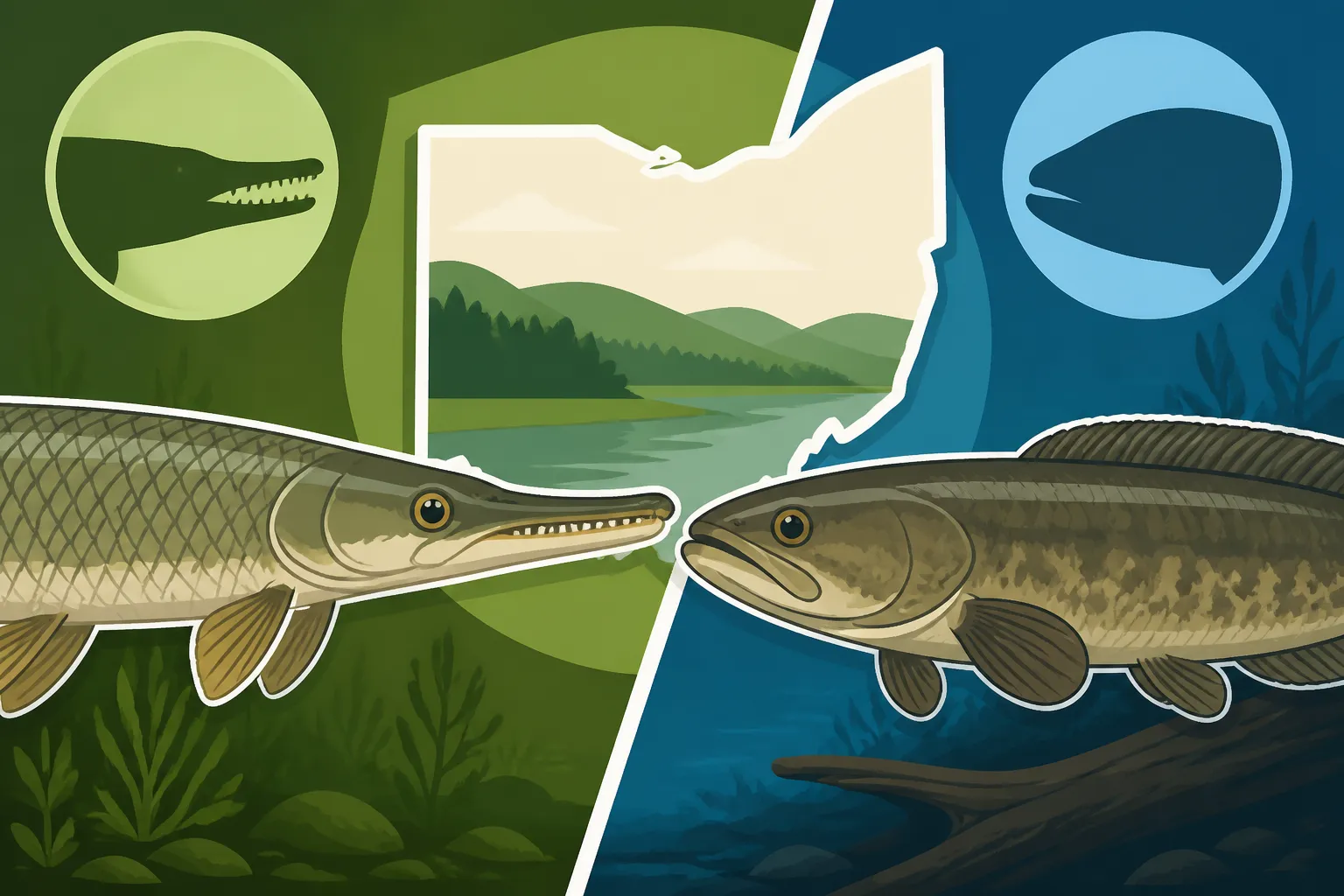
The Longnose Gar is perhaps the most recognizable gar species in Ohio, and they truly live up to their name. Their most defining characteristic is an extremely long, slender snout that is typically more than twice the length of the rest of their head. Imagine a spear-like extension, armed with rows of sharp, needle-like teeth, perfectly adapted for snatching smaller fish. Their bodies are torpedo-shaped, covered in tough, diamond-shaped ganoid scales that are incredibly hard and offer excellent protection, almost like armor. These fish can grow quite large, often exceeding three feet in length, and their coloration usually ranges from olive green to brown on their backs, fading to a lighter belly, sometimes with faint spotting along their sides. They are active predators, often seen lurking just below the surface in calm waters, waiting to ambush unsuspecting prey. You'll frequently find them in slow-moving rivers, backwaters, and large lakes, including the shallower bays of Lake Erie.
When you hook into a Longnose Gar, their fight can be surprisingly acrobatic. They often jump and thrash, making for an exciting, albeit sometimes challenging, battle. Handling them requires care due to their numerous sharp teeth. Many experienced anglers use tools like long-nosed pliers for hook removal, or even a specialized fishing glove, which you can often find on Amazon.
Spotted Gar: Camouflage Masters
Spotted Gar are another fascinating species found in Ohio, and as their name suggests, they are distinguished by prominent dark spots covering their head, body, and fins. While they share the elongated, cylindrical body shape and the hard, ganoid scales with their longnose cousins, their snout is proportionally shorter and broader. It's still a distinct "gar" snout, but not the extreme spear-like protrusion of the Longnose Gar. The spotting can vary in intensity, but it's usually quite clear, creating an effective camouflage pattern that allows them to blend into weedy or debris-filled environments.
You're most likely to encounter Spotted Gar in sluggish, warm waters with abundant aquatic vegetation, like oxbow lakes, slow rivers, and marshy areas. They are masters of ambush, lying perfectly still amongst weeds or submerged logs, waiting for prey to swim by. Their presence often indicates a healthy, diverse aquatic ecosystem. While they don't typically grow as large as Longnose Gar, they are still substantial fish and can provide a good fight. If you're targeting them specifically, fishing with cut bait or live minnows near heavy cover can be quite effective.
Shortnose Gar: The Lesser-Known Angler's Challenge
The Shortnose Gar is, as the name implies, characterized by a shorter, wider snout compared to the Longnose Gar, but it still maintains the classic gar profile. Its snout length is typically less than twice the length of the rest of its head, and it's noticeably broader and more flattened than that of the Longnose. Unlike the Spotted Gar, the Shortnose Gar usually has fewer, if any, distinct spots on its body, though some may exhibit faint spotting, especially on their fins. Their coloration tends to be more uniform, a grayish-brown or olive on the back, transitioning to a white or cream belly.
These gar are often found in larger rivers and associated backwaters, as well as some of Ohio's larger reservoirs, preferring areas with moderate current and turbid water. They are less common in very clear, shallow, or heavily vegetated areas where Spotted Gar thrive. Because their identification can sometimes be tricky without a clear visual comparison to other gar species, they are often misidentified, or simply labeled as "a gar." Pay close attention to the snout-to-head ratio and the lack of distinct body spots when trying to pin down a Shortnose Gar. Like all gar, they are robust fish that can put up a respectable fight, and their diet primarily consists of other fish. Understanding Ohio Fishing Regulations Every Angler Should Know can help clarify rules around these unique fish.
The Enigmatic Bowfin: A Glimpse into the Past
While often grouped with gar due to their ancient appearance and elongated bodies, the bowfin is in a league of its own, a truly unique fish in Ohio's waters. It's the sole living member of its family (Amiidae) and its order (Amiiformes), making it a genuine "living fossil." Encountering a bowfin is like shaking fins with a creature that has changed very little over millions of years, adapting to survive in diverse and often harsh conditions. They possess an impressive array of physiological adaptations, including the ability to breathe air, which allows them to thrive in oxygen-depleted waters where many other fish would perish.
Distinctive Features of the Bowfin
The bowfin has a robust, cylindrical body that is more stout than any of the gar species. Its head is blunt and somewhat flattened, without the elongated snout that is characteristic of all gar. Look for a large, powerful mouth armed with sharp, conical teeth, perfectly suited for crushing and holding prey. Their scales are cycloid, meaning they are smooth to the touch, unlike the rough, diamond-shaped ganoid scales of gar. This difference in scale type is one of the quickest ways to distinguish a bowfin from a gar if you're able to handle the fish.
Coloration can vary, but bowfin are typically mottled olive-brown to dark green on their back and sides, often with a lighter, cream-colored belly. They might have a worm-like pattern or dark blotches, especially when young. One of the most unique and tell-tale features, particularly in males or younger fish, is a prominent, dark spot, often rimmed with an orange or yellow halo, located at the base of the caudal (tail) fin. This "eyespot" is a key identifier.
Understanding the Bowfin's Dorsal Fin and Caudal Spot
The dorsal fin of the bowfin is arguably its most striking feature and is unlike anything you'll see on a gar. It's incredibly long, extending for more than half the length of its back, from just behind the head almost to the tail. What's more, this dorsal fin undulates in a wave-like motion when the fish swims slowly, propelling it through the water with remarkable grace and stealth. This wave-like motion is mesmerizing to watch and is a dead giveaway for a bowfin. Gar, by contrast, have a much shorter, stiffer dorsal fin, located further back on their bodies.
Then there's that caudal spot. While not present on all bowfin (it tends to be more pronounced in males, especially during spawning, and in younger individuals, sometimes fading in older females), when present, it's an unmistakable marker. This distinct, often brightly ringed, black spot at the upper base of the tail is unique to the bowfin among Ohio's freshwater fish. It's thought to be a form of mimicry, perhaps resembling an eye to deter predators or confuse prey. Seeing that long, flowing dorsal fin combined with the caudal spot makes identification almost instantaneous. For more on this fascinating fish, check out What a Bowfin Is.
Side-by-Side Comparison: Gar vs. Bowfin
When you're trying to quickly identify a fish on the water, having a mental checklist of key differences between gar and bowfin can be a huge advantage. They both have that "ancient fish" vibe, but their physical characteristics diverge significantly upon closer inspection. While they might both lurk in similar slow-moving waters, mistaking one for the other would be like confusing a snake for a lizard—related, but fundamentally different.
Head and Mouth Morphology
This is perhaps the most immediate differentiator. Gar possess a distinctly elongated, cylindrical snout, often described as duck-bill or needle-nosed, depending on the species. Their mouths are filled with numerous sharp, conical teeth arranged in rows, perfect for gripping slippery prey. The upper jaw is notably longer than the lower jaw. On the other hand, bowfin have a much blunter, broader, and more rounded head, almost like a bulldog. Their mouth is large and terminal (meaning it's at the very front of the head), also packed with sharp teeth, but the overall jaw structure is far less extended than a gar's. They have a bony, gular plate located on the underside of their chin, a feature absent in gar, which is another excellent identification marker if you can safely observe it.
| Feature | Gar | Bowfin |
|---|---|---|
| Snout/Head | Long, slender, cylindrical snout | Blunt, rounded, somewhat flattened head |
| Jaw | Elongated, upper jaw longer | Broad, terminal mouth, powerful jaws |
| Teeth | Numerous, sharp, needle-like | Sharp, conical, fewer in number |
| Gular Plate | Absent | Present (bony plate under chin) |
Dorsal and Caudal Fin Structure
Another critical identifying feature lies in their fins. Gar have a relatively short, stiff dorsal fin positioned very far back on their body, close to the tail. Their caudal (tail) fin is typically rounded and somewhat asymmetrical, often appearing heterocercal (like a shark's tail, though less pronounced), where the upper lobe is slightly longer. The bowfin, however, has a strikingly long dorsal fin that runs along more than half of its back, and it often appears soft and wavy as the fish swims slowly. Its caudal fin is rounded and symmetrical, and as we discussed, often features a distinct, dark "eyespot" at its base, especially in males or juveniles. This difference in dorsal fin length and appearance is a primary visual cue.
Scale Patterns and Body Shape
Their bodies also tell a different story. Gar are covered in incredibly tough, diamond-shaped, non-overlapping ganoid scales. These scales are hard, interlocking, and give the fish a distinctly armored feel. Their bodies are slender and torpedo-shaped, built for quick bursts of speed to ambush prey. Bowfin, conversely, have smooth, cycloid scales that are more typical of modern fish. These scales overlap and feel smooth to the touch. Their bodies are more stout and robust, almost cigar-shaped, with a firm, muscular feel. While both are elongated, the gar's slim, almost rigid appearance is quite different from the bowfin's thicker, more flexible form. Remember that Longnose Gar can have spots, but these are generally smaller and less defined than the distinct spotting of the Spotted Gar. If you're looking to upgrade your tackle to handle these powerful fish, checking out fishing gear reviews on Amazon can be helpful for finding durable nets or pliers.
Habitat Preferences and Behavior
Understanding where these fish like to hang out can also give you clues about their identity, even before you get a good look. While there can be some overlap, gar and bowfin often have slightly different environmental preferences, influenced by their evolutionary history and physiological adaptations. Knowing their typical haunts increases your chances of encountering them and helps you anticipate the kind of fish you might find in certain areas of an Ohio waterway.
Gar Preferred Environments
Gar, generally speaking, are lovers of warm, sluggish, or still waters. You'll frequently find them in:
- Backwaters and Oxbow Lakes: These are prime real estate for gar, especially Spotted Gar, due to the slow current, abundant vegetation, and ample prey fish.
- Large Rivers: All gar species can be found in larger rivers, particularly in areas with reduced flow, such as eddies, coves, and alongside submerged logjams. The Ohio River is a common place to encounter them.
- Shallow Bays and Marshes: The western basin of Lake Erie, with its vast shallow areas and marshy edges, is excellent gar habitat. They often lurk in the vegetation just below the surface, camouflaged and ready to strike.
- Reservoirs: Many of Ohio's larger reservoirs, particularly those with extensive shallow flats or standing timber, will hold gar populations.
They are often observed basking just below the surface on sunny days, appearing almost log-like. This behavior, sometimes called "loafing," allows them to warm up and conserve energy. They are primarily sight predators, relying on their keen eyesight and quick reflexes to capture fish, frogs, and even large insects. Anglers targeting other species often hook gar inadvertently, which can be an unexpected thrill. If you're wondering about other fascinating Ohio fish, take a look at Ohio Channel Catfish Identification or Ohio Muskie vs Northern Pike Identification.
Typical Bowfin Hangouts and Habits
Bowfin also prefer warm, slow-moving or stagnant waters, but they have a remarkable tolerance for conditions that would be lethal to many other fish. This is largely due to their ability to breathe atmospheric oxygen using a modified swim bladder that functions like a lung. This adaptation allows them to survive in:
- Heavily Vegetated Areas: Like Spotted Gar, bowfin thrive in dense aquatic vegetation. Ponds, slow creeks, and marshy areas with thick lily pads or submerged weeds are classic bowfin territory. They use this cover for both ambush predation and protection.
- Shallow, Stagnant Water: You'll often find them in areas with low oxygen levels that other fish avoid. They are incredibly resilient and can survive in muddy, warm water.
- Connected Wetlands and Floodplains: Their ability to gulp air allows them to survive temporary periods of low water or oxygen, making them well-suited to fluctuating wetland environments.
- Bottom Dwellers: While gar are often seen cruising or basking near the surface, bowfin tend to be more associated with the bottom, slowly cruising through vegetation or lurking in deeper holes within shallow areas.
Bowfin are incredibly aggressive predators, eating almost anything they can overpower, including fish, frogs, crayfish, and even small rodents or snakes. When hooked, they are known for their ferocious fight, often displaying explosive power and head-shaking maneuvers. Some anglers jokingly call them "dogfish" because of their aggressive nature and propensity to bite anything near them once in a boat. For a deeper dive into their biology, check out What a Bowfin Is and Do Ohio Lakes Have Bowfin?.
Importance of Accurate Identification for Anglers
You might be thinking, "What's the big deal if I can't tell them apart? They're just fish!" But for serious anglers and those who care about the health of Ohio's waterways, accurate fish identification is more than just a party trick. It plays a crucial role in adhering to regulations, practicing responsible angling, and appreciating the biodiversity that makes Ohio fishing so special. Misidentification can lead to unintentional violations or missed opportunities.
Navigating Ohio Fishing Regulations
Ohio's fishing regulations are designed to manage fish populations and ensure sustainable angling for future generations. While gar and bowfin are generally abundant and not typically subject to strict size or bag limits, knowing the exact species you've caught is always good practice. For instance, specific rules might exist for certain lesser-known species or in particular bodies of water, even if they aren't common for these fish. Always refer to the most current Ohio Fishing Regulations Every Angler Should Know booklet provided by the Ohio Department of Natural Resources (ODNR) for up-to-date information.
In some cases, distinguishing between similar species like different types of gar or between a gar and a bowfin could be critical for state record purposes. If you believe you've caught a potential state record fish, accurate identification is the very first step. You can read more about this in Ohio State Record Fish by Species. Furthermore, proper identification helps biologists track populations, understand species distribution, and manage fisheries effectively. As an angler, you're a vital part of this data collection, even if it's just by correctly identifying your catch.
Proper Handling and Conservation Practices
Beyond regulations, responsible handling of fish, especially unique or sensitive species, is paramount. Gar and bowfin are incredibly resilient, but they still deserve respect and proper care, particularly if you plan to release them. Both species have sharp teeth and can inflict a nasty bite, so safe handling is a must.
- Handling Gar: Their armored scales and sharp teeth require caution. Many anglers use heavy-duty gloves and long-nosed pliers to remove hooks safely. Avoid gripping them by the eye sockets or gill plates, as this can cause serious injury. If you plan to release them, try to do so quickly and with minimal stress.
- Handling Bowfin: Bowfin are incredibly feisty. Their powerful jaws and sharp teeth mean you need to be careful. They can also "play dead" and then suddenly explode with energy, so maintain a firm grip. Again, heavy gloves and pliers are essential. Because they can breathe air, they can survive out of water for longer periods than many other fish, but quick release is still best for their long-term health. Avoid dragging them on rough surfaces.
Understanding the unique biology of these fish, such as the bowfin's ability to gulp air, also informs best practices. If you're struggling to remove a hook, tools like a Jaw Spreader from Amazon can be a real game-changer for protecting both the fish and your fingers. By taking the time to correctly identify and properly handle these ancient fish, you contribute to their conservation and ensure that future generations of anglers can continue to marvel at Ohio's incredible aquatic diversity.
Disclaimer
This article is for general informational purposes only and does not constitute professional advice. Laws, prices and regulations vary by location and change over time. Consult a qualified professional for guidance on your specific situation.