Are Buffalo Fish Native to Ohio?
It’s a common scenario for anglers across Ohio: you pull in a good fish, and it’s big, solid, and fights hard. You think, “Is this a carp? Or something else?” The truth is, distinguishing between various large, bottom-dwelling fish can be surprisingly tricky, leading to lots of questions about what you've actually caught. If you've ever wondered about the origins of certain species in our local waters, particularly the often-misunderstood buffalo fish, you're not alone! This guide will dive deep into whether buffalo fish are native to Ohio, unraveling their history and ecological role in our state’s waterways.
Understanding Buffalo Fish: A Quick Overview
When we talk about "buffalo fish," many anglers immediately picture the common carp, or perhaps even a large goldfish. However, buffalo fish are distinct species with their own unique characteristics and, importantly, a rich native history in North America. They belong to the sucker family (Catostomidae), not the carp family (Cyprinidae), which is a crucial distinction often missed.
What Exactly Are Buffalo Fish?
Buffalo fish are large, deep-bodied freshwater fish known for their strong fighting ability and often overlooked culinary value. There are three main species found in various parts of the continent: the Bigmouth Buffalo, Smallmouth Buffalo, and Black Buffalo. In Ohio, you’re most likely to encounter the Bigmouth Buffalo and Smallmouth Buffalo. The Bigmouth Buffalo, as its name suggests, has a large, terminal (forward-facing) mouth, which it uses to filter small crustaceans and plankton from the water. They are typically silvery to brassy in color, with a robust body that can grow quite large, sometimes exceeding 50 pounds.
Smallmouth Buffalo, on the other hand, have a smaller, subterminal (downward-facing) mouth, adapted for feeding on insects, larvae, and plant matter from the bottom. Their bodies tend to be a bit more slender than the bigmouths, with a coppery or bronze hue. Black Buffalo are less common in Ohio, preferring slower, deeper waters, and are characterized by an even more subterminal mouth and often darker coloration. All buffalo species lack the barbels (whisker-like feelers) around their mouths that are characteristic of common carp, which is a key identification feature.
Buffalo Fish vs. Common Carp: Clearing Up the Confusion
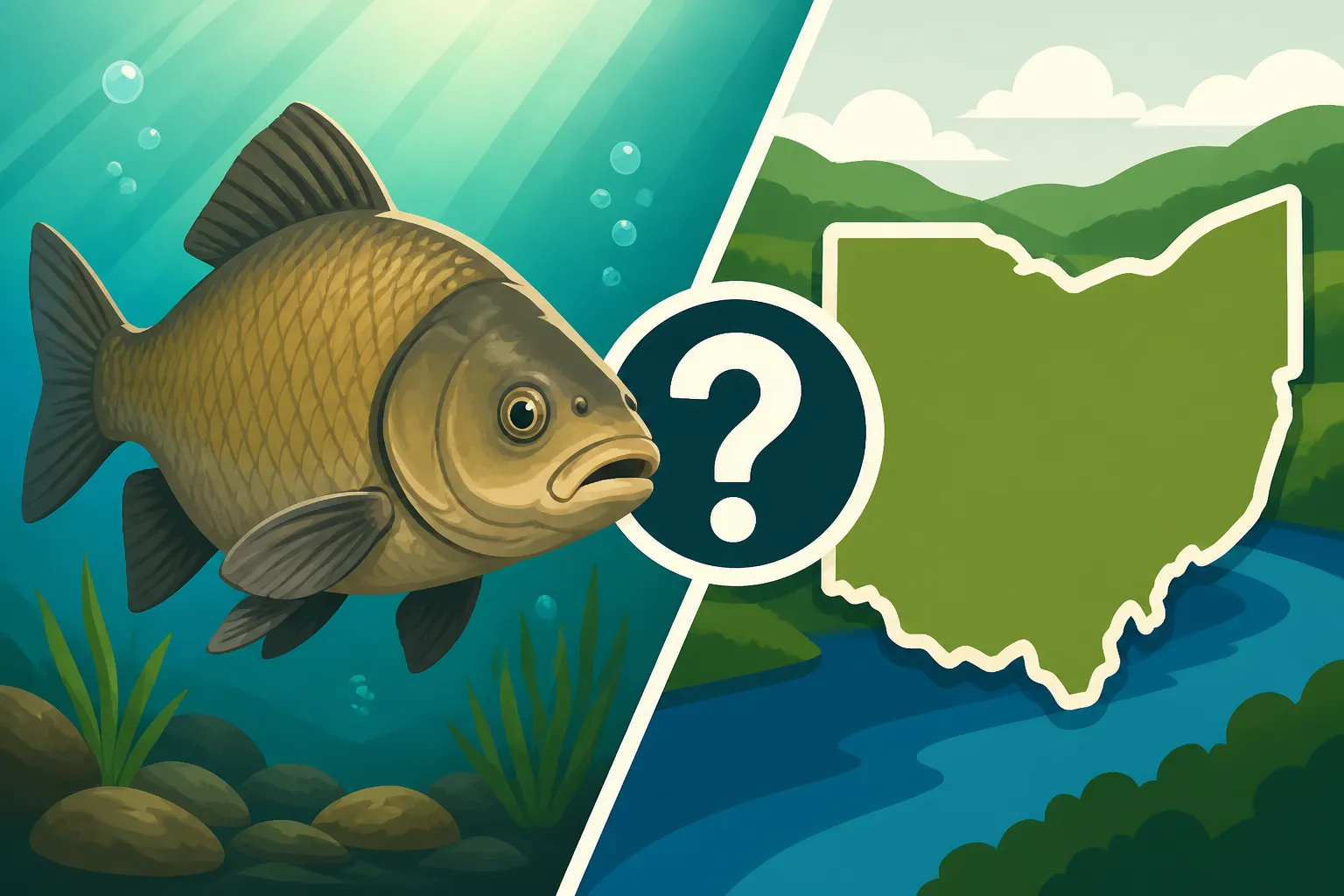
The biggest source of confusion for many anglers is telling the difference between a buffalo fish and a common carp. It's an easy mistake to make, especially when you're caught up in the excitement of a bending rod! Both are large, often found in similar habitats, and tend to put up a powerful fight. However, knowing a few key differences will help you correctly identify your catch every time. As we discussed earlier, buffalo fish belong to the sucker family, while carp are cyprinids. This family difference manifests in several visual cues. For a deeper dive into these distinctions, check out our article on Difference Between a Carp and a Buffalo Fish.
The most obvious difference lies in their mouths. Carp have two pairs of distinctive barbels on their upper jaw, near their mouth, which they use to root around for food in murky water. Buffalo fish, regardless of species, do not have these barbels. Their mouths are also different: Bigmouth Buffalo have a large, upward-pointing mouth, while Smallmouth and Black Buffalo have mouths that point downwards, ideal for bottom feeding. Carp, by contrast, have a protrusible, somewhat forward-facing mouth that they can extend to suck up food. Their bodies also differ subtly; carp tend to have a more elongated body shape, often with larger, more irregular scales, while buffalo fish are generally deeper-bodied with smoother, more uniform scales. Finally, common carp often have a serrated spine on their dorsal and anal fins, a feature absent in buffalo fish. It’s worth noting that if you're looking to stock up on gear for any kind of bottom fishing, a good heavy-duty rod and reel combo, perhaps something you can find on Amazon, will serve you well for either species.
| Feature | Buffalo Fish (Bigmouth/Smallmouth) | Common Carp |
|---|---|---|
| Family | Catostomidae (Sucker Family) | Cyprinidae (Carp Family) |
| Barbels | Absent | Present (2 pairs, whisker-like) |
| Mouth Position | Bigmouth: Terminal (forward/up) | Protrusible, somewhat forward |
| Smallmouth/Black: Subterminal (down) | ||
| Body Shape | Deep-bodied, robust | More elongated, often thicker |
| Scales | Smoother, more uniform | Larger, often irregular, sometimes sparse |
| Fin Spines | Soft rays, no serrated spines | Serrated spine on dorsal and anal fins |
| Feeding Style | Filter feeder (bigmouth), bottom | Bottom feeder, omnivorous |
| invertebrate/plant eater (smallmouth) |
Are Buffalo Fish Truly Native to Ohio? The Historical Context
This is the million-dollar question for many curious anglers! Unlike the common carp, which was introduced to North America from Europe and Asia, buffalo fish are indeed a native species to the continent, and specifically, to Ohio's historic waterways. This fact often surprises people who've grown up hearing about carp as the dominant "rough fish" in our rivers and lakes.
Tracing Their Ancestry: Native Range and Ohio's Rivers
Yes, buffalo fish are absolutely native to Ohio! Their ancestral range includes the large rivers and lakes of the Mississippi River basin, extending north into the Great Lakes basin via connecting waterways, and the Ohio River basin is a significant part of that natural habitat. These fish have been swimming in Ohio's rivers like the Ohio River itself, the Scioto, the Muskingum, and the Great Miami for thousands of years, long before European settlement. They are truly a part of Ohio's natural aquatic heritage.
Historically, they were a much more prevalent food fish for indigenous peoples and early settlers, valued for their size and abundance. Before the widespread introduction of common carp in the late 19th and early 20th centuries, buffalo fish were one of the largest and most ecologically important bottom-dwelling fish in our state's major river systems. Their presence is a testament to the natural biodiversity of Ohio's waters, especially those connected to the mighty Ohio River. If you're planning a trip to explore these historic waterways, our Ohio River Fishing Guide can provide excellent insights into access points and what to expect.
How Buffalo Fish Thrive in Ohio Waters
Buffalo fish are incredibly adaptable and resilient, which is why they continue to thrive in many of Ohio's varied aquatic environments. They prefer slow-moving waters, deep pools, and areas with soft bottoms rich in organic matter – conditions that are abundant in Ohio's larger rivers, reservoirs, and even some natural lakes. Their diet plays a significant role in their success. Bigmouth Buffalo are primarily filter feeders, sifting plankton from the water column, making them less competitive with traditional bottom feeders like carp. Smallmouth Buffalo, while also rooting on the bottom, often consume insect larvae and detritus.
These fish are also quite tolerant of turbid (murky) waters and fluctuating water levels, which are common characteristics of many Ohio rivers, especially after heavy rains. They have long lifespans, with some individuals living for several decades, contributing to stable populations when conditions are favorable. Their ability to adapt to various conditions, from large rivers to impoundments, has allowed them to maintain a strong foothold in Ohio, despite changes to their habitat over time. When considering what kind of tackle to use for these robust fish, you'll want something durable. Many anglers find great success with a sturdy catfish rig, and you can often find comprehensive kits on Amazon that include everything from heavy-duty lines to robust hooks, perfect for tackling big, powerful fish like buffalo.
The Role of Buffalo Fish in Ohio's Aquatic Ecosystem
While often overlooked, buffalo fish play a vital and beneficial role in the health of Ohio's aquatic ecosystems. They are not merely "rough fish" to be dismissed; they are integral components of our native fish communities, contributing to nutrient cycling and serving as a food source for other predators.
Ecological Importance: More Than Just Another Fish
Buffalo fish are essential members of the native fish fauna, performing critical functions within their environment. As bottom dwellers and filter feeders, they help to process organic matter and cycle nutrients. Bigmouth Buffalo, by consuming vast quantities of plankton, play a role in maintaining water clarity and balancing the aquatic food web. They convert microscopic organisms into a larger biomass, which then becomes available to other predators, including larger game fish and even birds of prey.
Smallmouth Buffalo, with their bottom-feeding habits, help to aerate the substrate and consume detritus, preventing the build-up of organic material. Their presence signifies a healthy and productive ecosystem, particularly in systems connected to the Ohio River. Unlike common carp, which can sometimes contribute to water quality issues by stirring up sediment and uprooting aquatic vegetation during their intense foraging, buffalo fish generally have a less disruptive feeding style. They coexist with many other species and are part of the natural balance that existed for centuries before other species were introduced. Understanding the broader ecosystem is crucial, and our Ohio Fishing Regulations Every Angler Should Know can help you fish responsibly in these diverse environments.
Fishing for Buffalo in Ohio: Tips and Techniques
For the adventurous angler looking for a strong fight, fishing for buffalo fish can be incredibly rewarding. They are powerful fish that can put a serious bend in your rod, and they are surprisingly good to eat when properly prepared. You don't need highly specialized gear to target them, but stout tackle is definitely recommended. If you're keen on catching these impressive fish, here are some tips:
- Location: Look for buffalo in slower sections of large rivers, especially near deep holes, log jams, and areas with soft, muddy bottoms. Reservoirs with ample plankton and submerged structure are also prime spots for Bigmouth Buffalo. The Muskingum River, Scioto River, and of course, the Ohio River, are excellent places to start.
- Bait: Since Bigmouth Buffalo are filter feeders, they don't typically bite traditional baits like worms or cutbait. Anglers targeting them often use dough balls made from cornmeal, bread, or even specialized commercial buffalo baits, sometimes flavored with anise or vanilla. Present these on a small, strong hook (like a size 6 or 8 circle hook) under a slip bobber or on a bottom rig. Smallmouth Buffalo might be tempted by worms, corn, or small insect imitations. For general bottom fishing strategies, many of the Best Baits for Ohio Catfish will also attract buffalo.
- Tackle: A medium-heavy to heavy spinning or casting rod paired with a reel spooled with 15-30 lb test monofilament or braided line is ideal. You'll want enough backbone to handle their powerful runs. A classic bottom-fishing rig, such as a Carolina rig or a simple ledger rig with an egg sinker, works well. Having a large, sturdy landing net is also a must, as these fish can be quite large and heavy at the boat or bank. When preparing your tackle box, you might find some excellent deals on specialized buffalo baits and heavier lines on Amazon.
- Technique: Patience is key. Cast your bait into promising areas and let it soak. Buffalo bites can range from subtle taps to strong, deliberate pulls. Be ready for a good fight! After hooking, let the fish run and tire itself out before trying to reel it in. They have incredible stamina.
Conservation and Management of Buffalo Fish Populations in Ohio
While buffalo fish are native and generally robust, like all fish species, their populations can be impacted by habitat changes, water quality, and overfishing. Understanding their status and the efforts to ensure their continued presence is important for any angler who values Ohio's natural resources.
Protecting Ohio's Native Species
Currently, buffalo fish populations in Ohio are generally considered stable, though they may not be as abundant in all areas as they once were. They are managed as part of the broader "rough fish" or "commercial fish" category by the Ohio Department of Natural Resources (ODNR) Division of Wildlife. Unlike many popular game fish that have specific size and bag limits, buffalo fish typically fall under more general regulations, reflecting their historical abundance and classification. However, this doesn't diminish their ecological value or their status as a native species deserving of appreciation and responsible angling practices.
Habitat preservation and water quality improvements are the most crucial aspects of ensuring healthy buffalo populations. Maintaining clean rivers and lakes, protecting riparian zones, and managing pollution are all beneficial for buffalo fish, as well as countless other native species. Anglers can contribute to these efforts by practicing catch-and-release, especially for larger breeding-size fish, and by properly disposing of trash and avoiding the spread of aquatic invasive species. If you're keen on knowing more about fish identification, especially for some of the lesser-known but equally important species, our Ohio Panfish Identification Guide can offer valuable insights.
The Future of Buffalo Fish in Ohio
The future for buffalo fish in Ohio looks promising, thanks to their adaptability and growing recognition among anglers and conservationists. There's a rising appreciation for native "rough fish" species, not just for their fighting prowess but also for their ecological significance. As more people learn about the differences between native buffalo and introduced carp, the buffalo fish are gaining more respect as a prized catch and an important part of Ohio's aquatic heritage.
Anglers who enjoy targeting species like channel catfish or flathead catfish often find that buffalo fishing provides a similar challenge and reward. Many of the same strategies and baits used in Ohio Catfish Fishing Techniques can be adapted for buffalo. We’re fortunate to have these powerful, native fish in our waters, offering unique fishing opportunities and contributing to the rich tapestry of Ohio’s freshwater ecosystems. So, the next time you hook into a big, strong fish that lacks those tell-tale barbels, you can confidently identify it as a native Ohio buffalo, a true gem of our state's fishing scene.
Disclaimer
This article is for general informational purposes only and does not constitute professional advice. Laws, prices and regulations vary by location and change over time. Consult a qualified professional for guidance on your specific situation.