Do Ohio Muskie Guides Practice Catch and Release Only?
One of the most common questions I hear from passionate anglers looking to chase the mighty muskie in Ohio is about the ethics and practices of the guides they hire. Specifically, many wonder: do Ohio muskie guides practice catch and release only? It's a valid concern, as muskie fishing is a serious commitment, and you want to ensure your guide shares your values when it comes to preserving these incredible fish. This guide will dive deep into what you can expect from muskie guides across the Buckeye State, focusing on their approach to catch and release.
Why Catch and Release is Crucial for Ohio Muskie
Let's be real for a moment: muskie fishing isn't just a casual hobby for most. It's an obsession, a quest for the "fish of a thousand casts," and these magnificent predators represent the pinnacle for many freshwater anglers. Given their slow growth rates and relatively low population numbers, especially for trophy-sized specimens, catch and release isn't just a suggestion—it's often seen as a moral imperative by the vast majority of dedicated muskie anglers and guides.
Muskie Biology and Conservation
Muskellunge are truly unique among Ohio's game fish. They grow to immense sizes, can live for many years, and are notoriously difficult to catch consistently. Unlike many panfish or even bass, a muskie takes a long time to reach that impressive, picture-worthy length. For example, a 40-inch muskie might be well over a decade old! When you consider that female muskie typically don't even start spawning until they are a few years old, and the older, larger females are the most prolific breeders, removing one of these giants from the population can have a disproportionate impact on future generations. This is why preserving these fish through careful handling and release is so vital. You can learn more about Muskie Growth Rate in Ohio Lakes to appreciate just how long it takes for these fish to reach trophy size.
The Ohio Division of Wildlife (ODW) has done a fantastic job managing muskie populations through stocking programs and regulations, but these efforts alone aren't enough. Angler practices play a huge role. Every muskie that swims away healthy after being caught represents another chance for that fish to grow, spawn, and be caught again, perhaps by you or another excited angler down the line. It's a cycle that dedicated muskie anglers are deeply committed to.
The Ethos of Muskie Guiding
For most professional muskie guides in Ohio, their business isn't just about putting clients on fish; it's about being stewards of the resource. They spend countless hours on the water, observe the fish behavior, and understand the fragility of muskie populations firsthand. Their livelihoods depend on healthy muskie fisheries, so promoting catch and release aligns perfectly with their long-term interests and passion for the sport. Many guides view it as their responsibility to educate clients on proper handling and release techniques, ensuring that the muskie they help you catch swims away strong. This commitment to the resource is a hallmark of truly professional guides.
Guide Practices: Beyond the Legal Limit
While Ohio does have specific Ohio Muskie Size and Bag Limits, which typically allow for keeping one fish over a certain minimum length (which can be quite generous, often 42-48 inches depending on the water), the reality on the water with most muskie guides is usually quite different. Few, if any, guides actively encourage keeping muskie.
The Unspoken Rule: Conservation Over Keepsakes
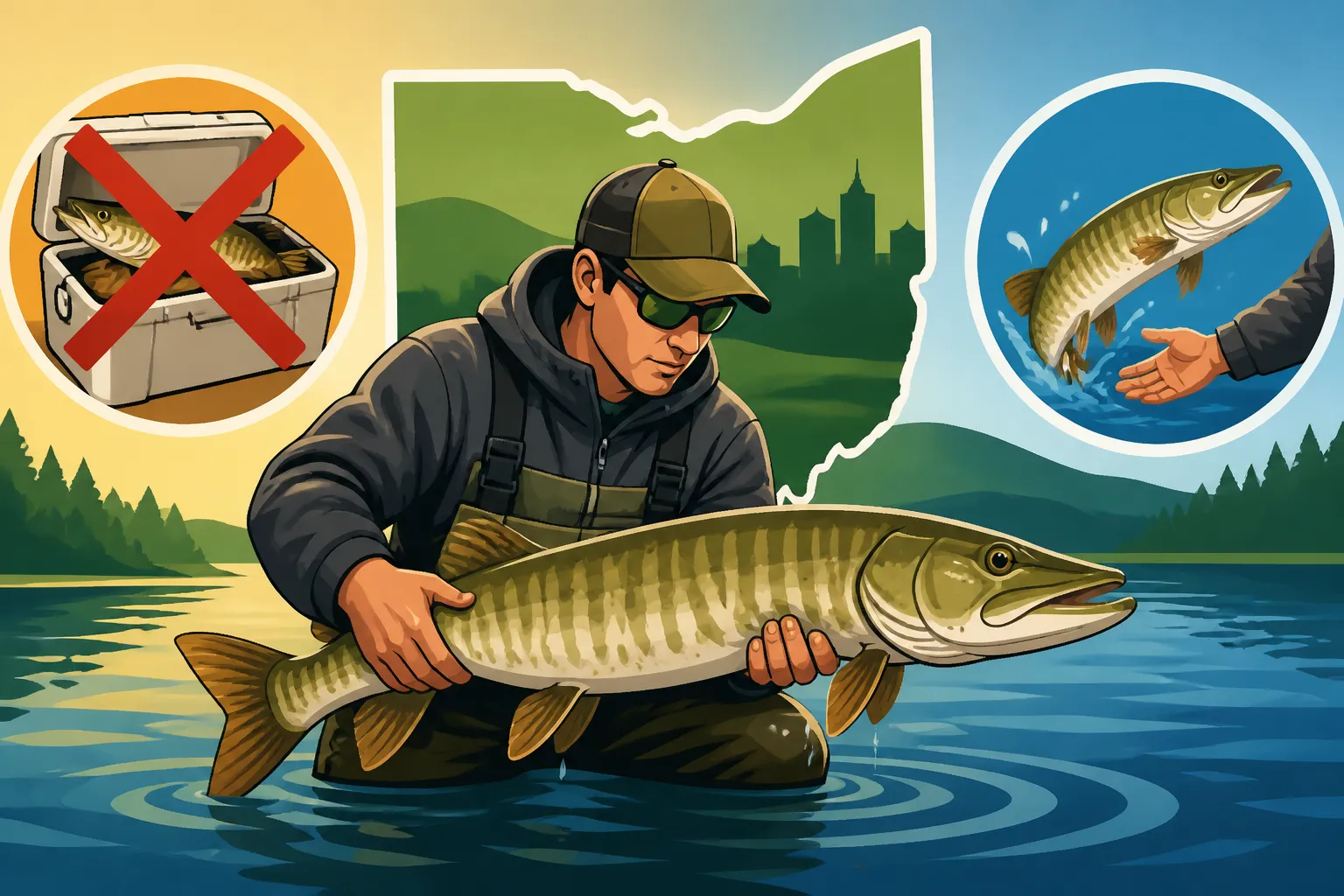
For many, if not most, reputable Ohio muskie guides, catch and release is not just a preference, it's virtually a standard operating procedure. While they are legally allowed to let you keep a fish that meets the state's minimum length requirement, it’s rare for a guide to suggest it, and even rarer for a client to request it. The philosophy is rooted in conservation: these fish are too valuable to the ecosystem and the sport to be removed from the water unless absolutely necessary. The trophy is the experience, the fight, and the photograph, not the meat on the table.
Think of it this way: your guide wants to be able to offer fantastic muskie fishing experiences for years to come. That means ensuring a healthy population. If every trophy-sized muskie was kept, the fishery would suffer greatly over time. Guides understand this deeply. So, while they might not explicitly state "catch and release only" in their advertising (because technically, you could keep a legal fish), their entire operation, from equipment to handling practices, is geared towards a successful release. This is why it's so important to be prepared with the right equipment for the release, which we'll discuss later, and know Best Way to Handle and Release an Ohio Muskie.
Situational Exceptions (And Why They're Rare)
There are, of course, always hypothetical exceptions. Perhaps a fish is gravely injured during the fight, or it's a new state record that absolutely needs to be certified (though even then, the goal is often to release if possible after official measurements). However, these scenarios are incredibly uncommon, and in the vast majority of cases, the guide's priority will be a quick, safe release. If a muskie is injured, a guide might counsel a client on whether it would be more humane to keep it rather than risk a slow death, but this is a somber decision, not a celebratory one.
If you are specifically looking for a guide, it’s always best to be clear about your intentions. Most guides will be thrilled to hear you're committed to catch and release. When searching for potential guides on platforms like FishingBooker, you can often find information about their philosophy or even send a direct message to clarify their approach before booking. It’s part of a guide's job to educate, and they appreciate clients who care about the resource.
Choosing a Muskie Guide with a Conservation Mindset
If you're serious about ethical muskie fishing and want to ensure your guide shares that conservation ethic, there are definitely steps you can take before committing to a trip. This due diligence ensures a better experience for you and the fish.
Questions to Ask Before Booking Your Trip
Don't be shy! A good guide will appreciate your interest in conservation. Here are some questions you might consider asking when you contact a potential Ohio muskie guide:
- "What is your philosophy on muskie retention? Do you typically practice catch and release?"
- "What kind of equipment do you carry for muskie handling and release (e.g., specific nets, hook removers, bolt cutters)?"
- "Are you prepared to revive a muskie if it's stressed after a long fight?"
- "How do you ensure the fish's safety during photo opportunities?"
Their answers should give you a clear indication of their commitment. You want to hear about proper handling, quick releases, and minimal time out of the water. Many guides will provide What Muskie Guides Provide on an Ohio Trip, which often includes specialized equipment for handling these toothy predators.
Researching a Guide's Philosophy
Beyond direct questioning, you can often glean a lot about a guide's philosophy from their online presence. Look at their websites, social media channels, and client testimonials. Do they prominently feature pictures of healthy, released fish? Do they talk about muskie conservation? Are they associated with muskie-specific organizations that advocate for C&R?
Utilizing platforms like FishingBooker can also be incredibly helpful. Many guides list their specialties and approaches directly on their profiles. You can read reviews from previous clients, which often touch upon how the guide handled the fish. A guide with a strong track record of promoting conservation will usually have that reflected in their feedback. This research is just as important as knowing Best Lakes for a Guided Ohio Muskie Trip or When Muskie Fishing Peaks in Ohio.
Handling Muskie for Successful Release
Whether you're fishing with a guide or on your own, knowing how to properly handle and release a muskie is paramount. Guides are experts at this, and they will lead the process, but understanding the basics makes you a better, more responsible angler.
Essential Equipment for Safe Handling
A reputable muskie guide will always have the right tools on board to ensure a safe and efficient release. This typically includes:
- Large, rubberized landing net: This is crucial. A large, knotless, rubber-coated net prevents damage to the muskie's slime coat and fins. Don't use standard nylon or knotted nets. Your guide will likely have one, but it’s good to know why. Best Landing Net for Ohio Muskie Fishing is a topic many muskie anglers research.
- Long-nosed pliers or jaw spreaders: Muskie have extremely sharp teeth, making direct handling dangerous and stressful for the fish. Long tools allow for hook removal without putting fingers near the danger zone or excessive stress on the fish.
- Bolt cutters: Sometimes, a hook is deeply embedded or tangled in a way that makes removal impossible without causing further harm. Bolt cutters allow the guide to quickly snip the hook, leaving only a small, barbless piece in the fish that will eventually rust out.
- Heavy-duty gloves: While guides use tools, they often wear gloves for added grip and protection when handling the fish's body or head, which still protects them from teeth and gill rakers.
Minimizing Stress and Injury
The goal is always to get the muskie back into the water as quickly and healthily as possible. This means minimizing its time out of the water and reducing physical stress. Your guide will:
- Land the fish quickly and efficiently: A prolonged fight can exhaust a muskie, especially a large one, making revival more challenging.
- Keep the fish in the net and in the water: Whenever possible, the fish should remain submerged in the net for hook removal and revival.
- Support the fish properly for photos: If a photo is taken, it will be quick. The guide will ensure the muskie's body is fully supported horizontally, never vertically by the jaw or gills, which can cause severe internal damage. They'll also hold the fish facing away from the boat, ready for a quick return.
- Revive the fish: If the muskie appears sluggish, the guide will hold it in the water, facing into the current or gently moving it back and forth, to force water over its gills until it swims away under its own power. This is a critical step in How to Revive a Muskie Before Release.
| Best Practice for Muskie Release | Explanation | Avoid This |
|---|---|---|
| Use a Large, Rubberized Net | Protects slime coat and fins; keeps fish contained and minimizes thrashing. | Small, knotty nets that strip slime and damage tissue. |
| Keep Fish Submerged | Reduces stress and allows fish to breathe during hook removal. | Hauling the fish onto the boat deck immediately. |
| Use Proper Tools | Long-nosed pliers, jaw spreaders, and bolt cutters for safe, quick hook extraction. | Sticking fingers near teeth, ripping hooks out carelessly. |
| Support Horizontally | When briefly out of water for photos, support the entire body to prevent internal organ damage. | Holding fish vertically by jaw or gills, causing spinal and internal injuries. |
| Revive Thoroughly | Hold fish in water, moving gently until it swims away on its own, ensuring it's strong enough to survive. | Releasing a sluggish fish that may not recover. |
| Minimize Air Exposure | Keep time out of water to an absolute minimum. | Extended photo sessions or excessive handling. |
Ohio's Muskie Fishing Future and C&R
The dedication of Ohio's muskie guides and anglers to catch and release practices directly impacts the health and vitality of our state's muskie fisheries. It’s a collective effort that ensures future generations can experience the thrill of chasing these freshwater giants.
The Impact of Angler Practices
Every decision an angler makes on the water, from the tackle they use to how they handle a fish, has an impact. With muskie, where populations are carefully managed and slow to reproduce, the impact of C&R is even more pronounced. A strong catch and release ethic means more big fish in the water, which in turn means better fishing opportunities for everyone. It cultivates a culture of respect for the resource that goes beyond mere compliance with regulations. It’s about being a true conservationist at heart. If you're passionate about the sport, practicing good C&R ensures you'll be able to enjoy Ohio Muskie Fishing Guide experiences for years to come.
Beyond Minimum Regulations
While Ohio fishing regulations provide a framework for conservation, particularly with Ohio Statewide Bag and Size Limits and specific muskie limits, many guides and experienced anglers choose to go above and beyond these minimums. Their "catch and release only" approach isn't legally mandated but is an ethical choice driven by a deep understanding of muskie biology and the long-term health of the fishery. They know that a healthy muskie population isn't built on what's legally allowed to be taken, but on what's carefully put back. This kind of stewardship is what makes Ohio's muskie fishing so special and why choosing a guide who shares this philosophy is so important.
Ultimately, if you're looking to book an Ohio muskie guide, you can rest assured that the vast majority operate with a strong catch and release ethic. It's not just good for business; it's good for the fish, and it's essential for the future of muskie fishing in our great state.
Disclaimer
This article is for general informational purposes only and does not constitute professional advice. Laws, prices and regulations vary by location and change over time. Consult a qualified professional for guidance on your specific situation.