How to Fish Docks for Largemouth Bass
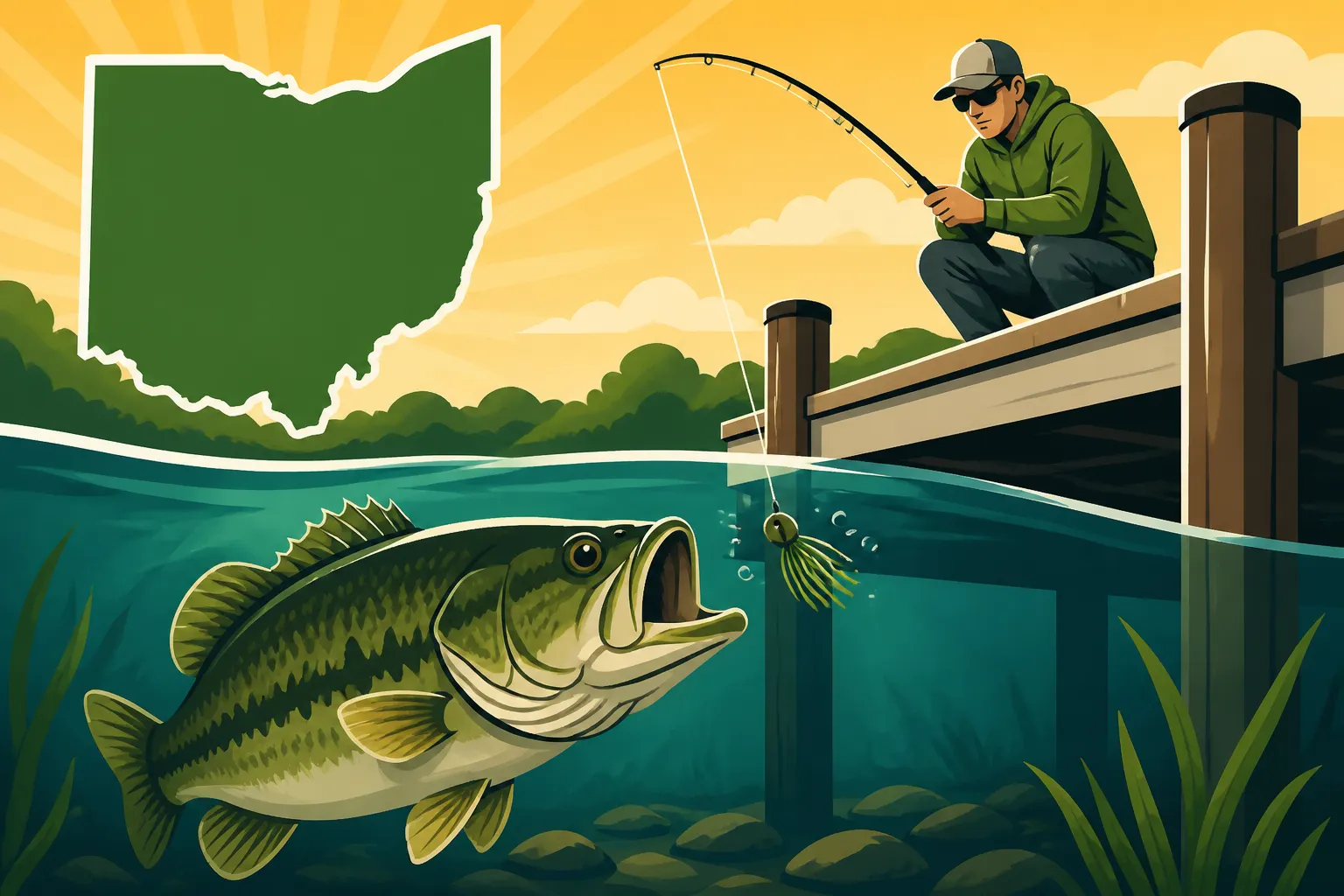
Few things are as frustrating as seeing what looks like prime largemouth bass habitat—a perfect dock with plenty of shade and cover—but not being able to coax a bite. Ohio's lakes and reservoirs are dotted with countless docks, and understanding how bass relate to these structures is key to unlocking some incredible fishing. This comprehensive guide will walk you through everything you need to know about fishing docks for largemouth bass in Ohio, from understanding why bass love them to the techniques that put fish in the boat.
Why Docks are Largemouth Bass Magnets in Ohio Waters
If you've spent any time on Ohio's diverse waterways, from the smaller lakes like Kiser Lake to expansive reservoirs such as Alum Creek Lake, you've undoubtedly noticed the proliferation of docks. These man-made structures aren't just for mooring boats; they are bustling aquatic neighborhoods for largemouth bass. They offer a unique blend of protection, ambush points, and foraging opportunities that bass simply can't resist.
The Irresistible Allure of Dock Structure
Imagine you're a largemouth bass. You're constantly looking for three things: food, safety, and comfort. Docks deliver on all fronts. First, they provide excellent shade, which is crucial during bright, sunny days, especially in warmer months. Bass are cold-blooded creatures, and direct sunlight can be uncomfortable, driving them into the cooler, darker recesses beneath docks. This shade also makes it harder for predators (like eagles or ospreys) to spot them from above.
Beyond shade, docks offer fantastic cover. The pilings, crossbeams, boat lifts, and even the boats themselves create a maze of underwater structure. This gives bass places to hide from larger predators, and more importantly, perfect ambush points for smaller baitfish, crawfish, and even frogs or insects that might fall in. A bass can patiently wait in the dark shadow of a pontoon, darting out quickly to snatch an unsuspecting meal before retreating to safety. It's like their own private hunting blind. Think about how many little bluegill or crappie often congregate around dock pilings—that's a ready-made buffet for a hungry largemouth.
Decoding Different Dock Types for Bass Potential
Not all docks are created equal in the eyes of a largemouth bass. Understanding the nuances of various dock types can significantly improve your fishing success.
Floating Docks: These docks rise and fall with the water level, often creating a consistent shadow line regardless of how high or low the lake is. The pontoons or flotation devices themselves create additional subsurface cover. Bass often suspend directly under the pontoons or along the ropes/chains securing the dock. They can also provide a deeper shade pocket on sunny days, making them prime targets for a well-placed jig or Texas-rigged worm. You might find bass holding tight to the cables or anchors that keep floating docks in place, especially if those cables extend to brush piles on the bottom.
Stationary Docks (Pilings): These are docks built on posts driven into the lakebed. The pilings themselves are magnets for baitfish and crawfish, and bass will often hold tight to them, especially the corners. The amount of cover can vary wildly. Some stationary docks are just simple platforms, while others have boat lifts, ladders, or even intentional brush piles sunk nearby by homeowners. These brush piles are absolutely goldmines for bass, offering dense cover. Always look for additional structures around stationary docks, like old tires, sunken Christmas trees, or even rock piles.
Boat Lifts and Pontoon Boats: Don't overlook these. Boat lifts, especially the hydraulic ones, often have complex frameworks that extend into the water, providing excellent hiding spots. Pontoon boats, when docked, cast a huge shadow and offer a massive amount of under-boat cover. Bass love to hold near the front or back of pontoons, especially where the cross-members meet the flotation tubes. These larger pieces of equipment also create a bigger "footprint" in the water, displacing more water and offering more surface area for algae and invertebrates, which in turn attract more baitfish.
Gearing Up for Success: Rods, Reels, Lines, and Lures
Successfully fishing docks for largemouth bass isn't just about knowing where to cast; it's about having the right tools for the job. You're often dealing with tight spaces, abrasive structures, and powerful fish that will try to bury themselves deep in the cover the moment they're hooked.
Selecting the Right Rod, Reel, and Line Setup
When it comes to fishing docks, you need gear that can handle a tough fight and get fish out of heavy cover quickly.
Rods: A medium-heavy to heavy power rod with a fast action is generally your best bet.
- Medium-Heavy Power: This is a versatile choice for most dock fishing scenarios. It offers enough backbone to handle a good-sized bass and pull it away from structure, while still having enough tip sensitivity to feel subtle bites. It's great for pitching jigs, Texas rigs, or even working crankbaits.
- Heavy Power: If you're targeting docks with extremely dense cover, like thick brush piles or multiple crossbeams, a heavy power rod is invaluable. It provides maximum lifting power to winch fish out before they can wrap you up. This is ideal for flipping heavy jigs or creature baits into tight spots.
- Action: A fast action rod means the rod bends mostly in the top third of its blank. This gives you excellent sensitivity for feeling bites and quicker hook sets, which are critical when a bass inhales your bait under a dock and you need to react instantly.
Reels:
- Baitcasting Reels: These are preferred by many experienced dock anglers for their power, control, and accuracy. A baitcaster allows for precise pitching and flipping, getting your lure exactly where you want it. Look for a reel with a high gear ratio (7.1:1 or higher) to quickly pick up slack line and maintain control of a fish once hooked, especially vital when a bass makes a run for another pilings.
- Spinning Reels: While baitcasters excel for heavy cover, a good quality spinning reel on a medium-heavy rod can be excellent for skipping lighter jigs or soft plastics far under docks where a baitcaster might struggle. They're also more forgiving for less experienced casters. Choose a reel with a smooth drag system and a decent line capacity.
Line: This is arguably the most critical component for dock fishing.
- Fluorocarbon (15-20 lb test): This is a fantastic choice for dock fishing. It's nearly invisible underwater, extremely abrasion-resistant, and has low stretch, which enhances sensitivity and hook-setting power. It sinks, which helps get your baits down quickly and maintain contact. For clearer Ohio lakes, fluorocarbon is often the top pick.
- Braided Line (30-50 lb test): When you're dealing with really thick, gnarly cover where bass will wrap you up instantly, braid is king. It has zero stretch, incredible strength, and unparalleled abrasion resistance. The downside is it's highly visible, so many anglers will tie a fluorocarbon leader (15-20 lb) to their braided mainline. This gives you the strength of braid with the invisibility of fluoro, a combo often called "the best of both worlds" by serious anglers.
- Monofilament (14-20 lb test): While less common for heavy dock fishing, mono can still have its place, particularly when throwing topwater lures around docks where its buoyancy is an advantage. However, its stretch can hinder hook sets in deep cover, and its abrasion resistance isn't as good as fluoro or braid.
When purchasing gear, many anglers find a wide selection of suitable rods, reels, and lines available through retailers like Amazon, offering convenience and variety for outfitting their tackle box.
Must-Have Lures and Baits for Ohio Docks
The effectiveness of a lure around docks depends heavily on the specific conditions, water clarity, and the mood of the bass. However, some categories consistently produce.
Soft Plastics: These are arguably the most versatile and productive baits for dock fishing.
- Texas-Rigged Worms/Creature Baits: Rigged weedless, these can be pitched or flipped into the tightest cover without snagging. Bass see them as crawfish or other easy meals. Popular choices include Yamamoto Senkos, Berkley PowerBait worms, or various creature baits from companies like Zoom or Strike King. Weight them with a 1/4 to 3/8 ounce bullet weight, allowing them to penetrate the cover.
- Jigs with Trailers: A pitching jig or football jig (3/8 to 1/2 ounce) with a crawfish or creature bait trailer is a classic for a reason. It imitates a crawfish perfectly and can be worked slowly and methodfully around pilings and under docks. The bulk and silhouette are very appealing to hungry bass, and the single heavy hook sets well.
- Drop Shots: For finicky bass or when the water is clear, a drop shot rig can be deadly. It allows you to present a small worm or finesse bait right in a bass's face without it falling too quickly. This is especially effective for bass suspended under docks.
Crankbaits:
- Square Bill Crankbaits: These are excellent for banging off dock pilings. Their square lip helps them deflect off wood without getting snagged, creating an erratic action that often triggers reaction strikes. Shallow-diving models are perfect for hitting the structure just under the surface or bumping along the submerged parts of the dock.
- Shallow Diving Crankbaits: For bass holding slightly deeper around the dock edges or within the open spaces between docks, a traditional shallow-diving crankbait can be effective, especially if you can get it to tick the structure.
Spinnerbaits and Chatterbaits:
- Spinnerbaits: When bass are a bit more aggressive or when there's some stain to the water, a spinnerbait can be fantastic. It puts off a lot of flash and vibration, drawing fish out of cover. Run it right along the edges of docks or even parallel to them.
- Chatterbaits (Bladed Jigs): These offer a unique vibration and a jig-like profile. They're excellent for covering water quickly around docks and can often coax bites from bass that might ignore other offerings. Pair them with a swim-bait trailer for added bulk and action.
Topwater Lures:
- Frogs and Poppers: During low-light conditions (dawn, dusk) or on overcast days, topwater action around docks can be explosive. Frogs can be walked over weeds near docks or popped right into open pockets, while poppers create a commotion that draws bass to the surface. Topwater strikes from dock bass are some of the most exciting experiences in fishing.
Mastering the Art of Dock Fishing Techniques
Knowing your gear is one thing, but knowing how to present your lure to these wary dock-dwelling bass is the real secret. Precision, stealth, and understanding bass behavior are paramount.
Precision Pitching and Flipping for Close Quarters
Pitching and flipping are the bread and butter techniques for dock fishing. They allow you to present a bait quietly and accurately into tight spots that conventional casting simply can't reach effectively.
Pitching: This technique involves a pendulum-like motion to gently lob your bait a short distance.
- Preparation: Open your bail (spinning reel) or press your thumb on the spool (baitcaster).
- Swing: Let out about 2-4 feet of line, allowing the lure to hang. Gently swing the rod tip forward, using the weight of the lure to load the rod.
- Release: As the rod swings forward, release your thumb (baitcaster) or line (spinning reel) to send the lure on a low, controlled trajectory.
- Targeting: Aim for specific targets: the dark recesses under the dock, just past a piling, or precisely next to a boat lift. The goal is a quiet entry into the water, often referred to as a "splat" rather than a "splash," to avoid spooking the bass.
- Retrieve: Once your bait hits the water, let it sink on a semi-slack line. Watch your line for any twitch or jump—this often indicates a bite. If nothing happens, gently hop or drag the bait a few times before reeling in and pitching to the next spot. Repeat this process around every likely piece of cover under and around the dock.
Flipping: This is even more precise and generally used for very close-quarters fishing, often just a few feet from the boat.
- Preparation: Hold the rod horizontally, reel in until your lure is just inches from the rod tip.
- Strip Line: With your free hand, strip out about 10-15 feet of line from the reel. Hold this line with your non-reeling hand.
- Pendulum: Swing the lure underhand, using the momentum to send it forward.
- Control: As the lure flies, control the loop of line you stripped out. The key is that only the lure and a small amount of line move, not the entire cast.
- Targeting: Flipping is used for surgical placements, like dropping a jig into a 1-foot opening between two pontoons or into a deep shadow pocket.
- Retrieve: This is often a vertical presentation. Let the bait fall, bounce it once or twice, then lift it out and flip to the next micro-target.
Both pitching and flipping require practice but are absolutely essential for thoroughly dissecting dock structure. For example, if you're fishing Buckeye Lake, you'll encounter numerous docks. Taking the time to master these techniques will greatly increase your chances.
The Tricky Art of Skipping Under Docks
Sometimes, bass are holding deep under the dock, in areas inaccessible to a regular pitch or flip. This is where skipping comes in, allowing your bait to literally "skip" across the surface of the water, like a flat stone, to reach those hidden pockets.
Why it Works: Bass feel incredibly secure in these hard-to-reach, super-shaded areas. A skipped bait is often the only way to get a lure to them, and its unusual entry can sometimes trigger a strike from an otherwise uncooperative fish.
How to Execute a Skip Cast (typically with a spinning reel, but skilled anglers can do it with a baitcaster):
- Lure Choice: Soft plastics, especially a Yamamoto Senko or a small jig, are ideal due to their flat profile and relatively light weight. Avoid anything with a strong hook that will get caught on every bounce.
- Low Trajectory: The key is a very low, almost horizontal cast. Angle your rod tip downwards towards the water.
- Snap and Release: Rather than a powerful overhead cast, use a sidearm or underhand snap. As you snap, release the line just as the lure is about to hit the water's surface near the dock.
- Angle of Attack: The lure needs to hit the water at a very shallow angle to skip. Too steep, and it splashes; too flat, and it can catch the wind and go off course. It's a delicate balance.
- Practice, Practice, Practice: Skipping takes a lot of practice to get right. Start by skipping into open water targets, then move to docks. Don't get frustrated if your lure ends up in a spiderweb or wrapped around a boat cleat initially!
Adapting Your Approach for Dock Edges and Surroundings
While penetrating the thickest cover is often the goal, bass don't always hang in the deepest shadows. Sometimes they patrol the edges or even the slightly more open water directly adjacent to the docks.
Casting Parallel: If bass are cruising the perimeter of a dock, a long cast parallel to the dock can be incredibly effective. This keeps your lure in the strike zone for an extended period. Try a spinnerbait, chatterbait, or even a shallow-diving crankbait down the length of the dock. This is particularly useful in the early morning or late evening when bass are more willing to venture out from the densest cover to feed.
Fishing Transition Areas: Look for where the dock structure transitions to something else—a weed line, a rocky bank, or even just deeper water. These transition zones are often ambush points. Bass might sit just off the corner of a dock, waiting for baitfish to swim past. A jig or Texas rig worked slowly along these transitions can be very productive. Areas like the Best Shore Fishing Spots for Lake Erie Perch can also be good for bass on docks nearby.
Fan Casting in Open Areas: If the docks are sparser, or if you suspect bass are relating to the general area rather than a specific piece of structure, fan casting can help you cover water. Make casts that radiate out from your position, slowly reeling in your chosen lure (e.g., a crankbait or a swimbait) to cover different angles and depths around the dock. This is a good way to find actively feeding bass that might not be tucked in tight.
Reading the Conditions: When and How Bass Use Docks
Bass behavior is heavily influenced by environmental factors. Understanding these dynamics will help you predict where bass will be around docks and which techniques will be most effective.
Seasonal Movements and Dock Preference
The time of year dramatically impacts how largemouth bass relate to docks in Ohio.
Spring (Pre-spawn, Spawn, Post-spawn): As the water warms in early spring, bass begin to move shallower. Docks become key staging areas for pre-spawn fish, offering shelter as they wait for ideal spawning conditions. They might hold on the outside edges or around the first set of pilings. During the spawn, some bass will build nests near dock pilings or under floating docks where they get protection. Post-spawn bass, often exhausted, might retreat to the shadiest, most secure parts of the dock to recover. This is often the best season to fish docks for bass in Ohio.
Summer: Summer means warmer water and brighter sunshine. Bass will typically seek the deepest, darkest shade under docks, often holding tight to pilings, boat lifts, or the undersides of pontoon boats. Early mornings and late evenings might see them venture to the edges, but during midday, they'll be buried deep. This is when pitching, flipping, and skipping into the absolute darkest pockets are most effective. Look for docks that sit over deeper water.
Fall: As water temperatures cool, bass become very active, feeding aggressively to build up fat reserves for winter. They might be more willing to chase lures. Docks can still hold fish, particularly if they are near deeper breaks or channels. Bass might move around more, using docks as part of a larger feeding pattern. Topwater lures can still be effective in early fall, while jigs and crankbaits will shine as temperatures drop.
Winter: While most Ohio anglers aren't thinking of docks in winter, bass will still use them, especially if they are over deeper water and offer consistent cover. They'll be much less active, holding tight to structure. Slow, subtle presentations like a jigging spoon or a dropshot will be the most likely to get a bite, but dock fishing becomes much more challenging.
Environmental Factors and Bass Position
Beyond the season, daily environmental conditions play a huge role in where bass position themselves around docks.
Sunlight and Shade: This is perhaps the most crucial factor. On bright, sunny days, bass will be glued to the darkest shade available, often deep under the dock or tucked against a boat. On overcast days, or during low-light periods, they might be more spread out, cruising the dock edges or even the areas just outside the immediate dock footprint. The position of the sun dictates the best angle to approach and cast to avoid spooking fish in the shadows.
Water Clarity:
- Clear Water: In clear lakes, bass are often warier. You'll need longer casts, quieter presentations, and more natural lure colors. Fluorocarbon line is a must. They'll also hug structure more tightly for camouflage.
- Stained/Murky Water: Bass are generally less skittish in stained water. They might be more willing to chase brighter, louder lures. Braided line with a short fluoro leader can be fine. The reduced visibility means they rely more on vibration and scent.
Wind and Current:
- Wind: A light chop on the water surface can be a friend, breaking up the surface and making bass less wary. It also concentrates baitfish. If the wind is blowing into a dock, it can push baitfish against it, making that side a prime feeding zone. However, strong winds can make casting accurately challenging.
- Current: On rivers or reservoirs with some flow, bass will orient themselves to face into the current, using the dock as a current break. Cast upstream of them and let your bait drift naturally into their strike zone. Special Fishing Regulations on the Ohio River often mean considering current when targeting bass or sauger.
Stealth and Observation: Always approach docks quietly. Minimize boat noise, footsteps, and unnecessary movements. Observe the dock first: are there baitfish dimpling the surface? Are there any visible brush piles? Does it look like there's deep shade? These observations can give you clues about where the bass might be holding before you even make your first cast.
Remember, fishing docks for largemouth bass is an art form that blends technical skill, gear knowledge, and a keen understanding of bass behavior. By paying attention to these details, you'll be well on your way to more successful days on the water.
Here's a quick look at some popular lure types and how they typically perform around docks:
| Lure Type | Best Technique | Ideal Conditions | Target Depth Range | Key Bass Behavior |
|---|---|---|---|---|
| Texas-Rigged Soft Plastic | Flipping, Pitching, Skipping | Heavy cover, all depths, clear to stained water | Subsurface to Bottom | Seeking cover, wary, feeding on crawfish/worms |
| Jig with Trailer | Flipping, Pitching | Heavy cover, bottom contact, stained water | Subsurface to Bottom | Ambush feeding, mimicking crawfish |
| Square Bill Crankbait | Parallel Casting, Bumping | Dock edges, shallow cover, moderate clarity | 1-5 feet | Reaction strikes, chasing baitfish |
| Spinnerbait/Chatterbait | Parallel Casting, Fan Casting | Stained water, aggressive fish, low light | Mid-column to Subsurface | Active feeding, attracted to vibration and flash |
| Topwater Frog/Popper | Skipping, Popping, Walking | Low light, calm water, surface vegetation near dock | Surface | Active feeding on surface, opportunistic |
| Drop Shot Rig | Vertical Presentation | Clear water, suspended fish, finicky bites | Mid-column, specific depth | Suspended, finicky, looking for subtle presentations |
Disclaimer
This article is for general informational purposes only and does not constitute professional advice. Laws, prices and regulations vary by location and change over time. Consult a qualified professional for guidance on your specific situation.