Best Bait for Ice Fishing Crappie in Ohio
You drilled six holes over a brush pile you marked last fall, the flasher is lit up with crappie, and nothing bites. Every Ohio ice angler has lived that morning. The fish are there, but the bait is wrong for the mood they are in. This guide walks through the baits that actually trigger hard-water crappie in Ohio and when to switch between them.
Why Crappie Get So Picky Under Ohio Ice
Crappie do not stop eating in winter, but their metabolism slows down with the water temperature. Under the ice at places like Mosquito Creek Lake, Indian Lake or the backwater coves of Pymatuning, the water just under the ice sits near freezing while the deeper layers hold a few degrees warmer. Crappie suspend in that slightly warmer band and feed in short windows, usually around first light and the last hour before dark.
That slow metabolism changes what they want. In June a crappie will chase a two-inch swimbait across a flat. In January it will rise a foot to inspect a bait, hang there, and sink back down if anything looks off. The bait has to be small, it has to move in a way that looks alive without looking frantic, and it has to sit at the right depth. Most of the “they won’t bite” frustration comes from one of those three things being wrong.
It also helps to know what crappie are eating. Through the winter they feed on small shad, minnows, insect larvae and zooplankton. If you want the long version of their diet, read What Crappie Eat in Ohio Lakes. The short version is that tiny, pale, subtle food makes up most of the menu, and the best ice baits imitate exactly that.
Light, Clarity and Bait Color
Ohio’s ice lakes range from stained reservoirs to fairly clear natural lakes. Snow on top of the ice cuts light dramatically, which matters more than most people realize. Under clear black ice in bright sun, natural colors like white, silver and pale olive tend to do best. Under a foot of snow or in stained water, glow, chartreuse and pink start to earn their spot in the box. Charging a glow jig with a small UV light before each drop is an easy habit that pays off at dawn and dusk.
The Best Live Baits for Ohio Ice Crappie
Live bait is still the most reliable way to catch crappie through the ice, especially on tough days. Here is how the main options compare.
| Bait | Best Situation | Strengths | Drawbacks |
|---|---|---|---|
| Crappie minnows | Active fish, low light, first ice | Natural scent and motion, big profile | Must be kept alive, can be dead on arrival in deep cold |
| Wax worms | Finicky fish, midwinter | Easy to store, small, works tipped on jigs | Smaller profile, pulled off by bluegill |
| Spikes or maggots | Very slow bites | Tiny, wiggly, cheap to tip with | Fall off easily, fiddly with gloves |
| Plastic tails | Aggressive fish, fast fishing | No refills needed, many colors | Less forgiving when fish are neutral |
| Minnow heads on a jig | Fish that nip but miss | Scent trail with a smaller target | Requires cutting bait on the ice |
Crappie Minnows
If you only bring one bait, bring small fatheads or shiners, often sold as crappie minnows. An inch and a half to two inches is the sweet spot. Hook the minnow lightly through the back just under the dorsal fin so it swims naturally below a small float or a dead stick. Hooking through the lips works when you are jigging, because the minnow stays straighter as you lift and drop.
The trick with minnows in winter is keeping them lively. A minnow that has gone stiff on the bottom of a frozen bucket is a poor bait. An insulated bait bucket and an aerator help a lot, and so does changing out some of the water before you leave the house. Our guide on How to Rig a Live Minnow for Crappie goes deeper into hooking angles and float setups, and Best Way to Keep Minnows Alive While Perch Fishing covers bucket tricks that work just as well on crappie trips.
Wax Worms and Spikes
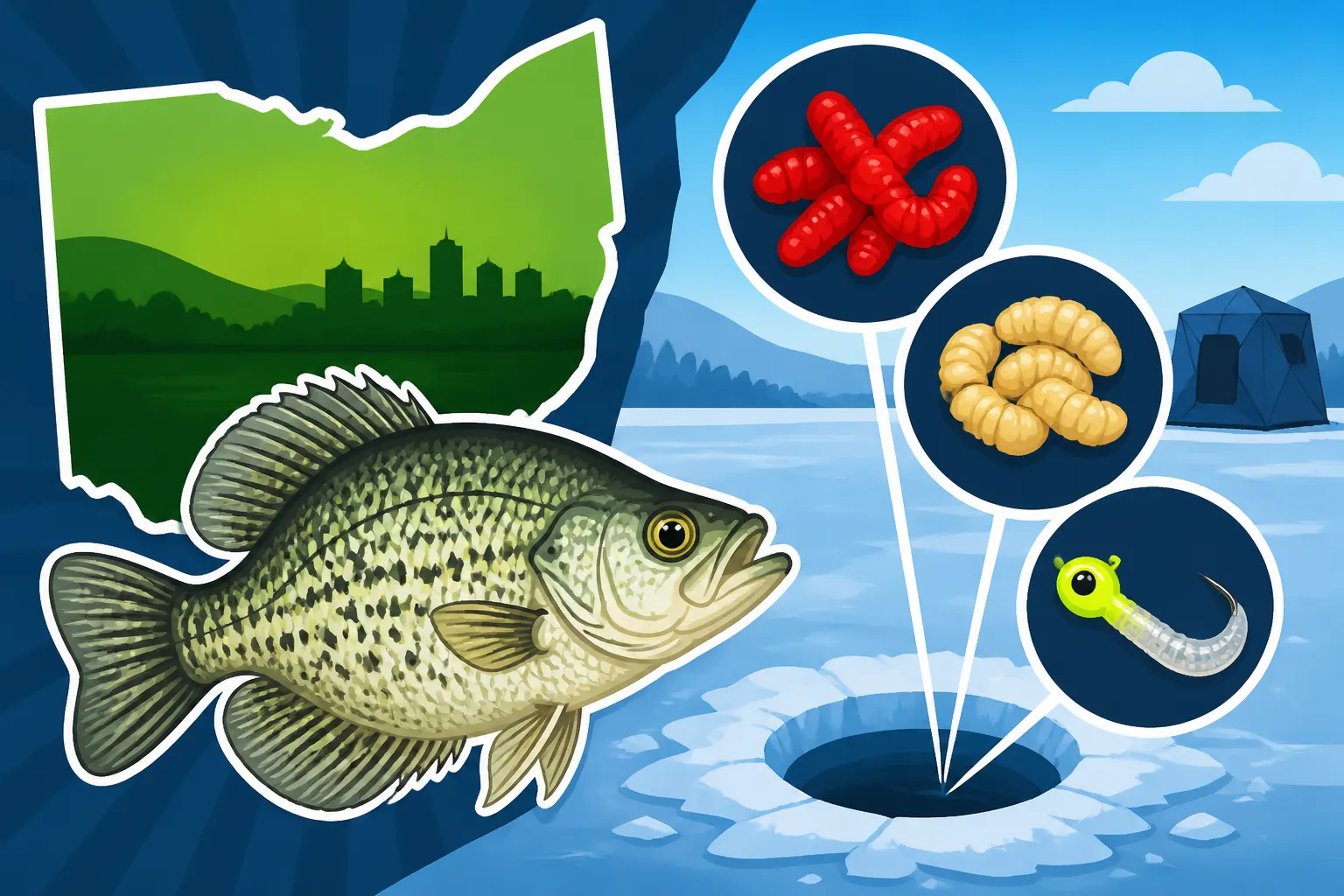
Wax worms are the workhorse for midwinter crappie. One or two on a small tungsten jig create a pale, soft target that crappie inhale even when they are barely feeding. Spikes, which are maggots, are even smaller and wiggle hard, which can tip the balance on a slow afternoon. Many Ohio bait shops near the big ice lakes carry both through the winter, and you can also find larval baits and storage containers on Amazon if your local shop runs out, though live baits ordered online can arrive stressed during a cold snap.
Store wax worms cool but not frozen. A small container in a jacket pocket keeps them soft and active on a bitter morning.
Soft Plastics as a Live Bait Partner
Plastics are not technically bait, but tiny tube tails, micro grubs and two-inch minnow plastics have earned a permanent place on Ohio ice. The best approach on many days is a hybrid: a small jig dressed with a plastic tail, plus one wax worm or a single spike for scent. You get the fluttering action of the plastic and the taste of real food. Amazon is an easy place to stock up on small plastic packs in a range of colors, so you can test several shades without driving between shops.
Matching Bait to the Lure and Presentation
The bait is only half of the equation. The right bait on the wrong presentation still gets ignored.
Tungsten Jigs Tipped With Bait
Tungsten jigs are denser than lead, so a small jig drops fast and still gives a compact profile. That speed matters when you are trying to stay on a moving school. Sizes around 3 mm to 4 mm cover most Ohio crappie situations. Tip with one or two wax worms, a couple of spikes, or a minnow head. For more on color picks, see Best Jig Color for Ohio Crappie.
Small Spoons With a Minnow Head
When crappie are aggressive, a small flutter spoon with a minnow head on the treble hook pulls fish from a distance. The flash draws them in, and the minnow head gives them something real to bite. Once you catch a few and the school settles under you, switch to a smaller jig with wax worms to keep catching the fish that are looking but not committing.
Dead Sticking and Slip Floats
A dead stick is a second rod rigged with a live minnow, set at the depth the fish are holding and left still. Watch the rod tip or a small spring bobber. In Ohio, line limits apply on the ice, so check Ohio Ice Fishing Gear and Line Rules before you set out a second rod. A slip float with a minnow does a similar job and makes light bites easy to see.
A Simple Plan for Your Next Ohio Ice Trip
Here is a straightforward approach that works on most Ohio crappie lakes.
- Check ice thickness at the access and keep checking as you walk. Our guide on How Thick Ice Should Be Before Fishing in Ohio covers the basics.
- Start on structure you know: brush piles, creek channel edges, or deep basins near weed lines.
- Drill a cluster of holes and use a flasher or sonar to find suspended fish.
- Drop a small spoon with a minnow head to see if fish are aggressive.
- If fish rise and refuse, switch to a tungsten jig with wax worms or spikes.
- Set a dead stick with a live minnow a foot above the school in a nearby hole.
- When the bite slows, change color or switch from plastic to live bait before moving.
- If nothing works for twenty to thirty minutes, move to the next spot.
How Bait Choice Shifts Through the Season
At first ice, crappie are often shallower and hungrier, and minnows and spoons work well. In midwinter, under thick ice and snow, wax worms and spikes on small jigs usually take over. At late ice, when meltwater starts pushing in, fish often turn aggressive again and minnows come back into play. Keep in mind that late ice is also the most dangerous time to be out, and many anglers call it quits when edges start to soften.
Limits and Regulations to Keep in Mind
Keep track of how many fish you keep. Ohio sets a daily limit on crappie, and some lakes add special rules. Check Crappie and Panfish Daily Limits and Is There a Minimum Size Limit for Crappie in Ohio? before your trip. For the wider winter picture, read our Ohio Ice Fishing Guide and the companion piece Ice Fishing Techniques for Ohio Crappie.
Disclaimer
This article is for general informational purposes only and does not constitute professional advice. Laws, prices and regulations vary by location and change over time. Consult a qualified professional for guidance on your specific situation.