Size of Rainbow Trout Stocked in Ohio Lakes
It's always a thrill to head out to your favorite Ohio lake, knowing that the Ohio Division of Wildlife has recently stocked it with beautiful rainbow trout. But let's be honest, a common question that pops into every angler's mind is, "Just how big are these fish going to be?" It's a natural curiosity, whether you're hoping for a feisty fighter on the end of your line or planning a delicious dinner. This guide is here to demystify the typical size of the rainbow trout you can expect to encounter in Ohio's stocked waters, giving you a clearer picture before you even cast your first line.
Ohio's Commitment to Trout Stocking
The Ohio Division of Wildlife (ODOW) puts a lot of effort into its trout stocking program, and for good reason! Many of Ohio's inland lakes and streams simply don't have the cold, oxygen-rich waters necessary for rainbow trout to naturally reproduce and thrive year-round, especially once the summer heat sets in. This is why the state invests in hatcheries to raise and release these popular game fish, creating fantastic, accessible fishing opportunities for anglers across the state. It’s a brilliant way to ensure that even without a true "trout stream" in every county, everyone gets a chance to experience the tug of a rainbow.
Why Stocking is Essential for Ohio Anglers
For folks like us who love to fish, the stocking program is a huge deal. It means that even if you can't make the long trip to a major river for Ohio Steelhead Trout Fishing Guide, you still have a chance to catch some vibrant trout closer to home. These stocked fish provide immediate angling opportunities, especially in the spring and fall when water temperatures are more favorable. It introduces many new anglers, especially kids, to the joy of fishing because stocked trout, once acclimated, can be quite eager to bite. It helps create a diverse fishing experience that goes beyond just bass or panfish, making our state's waterways even more exciting to explore.
The Role of Hatcheries in Trout Production
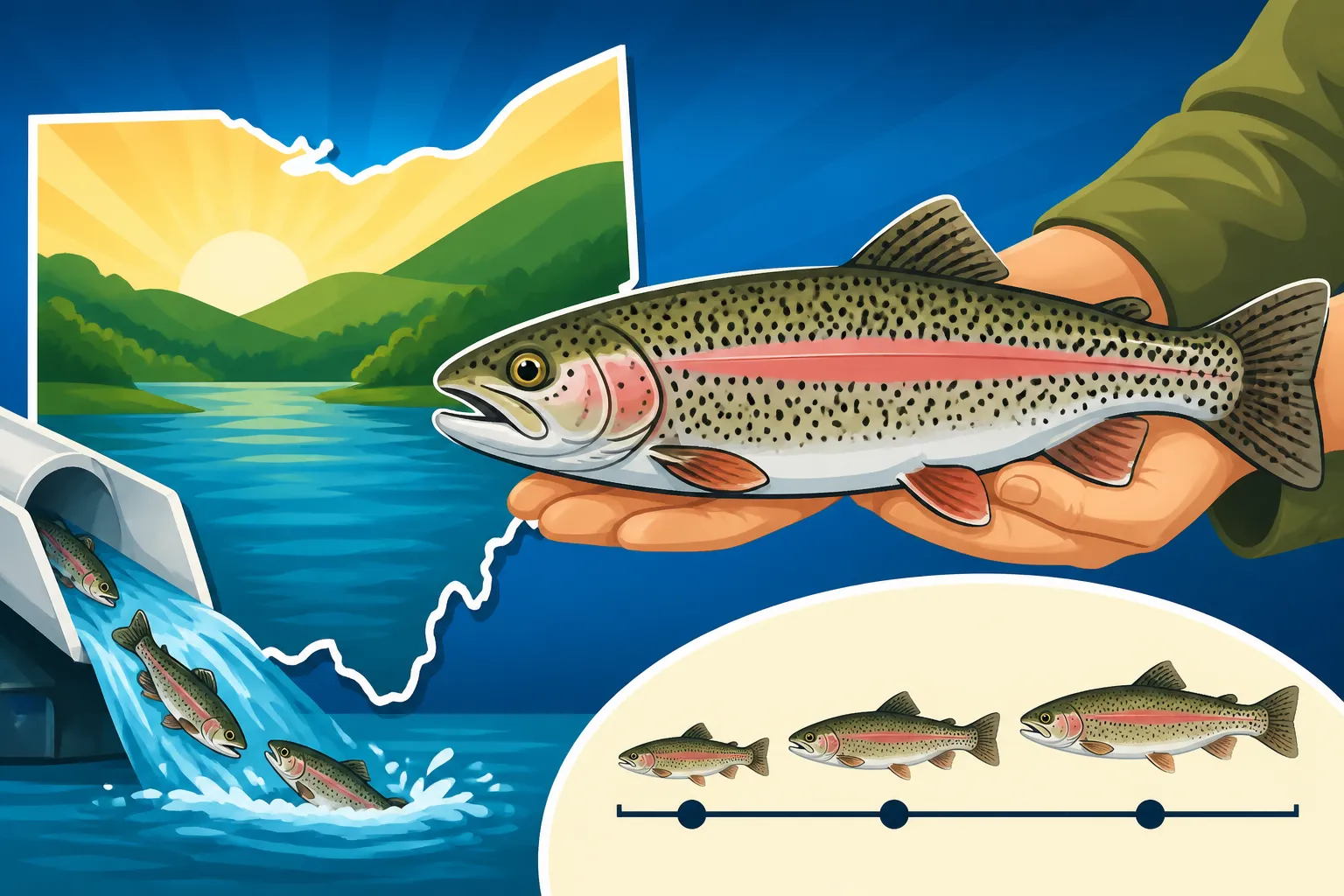
The journey of an Ohio stocked rainbow trout begins in one of the state's dedicated fish hatcheries. These facilities are incredible, designed to nurture millions of fish from tiny eggs to catchable sizes. The ODOW operates hatcheries like the London Fish Hatchery, which plays a significant role in producing rainbow trout for statewide stocking. They carefully manage water quality, feed, and growth conditions to ensure healthy fish. It's a complex operation, but it’s what allows us to enjoy such consistent trout fishing each year. Without these hatcheries, many of our local ponds and lakes wouldn't offer trout fishing at all.
What Size Rainbow Trout to Expect
When the Ohio Division of Wildlife trucks roll up to your local lake or pond, the rainbow trout they release are generally of a very consistent and catchable size. We're not talking about fingerlings here; these are trout intended to provide immediate action and, for many anglers, a tasty meal.
Average Length and Weight of Stocked Trout
Most of the rainbow trout stocked in Ohio lakes and ponds will fall into a predictable range, typically measuring 10 to 13 inches in length. In terms of weight, you can usually expect these fish to be anywhere from half a pound to a full pound, or sometimes even a bit more. This is a fantastic size for recreational angling. They're big enough to put a respectable bend in a light rod and offer a decent fight, but not so large that they require heavy-duty gear, making them perfect for family outings or a casual afternoon on the water.
While the majority are in this "pan-sized" category, occasionally, you might get a pleasant surprise. Sometimes, a few larger broodstock fish (older fish used for breeding) are mixed in during stocking, or perhaps a few fish from an earlier stocking have managed to survive and grow. These can push into the 14-16 inch range or even bigger, but they are generally the exception, not the rule. The bulk of the fish are designed to be "catch-and-keep" ready, perfectly sized for a single serving.
Why the Consistency in Size?
There's a method to the madness, or rather, the uniformity, in trout stocking sizes. The ODOW aims for consistency to provide a reliable and enjoyable experience for anglers. Stocking fish of a similar size ensures:
- Optimal Catchability: Fish in this size range are large enough to attract attention but not so large that they become elusive.
- Survival Rates: While stocked trout often face challenges in Ohio's warmer summer waters, releasing them at a robust size gives them the best chance to survive for a reasonable period, maximizing the angling window.
- Ease of Handling: These sizes are easy for anglers of all ages and skill levels to handle, whether they plan to keep the fish or practice catch and release.
- Economic Efficiency: Raising fish to a certain size before release is a balance between growth time and cost-effectiveness for the hatcheries. The 10-13 inch range hits a sweet spot.
It's important to remember that these are not wild, stream-bred trout that have spent years growing in their natural environment. These are hatchery-reared fish, and their size reflects the controlled conditions they grew up in, optimized for the stocking program's goals.
Factors Influencing Stocked Trout Size
Ever wonder why stocked trout generally come in a pretty specific size range? It’s not just a random occurrence. There are several key factors that influence the size of rainbow trout released into Ohio’s lakes and ponds, all carefully managed by the Ohio Division of Wildlife. Understanding these can give you a deeper appreciation for the stocking program itself.
Hatchery Growth Management
The growth rate of trout in a hatchery setting is incredibly controlled. Fish culturists carefully monitor water temperature, oxygen levels, and, crucially, their diet. They feed the trout specialized pellets designed to promote healthy and efficient growth. Think of it like a carefully calibrated farming operation. The goal isn't necessarily to grow massive trophy trout, but rather to produce a large quantity of healthy, uniformly sized fish that are ready for harvest (or, in our case, stocking!) within a predictable timeframe.
This means that the trout aren't simply left to grow indefinitely. They are typically raised to reach that target 10-13 inch size before they are loaded onto trucks and transported to various stocking locations. It's a very precise process to ensure that when it's time for the spring or fall stocking events, the fish are exactly where they need to be in terms of size and health.
Age at Stocking
Generally, the rainbow trout stocked in Ohio are about one to two years old when they are released. This age correlates directly with their target size. Hatcheries time their spawning cycles and growth patterns so that fish reach the optimal catchable size within this age window. Younger fish would be too small and vulnerable, while holding them for much longer would significantly increase the cost and resources required to feed and house them.
The stocking schedule for Ohio Inland Trout Stocking Months often aligns with these age groups. You'll find that spring stockings usually involve fish that have grown through the winter, while fall stockings might be a new batch or fish that have continued to grow from a spring hatch. This methodical approach ensures a consistent supply of ready-to-catch trout for us anglers.
Logistics and Economic Considerations
It might not be the first thing you think about, but the practicalities of moving thousands of fish play a huge role in their size. Transporting fish requires specialized trucks with aerated tanks. Larger, heavier fish take up more space and put more strain on the transport system. A moderate size makes the logistics of stocking countless lakes and ponds across the state much more manageable and cost-effective.
Furthermore, there are significant economic factors at play. Raising trout to an enormous size would be incredibly expensive for the state. The cost of feed, water, labor, and disease prevention all increase with the size and age of the fish. By stocking trout in the 10-13 inch range, the ODOW can provide abundant fishing opportunities while staying within their budget, making the most of taxpayer dollars and fishing license fees. This pragmatic approach allows them to stock a wider variety of locations and maintain the program year after year. If you're looking for gear for these trout, a simple spinning rod and reel combo, perhaps one you found on Amazon, will do the trick perfectly.
What to Expect When You Catch a Stocked Trout
So, you've got your line in the water, maybe a little PowerBait or a small spinner, and suddenly – wham! – a stocked rainbow trout is on the end of your line. What kind of experience can you expect? It’s usually a fun, lively encounter, perfect for creating lasting fishing memories.
The Fight of a Stocked Rainbow
Even though they're hatchery-reared, these 10-13 inch rainbow trout can provide a surprisingly spirited fight. They're often feisty, especially in the cooler waters of spring and fall. Expect some quick runs, maybe a jump or two, and plenty of headshakes. They pull hard for their size, and on light tackle, it's a genuine thrill. This is why many anglers, even seasoned veterans, enjoy fishing for stocked rainbows – they offer consistent action and a good challenge without needing heavy gear. A simple ultra-light rod and reel, with 4-6 pound test line, is often all you need, and you can find many great options for this setup on Amazon.
For newer anglers, this kind of fight is exhilarating and helps build confidence. It’s also a great way to practice setting the hook, playing a fish, and using a net. Just remember, while they're tough, they're not invincible, so be gentle if you plan to release them, or handle them carefully if you're taking them home for dinner.
Eating Quality and Preparation
Many anglers choose to keep their limit of stocked rainbow trout, and for good reason: they are absolutely delicious! These hatchery-raised fish tend to have a mild, delicate flavor that's less "fishy" than some wild trout. Their flesh is typically a lovely pinkish-orange, especially if they've been fed a diet that includes carotenoids in the hatchery.
They're incredibly versatile in the kitchen. You can bake them whole with lemon and herbs, grill them in foil, pan-fry them, or even smoke them. Their pan-sized proportions make them ideal for a single serving per fish. Just remember to check the Ohio Statewide Bag and Size Limits before you go, as regulations are in place to ensure sustainable enjoyment of this resource. Cleaning them is relatively straightforward, and their mild flavor makes them a hit even with people who claim not to love fish. Having a sharp fillet knife, which you can easily find on Amazon, makes the process a breeze.
Longevity and Survival in Ohio Waters
While stocked trout provide excellent immediate fishing, it's also important to understand their long-term prospects in Ohio waters. As mentioned, most Ohio lakes and ponds don't offer the year-round cold water that trout need to thrive and reproduce naturally. Because of this, many stocked rainbow trout are considered "put-and-take" fisheries. This means they are stocked for anglers to catch soon after release.
As water temperatures rise in late spring and summer, particularly in shallower impoundments, the survival rate of these trout tends to decrease significantly. They become stressed in warmer, less oxygenated water, making them more susceptible to disease and predation. This is why the prime time for catching stocked rainbows often aligns with cooler weather patterns in the spring and fall. So, if you're targeting them, it's usually best to go out shortly after stocking reports become available.
Maximizing Your Success with Stocked Trout
Catching stocked rainbow trout in Ohio is a fantastic way to enjoy a day on the water, whether you're a seasoned pro or just starting out. While they're generally eager to bite, having a few tricks up your sleeve can definitely increase your chances of a successful outing.
Choosing the Right Gear
You don't need a massive investment in specialized equipment for stocked trout. In fact, simpler is often better.
- Rods and Reels: An ultralight or light-action spinning rod, typically 5 to 6.5 feet long, paired with a small spinning reel spooled with 4-6 pound monofilament or fluorocarbon line, is ideal. This setup provides excellent sensitivity for subtle bites and makes even a modest trout feel like a champion fighter. If you’re looking to upgrade, you can find a huge selection of combos on Amazon that are perfect for this type of fishing.
- Baits and Lures: Stocked trout are often conditioned to eat commercial pellets in the hatchery, which is why dough baits like PowerBait (in various colors like chartreuse, orange, or rainbow) are incredibly effective. Small inline spinners (like Mepps or Rooster Tail), tiny spoons (such as Kastmasters or Little Cleos), and micro jigs tipped with a small piece of worm or corn are also excellent choices. Live bait, like small worms (mealworms, wax worms, or redworms) and minnows, can also be irresistible.
- Terminal Tackle: A small bobber, split shot weights to get your bait down, and size 10-14 hooks (either baited with dough bait or a small worm) are typically all you need. Keep it light and stealthy.
Techniques for Stocked Trout
Your approach can make a big difference. Stocked trout often cruise along shorelines and congregate in specific areas, especially soon after release.
- Bottom Fishing with Dough Bait: This is a classic and highly effective method. Use a small egg sinker or split shot above a swivel, then a 12-18 inch leader to a small hook. Form your dough bait into a ball that just covers the hook. Cast it out and let it settle on the bottom. Trout will often pick it up as it disperses its scent. This works well from shore or a boat.
- Casting and Retrieving Lures: Spinners and spoons are great for covering water and enticing aggressive bites. Cast them out, let them sink a bit, and retrieve them slowly or with a stop-and-go motion. Vary your retrieve speed until you find what triggers a strike. This is often more active fishing than waiting for a bite.
- Bobber Fishing: For a visual indicator of a bite, a small slip bobber or fixed bobber can be fantastic, especially when using live bait or suspended dough bait. Set your depth so your bait is just off the bottom or at a depth where you're seeing fish on your fish finder.
- Finding the Fish: Immediately after stocking, trout might be a bit disoriented and spread out, but they often school up. Look for areas with slightly deeper water near shore, points, or submerged cover. In ponds, they tend to cruise the entire perimeter. Observing other anglers is also a good strategy – if someone is catching, try to mimic their setup and location. Remember to check out resources like Ohio Inland Trout Stocking Schedule to know exactly when and where these fish are being released.
Here's a quick comparison of common baits:
| Bait Type | Best Use Case | Pros | Cons |
|---|---|---|---|
| PowerBait / Dough | Stationary bottom fishing, highly scented | Very effective, easy to use, floats off bottom, wide color range | Can be messy, might require small treble hook |
| Inline Spinners | Active casting and retrieving, covering water | Triggers aggressive strikes, covers various depths quickly | Requires active retrieval, less effective when fish are lethargic |
| Small Spoons | Active casting, jigging, long casts | Mimics baitfish, good for distance, flashy | Can snag easily in rocky areas, less natural scent |
| Live Worms | Versatile, natural presentation, sensitive bites | Natural scent and movement, often irresistible to trout | Can be delicate, keeping them alive requires care |
| Micro Jigs | Finesse fishing, light bite, vertical jigging | Subtle presentation, good for finicky fish, can be tipped with bait | Requires sensitive rod, can be too small for some conditions |
Remember, the key is to experiment. If one thing isn't working, don't be afraid to change your bait, lure, or even your location. Stocked trout provide a fantastic opportunity to hone your skills and enjoy the great outdoors here in Ohio. Always be sure to carry your valid Ohio Fishing License Guide for Residents and Nonresidents and respect all local regulations. Happy fishing!
Disclaimer
Please note that fishing regulations, stocking schedules, and fish behavior can change. Always consult the latest Ohio Department of Natural Resources (ODNR) fishing regulations booklet or website before heading out. The information provided here is for general guidance and educational purposes only.