Can You Release Fish on a Guided Charter Trip?
It's a common question for anglers embarking on a guided fishing trip in Ohio: "Can I release the fish I catch?" The answer, thankfully, is almost always yes! Many anglers, myself included, head out with the intention of enjoying the thrill of the catch, snapping a few photos, and then gently releasing their finned foe back into the water to fight another day. This guide will walk you through the nuances of catch and release on Ohio charter trips, ensuring you're prepared to make the most of your time on the water while honoring your personal fishing ethics.
Understanding Catch and Release on Ohio Charters
When you step aboard a charter boat, you're not just buying a ride to a fishing spot; you're often benefiting from the captain's extensive knowledge, specialized gear, and commitment to a successful (and often sustainable) fishing experience. Your desire to release fish generally aligns well with these principles, but it's important to understand the different factors at play.
The Ethical Angler's Choice
For many of us, fishing isn't just about filling a cooler; it's about the challenge, the connection to nature, and the sheer joy of feeling a powerful fish on the end of the line. Catch and release allows us to experience these aspects without contributing to overfishing or diminishing future populations. There's an immense satisfaction in watching a healthy fish swim away, knowing you've played a part in its survival. This is particularly true for trophy-sized fish, where the experience of landing a magnificent specimen is often more valued than the meal it might provide. For example, catching a massive muskie on a Lake Erie charter is an achievement many want to document with a quick photo before ensuring its safe return to grow even larger.
Captain's Discretion and Conservation Goals
Every reputable charter captain in Ohio understands the importance of conservation. Their livelihood depends on healthy fish populations, so they are often strong advocates for sustainable practices. While most captains are perfectly happy for you to release fish, especially those you don't intend to eat or that don't meet trophy standards, their ultimate goal is to provide a good experience. Sometimes, if fish are biting incredibly well, and everyone has their limit of keepers, the captain might suggest releasing additional fish. Other times, they might even encourage catch and release for certain species, or during specific times of the year, to help maintain the fishery. They are often excellent resources for information on Ohio Fishing Regulations Every Angler Should Know and why certain practices are in place.
Legal Requirements and Bag Limits
While your personal preference for catch and release is important, it always operates within the framework of state fishing regulations. Ohio has strict Ohio Statewide Bag and Size Limits for many species, including walleye, perch, and bass. Even if your intention is to release every fish, you still need to be aware of these limits. For instance, if you're on a Lake Erie walleye charter and you catch a fish below the legal minimum size, you must release it immediately. Conversely, if you catch a trophy walleye, but you've already filled your legal daily limit, that fish also needs to be released. Your captain will be intimately familiar with these rules and will guide you to ensure compliance. They are the experts on the water, and their advice should always be followed regarding legality.
How to Discuss Your Release Preferences with Your Captain
Open communication is absolutely vital for a successful and enjoyable guided fishing trip, especially when it comes to catch and release. Don't wait until the last minute or assume anything.
Communication is Key
The best time to discuss your catch and release intentions is when you book your trip or, at the very latest, at the beginning of the charter before you even leave the dock. A simple conversation can avoid any misunderstandings. You might say something like, "Captain, we're really looking forward to the trip, and our primary goal is just to enjoy the fishing. We're interested in releasing most of what we catch, especially any larger fish, after a quick photo. Is that okay with you?" Most captains will appreciate your upfront honesty. They might even offer tips on how to handle fish for release or suggest target species that are particularly good candidates for catch and release. Many captains list their policies on platforms like FishingBooker or their own websites, making it easier to find a match for your angling philosophy.
Species-Specific Considerations
Not all fish handle the stress of being caught and released equally well. Some species are quite resilient, while others are more fragile.
- Muskie: Often called the "fish of 10,000 casts," muskie anglers are almost universally catch-and-release focused. These powerful predators are highly prized for their fight and rarity. Capturing a muskie is an incredible feat, and most anglers want them returned to the water to grow and spawn again. Many guides specializing in Ohio Muskie Fishing Guide trips are experts in proper handling techniques to ensure a high survival rate. They'll have large nets, release tools, and might even perform a "revival" process to ensure the fish is strong before swimming off.
- Steelhead: Much like muskie, Ohio Steelhead Trout Fishing Guide trips often emphasize catch and release, especially for the larger "skamania" strain steelhead that migrate up Ohio's Lake Erie tributaries. These fish are powerful fighters and a cornerstone of Ohio's fall and spring fishing seasons. Guides will encourage proper handling and quick release to protect these important migratory fish.
- Walleye: While many walleye are kept for their delicious table fare, an increasing number of anglers are practicing catch and release for larger trophy walleye on Lake Erie, particularly during the spawning season when fish are most vulnerable. If you're targeting big fish on an Ohio Walleye Fishing Guide trip, let your captain know you intend to release them.
- Perch and Panfish: Smaller panfish like yellow perch or bluegill are generally quite hardy and handle release well. However, they are also highly sought after for eating, and most trips targeting them are focused on filling a cooler. If you wish to release perch, it's usually not an issue, but the captain might have limits on how many you can release if they are being damaged in the process or if they are undersized and must be released anyway.
Your captain will have the best advice on which species are good candidates for release and when it's appropriate.
Tools and Techniques for Successful Release
A responsible catch-and-release angler, whether on a guided trip or fishing independently, knows that how you release a fish is as important as the decision to release it. Your captain will likely have specialized tools and techniques for ensuring the fish's survival.
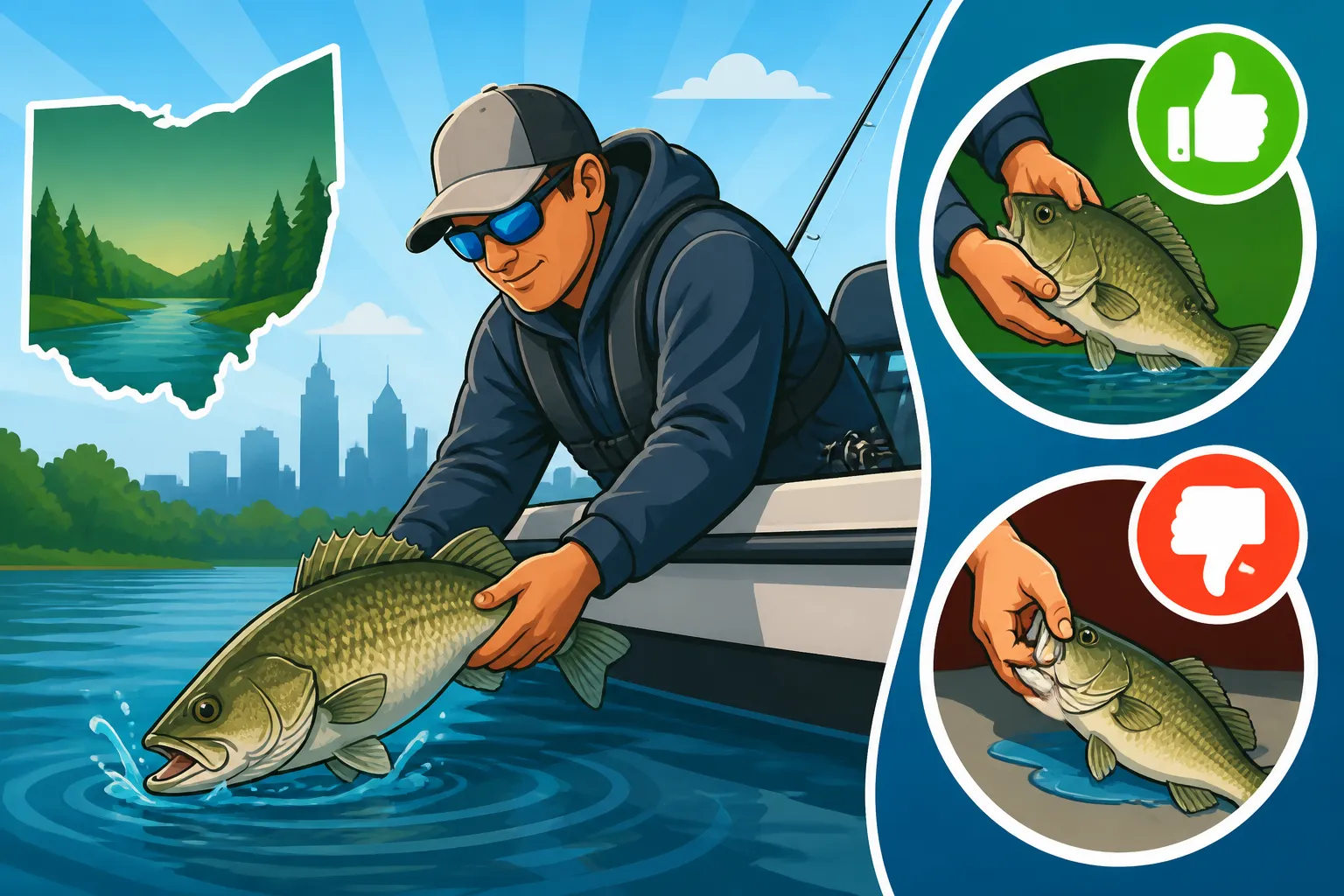
- Minimize Handling: The less you touch a fish, especially without wet hands, the better. Dry hands can remove the protective slime layer, making the fish susceptible to disease.
- Use the Right Tools: Barbless hooks can make unhooking much faster and less damaging. Forceps or needle-nose pliers are essential for quickly removing hooks.
- Keep Fish in Water: If possible, unhook the fish while it's still in the water, especially larger species. For quick photos, lift it horizontally, supporting its belly, and get it back into the water swiftly. Never hold a large fish vertically by its jaw, as this can damage its internal organs. Guides on Ohio Muskie Fishing Guide trips are particularly adept at this, using large nets and unhooking tools to work quickly.
- Revival: If a fish seems stressed or sluggish after the fight, hold it gently in the water, facing into the current (or gently move it back and forth to force water over its gills) until it regains its strength and swims away on its own. Your captain can often demonstrate How to Revive a Muskie Before Release or other large game fish.
The Reality of Releasing Fish and Its Impact
Choosing to release fish is a powerful statement about your commitment to the resource. It's not just about what you do, but how it impacts the broader fishery.
Mortality Rates and Best Practices
While the goal of catch and release is 100% survival, the reality is that some fish, particularly those deeply hooked, fought for extended periods, or handled improperly, may still die after release. This is known as "post-release mortality." However, studies consistently show that practicing proper catch-and-release techniques drastically reduces this mortality rate. Using appropriate tackle, landing fish quickly, minimizing air exposure, using wet hands, and de-hooking gently are all crucial steps. Your charter captain will usually lead by example, demonstrating best practices to give every released fish the best chance of survival. This emphasis on best practices is a hallmark of good Ohio Fishing Charter Guide services.
Catch and Release for Trophy Hunters
For many dedicated anglers, the pursuit of a "trophy" fish – a particularly large or rare specimen – is the ultimate goal. For species like muskie, northern pike, or even massive Lake Erie walleye, keeping such a fish often means removing a prime breeding individual from the population. By practicing catch and release with these giants, anglers ensure that these genetics remain in the water, contributing to the next generation of large fish. This sustainable approach helps maintain the integrity and health of Ohio's trophy fisheries. It’s also a key reason why destinations become famous for their trophy potential, attracting more anglers year after year.
Photography and Memories
In the age of smartphones and social media, a photograph has often replaced the need to keep a fish as a memento. A quick, respectful photo with your prized catch before release allows you to share your experience and preserve the memory without impacting the fish population. Your captain and deckhand are usually pros at taking these "grip-and-grin" shots quickly and efficiently, ensuring the fish is minimally stressed. They've often perfected the art of handling fish for a photo, getting that perfect shot and returning the fish to the water in mere seconds. This is part of the comprehensive service many charters offer, enhancing your overall experience.
Finding Charters That Align with Your Values
You want your fishing trip to be enjoyable and align with your personal values, especially regarding conservation. Thankfully, finding a charter that supports catch and release is easier than ever.
Researching Charters and Their Policies
Before booking, do a little homework. Look for charter captains and services that explicitly mention their commitment to conservation or catch and release. Websites, social media pages, and online booking platforms like FishingBooker are excellent resources. Often, you can read reviews from past clients, which might mention the captain's approach to fish handling and release. Don't hesitate to directly contact the charter service or captain to ask about their policies. A good captain will be happy to discuss their approach to fishing and conservation.
Here's a quick comparison of charter philosophies:
| Feature | "Keep Your Limit" Focused Charter | "Catch & Release Friendly" Charter |
|---|---|---|
| Primary Goal | Maximizing harvest within legal limits; filling coolers for clients. | Providing a quality angling experience; conservation; trophy pursuit. |
| Handling Philosophy | Efficient unhooking, often prioritizing speed over gentle handling. | Emphasizes gentle handling, minimal air exposure, revival techniques. |
| Species Focus | Often targets prolific species like Lake Erie walleye or yellow perch. | May specialize in trophy species like muskie or steelhead, but applies to all. |
| Discussion on Release | May need to initiate the conversation about releasing fish. | Often proactively discusses catch and release options. |
| Gear | Standard fishing tackle. | May use specialized gear like barbless hooks, large nets, release tools. |
When you're trying to decide between different options, reading Choosing an Ohio Fishing Charter and Reading Reviews Before Booking an Ohio Fishing Charter can be incredibly helpful. You want to ensure the captain's style of fishing matches your own goals for the trip.
Different Trip Types and Their Implications
The type of fishing trip you book might naturally lean towards or away from catch and release.
- Trophy Hunts (e.g., Muskie, Large Bass): These trips almost inherently involve a strong catch-and-release ethic. Anglers pursuing trophy muskie in lakes like Piedmont or Alum Creek typically aren't looking to put them on the dinner plate. The focus is purely on the challenge and the photo opportunity. Muskie guides are often the most meticulous when it comes to Best Way to Handle and Release an Ohio Muskie.
- Limit Trips (e.g., Lake Erie Walleye or Perch): While many walleye and perch trips aim to catch legal limits for clients to take home, there's still room for catch and release. If you've caught your limit and are still enjoying the action, or if you catch an undersized fish, releasing is the standard. Again, clear communication with your captain is vital to ensure everyone is on the same page about how many fish will be kept versus released.
- Beginner or Family Trips: For these outings, the joy is often in simply catching anything. If the goal is to get kids hooked on fishing, releasing a small bluegill after showing it off can be a great way to teach conservation from a young age. Many Best Guides for Beginner Anglers in Ohio will be happy to facilitate this.
The Role of Online Booking Platforms
Platforms like FishingBooker make it easier than ever to connect with charter captains and understand their offerings. Many captains list details about their fishing style, target species, and even their conservation practices directly on their profiles. You can often see what's included in the trip – like whether the captain cleans your fish, which might suggest a focus on harvesting – or read customer reviews that highlight their approach to fish handling. Don't be shy about using the messaging features on these platforms to ask specific questions about catch and release before you commit to a booking. It's all about ensuring your expectations for the trip align with what the captain provides.
Ultimately, yes, you absolutely can release fish on a guided charter trip in Ohio. By communicating your intentions clearly, understanding the regulations, and trusting your captain's expertise, you can enjoy a rewarding fishing experience that aligns with your commitment to conservation and the future of Ohio's incredible fisheries.
Disclaimer
This article is for general informational purposes only and does not constitute professional advice. Laws, prices and regulations vary by location and change over time. Consult a qualified professional for guidance on your specific situation.