Best Nymph Patterns for Ohio Trout
If you've ever stood streamside in Ohio, casting your line and wondering why those wily trout aren't biting, it's often because you're not speaking their language. Trout, especially in the cold, clear waters of our stocked streams and sometimes in wilder pockets, spend the vast majority of their lives feeding beneath the surface. This guide will dive deep into the world of nymph fishing, helping you select and present the most effective nymph patterns to entice even the pickiest Ohio trout, transforming those frustrating outings into successful ones.
Understanding Ohio Trout and Their Underwater Buffet
Before we even talk about specific fly patterns, it’s crucial to understand what Ohio trout are actually eating. Our trout populations are primarily sustained by stocking programs, especially for rainbow trout, but we also have brown trout and, in certain Lake Erie tributaries, steelhead, which are essentially migratory rainbow trout. These fish, whether freshly stocked or having spent some time in the wild, key into the invertebrate life present in their aquatic environment.
The Importance of Invertebrate Life Cycles
Think of an aquatic insect's life cycle as a constant, year-round buffet for trout. Mayflies, caddisflies, stoneflies, midges – these aren't just names; they represent the vast majority of a trout's diet. Most of their lives are spent in their immature, larval, or nymphal stages, clinging to rocks, burrowing in silt, or drifting in the current. This is why nymph patterns are so incredibly effective. They imitate these readily available food sources, which are often less visible to the angler but constantly on the menu for a hungry trout. Understanding which invertebrates are prevalent at different times of the year and in different types of water bodies is the first step to choosing the right nymph. It's not always about perfectly "matching the hatch" for emerging adults; more often, it's about matching the common nymphs that are always present.
Key Forage in Ohio Trout Waters
Ohio's trout waters, whether they are small streams, larger rivers, or stocked lakes, host a variety of invertebrates. You’ll find healthy populations of caddis larvae, often clinging to rocks, and various species of mayfly nymphs, from tiny Baetis to larger March Browns. Stoneflies are less common in many of our warmer, slower Ohio streams but can be a major food source in colder, oxygen-rich rivers. Midges are tiny but incredibly numerous and are often overlooked, yet they are a staple food item, especially in winter or when other hatches are sparse. Terrestrial insects, like ants, beetles, and grasshoppers, also contribute to a trout's diet, especially during warmer months when they fall into the water. Knowing these basic food sources helps you select your nymph patterns with confidence.
Essential Nymph Patterns for Ohio Streams and Lakes
Alright, let's get down to brass tacks. You want to know which flies to tie on. While there are countless nymph patterns out there, a handful consistently produce fish in Ohio. These are your workhorses, the flies that should always have a spot in your fly box.
Mayfly Nymph Imitations
Mayfly nymphs are probably the most important invertebrate group for trout anglers. They are found in almost every trout stream and come in a wide range of sizes and colors.
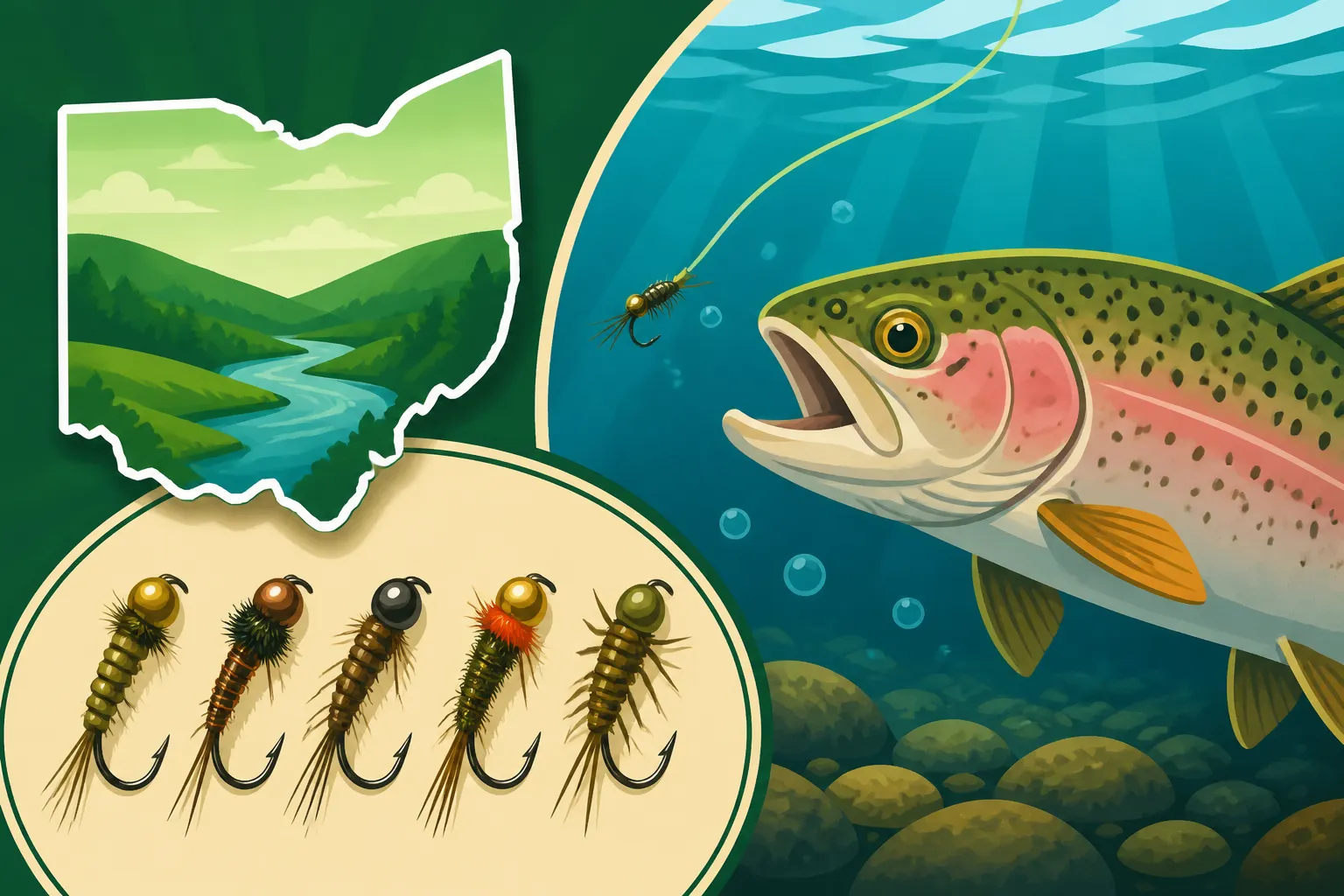
- Pheasant Tail Nymph: If I had to pick one nymph, this might be it. The Pheasant Tail Nymph is an absolute classic for a reason. It's incredibly versatile, imitating a huge variety of slender-bodied mayfly nymphs. You'll want these in sizes ranging from #12 down to #20, and in various shades, though the natural pheasant tail color is paramount. It’s effective in clear water, fast riffles, and slow pools alike. When trout are being picky, a small, well-presented Pheasant Tail often gets the job done. I’ve caught countless trout on these, especially when the fish are keyed into smaller, darker mayflies.
- Hare's Ear Nymph: Another tried-and-true classic, the Hare's Ear Nymph has a shaggy, buggy profile that imitates a range of darker mayfly nymphs and even some caddis larvae. The buggy nature of the Hare's Ear provides great segmentation and movement in the water. I like them in natural brown or olive tones, in sizes #10 to #18. A little flash, like a rib of gold wire, can also make a big difference in drawing attention. This is a pattern I often reach for when I'm fishing murkier water or when I want a slightly larger, more impressionistic offering.
- Baetis Nymph (Blue-Winged Olive): These are small, dark mayfly nymphs that are super important, especially during cooler weather. The Baetis Nymph is typically tied slim, with a dark olive or grey body. Sizes #18 to #22 are standard. These little guys are often overlooked, but many times, smaller trout, or even larger, more cautious ones, will only eat these tiny offerings. When you see trout rising subtly but can't identify the hatch, it’s often small Baetis nymphs or emergers they’re targeting subsurface.
Caddisfly Nymph Imitations
Caddisflies are another crucial food source, and their larval and pupal stages are a significant part of a trout's diet.
- Green Rock Worm / Caddis Larva: Many caddis species create protective cases out of sand, gravel, or silk, but others, like the "free-living" caddis, are soft-bodied larvae. A simple, segmented green caddis larva pattern, sometimes weighted with a bead head, can be deadly. These are typically bright green or olive, resembling the color of algae they often feed on. Sizes #10 to #16 are good to have. They're especially effective when fished near stream bottom structure where caddis larvae hide.
- Caddis Pupa: As caddis larvae prepare to emerge, they morph into pupae, which are highly active and often drift freely in the current, making them irresistible to trout. Patterns like the LaFontaine's Sparkle Pupa or other emerger-style caddis pupae are excellent. These often feature a little sparkle or a "bubble" of air trapped in the thorax to imitate the natural emergence process. Look for them in olive, tan, or cream colors, in sizes #12 to #16. Fishing these with a bit of slack in your line can allow them to tumble naturally, mimicking a struggling insect.
Stonefly Nymph Patterns
While perhaps not as universally abundant in Ohio as mayflies or caddis, stonefly nymphs are a big meal, and where they are present, trout absolutely love them.
- Pat's Rubber Legs / Girdle Bug: This is a big, buggy pattern that doesn't necessarily imitate one specific insect but generally suggests a stonefly nymph. Its rubber legs provide fantastic movement in the water, a key attractor for trout. I like these in black, brown, or coffee-colored, in larger sizes like #6 to #12. It’s a great search pattern, especially in deeper, faster water, or as the lead fly in a two-nymph rig. This fly is especially effective when fishing tributaries or larger streams that have good oxygenation and rocky bottoms, conditions where stoneflies thrive. You might find a good selection of these on Amazon if your local fly shop is limited.
- Golden Stone Nymph: When golden stoneflies are present, these patterns can be incredibly effective. They typically feature a golden-brown or yellowish body with prominent legs and antennae. Sizes #8 to #14 are common. These are particularly good during specific times of year when these larger insects are active.
Attractor Nymphs and Terrestrials
Sometimes, trout aren't keying into one specific bug. That's when you want something that simply looks "buggy" and enticing.
- Prince Nymph: The Prince Nymph is a fantastic attractor pattern. It has a peacock herl body, white biots for wings, and often a bead head. It's not a perfect imitation of anything, but it looks like a juicy meal to a trout. It works everywhere and always. Sizes #10 to #16 are perfect. It’s a great choice for stained water or when you're just not sure what the fish are eating.
- Copper John: This weighted, flashy nymph is another excellent attractor. It sinks quickly and has a bright copper wire body that catches the light. The Copper John can imitate a number of aquatic insects or simply trigger an aggressive strike. I keep these in various colors, like copper, black, and red, in sizes #12 to #18. It’s a go-to when you need to get down deep quickly in fast runs or pools.
- Worm Patterns (San Juan Worm): While not technically a nymph, worm patterns like the San Juan Worm are often fished like nymphs and are incredibly effective, especially after rain or during high water events when natural worms are washed into the stream. They are also fantastic for freshly stocked trout. These simple chenille patterns, usually red or pink, are soft and provide a wriggly profile that fish can't resist.
- Ants and Beetles: During warmer months, don't forget about terrestrial patterns, especially ants and beetles. While often thought of as dry flies, subsurface ant and beetle patterns, weighted slightly, can be very effective when terrestrials are falling into the water. A black or brown foam ant in a size #14 or #16 fished just under the surface can be surprisingly productive.
How to Fish Nymphs Effectively in Ohio
Having the right nymph patterns is only half the battle. Presenting them naturally to a trout is equally, if not more, important.
Mastering the Dead Drift
The most crucial aspect of nymph fishing is achieving a "dead drift." This means your nymph should be moving downstream at the exact same speed as the current, without any drag from your fly line. Drag makes your fly look unnatural, like a bug tied to a rope, and trout are experts at spotting this.
- High-Sticking and Line Control: To achieve a dead drift, you often need to "high-stick," keeping most of your fly line off the water. This involves raising your rod tip and mending your line upstream as your fly drifts downstream. Mending is essentially repositioning your fly line to eliminate drag, allowing the fly to drift freely. It takes practice, but it's a fundamental skill for nymphing. Think about the currents between you and your fly; they're rarely uniform, and learning to read them is vital.
- Indicator Use: A strike indicator (often a small bobber-like device) is indispensable for nymph fishing. It serves two main purposes: it helps you detect subtle takes (when a trout eats your fly, the indicator will dip, twitch, or stop) and it helps suspend your nymph at the desired depth. Placement of your indicator is key; you typically want it 1.5 to 2 times the depth of the water you're fishing above your lead fly. For instance, if you're fishing in three feet of water, your indicator might be four to six feet above your nymph. Remember, a trout's take can be incredibly subtle, so watch that indicator like a hawk!
Weighting Your Rig for Success
Getting your nymphs down to the fish's feeding zone is critical. Trout rarely move far to eat a nymph; they expect their food to come to them.
- Bead Heads and Lead Wire: Many nymph patterns come with bead heads (tungsten or brass) or incorporate lead wire in their construction to help them sink. Tungsten is heavier than brass for its size, allowing for smaller, faster-sinking flies.
- Split Shot: Often, even with bead-head flies, you'll need additional weight in the form of small split shot squeezed onto your leader. The trick is to add just enough weight to get your flies down without hindering your cast or making them snag too often. Start with a small amount and add more until you're occasionally ticking the bottom. Place your split shot about 6-12 inches above your first fly. You can pick up a variety of weighted nymph patterns and split shot sizes on Amazon, which is convenient for building out your toolkit.
- Two-Nymph Rigs: Fishing two nymphs at once is a very common and effective technique. This allows you to present two different patterns (maybe one attractor and one imitation) or fish two different depths simultaneously. You can attach the second nymph directly to the bend of the hook of the first fly (often called a "dropper rig") or tie it to a separate tag end off your leader. Experiment with different combinations to see what the fish prefer on any given day. Remember, you'll need a good Ohio Fishing License Guide for Residents and Nonresidents before you even get to the water.
Seasonal Nymph Choices for Year-Round Success
Trout in Ohio eat nymphs year-round, but the specific patterns they favor can shift with the seasons, largely influenced by water temperature and invertebrate life cycles.
Springtime Nymphing
Spring in Ohio brings warming waters and increased insect activity. This is often a fantastic time for nymphing.
- Heavy Stoneflies and Mayflies: As waters begin to warm after the thaw, larger stonefly nymphs and bigger mayfly patterns like March Browns (sizes #10-#14) can be very effective. Increased water flows also wash more invertebrates into the current, making trout eager feeders.
- Emergence Patterns: Later in spring, as insects prepare to hatch, focus on caddis pupae and mayfly emerger patterns. Trout will often sit just beneath the surface, intercepting insects that are struggling to break through the surface film. Consider fishing these patterns higher in the water column or even shallow under a strike indicator. For specific details on when certain insects emerge, you can often find local fly shop reports or online resources about Ohio Fishing Season Dates and Effective Periods.
Summer Nymphing
Summer can present challenges with warmer water temperatures and lower flows, but nymphing can still be highly productive, especially in the mornings and evenings.
- Smaller Mayflies and Midges: With lower, clearer water, trout become warier. Downsize your patterns to smaller Baetis nymphs (#18-#22) and tiny midge larvae or pupae (#20-#26). Presentation becomes even more critical.
- Terrestrials: As mentioned, summer is prime time for terrestrials. Weighted ant, beetle, or even small grasshopper nymph patterns fished near undercut banks or overhanging vegetation can be deadly.
- Night Fishing: While less common for nymphs, some anglers find success with larger, darker nymphs during summer nights when big trout move to feed under the cover of darkness. This can be a very unique experience for dedicated anglers.
Fall Nymphing
Fall is arguably one of the best times to fish for trout in Ohio. Cooler temperatures invigorate the fish, and many insects have their last big push before winter.
- Mayfly and Caddisfly Resurgence: Many of the same patterns that worked in spring, particularly larger mayfly nymphs like Blue-Winged Olives (BWO) and caddis pupae, become effective again as water temperatures drop to optimal levels.
- Egg Patterns: For steelhead and brown trout, particularly in rivers like the Rocky River or Vermilion River as they make their spawning runs, egg patterns can be incredibly effective. These brightly colored, round patterns imitate fish eggs, a high-protein snack for hungry fish.
- Streamers and Larger Nymphs: As trout fatten up for winter, they become more aggressive. Don't be afraid to try larger nymphs or even small streamerset just under the surface, especially for larger fish looking for a substantial meal.
Winter Nymphing
Don't hang up your waders just because it's cold! Winter nymphing can be incredibly rewarding, though the pace is slower.
- Midges and Small Baetis: Trout metabolism slows down, and they feed less aggressively. Midges become paramount, often fished in tandem with a tiny Baetis nymph. Look for trout in deeper, slower pools where they conserve energy.
- Slow and Deep: Your presentation needs to be slow and deep. Use enough weight to get your nymphs right on the bottom, where trout are often hunkered down. Subtle takes are the norm, so focus intently on your indicator. Check out our Ohio Ice Fishing Guide for tips on winter tactics.
A Nymph Angler's Essential Toolkit
Beyond the flies themselves, having the right gear can make all the difference in your nymphing success.
| Item | Why It's Essential | Considerations for Ohio Trout Anglers |
|---|---|---|
| Fly Rod | Provides the necessary length and sensitivity for nymphing. | A 9-10 foot, 4 or 5-weight rod is ideal for most Ohio streams. |
| Fly Reel | Holds your fly line and provides drag when fighting fish. | Match to your rod weight; doesn't need to be fancy for nymphing. |
| Floating Fly Line | Crucial for strike indicator use and line mending. | Weight-forward taper is common. Consider high-vis colors for tracking. |
| Tapered Leader | Connects fly line to tippet, gradually reducing diameter. | 7.5 to 9-foot leaders, 3X to 5X for general nymphing. |
| Tippet Spools | Connects leader to fly, allows for changing flies without cutting leader. | 4X, 5X, and 6X are workhorses. Fluorocarbon is less visible and sinks faster. |
| Strike Indicators | Detects subtle strikes and suspends flies at depth. | Various styles (yarn, foam, pinch-on); experiment to find what works for you. |
| Split Shot | Adds weight to get nymphs down to the feeding zone. | Assorted sizes (BB, B, 3/0, 1/0); non-toxic options are preferred. |
| Forceps/Hemostats | Essential for hook removal and crimping barbs. | Locking forceps make removing hooks from trout safer and easier. |
| Nippers/Clippers | For trimming tippet and leader quickly. | Keep them sharp; often combined with a knot-tying tool. |
| Fly Box | Organizes and protects your precious nymph patterns. | Silicone insert boxes hold flies securely. You can find a good range on Amazon. |
Having a well-stocked fly box with these essential nymphs and the right gear will give you a huge advantage when targeting Ohio trout. Remember, fishing is all about learning and adapting. Pay attention to what the fish are telling you, and don't be afraid to experiment with different patterns, sizes, and depths. Happy nymphing out there, and may your indicator always dip!
Disclaimer
This article is for general informational purposes only and does not constitute professional advice. Laws, prices and regulations vary by location and change over time. Consult a qualified professional for guidance on your specific situation.