Ohio Ice Fishing Guide
The biting cold of an Ohio winter doesn't have to mean packing away your fishing gear until spring. In fact, for many of us, it signals the start of one of the most exciting and rewarding seasons on the water: ice fishing! But let's be real, navigating Ohio's often unpredictable ice conditions and knowing where and how to target fish can feel like a daunting challenge. This comprehensive guide is here to cut through the confusion, equipping you with the knowledge, safety tips, and techniques you need to confidently and successfully enjoy ice fishing across the Buckeye State.
Understanding Ohio's Ice Fishing Landscape
Ohio's ice fishing scene is unique, largely due to our notoriously variable winters. One week you might be walking on solid ice, the next it's mild enough to question if winter ever truly arrived. This unpredictability means being extra vigilant and knowledgeable, but it also means we get a diverse range of opportunities when the ice does hold.
Variable Winters and Ice Safety
The biggest frustration for Ohio ice anglers is undoubtedly the inconsistent weather patterns. We rarely get sustained, deep freezes like our neighbors to the north in Michigan or Wisconsin. This means ice conditions can change rapidly, sometimes even within a single day. What might be safe in the morning could become treacherous by afternoon if temperatures rise or strong winds pick up. Because of this, safety isn't just a suggestion; it's the absolute foundation of any successful ice fishing trip here.
You're constantly checking forecasts, observing ice formation, and perhaps even driving miles only to find conditions aren't quite right. It's a dance with Mother Nature, and sometimes she leads with two left feet! This guide will continually circle back to safety, because in Ohio, it’s not just about catching fish, it's about making it home safely to tell the tale. Always remember that no fish is worth risking your life over.
Top Ice Fishing Destinations
When the conditions are right, Ohio boasts some fantastic ice fishing opportunities, ranging from expansive Lake Erie to numerous inland lakes and reservoirs. Each spot offers its own unique charm and target species, making it worth exploring different locales throughout the season.
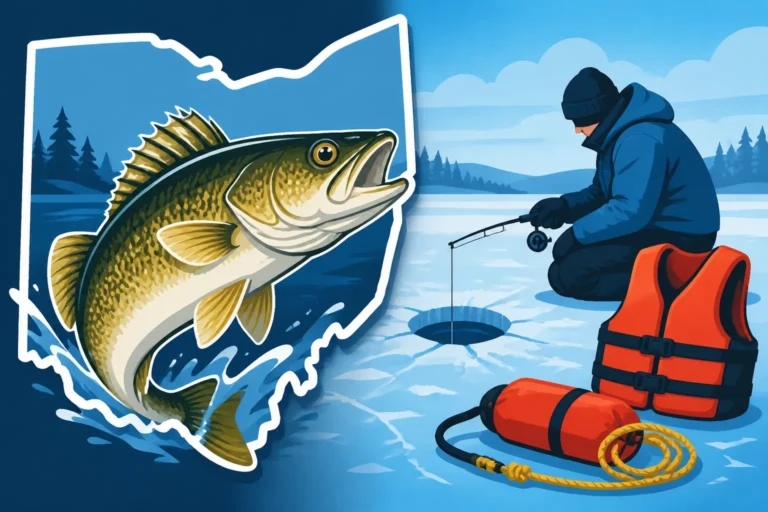
For many, Lake Erie's Western Basin is the crown jewel of Ohio ice fishing, especially for walleye. Places like Catawba Island, Port Clinton, and the various islands become buzzing hubs when the ice is safe. The sheer abundance of walleye here makes it a bucket-list destination for many. You'll find yourself fishing alongside dozens of other anglers, creating a true community feel on the ice. While Lake Erie is famed for its walleye, yellow perch are also a prime target, especially closer to shore or in specific localized zones.
Moving inland, reservoirs like Mosquito Creek Lake, Indian Lake, and Lake Milton are consistently popular. Mosquito Creek, in particular, is renowned for its walleye and saugeye populations, offering a fantastic alternative to Lake Erie when conditions there are unfavorable. Indian Lake, while shallower, can offer excellent panfish and even some bass through the ice. Further south, smaller lakes and even some deeper state park ponds can provide excellent crappie and bluegill action, often forming ice earlier and safer than the larger bodies of water. For a deeper dive into specific locations, check out our guide on the Best Ohio Lakes for Ice Fishing.
Essential Ice Fishing Gear and Equipment
Getting started with ice fishing can feel overwhelming with all the specialized gear, but many items are versatile, and you can build your setup over time. Having the right tools isn't just about comfort; it's about efficiency and, most importantly, safety.
Shelters, Augers, and Electronics
Your shelter, auger, and electronics form the core of your ice fishing setup, enabling comfort, access, and fish-finding capabilities. A good shelter can make a frigid day enjoyable, an efficient auger saves energy, and a reliable fish finder helps you pinpoint your quarry.
Shelters: These range from simple windbreaks to fully insulated portable shanties and even permanent ice shacks. For most Ohio anglers, a portable pop-up style or a flip-over shelter is ideal. Brands like Eskimo, Clam, and Otter offer fantastic options that are relatively lightweight and easy to set up. On a blustery day, being tucked inside a heated shelter makes all the difference, transforming a cold chore into a cozy experience. Many of these shelters are designed for solo anglers or small groups, providing just enough space for gear and a portable heater. When looking on Amazon, you’ll find a huge array of options, often with customer reviews that highlight their performance in varying conditions.
Augers: Drilling holes through the ice is non-negotiable, and your auger choice is critical. Manual augers are lightweight and affordable, perfect for shallow ice or if you're only drilling a few holes. However, for thicker ice or drilling many holes, a power auger is a game-changer. Propane, electric (battery-powered), and gas augers are all popular. Electric augers, with their quiet operation and lack of fumes, have become incredibly popular in recent years, especially with brands like ION and StrikeMaster leading the charge. Choosing the right auger often depends on how much drilling you anticipate and the typical ice thickness you encounter. Remember to always keep your auger blades sharp for optimal performance and safety. You can learn more about Best Auger for Ohio Ice Fishing in another one of our posts.
Electronics: A good fish finder (flasher or LCD unit) is arguably one of the most impactful pieces of gear for ice fishing. It allows you to see the depth, the bottom composition, your bait, and most importantly, fish! Brands like Vexilar, Marcum, and Humminbird are industry leaders. Being able to watch a fish approach your lure in real-time is not only exciting but also helps you adjust your presentation. It takes a lot of the guesswork out of the equation and dramatically increases your success rate. A portable GPS unit or a smartphone app with mapping capabilities is also incredibly useful for marking productive spots and safely navigating back to shore, especially on vast lakes like Erie.
Rods, Reels, and Line for Ice Fishing
Ice fishing tackle is distinct from open-water gear, designed for precision in a small space and sensitivity to detect subtle bites in cold water. Don't just grab your summer spinning rod; specialized ice gear will serve you much better.
Rods: Ice fishing rods are typically short, ranging from 24 to 36 inches, which is perfect for fishing inside a shanty or kneeling over a hole. They come in various actions, from ultra-light for panfish to medium-heavy for walleye and saugeye. A sensitive rod tip is crucial for detecting those light "up-bites" common in cold water, where fish might just inhale your bait without a strong tug. Many rods feature cork or foam handles for comfort in the cold. Look for rods specifically designed for ice fishing, as they will have the right flex and responsiveness.
Reels: Most ice anglers use small spinning reels, typically in the 500 or 1000 size. They should be smooth and have a reliable drag system, even in freezing temperatures. Some dedicated ice fishing reels have larger arbors to reduce line curl, but a good quality freshwater spinning reel often works fine. Inline reels, which prevent line twist, are also gaining popularity, especially for panfish. Whatever reel you choose, make sure it's designed to handle cold and moisture without freezing up.
Line: The choice of line is paramount. Fluorocarbon or monofilament lines are popular for panfish due to their low visibility and stretch, which can act as a shock absorber. For walleye and saugeye, many anglers prefer braid with a fluorocarbon leader. Braid offers incredible sensitivity, allowing you to feel even the slightest tap, and it doesn't stretch, which is great for solid hooksets. However, braid can freeze to itself, so a good line conditioner is a must. Line strength typically ranges from 2-pound test for panfish up to 8-10 pound test for walleye. For detailed advice on this, check out our guide on Ohio Ice Fishing Gear and Line Rules.
Ice Fishing Safety Protocols and Best Practices
Seriously, folks, this section is not just filler. In Ohio, where ice conditions can be notoriously finicky, safety needs to be your absolute top priority. We all want to catch fish, but no catch is worth a trip to the emergency room, or worse.
Assessing Ice Thickness and Conditions
This is the most critical aspect of ice fishing safely in Ohio. You can't just assume the ice is safe because someone else is out there, or because it was safe yesterday. Conditions change, and they change fast. Always follow the mantra: "Think, tell, test, and take."
Think: Before you even leave the house, consider the recent weather. Has it been consistently cold? Have there been warm spells or heavy snow? Snow can actually insulate ice, slowing its growth, and heavy rain can weaken it significantly. Always prioritize solid, clear ice over opaque, snowy, or slushy ice. New ice is generally stronger than old ice. Moving water areas, inlets, outlets, and areas around docks or structures will always have weaker ice.
Tell: Let someone know where you're going and when you expect to return. This simple step could be a lifesaver if something goes wrong. Provide specific details about your location and your planned route, especially if you're venturing far from shore.
Test: Never step onto ice without testing it first. Use an ice spud bar or an auger to check thickness every few feet as you venture out. The Ohio Department of Natural Resources (ODNR) recommends minimum ice thickness guidelines:
- 2 inches or less: STAY OFF! Absolutely not safe.
- 3 inches: Suitable for a single person on foot. Even at this thickness, proceed with extreme caution and continue to test frequently.
- 4 inches: Suitable for group walking and ice fishing. Again, spread out and don't congregate too closely.
- 5-7 inches: Suitable for snowmobiles or ATVs.
- 8-12 inches: Suitable for a small car or light pickup truck.
- 12-15 inches: Suitable for a medium pickup truck.
These are general guidelines; always err on the side of caution. Remember that ice thickness can vary dramatically even within a few feet. A useful resource is our post on How Thick Ice Should Be Before Fishing in Ohio.
Emergency Preparedness
Even if you're meticulously careful, accidents can happen. Being prepared for an emergency, particularly falling through the ice, is non-negotiable.
Survival Gear: Always wear a PFD (personal flotation device) or a float suit. These aren't just for boating; they significantly increase your chances of survival if you go through the ice. Carry ice picks around your neck or in an easily accessible pocket. These are critical for self-rescue, allowing you to grip the ice and pull yourself out. A length of rope (at least 50 feet) and a whistle are also invaluable. Keep a change of warm, dry clothes in a waterproof bag inside your vehicle.
Self-Rescue: If you fall through, don't panic. Call for help if anyone is nearby. Turn toward the direction you came from, as that's likely where the ice was strongest. Extend your arms onto the ice, using your ice picks to get a grip. Kick your feet to propel yourself onto the ice, like a seal. Once you're out, roll away from the hole, spreading your weight evenly, until you reach solid ice. Do not stand up immediately.
Rescuing Others: If someone else falls through, do not run directly to them. This could put you in the same danger. Call 911 immediately. Try to reach them with a long object (rope, branch, ladder, jump start cables) while lying flat on your stomach to distribute your weight. Throw the rope to them and pull them out slowly. Once they're out, get them warm and to medical attention as quickly as possible. The shock of cold water can be lethal even if they are pulled out quickly.
Target Species and Techniques for Ohio Ice Anglers
Ohio's diverse waters offer a range of fish species to pursue through the ice. Knowing what you're targeting will help you refine your gear, bait, and techniques for optimal success.
Walleye and Saugeye on the Ice
For many, walleye and saugeye are the holy grail of Ohio ice fishing. Their aggressive nature and delicious fillets make them highly sought-after, especially on Lake Erie and major inland reservoirs.
Walleye: Lake Erie walleye fishing through the ice is legendary. Anglers typically target them in the Western Basin, often in 15-30 feet of water. Peak times are usually early morning and late afternoon/evening, but they can be caught throughout the day. Jigging is the primary technique, using spoons, blade baits, or lipless crankbaits tipped with a minnow head or a piece of plastic. Aggressively jigging to attract attention, then pausing or subtly shaking the lure, often triggers a bite. Many anglers also set up tip-ups with live minnows (shiners or fatheads) on treble hooks, covering a wider area. When a flag pops, the race is on! Be mindful of Lake Erie Walleye Bag Limits and length regulations, as these can change annually.
Saugeye: Found primarily in inland reservoirs like Mosquito Creek Lake, Indian Lake, Alum Creek Lake, and Deer Creek Lake, saugeye are a hybrid of walleye and sauger and offer fantastic winter action. They tend to be a bit more aggressive than walleye in certain situations and are often found in slightly shallower water or near structure in 10-25 feet. Techniques are very similar to walleye: jigging with spoons like a Rapala Jigging Rap or a Swedish Pimple, often tipped with a piece of minnow or a maggot. Tip-ups are also effective, especially during low-light conditions. You'll find saugeye actively feeding in these reservoirs throughout the winter, and they make for excellent table fare.
Crappie and Panfish Strategies
Crappie, bluegill, and sunfish are arguably the most accessible and consistently cooperative species for ice anglers in Ohio, offering steady action and making for a great meal. They're perfect targets for beginners and seasoned pros alike.
Crappie: Ohio's lakes and reservoirs are full of slab crappie, and winter is a prime time to target them. They often suspend in schools over deeper water or relate to submerged brush piles, weed lines, or other structure. Vertical jigging with small jigs (1/32 to 1/16 ounce) tipped with a small minnow, wax worm, or a tiny plastic tail is incredibly effective. Bright colors like chartreuse, pink, and orange often work well. When you find one crappie, you've likely found a school, so be prepared for steady action! Popular crappie lakes include Mosquito Creek, Indian Lake, and Buckeye Lake. For more specific tactics, check out Ice Fishing Techniques for Ohio Crappie.
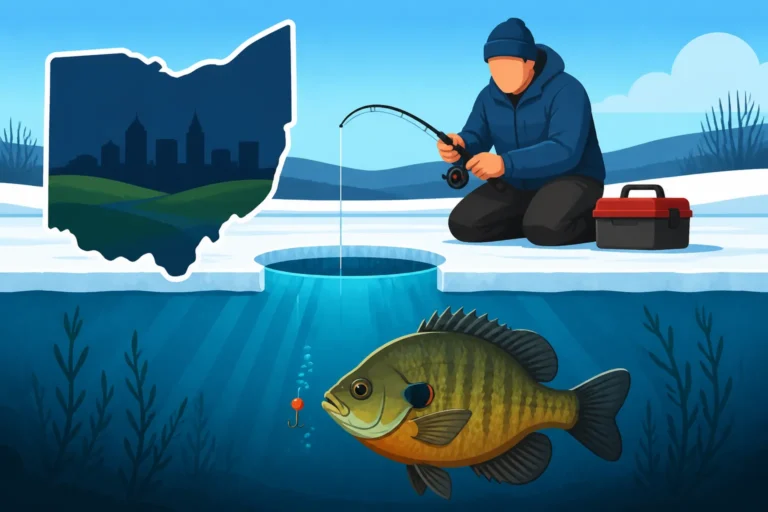
Bluegill and Sunfish: These feisty little panfish are abundant across Ohio and provide excellent sport on ultra-light gear. They're often found in shallower waters, typically 5-15 feet, especially around weeds or soft bottom areas. Tiny jigs (1/64 to 1/80 ounce) tipped with a single wax worm, maggot, or a piece of soft plastic are deadly. Ice flies, small tungsten jigs, and horizontal "gill pills" are also highly effective. The key is to present your bait slowly and subtly, as bluegill have small mouths and can be finicky. Watching your flasher for subtle changes in the "red line" (your lure) is essential to detect light bites. When the bite is on, bluegill can provide non-stop entertainment, perfect for a family outing. Our guide on How to Catch Bluegill Through the Ice in Ohio offers more tips.
Catfish and Other Winter Species
While less common, some anglers successfully target species like channel catfish and even pike through the ice in Ohio, adding a unique twist to winter angling.
Catfish: Channel catfish, known for their powerful fights, can be caught through the ice, though it's less common than in warmer months. They tend to settle into deeper holes or channels in winter. Anglers targeting them often use heavier tip-ups or dead sticks (rods left unattended) rigged with cut bait, chicken liver, or shrimp, fished right on the bottom. While not as aggressive as in summer, they will still opportunistically feed. You might find success in some of the larger reservoirs known for good catfish populations.
Northern Pike: Though not as widespread as in some northern states, northern pike can be found in certain Ohio waters, particularly in the western basin of Lake Erie and some northern inland lakes like LaDue Reservoir. They are ambush predators, so targeting them involves setting large tip-ups with live bait (large shiners or suckers) suspended under a float, often near weed lines or drop-offs. Their toothy mouths require heavy leaders (fluorocarbon or steel) to prevent bite-offs. Catching a pike through a small ice hole is an unforgettable battle!
Mastering Ice Fishing Techniques and Tactics
Beyond the basic gear and species, understanding how to effectively fish through the ice, read the environment, and adjust your approach is what separates a good day from a great one.
Reading the Ice and Understanding Structure
Ice fishing success often hinges on finding the fish, and that means understanding where they hold in winter. This requires a combination of interpreting ice conditions and knowing how to read underwater structure.
Ice-Specific Clues: Beyond thickness, observe the ice itself. Areas of slush or recent refreeze can indicate pressure points or areas of recent instability. Patches of darker ice often mean deeper water or a cleaner freeze, which is generally stronger. Snow cover can make navigation challenging and obscure weak spots, so proceed with extreme caution on snow-covered ice. Also, pay attention to current; even seemingly still lakes can have subtle currents near inlets, outlets, or constrictions, which can thin ice or concentrate fish.
Underwater Structure: Fish don't just disappear in winter; they simply adapt to colder water temperatures, typically becoming less active and concentrating in specific areas. Look for classic fish-holding structure:
- Drop-offs: Transitions from shallow to deep water are always key. Fish will stage on these edges, moving up to feed and retreating to deeper, more stable temperatures.
- Weed Lines: Healthy green weeds (often found in shallower bays or flats) continue to produce oxygen and hold baitfish, attracting predators.
- Humps and Points: Underwater hills or extensions of land provide ambush points and cover.
- Submerged Timber/Brush Piles: These offer cover and attract baitfish, making them crappie and bluegill magnets.
- Deep Water Basins: Walleye and saugeye will often suspend in the deeper, more stable parts of a lake during midday.
Your fish finder is your best friend for identifying these structures. Take the time to slowly move and scan with your unit, marking promising contours or cover on your GPS. Don't be afraid to drill multiple holes to "grid" an area and understand the underwater topography.
Bait, Lure, and Presentation Choices
The subtle world beneath the ice demands specific baits, lures, and presentations. What works in open water often needs a winter modification.
Baits: Live bait is king for ice fishing.
- Minnows: Small fatheads or shiners are excellent for crappie, walleye, and saugeye. Hook them lightly through the back or lips.
- Wax Worms/Maggots: These are irresistible to panfish like bluegill and crappie, often tipping tiny jigs.
- Worms: Redworms or pieces of nightcrawler can work for bluegill or even perch.
- Cut Bait/Chicken Liver: Ideal for targeting catfish.
Keep live bait fresh and active by storing it in a warm bait bucket or insulated container. On a really cold day, an Amazon-sourced minnow bucket heater can be a lifesaver to keep those baitfish lively.
Lures:
- Jigging Spoons: Metallic spoons like a Swedish Pimple, Acme Kastmaster, or Northland Forage Minnow are great for walleye, saugeye, and aggressive perch. Tip them with a minnow head or wax worm for added attraction.
- Blade Baits: Vibrating lures like a Berkley Vibrato or Rapala Snap Rap are fantastic for vertical jigging, especially for walleye.
- Lipless Crankbaits: Smaller versions can be effective for aggressive walleye and pike.
- Tungsten Jigs: Tiny, heavy tungsten jigs (like Fiskas or VMC Tungsten Jigs) are excellent for panfish. Their density allows them to sink quickly, getting back to the fish faster.
- Plastic Tails: Small soft plastic tails (micro plastics) on jig heads can be deadly for crappie and bluegill, especially when tipped with a live bait.
Presentation: The key to successful ice fishing presentation is often subtlety and patience, but also knowing when to be aggressive.
- Jigging: Vary your retrieve. Start aggressive to attract attention (lift-fall, hard rips), then slow down significantly to trigger bites. Often, a slow quiver, a subtle lift, or simply holding the bait still after an aggressive series of jigs is what seals the deal. Watch your fish finder for reactions.
- Dead Sticking/Tip-Ups: These are passive techniques, but still require thought. Position tip-ups strategically across different depths or structures. For dead sticking (leaving a rod with live bait in a rod holder), ensure your bait is suspended at the correct depth.
- Finesse: In cold water, fish metabolism slows, and they often prefer a slow, subtle presentation. Don't be afraid to barely move your bait or let it sit motionless for extended periods.
Drilling Holes and Hole Management
There's more to drilling holes than just punching through the ice. Strategic placement and proper management can significantly impact your success and safety.
Strategic Drilling: Don't just drill one hole and stay put. Especially early in the day, drill a series of holes along a contour, a weed line, or across a suspected fish-holding area. This allows you to quickly cover water and find active fish. The phrase "hole hopping" describes this dynamic approach, where you move from hole to hole, fishing each for a few minutes before moving on. This is where a good, efficient power auger (like an electric model from ION or StrikeMaster that you can pick up on Amazon) really pays off.
Hole Management: Once you've drilled your holes, keep them clear of ice chunks and slush. A small scoop or skimmer is essential for this. If it's particularly cold, holes can freeze over quickly, so check them periodically. If using a portable heater, ensure good ventilation in your shanty, as carbon monoxide poisoning is a very real danger. Always drill holes a safe distance from other anglers unless explicitly invited to fish closer. Maintaining personal space is part of ice fishing etiquette.
Navigating Regulations and Conservation on the Ice
Just like any other season, ice fishing in Ohio comes with specific rules and regulations that every angler must follow. Being informed isn't just about avoiding fines; it's about contributing to the health of our fisheries for future generations.
Ohio Ice Fishing Rules and Limits
The Ohio Department of Natural Resources (ODNR) sets specific regulations for ice fishing, which can vary by water body and species. It's crucial to consult the most current Ohio Fishing Regulations booklet or the ODNR website before you head out. Ignorance of the law is not an excuse, and a wildlife officer will not hesitate to issue a citation. You can check out our detailed Ohio Fishing Regulations Every Angler Should Know for a more general overview.
Licensing: First and foremost, you need a valid Ohio fishing license. There are no special ice fishing licenses; your regular annual or multi-year license covers it. Make sure you understand Ohio Fishing License Types and Options before you hit the ice. Kids generally don't need a license under a certain age, but always double-check the current regulations.
Number of Lines: Ohio typically allows anglers to use up to two lines while ice fishing. This means two rods or two tip-ups, or a combination thereof. It’s important to stay within this limit to avoid penalties. Our article on How Many Fishing Lines You Can Use in Ohio provides greater clarity on this.
Bag and Size Limits: These are perhaps the most frequently overlooked regulations. Each species often has a specific daily bag limit (how many you can keep) and a minimum length limit (how small a fish you can keep). For instance, Lake Erie walleye have specific Lake Erie Walleye Bag Limits that change annually based on population assessments. Crappie, bluegill, and other panfish also have daily limits. Always measure your fish carefully and release anything that doesn't meet the legal requirements. Keep a ruler or measuring tape handy.
Shelters and Identification: If you use a portable or temporary shelter, you must remove it from the ice daily. Permanent ice shanties or structures left overnight must be clearly marked with your name and address, especially on certain public waters. This ensures accountability and helps prevent abandonment, which can create hazards when the ice melts.
Motorized Vehicles: Using ATVs, snowmobiles, or even trucks on the ice is a privilege, not a right. Always adhere to posted signage regarding ice thickness requirements for vehicles and drive responsibly. Be aware of private property boundaries when accessing public waters, as many access points are through private lands.
Practicing Responsible Ice Angling
Beyond the rules, responsible angling is about ethics and ensuring the sustainability of our natural resources.
Leave No Trace: Whatever you bring onto the ice, take it back home. This includes bait containers, fishing line scraps, broken lures, food wrappers, and anything else. Litter not only degrades the environment but can also be hazardous to wildlife. A small trash bag is an essential item for every trip.
Proper Fish Handling: Even if you plan to keep your catch, proper handling ensures the fish remains fresh and palatable. If you're releasing fish, especially in cold water, minimize handling time. Wet your hands before touching the fish to protect its slime coat, and try to keep it in the water as much as possible. If a fish is deeply hooked and unlikely to survive, it's generally better to keep it within legal limits.
Respect Other Anglers: Ice fishing can draw crowds, especially on popular lakes. Be mindful of your noise level, give other anglers adequate space, and avoid drilling holes too close to someone else's established fishing spot. Courtesy goes a long way in making everyone's day enjoyable. Share the ice, and share the resource.
Advanced Tips for Challenging Ohio Ice Conditions
Let's face it, not every ice fishing day in Ohio is perfect. Sometimes the weather turns ugly, the ice is slushy, or the bite is just plain tough. But with a few advanced tips, you can still find success and make the most of those challenging days.
Dealing with Slush, Snow, and Extreme Cold
Ohio winters often throw us curveballs, from heavy snowfall to slush layers, and bitter cold. Being prepared for these conditions can salvage a trip.
Slush: A layer of slush on top of solid ice can make travel incredibly difficult, especially on foot. It’s heavy, wet, and can exhaust you quickly. If you anticipate slush, consider using a sled or a portable auger on wheels to transport your gear. Wearing waterproof boots and gaiters is essential to keep your feet dry. If a deep slush layer exists, it might be best to reconsider going out, as it can hide cracks and thin spots in the ice. On Lake Erie, strong winds can push slush around, creating treacherous drifts.
Snow Cover: While a light dusting of snow is fine, heavy snow cover can present several challenges. It insulates the ice, slowing its growth, and can make it harder to assess ice conditions visually. Navigating on snow-covered ice also means you can't see cracks or pressure ridges, increasing the risk. When fishing in snowy conditions, pay extra attention to your GPS to avoid getting disoriented, and continuously test the ice. Heavy snow can also make fish more lethargic, requiring even subtler presentations.
Extreme Cold: When temperatures plummet, staying warm becomes a primary concern. Layering is key: start with a moisture-wicking base layer, add insulating middle layers (fleece, down), and finish with a waterproof and windproof outer shell. Hand warmers and foot warmers are your best friends. A portable heater in your shanty is a game-changer, but ensure adequate ventilation. Cold weather can also make your gear brittle; be gentle with rods and plastics. Ensure your auger starts reliably in the cold. It’s also important to stay hydrated, even if you don't feel thirsty, as dehydration can contribute to hypothermia.
Hole Hopping and Locating Productive Spots
The days of just drilling one hole and waiting are often over, especially for mobile species like walleye and saugeye. Aggressive hole hopping can dramatically increase your catch rate.
The Strategy: Instead of setting up camp in one spot, drill a series of holes (5-10 or more) in a grid or along a contour. Start at one end, drop your transducer down, make a few jigs with your lure, and watch your fish finder for a minute or two. If you don't see any activity, move to the next hole. This allows you to quickly cover a large area and locate active fish. When you find a fish or get a bite, slow down and thoroughly fish that hole and the surrounding ones. This strategy is most effective for active predators that might be cruising, like walleye or larger crappie.
Using Electronics to Your Advantage: Your fish finder becomes even more critical when hole hopping. Look for subtle changes in bottom contour, submerged brush, or even schools of baitfish. Mark these spots on your GPS. If you see fish but they aren't biting, try adjusting your lure color, size, or presentation. Sometimes just a slight change is all it takes to trigger a strike. Don't be afraid to experiment! If you're constantly seeing fish but not getting bites, that might mean they're lethargic, and a finesse presentation (tiny jig, small bait, minimal movement) is in order. Conversely, if you're not seeing anything, it's time to move.
Preparing Your Catch and Enjoying the Harvest
One of the most rewarding aspects of ice fishing is bringing home fresh fish for a delicious meal. Knowing how to properly care for your catch on the ice ensures the best quality fillets.
Field Dressing and Storage on the Ice
Proper handling from the moment you land a fish can make a huge difference in its taste and longevity. The cold environment actually works in your favor for preservation.
Immediate Care: As soon as you catch a fish you intend to keep, dispatch it quickly and humanely. A swift blow to the head or using a fish priest is recommended. The cold ice will keep your fish fresh, but it's even better to place them in a cooler with some ice or snow. This prevents them from freezing solid (which makes filleting much harder) and keeps them at an optimal temperature. Many anglers also like to bleed their catch immediately by cutting a gill arch, which improves the flavor of the fillets.
Cleaning and Filleting: While some prefer to fillet right on the ice, it’s often more comfortable and hygienic to wait until you get home. However, if conditions are mild enough and you have the right tools, filleting on the spot means less mess at home. Always use a sharp fillet knife. For species like walleye, saugeye, and perch, a simple two-sided fillet is common. For panfish like bluegill and crappie, some prefer to scale and gut them whole for frying, while others opt for small, boneless fillets. Remember to take all fish carcasses and waste home with you; never leave them on the ice. This adheres to the Ohio Fishing Regulations Every Angler Should Know and helps keep our lakes clean.
Delicious Recipes for Ohio's Winter Catches
Ohio's winter catches are known for their firm, white, and delicious meat, making them perfect for a variety of culinary preparations.
Walleye and Saugeye: These are arguably the best-tasting freshwater fish in Ohio. Their mild, flaky white meat is incredibly versatile. Simple pan-frying with a light breading (like seasoned flour or a Panko crust) is a classic. You can also bake them, grill them, or even make fish tacos. The delicate flavor shines through with minimal seasoning, perhaps just a squeeze of lemon and some fresh herbs.
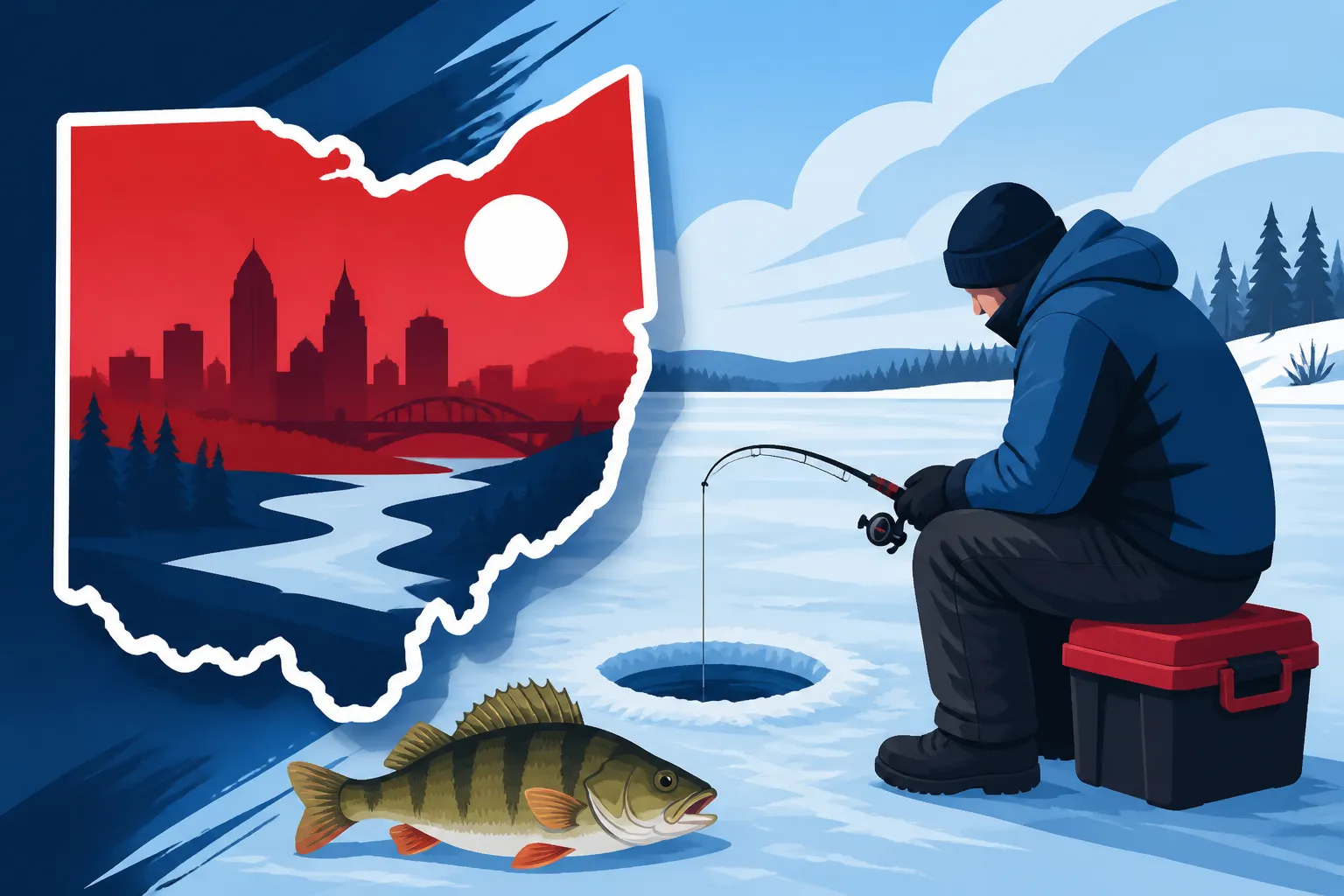
Yellow Perch: Often called "poor man's walleye," yellow perch offer small, sweet fillets that are fantastic when fried. Many Ohioans consider fried perch a quintessential winter delicacy, especially after a successful day on Lake Erie. The small size means quick cooking, and they develop a beautiful golden crust when pan-fried.
Crappie and Bluegill: These panfish provide plentiful, sweet fillets. They are excellent when fried whole (scaled and gutted) or as small fillets. A cornmeal-based breading often complements their flavor perfectly. They are also wonderful in fish stews or chowders, adding a delicate texture and flavor. Don't underestimate these smaller species; they offer some of the finest eating in the freshwater world.
Storage: Once filleted, pat the fillets dry and store them in freezer bags, removing as much air as possible. Label with the date and species. Properly stored fish can last for several months in the freezer, allowing you to enjoy the fruits of your winter labor long after the ice has melted.
Disclaimer
The information provided in this Ohio Ice Fishing Guide is for general guidance and informational purposes only. Ice conditions are inherently unpredictable and can change rapidly. Always exercise extreme caution, follow all local and state regulations, and prioritize your safety above all else. Neither the author nor the publisher assumes any liability for accidents or injuries sustained while engaging in ice fishing activities. It is your responsibility to assess ice conditions, carry appropriate safety gear, and ensure you are adequately prepared before venturing onto the ice.