How to Anchor for Catfish on the Ohio River
There’s nothing quite like the thrill of catfishing on the mighty Ohio River, but let’s be real, holding your position in that powerful current can feel like wrestling a bull sometimes. The constant battle against the flow, the worry about dragging anchor, and the sheer effort involved can certainly test your patience. This guide is here to help you conquer those challenges, breaking down the art of anchoring for catfish on the Ohio River so you can stay put, fish effectively, and enjoy your time on the water.
Understanding the Ohio River's Challenges for Anchoring
Before we even talk about dropping an anchor, it’s crucial to wrap our heads around what makes the Ohio River such a unique beast to fish, especially when you’re trying to stay in one spot. It's not your average lake, and ignoring its quirks will lead to a lot of frustration.
The Power of the Current and River Traffic
The Ohio River isn't just a big body of water; it's a dynamic, ever-changing system with a current that can range from a gentle push to a relentless pull. This is especially true after heavy rains when the river swells and the current truly rips. You'll feel it trying to snatch your boat downstream, making it nearly impossible to keep your baits in that perfect catfish honey hole.
And then there's the traffic. Commercial barges, often pushing multiple football-field-sized loads, create massive wakes that roll for miles. Recreational boaters, especially on weekends, add to the chaos. These wakes don't just rock your boat; they can put immense strain on your anchor system, causing it to slip or even dislodge entirely. Imagine you've finally found a productive spot, dropped your delicious Best Baits for Ohio Catfish, and then a monster wake dislodges you, sending you drifting away from the bite. It's incredibly frustrating, and it's why having the right gear and technique is paramount. Understanding how to manage your boat in these conditions is a skill that comes with time and the right knowledge, which is exactly what we're aiming for here.
Varied Bottom Composition and Obstacles
Unlike many lakes with fairly uniform bottoms, the Ohio River floor is a diverse and often treacherous landscape. You'll encounter everything from soft, silty mud and sand to gravel beds, hard rock formations, and, inevitably, a whole lot of snags. Think submerged trees, old tires, discarded construction debris, and forgotten fishing gear – the river holds a treasure trove of anchor-eating obstacles.
Each of these bottom types interacts differently with an anchor. A fluke anchor might dig perfectly into soft mud but just slide uselessly across a rocky bottom. A heavy river anchor might hold tight in gravel but get hopelessly wedged in a log jam. The sheer unpredictability of what your anchor will grab onto, or get stuck in, is a constant challenge. Losing an anchor isn't just an inconvenience; it's a financial hit and can quickly derail a promising fishing trip. That’s why having a good strategy for your anchor is just as important as knowing your Ohio Fishing Regulations Every Angler Should Know.
Essential Anchoring Gear for the Ohio River
You wouldn't try to change a tire with a butter knife, and you shouldn't try to anchor on the Ohio River with inadequate gear. The right equipment isn't just about convenience; it's about safety and effectiveness.
Choosing the Right Anchor Type
When it comes to the Ohio River, one anchor size or style definitely does not fit all. You need to consider the varying bottom types and the relentless current.
- River Anchor (or Box Anchor): For serious catfishing on the Ohio, a heavy river anchor, sometimes called a box anchor or grapple anchor with heavy lead chain, is often the hero. These anchors are typically heavy (think 20-30 pounds or more for smaller boats, much more for larger ones) and designed to dig into diverse bottoms or snag onto irregularities. Their weight alone helps them hold, and many feature tines or claws that can grab onto rock, gravel, or even mud. Brands like Digger Anchors are popular, but you can find many robust options. I've seen countless anglers on the Ohio rely on these because they offer superior holding power in strong currents.
- Fluke/Danforth Anchor: This is your classic mud and sand anchor. It has two large, flat flukes that dig deep into soft bottoms. If you’re fishing a wide, silty flat, these can be incredibly effective. However, on hard or rocky bottoms, they tend to just slide. They're usually lighter than dedicated river anchors.
- Grapnel Anchor: With multiple thin tines, grapnel anchors are fantastic for snagging onto rocky bottoms or submerged timber. The downside is they often don't have enough surface area to hold well in soft mud or sand, and they can get hopelessly stuck in true snags. Some anglers use a smaller grapnel as a secondary anchor or for a quick, temporary hold.
- Mushroom Anchor: While great for small boats or kayaks in calm, shallow ponds, mushroom anchors are largely ineffective in the Ohio River's current. Their holding power relies almost entirely on suction in very soft mud, which is quickly broken by any significant flow. Don't even consider this for serious river catfishing.
Here’s a quick comparison of common anchor types and their suitability for the Ohio River:
| Anchor Type | Ideal Bottom | Holding Power in Current | Snag Risk | Best Use Case for Ohio River |
|---|---|---|---|---|
| River/Box Anchor | Mixed, Heavy | Excellent | Moderate | Primary catfishing anchor |
| Fluke/Danforth | Mud, Sand | Good | Low | Secondary/soft bottom |
| Grapnel | Rock, Timber | Fair-Good | High | Secondary/rocky bottom |
| Mushroom | Soft Mud | Poor | Very Low | Not recommended |
You can often find good deals on all these types of anchors, including heavy-duty river anchors, by browsing online retailers like Amazon. Just make sure to check reviews and ensure the weight is appropriate for your boat and the river conditions.
The Importance of Rope, Chain, and Buoys
An anchor is only as good as the system that connects it to your boat. Skimping on these components is a recipe for disaster.
- Anchor Rode (Rope): You need strong, durable rope, often referred to as "rode." Nylon is the preferred material because it has some stretch, acting as a shock absorber against waves and current, reducing strain on your anchor and boat cleats. The length is critical. A general rule of thumb is to have at least a 7:1 scope (7 feet of rope for every 1 foot of water depth). On the Ohio River, especially with strong currents, I often go even longer – 10:1 or more is not uncommon to ensure maximum holding power. For example, if you're in 20 feet of water, you might need 200 feet of rope. Don't forget to tie a secure Ohio Fishing Knots to Know knot!
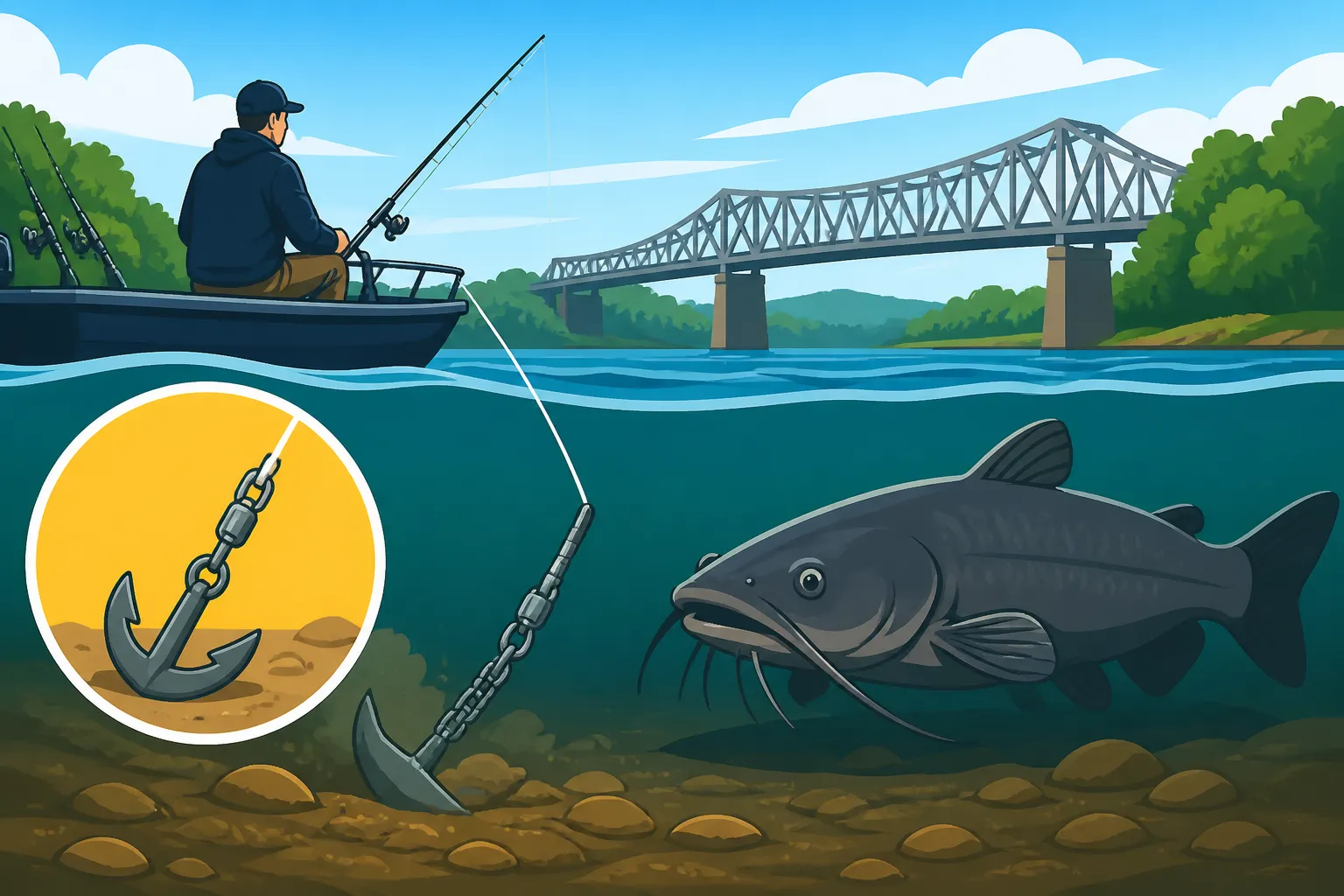
- Anchor Chain: This is non-negotiable for river anchoring. A heavy section of galvanized or stainless steel chain (typically 6-10 feet long, but more for larger boats or stronger currents) between your anchor and your rope serves multiple vital purposes. First, its weight helps the anchor lay flat and dig into the bottom. Second, it provides abrasion resistance, protecting your rope from sharp rocks, mussels, or debris on the riverbed. Without chain, your rope is much more likely to fray and break, leading to a lost anchor.
- Anchor Buoy and Release System: This is a lifesaver, literally. When your anchor gets hopelessly snagged (and it will happen on the Ohio), an anchor buoy and release system allows you to retrieve it without having to cut your line or dangerously try to free it. This system typically involves a heavy-duty buoy that slides down your anchor line to the anchor. You then motor upstream, pulling the anchor out backward. It's a game-changer for retrieving stuck anchors and well worth the investment. You can find excellent anchor retrieval buoys and systems on Amazon, which can save you a ton of frustration and money in the long run.
Mastering Anchoring Techniques for Catfishing
Having the right gear is only half the battle; knowing how to use it effectively is what separates the pros from the frustrated novices. Catfishing, especially for big flatheads, often involves sitting tight on a spot, so precision anchoring is key.
The Art of the "Set and Drift"
You rarely just drop your anchor directly over the spot you want to fish on the Ohio River. Instead, you perform a controlled "set and drift" maneuver.
- Scout Your Spot: Use your fish finder to locate those deep holes, log jams, or current seams where catfish like to hang out. Remember, the Ohio River Fishing Guide can point you to some great general areas, but specific spots are often found with your electronics.
- Approach Upstream: Motor slowly upstream of your target area. How far upstream depends on the current speed and the depth you're fishing. You want enough distance to let out sufficient scope (rope + chain) for your anchor to dig in properly before your boat settles over your desired fishing location.
- Deploy the Anchor: Gently lower your anchor until it hits the bottom. Don't just toss it! This prevents tangles and allows the chain to lay out correctly.
- Drift Back and Let Out Scope: As the current slowly pushes your boat downstream, begin letting out anchor line, maintaining tension. You should feel the anchor dragging along the bottom. Keep letting out line until you feel the anchor bite and dig in. Your boat will slow, then stop. This "bite" is crucial – it means the anchor has engaged. You might need to let out more scope than you think necessary to get a really good hold.
- Confirm the Hold: Once you think your anchor is set, put your motor in reverse (just a little power) to pull against the anchor. This will ensure it's firmly dug in. If it drags, pick it up and try again slightly upstream. Remember, you want to be fishing behind your anchor, not directly over it, to prevent spooking fish and to allow your baits to present naturally. This technique takes practice, but it's essential for a successful catfishing trip.
Double Anchoring for Stability and Safety
For serious catfishing in strong currents or windy conditions, one anchor often isn't enough. Employing a double-anchoring system provides superior stability, keeps your boat from swinging, and allows for precise bait presentation.
- Bow and Stern Anchoring: This is a popular method. You set your first anchor (often your heavy river anchor) off the bow using the "set and drift" method described above. Once that anchor is firmly set, you motor slowly downstream past your desired fishing spot, then deploy a second, lighter anchor off the stern. As you slowly motor back upstream and take up slack on the stern anchor, you create tension between the two anchors, effectively pinning your boat in place. This technique dramatically reduces boat swing, which is a huge advantage when you're trying to keep your Catfish Feeding Patterns at Night baits in a very specific small area.
- Two Anchors Off the Bow (V-Shape): Another effective method, especially in very strong current, is to deploy two anchors off the bow, spread in a "V" shape. This also minimizes swing and provides exceptional holding power. You set the first anchor using the "set and drift" method. Then, once you're positioned, you carefully maneuver your boat slightly to one side and deploy a second anchor. This requires good boat control and clear communication if you have a partner.
Regardless of the method, remember that safety is paramount. Always be aware of your surroundings, especially other boaters and commercial traffic. Ensure your anchor lines are clear and won't foul your prop. If you ever need to get off a spot quickly, knowing how to release your anchors (or even having a knife handy to cut a line in a true emergency) is critical.
Retrieving Your Anchor Safely and Effectively
Retrieving a well-set anchor, especially a heavy one in a strong current, can be just as challenging as setting it. Trying to pull it straight up can be back-breaking and even dangerous if your boat doesn't have a robust cleat.
- Using Your Boat's Power: The easiest way to retrieve a heavy anchor is to motor directly towards it, or even slightly past it, in the direction the anchor is set. This reduces the strain on the line and helps break the anchor free from the bottom. Once you're over the anchor, pull straight up quickly.
- The Anchor Buoy System: This is where that anchor buoy and release system truly shines. If your anchor is deeply stuck or you simply don't want to fight the current to pull it up, attach your anchor buoy to the anchor line. Then, motor slowly downstream, keeping tension on the line. The buoy will slide down to the anchor. Once it hits, continue motoring, and the buoy will pull the anchor free from the opposite direction it was set. This "reverse pull" method is incredibly effective for freeing snagged anchors and preventing line breakage.
- Preventing Snags During Retrieval: When you're pulling in your line, try to keep it off the bottom as much as possible to avoid snagging it on underwater debris during retrieval. If you feel resistance, stop pulling and try to change your boat's angle slightly to free it. Sometimes, a series of short, sharp tugs can help dislodge a stubborn anchor. Always keep an eye on how much How Many Fishing Lines You Can Use in Ohio you have out, and never pull directly overhead with a boat in current, as it can be unsafe and damage your boat's cleats or anchor winch.
Strategic Placement for Catfish Success
Anchoring isn't just about sticking to the bottom; it's about sticking to the right bottom, in the right way, to maximize your chances of catching catfish.
Targeting Structure and Current Seams
Catfish, especially big flatheads and channel cats, are ambush predators. They're not going to sit in the main current burning energy all day unless there's a serious food source. Instead, they seek out areas where they can expend less energy while still having food brought to them.
- Deep Holes and Depressions: These are classic catfish haunts. Use your sonar to find significant depth changes, especially those with steep drops or ledges. Catfish often sit at the bottom or along the edges of these holes.
- Log Jams and Submerged Timber: Woody debris is a magnet for catfish. It offers cover from the current, ambush points, and a buffet of smaller baitfish and invertebrates. Anchoring near these structures, positioning your boat so your bait drifts into the cover without getting immediately snagged, can be deadly.
- Rock Piles and Riprap: Bridge pilings, dam abutments, and riprap (rocks along the bank) provide current breaks and hiding spots. Catfish will tuck in behind these structures, waiting for food.
- Eddy Lines and Current Breaks: These are areas where the main current flows past an obstruction (like a point, island, or large rock), creating a calmer "eddy" or slack water area. The seam where the fast current meets the slack water is a prime feeding lane. Position your boat so your baits drift along or just inside this seam. Learning to identify these spots using your electronics, like those from Humminbird or Garmin, before you even think about deploying an anchor, is a skill that will pay dividends. Many anglers on the Ohio River Fishing Guide swear by targeting these subtle current changes.
Considering River Hazards and Other Anglers
Fishing the Ohio River requires constant situational awareness, not just for the fish, but for your safety and courtesy to others.
- Shipping Channels and Navigation: The Ohio River is a busy commercial waterway. Always be aware of the main shipping channels, marked by buoys and lights. Never anchor in a shipping lane, as it's incredibly dangerous and illegal. Give commercial barges a wide berth; they cannot stop quickly. Consult your charts or navigation apps to understand these zones.
- Shallow Areas and Obstructions: Be mindful of shallow areas, sandbars, and known submerged obstructions. A sudden drop in depth can be good for fish, but you don't want to inadvertently run aground or lose an anchor in a dangerously shallow snag.
- Angler Etiquette: The Ohio River is a popular fishing destination, especially during peak Best Time of Day to Catch Catfish in Ohio hours. Be respectful of other anglers. Don't drop anchor directly on top of someone else's spot, especially if they were there first. Give plenty of space. If you're drifting, communicate your intentions. We’re all out there to enjoy the water, and a little courtesy goes a long way.
- Emergency Preparedness: Always have a knife readily accessible to cut your anchor line in an emergency. If your anchor gets hopelessly snagged and a large barge or sudden storm puts you in immediate danger, cutting the line might be your only safe option. It's a last resort, but one you must be prepared for. You can find high-quality, corrosion-resistant anchor knives suitable for marine environments on Amazon. Additionally, make sure you understand the Ohio Boater Education Requirements for Anglers to ensure you're always operating safely and legally.
Disclaimer
Please note that fishing regulations, conditions, and best practices can change. Always consult the latest Ohio Department of Natural Resources (ODNR) fishing regulations before heading out on the water. This guide is for informational purposes only and should not replace official safety guidelines or local expertise.