Best Way to Follow Bird Activity to Find Fish
There’s nothing quite as frustrating as heading out to your favorite Ohio fishing spot, full of hope, only to spend hours casting into seemingly dead water. You scout out the usual humps and drops, try all your go-to lures, and still, nothing. It can feel like the fish have simply vanished. But what if I told you that some of the best fishing guides are already out there, soaring above the water, ready to show you exactly where the action is? This guide will walk you through how to observe and interpret bird activity to dramatically improve your chances of finding fish across Ohio's diverse waters.
The Avian Advantage: Why Birds Are Your Best Fishing Buddies
As anglers, we often get fixated on what's under the water – our sonar screens, the contour maps, the thermoclines. But sometimes, the biggest clues are happening right above our heads. Birds, especially those that feed on fish, are incredibly efficient predators. They spend their entire lives honing the skill of locating baitfish, and by extension, the larger game fish that are often lurking just below. Think about it: they have a literal bird's-eye view, often spotting schools of baitfish or the commotion of feeding predators long before our human eyes or even our electronics can pick up on it.
This isn't just about a lucky guess; it's about understanding the food chain. When baitfish are pushed to the surface by larger predatory fish, they become an easy target for hungry birds like gulls and terns. These birds aren't just flying around aimlessly; they are actively hunting. Their behavior is a direct reflection of what's happening just beneath the surface. Learning to read these avian signals is like having an extra set of incredibly keen eyes constantly scanning the water for you, transforming a slow day into a productive one. It's a natural, time-tested strategy that savvy anglers have used for generations to key into productive water.
Understanding the Predator-Prey Connection
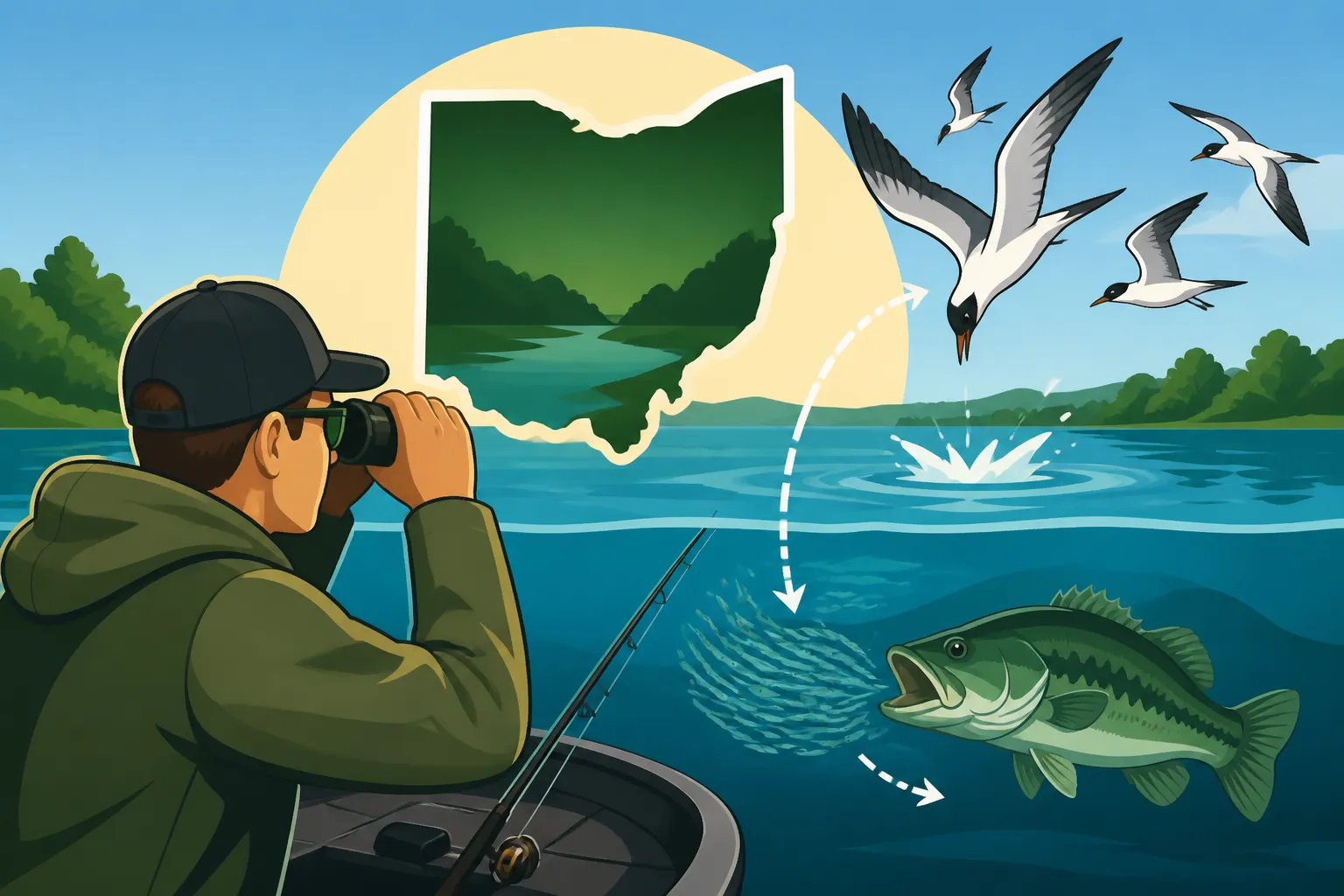
The magic of using birds to find fish lies in the simple, brutal reality of the aquatic food chain. Smaller fish, often called baitfish like emerald shiners, shad, or smelt, form massive schools for protection. These schools are what larger predatory fish – our target species like walleye, bass, and crappie – love to ambush. When these game fish attack from below, they often drive the baitfish upward, creating a chaotic scramble at the surface.
This surface commotion, whether it’s frantic splashing or a shimmering mass of baitfish trying to escape, is like a dinner bell for opportunistic birds. Gulls and terns are particularly adept at spotting this from high in the sky. They know that where there's a concentrated school of panicked baitfish, there's also likely a host of larger fish feeding on them. So, when you see birds exhibiting feeding behavior, you're not just seeing birds; you're witnessing the culmination of a feeding frenzy that started with your target species. It’s a tell-tale sign that the food chain is alive and kicking in that specific spot.
Birds as Natural Fish Finders
Consider birds as nature’s original, organic fish finders. Unlike electronic units that require power and calibration, birds are always on, always searching, and always accurate in their immediate task of finding food. They react instantly to subtle changes in baitfish movement or surface activity that you might otherwise miss.
For instance, a lone gull flying high might not mean much, but a group of gulls suddenly converging on an area, circling tightly, and then diving repeatedly? That's a signal you can't ignore. They are telling you, without a doubt, that food is concentrated there. In vast open waters, particularly on Lake Erie, these feathered sentinels can guide you to productive grounds faster than aimless trolling or staring at a blank sonar screen. They narrow down the search area, allowing you to focus your efforts where the fish are actively feeding, saving you time, fuel, and frustration. It's truly one of the most reliable "fish finding" methods passed down through generations of successful anglers.
Decoding Bird Behavior: What Different Actions Tell You About Fish
Not all bird activity is created equal when it comes to finding fish. You need to become a bit of an avian detective, observing not just that birds are present, but what they are doing. Different behaviors signal different things about the fish below, from their size to their feeding intensity.
Identifying Key Bird Species and Their Habits
In Ohio, several bird species are particularly useful for anglers. Knowing who you're looking at can help you better interpret their actions.
- Gulls (e.g., Ring-billed Gulls, Herring Gulls): These are perhaps your most common and easiest-to-spot indicators, especially on Lake Erie. Gulls are opportunistic feeders and will readily dive for baitfish pushed to the surface. Their presence in large numbers, circling, and especially diving, is a huge sign.
- Terns (e.g., Common Terns, Forster's Terns): Terns are often more agile and graceful than gulls, performing spectacular dives head-first into the water. Their precise, rapid dives often indicate smaller, tighter schools of baitfish being actively pursued by predators. If you see terns plunge-diving, that's often a hot spot for smaller game fish or active, aggressively feeding larger fish.
- Cormorants (Double-crested Cormorants): While gulls and terns feed primarily on the surface or just below, cormorants are expert divers, often pursuing fish much deeper. A group of cormorants diving and resurfacing in a concentrated area can indicate a dense school of baitfish or even larger fish holding deeper in the water column. While they don't necessarily signal surface feeding frenzies, they do indicate a strong presence of fish in that area.
- Loons (Common Loons): Less common than gulls or cormorants in many fishing spots, loons are also deep divers that hunt fish. Their presence, particularly if they are repeatedly diving in one area, suggests a healthy fish population.
Becoming familiar with these birds and their general hunting styles will give you a significant edge. You can often spot these birds and their activity from a distance, making binoculars, like those you might find on Amazon, an invaluable tool for your fishing arsenal.
Interpreting Specific Bird Actions
Once you can identify the key players, it's time to understand their language.
- Circling and Hovering: When birds like gulls or terns begin to circle and hover intently over a particular spot, it often means they've sighted something below. They are waiting for the perfect moment for baitfish to be pushed within striking distance. This is your cue to head towards that area, but be ready to observe further. It’s an early warning sign, hinting at impending action.
- Plunge Diving (Terns) and Splash Diving (Gulls): This is the ultimate signal. When terns are nose-diving into the water with precision, or gulls are hitting the surface with splashes, they are actively catching fish. This means baitfish are being violently driven to the surface by aggressive predators. This is prime real estate! Get your lines in the water as quickly and quietly as possible. The fish below are actively feeding, and they might not be picky.
- Sitting on the Water in Groups: Sometimes you'll see large groups of gulls or other birds simply sitting calmly on the water. This usually indicates that a feeding event has recently occurred, and they are now resting or digesting. While not an immediate hot strike zone, it tells you that fish were there, and they might return. It’s a good spot to keep an eye on, or perhaps try a slower, more methodical approach.
- Flying in a Straight Line: Birds flying purposefully in a straight line are likely just commuting between roosting areas and feeding grounds. While they might pass over good water, this behavior isn't indicative of active feeding. Don't waste time chasing birds that are simply traveling.
| Bird Behavior | What it Suggests for Anglers | Best Action |
|---|---|---|
| Circling & Hovering | Baitfish sighted, potential feeding event developing. | Approach slowly, observe closely, prepare gear. |
| Plunge/Splash Diving | Active feeding frenzy below, baitfish at surface. | Move quickly but quietly to the area, cast immediately. |
| Sitting in Large Groups | Recent feeding activity, fish may return. | Stay alert, consider slow presentations, mark the spot for later. |
| Cormorants Diving Repeatedly | Dense schools of fish/baitfish, potentially deeper. | Scan sonar, try deeper presentations, jigging. |
| Flying in Straight Lines | Commuting, not actively feeding; likely no immediate fish. | Ignore, focus on other indicators. |
Applying Bird Intel: Specific Scenarios Across Ohio Waters
The beauty of using bird activity is that it's applicable across various types of Ohio fishing environments, though the nuances change slightly. Whether you're chasing walleye on Lake Erie or bass in an inland reservoir, those feathered friends can point the way.
Lake Erie Walleye and Perch Hot Spots
Lake Erie is arguably where bird activity shines brightest as a fishing indicator, especially for walleye and yellow perch. The sheer scale of the lake means that finding fish can be like looking for a needle in a haystack. But when you see gulls and terns working an area, that haystack suddenly shrinks significantly.
Imagine you're out on the Western Basin, perhaps near the Bass Islands. You've been Trolling for Lake Erie Walleye for an hour with little luck, scanning your electronics, but the fish seem scattered. Suddenly, in the distance, you spot a flurry of white wings, hundreds of gulls diving and swirling over a specific patch of water. This is your cue! Speed up and head towards that commotion. What you're witnessing is almost certainly a massive school of walleye (or sometimes even white bass) pushing emerald shiners or smelt to the surface. When you arrive, you might see the water boiling with baitfish and splashes. This is the time to deploy your best Ohio Walleye Fishing Guide tactics. Cast spoons, crankbaits, or jigging baits into the melee. If the birds are working actively, the walleye are feeding aggressively, and your chances of a hook-up are excellent.
For yellow perch, the signs can be similar but sometimes more subtle. Perch often school tighter and may not drive baitfish to the surface with the same explosive force as walleye. However, groups of gulls or cormorants repeatedly diving in a smaller, more localized area, especially over mud flats or humps, can indicate a dense school of perch feeding on insect larvae or smaller baitfish near the bottom. Observing these birds can lead you to prime Lake Erie Yellow Perch Zone Limits where you can drop down a spread of crappie rigs tipped with minnows or emerald shiners.
Inland Lakes and Reservoirs for Bass and Crappie
Don't think bird-watching is only for the big lake! Inland Ohio lakes and reservoirs also offer plenty of opportunities to use our feathered friends as guides. While the bird species might differ slightly, and the scale is smaller, the principle remains the same.
On a lake like Alum Creek or Mosquito Lake, for instance, you might be targeting largemouth or smallmouth bass. If you see great blue herons or egrets wading purposefully along a shallow shoreline, their presence suggests a consistent food source like frogs, crayfish, or small sunfish. While they aren't diving after schooling baitfish, their sustained presence often points to a healthy ecosystem rich in smaller prey, which in turn means bigger bass are likely lurking nearby. For an example, check out our Best Ohio Lakes for Bass Fishing guide.
More directly, watch for gulls or terns working over open water or along the edges of weed beds, especially during early morning or late evening. If you see them diving, even occasionally, it means bass or crappie are likely pushing shad or minnows to the surface. Imagine a flock of swallows or even smaller gulls repeatedly dipping down near a brush pile or submerged timber. This might signal a school of crappie ambushing baitfish. In these scenarios, throwing topwater lures, small jerkbaits, or even simply jigging with a small plastic might be incredibly effective. Consider looking up some new lures on Amazon to try out when you encounter these feeding frenzies!
Rivers and Smaller Streams for Steelhead and Catfish
Even on Ohio's rivers and smaller streams, bird activity can offer clues. For example, when the steelhead are running in tributaries like the Rocky River or Vermilion River, you might see bald eagles or ospreys perched high, keenly observing the water. While they're after the larger fish themselves, their presence indicates a strong fish migration. If an eagle suddenly swoops down and grabs a fish, you know there's active movement.
For catfish anglers on the Ohio River, while you might not see birds diving for cut bait, the presence of various wading birds or even certain raptors can indicate a healthy, active river system. Consider if you see kingfishers dive-bombing into slower pools. Their pursuit of smaller fish indicates that these areas hold food, which can attract larger predatory species like channel cats and flatheads. It's less about direct feeding frenzies and more about a general barometer of fish presence. Learning about Ohio Catfish Fishing Techniques can help you capitalize on these findings.
Maximizing Your Bird-Watching Efforts for Fishing Success
Okay, so you're convinced that birds can lead you to fish. Now, how do you make this a consistent part of your fishing strategy? It's about combining observation with the right tools and knowing when to trust your instincts.
Essential Tools for Avian Angling
While your eyes are your primary tool, a few pieces of gear can significantly enhance your bird-watching capabilities.
- Binoculars: This is probably the most crucial tool. A good pair of waterproof binoculars, easily found on Amazon, allows you to scan distant horizons for bird activity without spooking potential fish or wasting time running to false alarms. You can discern whether birds are merely flying or actively feeding, and identify the species and their specific behaviors from afar. Imagine seeing a distant flock of gulls, then zooming in to see they are frantically diving – that's your green light!
- Boat or Kayak: While shore fishing can benefit from bird intel, having mobility is key. A boat or kayak allows you to quickly and quietly move to where the birds are working. If you're stuck on shore, you might spot the action, but you can't reach it. For those interested, consider reading up on Kayak Fishing Techniques in Ohio to learn how to approach these situations stealthily.
- Fish Finder/Sonar: Even though birds are nature's fish finders, your electronic fish finder still plays a vital role. Once you arrive at the bird activity, use your sonar to confirm the presence of baitfish schools and larger game fish below. The birds tell you where, your sonar tells you how deep and how dense the schools are, helping you choose the right presentation. You might even discover that the baitfish are being pushed up from a deep thermocline, a detail you can only verify with electronics.
Best Practices for Integrating Bird Activity into Your Strategy
Simply spotting birds isn't enough; you need to know how to react effectively.
- Approach Stealthily: Once you've identified a hot spot via birds, approach it carefully. Throttle down your engine well before you get there and use your trolling motor (if you have one) or paddle silently. Spooking the feeding fish (or the baitfish) can shut down the action instantly. Try to stay on the outer edges of the activity, casting towards the center.
- Observe Wind and Current: Birds, baitfish, and game fish are all influenced by wind and current. Pay attention to how the birds are moving. If they are drifting with the wind, the baitfish and predatory fish are likely doing the same. Position your boat to drift with the activity, allowing you to stay on the fish longer. This is particularly important for techniques like Drift Fishing for Lake Erie Yellow Perch.
- Don't Forget the Electronics: As mentioned, use your fish finder to verify. Sometimes birds are just picking off a few stragglers, not a full-blown feeding frenzy. Your sonar will tell you if there are substantial fish schools below. If the birds are working but your sonar is blank, it might not be worth the effort. Conversely, if your sonar shows fish but the birds are absent, it could mean the fish are feeding deeper, or the baitfish are not being driven to the surface.
- Be Ready to Cast Quickly: When you see a full-blown feeding frenzy with diving birds, time is of the essence. Have your rod ready with a suitable lure – often a fast-moving spoon, crankbait, or jig – that mimics the panicked baitfish. Cast into the heart of the activity or just beyond it, and retrieve. The fish are in an aggressive feeding mood, so capitalize on it. You can find a great selection of Best Lures for Ohio Fishing and specific species on Amazon.
- Mark the Spot: Even if the bird activity dies down, mark the location on your GPS. Feeding frenzies often happen in the same general areas due to underwater structure, current breaks, or baitfish concentrations. That spot might light up again later in the day, or even on your next trip. This is a crucial part of building your own "milk run" of productive spots. Knowing Best Time of Day to Fish in Ohio for different species can help you predict when these frenzies might reoccur.
By integrating bird observation into your fishing routine, you're tapping into a powerful, natural indicator that can turn an ordinary day on the water into an extraordinary one. Happy bird-watching, and even happier fishing!
Disclaimer
This article is for general informational purposes only and does not constitute professional advice. Laws, prices and regulations vary by location and change over time. Consult a qualified professional for guidance on your specific situation.