Ohio Boater Education Requirements for Anglers
It can be incredibly confusing trying to figure out all the rules and regulations when you just want to get out on the water and fish in Ohio. Beyond your fishing license, one common question that pops up, especially if you’re planning to head out on a boat, is whether you need a special boater education. This guide is here to clear up exactly what Ohio’s boater education requirements are for anglers, so you can focus on reeling in that next big catch without worrying about legal hassles.
Understanding Ohio's Boater Education Mandates
Navigating Ohio's waterways, whether you're chasing walleye on Lake Erie or casting for bass on a smaller inland lake, comes with a set of responsibilities. It’s not just about knowing your fishing limits or having the right Ohio Fishing License Guide for Residents and Nonresidents, but also about understanding the rules of the road – or, in this case, the water. The Ohio Department of Natural Resources (ODNR) sets these mandates to ensure everyone's safety and enjoyment on the state's diverse aquatic landscapes.
Who Needs Boater Education in Ohio?
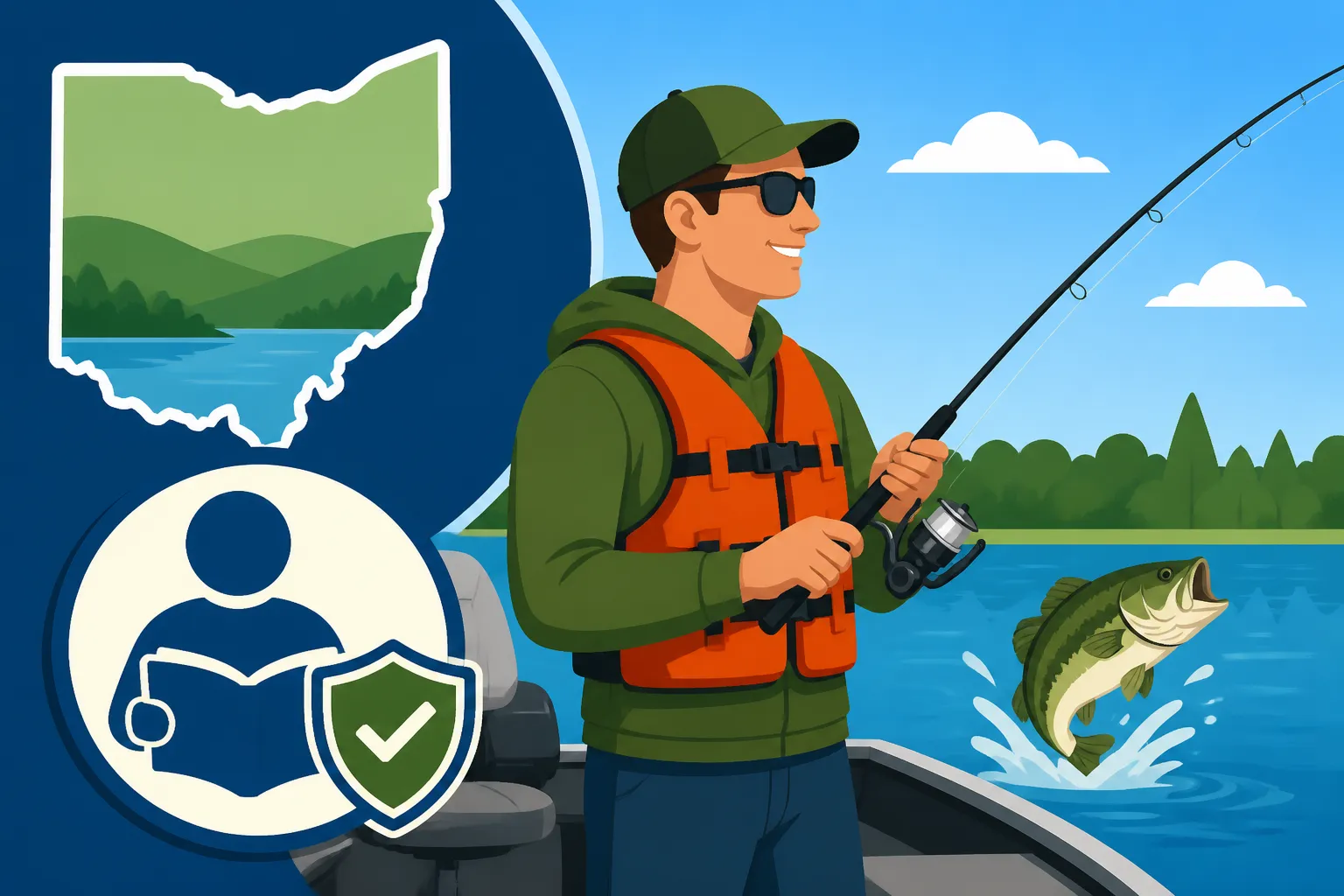
Let's cut right to the chase: not every angler needs to complete a boater education course in Ohio. The requirements are primarily tied to age and the type of watercraft you're operating. If you were born on or after January 1, 1982, and you plan to operate a power-driven boat over 10 horsepower, including personal watercraft (PWCs like jet skis), you must complete an approved boater education course. This is a critical distinction that many people miss. If your boat is smaller than 10 horsepower, or if you're operating a non-motorized craft like a canoe, kayak, or rowboat, this specific requirement doesn't apply to you, regardless of your age.
However, even if you’re older than the cut-off date or operating a low-horsepower vessel, taking a boater education course is still a fantastic idea. It’s about more than just legal compliance; it’s about safety, confidence, and knowing how to handle potential issues on the water. Think of it as investing in your peace of mind and the safety of your passengers. You might even find some excellent supplementary study guides or rulebooks on Amazon that can help reinforce the lessons.
Specific Requirements for Different Watercraft
Ohio's boater education requirements are indeed specific to the vessel. For most anglers, this means focusing on motorboats. If you’re at the helm of a fishing boat with an outboard motor, an inboard, or even a trolling motor that pushes you above the 10 horsepower threshold, and you fall into that post-1982 birthdate category, then yes, the course is mandatory. This also includes popular fishing craft like bass boats, center console boats, and pontoon boats with sufficient engine power.
Personal watercraft (PWCs) like Sea-Doos or WaveRunners also fall under this mandate, regardless of horsepower, if operated by someone born after January 1, 1982. There are no two ways about it; the safety risks associated with these fast, nimble craft mean the state wants operators to be well-versed in safety and navigation rules. Even if you're just using a PWC to get to your favorite fishing spot on Lake Erie Fishing Regulations in Ohio, you still need that education certificate if you meet the age criteria.
Penalties for Non-Compliance
Ignoring boater education requirements can lead to more than just a stern look from an Ohio Wildlife Officer. The consequences can range from fines to even being cited for a misdemeanor. It’s not worth the risk. If you're stopped on the water and found to be operating a vessel without the required education certificate, the penalties can quickly add up. A first offense might result in a warning, but repeat offenses will almost certainly come with a monetary fine and potentially court costs. These citations go into the same regulatory bucket as other boating or fishing violations, so it's best to be compliant.
Just like understanding What Happens If You Fish Without a License in Ohio, knowing the repercussions for boater education non-compliance is essential. An officer has the authority to issue a citation, and that can certainly put a damper on your fishing trip. The state's goal isn't just to penalize, but to encourage safe boating practices, so getting educated beforehand is the easiest way to avoid these headaches entirely.
Navigating the Boater Education Course Options
Once you realize you need boater education, the next step is finding a course that fits your learning style and schedule. Luckily, Ohio provides several convenient options, from online modules you can complete at your own pace to in-person classes where you can interact with instructors and other boaters. Choosing the right path ensures you gain the necessary knowledge effectively.
Online vs. In-Person Courses
The flexibility of online boater education courses has made them incredibly popular, especially for busy anglers. Websites like Boat-Ed.com or BoaterExam.com offer ODNR-approved courses that you can take from the comfort of your home. These courses are typically self-paced, allowing you to stop and start as needed, which is perfect for fitting around work or family commitments. You'll go through modules covering everything from navigation rules to emergency procedures, concluding with a final exam. Successfully passing this exam earns you your certificate.
For those who prefer a more traditional classroom setting, in-person courses are also available, often taught by certified instructors at local marinas, community centers, or through organizations like the U.S. Coast Guard Auxiliary or U.S. Power Squadrons. These classes offer the benefit of direct interaction, allowing you to ask questions and learn from real-world experiences shared by the instructor and fellow students. While less flexible, some people find the structured environment and hands-on demonstrations more beneficial. Both options cover the same core curriculum and lead to the same state-recognized certificate.
What the Courses Cover
Whether you choose an online or in-person format, the content of an ODNR-approved boater education course is comprehensive and designed to equip you with critical knowledge for safe boating. You can expect to learn about:
- Boating Safety Equipment: What life jackets, fire extinguishers, and signaling devices you need on board, and where to find them. From life jackets to signaling devices, a quick search on Amazon will show you the breadth of available safety gear.
- Navigation Rules: Understanding buoys, markers, rights-of-way, and how to avoid collisions.
- Boating Operations: Safe docking, anchoring, fueling, and operating practices.
- Emergency Procedures: What to do in case of capsizing, man overboard, or other accidents.
- Ohio-Specific Regulations: Crucial information about speed limits, restricted areas, and environmental protection.
- Weather and Water Conditions: How to interpret forecasts and respond to changing conditions on the water.
These courses are designed to not only make you a lawful boater but a truly competent one. They address real-life scenarios that can arise on the water, preparing you to react safely and responsibly.
Official Course Providers
When looking for a boater education course, it's absolutely crucial to ensure that the provider is officially approved by the Ohio Department of Natural Resources (ODNR) and recognized by the National Association of State Boating Law Administrators (NASBLA). This guarantees that the certificate you receive will be valid and accepted by Ohio law enforcement.
Some of the most popular and widely recognized providers include:
- Boat-Ed: A leading provider of online boating safety courses.
- BoaterExam: Another highly respected online platform for boater education.
- America's Boating Course (U.S. Power Squadrons): Often available in classroom settings, offering in-depth instruction.
- U.S. Coast Guard Auxiliary: Offers a variety of boating safety courses, usually in-person.
Always double-check the ODNR website for an up-to-date list of approved providers. While the official course providers are key, many anglers like to pick up additional resources, like detailed navigation charts or safety equipment, and Amazon is a convenient place to find a lot of those essentials. Avoid any unofficial courses that claim to offer a quick solution, as their certificates may not be recognized by the state, leaving you unprotected and non-compliant.
Frequently Asked Questions for Anglers and Boater Education
Anglers often have very specific questions about boater education, especially concerning the crossover between boating and fishing regulations. It’s easy to get tangled up in the details, so let’s untangle some of the most common queries to ensure you have a clear understanding.
Do You Need a Boating License to Fish From a Boat in Ohio?
This is perhaps the most common question, and it's important to clarify the terminology. In Ohio, there isn't a separate "boating license" in the same way you have a driver's license for a car. Instead, there's a boater education certificate or card that proves you've completed the required safety course.
So, to directly answer the question: If you are born on or after January 1, 1982, and you plan to operate a power-driven boat over 10 horsepower (or any PWC) while fishing in Ohio, then yes, you need to have successfully completed an approved boater education course and carry proof of that completion. If you don't meet those age or vessel criteria, you don't legally need the education certificate to fish from a boat. However, as emphasized earlier, it’s always a good idea for safety reasons, regardless of the legal requirement. For those considering a guided trip, remember that most reputable fishing charters will handle all the boating aspects, but you'll still need your individual Ohio Fishing Regulations Every Angler Should Know and a valid fishing license.
How to Prove You've Completed the Course
Once you've passed your boater education course, you'll receive an official certificate or card. This is your proof of completion. It's crucial that you carry this physical or digital proof with you whenever you're operating a vessel that requires it. Ohio law enforcement officers, including ODNR Wildlife Officers, may ask to see it during routine stops or if there's an incident.
Think of it like carrying your driver's license or your Ohio Fishing License Guide for Residents and Nonresidents – it needs to be readily accessible. Many online providers will issue a printable temporary certificate immediately, with a permanent card mailed to you later. Make sure to keep this safe. For those who prefer a physical manual, searching Amazon for 'Ohio Boating Regulations' might yield some helpful print resources to keep on your boat, though it's not a substitute for your official certificate.
Exemptions and Special Cases
While the general rule for boater education is clear, there are a few exemptions and special cases worth noting:
- Age Exemption: As mentioned, if you were born before January 1, 1982, you are exempt from the mandatory boater education requirement in Ohio.
- Out-of-State Certificates: If you are a nonresident and have successfully completed a boating safety course that is approved by NASBLA (National Association of State Boating Law Administrators) or issued by your home state, Ohio will generally recognize that certificate. Just make sure to carry it with you.
- Commercial Operators: Individuals operating vessels for commercial purposes, like licensed fishing charter captains, typically have different licensing and credentialing requirements through the U.S. Coast Guard, which supersede the state's recreational boater education mandate.
- Apprentice or Supervised Operation: In some cases, a person who would otherwise need a certificate may operate a vessel under the direct, onboard supervision of a person who is at least 18 years of age and meets the education requirements. This is usually for learning purposes.
It's always a good idea to consult the latest ODNR boating regulations booklet or their official website if you have a unique situation or are unsure about your specific status. Rules can sometimes have nuances, and staying informed is your best defense against unintended violations.
Ensuring a Safe and Lawful Fishing Experience
Obtaining your boater education certificate is a fantastic step, but it’s really just the beginning of being a responsible and safe angler on Ohio’s waters. A certificate is a piece of paper; true safety comes from continuous awareness, preparation, and good judgment. It’s about creating a culture of safety for yourself and everyone else sharing the water.
Beyond the Certificate: Essential Safety Practices
The boater education course covers a lot, but putting that knowledge into practice consistently is what truly matters. Here are some essential safety practices every angler should integrate into their routine:
- Always Wear a Life Jacket: This is perhaps the most critical safety tip. Accidents happen fast, and there's often no time to grab a life jacket if you're already in the water. Ohio law requires children under 10 to wear a PFD when on any vessel 18 feet or less in length, and it's smart for everyone to wear one. Don't forget to check Amazon for PFDs (Personal Flotation Devices) for everyone on board, especially if you're taking kids out. Safety first!
- Check the Weather: Before you even launch, check the marine forecast. Weather on large bodies of water like Lake Erie can change rapidly, turning a calm day into a dangerous one in minutes. Knowing what to expect can help you decide if it's safe to go out or when to head back.
- Tell Someone Your Plan: Always let a trusted person on shore know where you're going, what time you expect to be back, and who is with you. This "float plan" is invaluable if you run into trouble.
- Carry Essential Safety Gear: Beyond the required PFDs, consider a first-aid kit, a whistle or horn, flares, a marine radio (VHF), and an anchor appropriate for your boat size and fishing location.
- Never Boat Under the Influence: Just like driving a car, operating a boat while impaired by alcohol or drugs is illegal and extremely dangerous. Ohio has strict Boating Under the Influence (BUI) laws with severe penalties.
- Know Your Boat: Understand your vessel's capabilities and limitations. Don't overload it, and know how it handles in different conditions.
- Practice Good Seamanship: Be courteous to other boaters and anglers. Understand right-of-way rules and maintain a safe speed. This is especially important in crowded areas or when navigating rivers like those mentioned in the Ohio River Fishing Guide.
Combining Boater Education with Fishing Knowledge
For anglers, boater education isn't just a separate legal hurdle; it's an integral part of becoming a well-rounded and successful outdoorsperson. Knowing how to safely operate your vessel means you can get to those Best Places to Fish in Ohio more effectively, navigate treacherous spots with confidence, and spend more time actually fishing instead of worrying about safety issues.
Consider how your boating knowledge integrates with other aspects of fishing:
- Ice Fishing Safety: While ice fishing might not involve a boat directly, the principles of checking ice thickness and understanding weather patterns, covered in a boater safety course, are highly relevant to staying safe on the ice. Consult the Ohio Ice Fishing Guide for specific ice safety tips.
- Tackle and Gear Management: A safe boat is an organized boat. Knowing how to secure your rods, tackle boxes (which you might purchase from Amazon), and other equipment prevents hazards and ensures nothing goes overboard. Proper storage ensures you have the Best Ohio Fishing Gear and Tackle Guide items ready when you need them.
- Environmental Awareness: Boater education often includes components on environmental stewardship, like preventing the spread of invasive species or properly disposing of waste. This aligns perfectly with ethical angling practices and helps preserve Ohio's waterways for future generations.
- Understanding Regulations: Being aware of general boating rules complements your understanding of specific fishing regulations, such as How Many Fishing Lines You Can Use in Ohio or specific limits in Ohio State Park Fishing Rules. It's all part of being a responsible outdoor enthusiast.
By embracing both comprehensive boater education and a deep understanding of fishing techniques and regulations, you're setting yourself up for a lifetime of enjoyable, safe, and productive fishing adventures on Ohio's beautiful waters.
Ohio Boater Education Requirements Summary Table
Here’s a quick overview of Ohio’s boater education requirements to help you determine if you need to take a course:
| Operator's Birth Date | Vessel Type (Power-Driven) | Horsepower | Boater Education Required? | Notes |
|---|---|---|---|---|
| On or after Jan 1, 1982 | Any motorboat | > 10 HP | Yes | Mandatory for operation |
| On or after Jan 1, 1982 | Personal Watercraft (PWC) | Any | Yes | Mandatory for operation |
| Before Jan 1, 1982 | Any motorboat | Any | No | Recommended for safety |
| Any Birth Date | Motorboat | <= 10 HP | No | Recommended for safety |
| Any Birth Date | Non-motorized (kayak, canoe) | N/A | No | Recommended for safety |
Disclaimer
The information provided in this guide is for general informational purposes only and does not constitute legal advice. While we strive to provide accurate and up-to-date information, boating regulations and laws can change. Always consult the official Ohio Department of Natural Resources (ODNR) website or contact them directly for the most current and specific regulations that apply to your situation. Compliance with all state and federal boating laws is the sole responsibility of the individual operator.