Ohio Ice Fishing Gear and Line Rules
It’s a truly unique thrill, isn’t it, sitting out on a frozen lake, waiting for that subtle twitch of a line that signals a bite? But let's be honest, venturing onto the ice in Ohio can feel a little intimidating if you’re not absolutely sure about all the rules and the right gear. Nobody wants to have their peaceful day interrupted by a wildlife officer because of a misunderstanding about how many lines they’re allowed or what kind of shelter they can use. This guide is here to clear up all that confusion, breaking down Ohio's ice fishing gear and line regulations so you can focus on the fishing, not the fines.
Ohio's Core Rules for Fishing Lines and Poles on the Ice
One of the most common questions, and perhaps the quickest way to run into a problem, is about how many lines you can legally have in the water while ice fishing. Ohio has pretty clear guidelines, but it’s easy for new anglers or those coming from other states to get it wrong. It’s not just about the number of rods; it's about what constitutes an active "line" and how that impacts your setup. Understanding these nuances is crucial for a stress-free day on the ice.
Understanding the Two-Pole and Line Limit
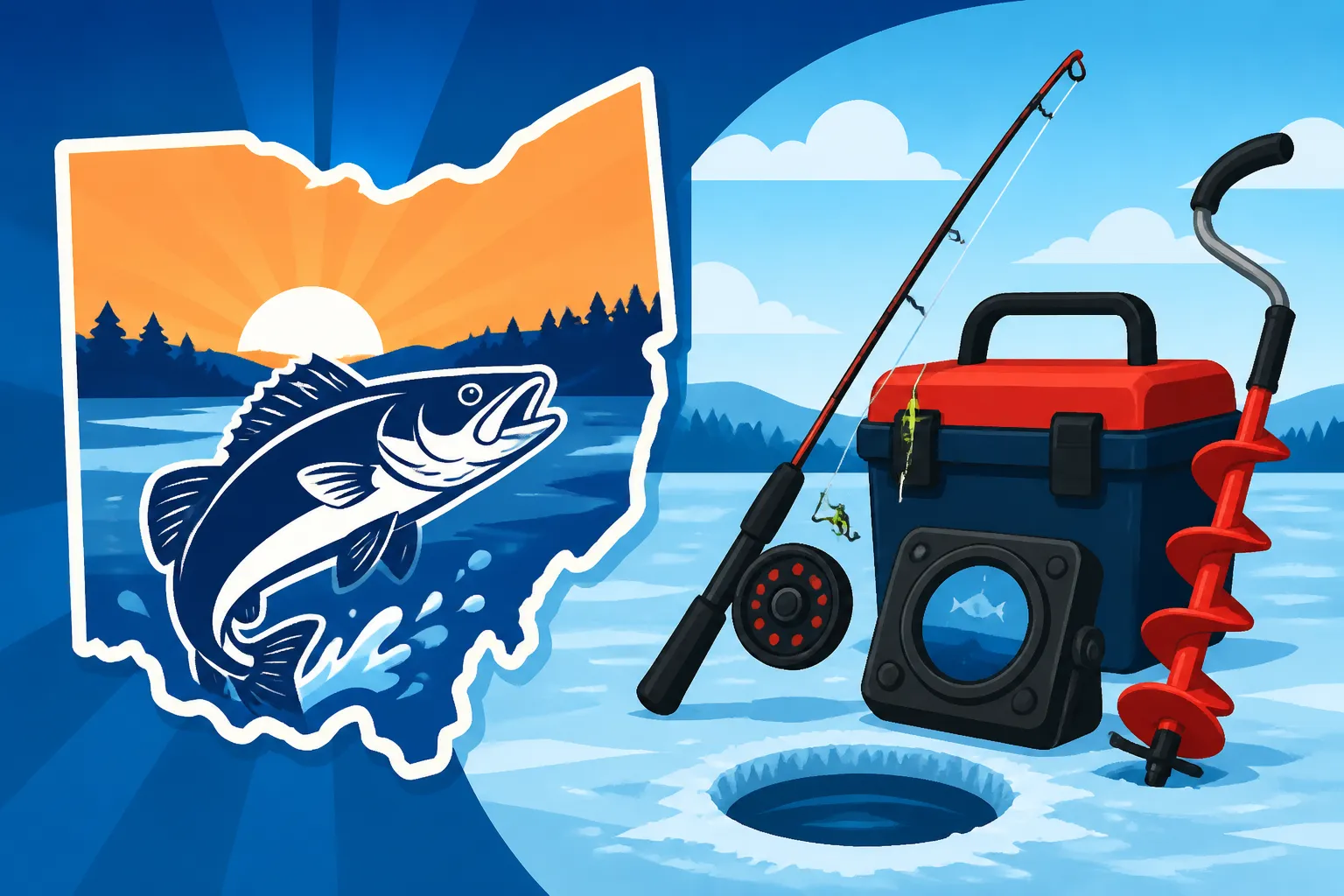
In Ohio, the general rule is that an angler may use no more than two fishing lines at a time. This is often referred to as the "two-pole and line limit." For ice fishing, this means you can have two holes drilled, and a rod and line setup in each one. It sounds simple, but let's expand on what that really means. You can’t, for instance, have two traditional jigging rods and a tip-up simultaneously. That would be three lines, putting you over the limit. Each individual setup, whether it’s a standard rod and reel or a passive tip-up, counts as one line.
This regulation applies to all public waters across Ohio, from the smaller inland lakes like Kiser Lake to larger bodies of water like Lake Erie. It’s designed to ensure fair chase and prevent overharvesting, giving everyone a reasonable chance at a good catch. Imagine if someone could blanket a whole section of ice with a dozen lines; it wouldn't be much fun for anyone else. So, while it might feel restrictive if you're used to more lines, it’s a regulation meant to preserve the resource and the angling experience for everyone. For a deeper dive into these specifics, check out our guide on Can You Fish With Two Poles at Once in Ohio?.
What Constitutes a "Line" in Ice Fishing
So, what exactly counts as a "line" in the eyes of the Ohio Division of Wildlife? It's pretty straightforward: any device that is deployed in the water and designed to catch fish is considered a line. This includes your typical ice fishing rod with a reel, a jig stick, and, very importantly, tip-ups. A tip-up, for those unfamiliar, is a passive device where a flag "tips up" when a fish takes the bait. Even though you’re not actively holding it, it's still a line in the water with a hook, actively fishing.
Therefore, if you’re out on the ice, you could have:
- Two ice fishing rods actively jigging.
- One ice fishing rod and one tip-up.
- Two tip-ups.
What you cannot have is any combination that adds up to more than two active lines. This might seem obvious to experienced ice anglers, but for someone just getting into the sport, it's a critical detail that's easily overlooked. Always double-check your setup before you drop that third lure down a hole.
Consequences of Violating Line Regulations
Nobody wants to deal with a fine, especially when you’re just trying to enjoy a peaceful day of fishing. Fishing with too many lines in Ohio is a violation, and the consequences can range from a warning to a significant fine, and potentially even the forfeiture of your fishing equipment. Wildlife officers regularly patrol popular ice fishing spots, and they are well-versed in spotting infractions. They’re not out there to ruin your day, but to enforce the regulations that protect Ohio's fisheries.
A typical fine for exceeding the line limit can be several hundred dollars, plus court costs. More severe or repeat offenses can lead to higher penalties. It’s simply not worth the risk. The small advantage of having an extra line in the water is far outweighed by the potential financial hit and the headache of dealing with a legal issue. Always err on the side of caution. If you're unsure, stick to one line until you've confirmed the regulations or you're absolutely certain about your setup. If you're looking for more general information on compliance, our comprehensive Ohio Fishing Regulations Every Angler Should Know can be a great resource.
Essential Equipment and Shelter Regulations for Ice Anglers
Beyond your actual fishing lines, there are other pieces of equipment that come with their own set of rules, particularly when it comes to safety and environmental impact. Ice shanties, power augers, and even how you mark your holes are all subject to regulations that keep everyone safe and preserve the natural beauty of Ohio's frozen lakes.
Rules for Portable Shanty and Permanent Shelter Use
Ice fishing shanties, whether they're lightweight portable models or more robust permanent structures, are a common sight on Ohio's frozen lakes. They offer protection from the elements, making long days on the ice far more comfortable. However, there are rules for their use and, crucially, their removal. Portable shelters, like those from brands such as Eskimo or Clam, are generally easier to manage and have fewer explicit rules beyond proper identification.
For any ice shanty or shelter, it must be clearly marked with the owner's name and address or their Ohio customer identification number in legible English letters and numbers. This is critical for identification purposes, especially if a shanty is left on the ice. The most important rule, though, is the removal deadline. All ice fishing shelters must be removed from the ice by a specific date, which is typically the first ice-free day or by a set date in late winter/early spring (often around late February or early March), regardless of ice conditions. Check the current year's Ohio Fishing Season Dates and Effective Periods for precise dates, as they can vary slightly. Leaving a shanty on the ice past this date is a violation and can result in significant fines and removal costs. Abandoned shanties pose a navigation hazard as the ice thins and melts, and they can pollute the waterways.
| Ice Fishing Equipment | Key Regulations in Ohio | Important Notes |
|---|---|---|
| Fishing Lines | Max 2 lines per angler (rods or tip-ups). | Each device actively fishing counts as one line. Violations incur fines and potential equipment forfeiture. For more details on this, see Two-Pole and Line Limit Rules in Ohio. |
| Ice Shanties/Shelters | Must be clearly marked with owner's name/address or customer ID. Must be removed by published deadline (typically early March, regardless of ice). | Leaving a shanty is illegal, hazardous, and subject to fines/removal costs. Check current ODNR regulations for exact dates. |
| Power Augers | No specific restrictions on type or fuel source (electric, gas, propane). | Exercise caution; ensure proper ventilation in enclosed shelters. |
| Hole Marking | No specific mandate for marking, but highly recommended for safety. | Use bright flags or cones around your holes, especially if leaving them unattended, to prevent accidents. |
| Ice Safety Equipment | Not legally required, but essential for personal safety. | Spud bar (for checking ice thickness), ice picks, floatation suit, rope, cell phone. Learn more about safety in our Ohio Ice Fishing Guide. |
Power Auger Regulations and Safe Operation
Modern ice fishing often involves power augers, which make drilling holes through thick ice a breeze compared to the old hand auger days. Thankfully, Ohio has fairly relaxed regulations regarding the type or fuel source of your auger. You can use gas, propane, or electric augers without special permits. This is great news for anglers who rely on efficient tools to get through thick ice quickly. Many popular models, readily available on platforms like Amazon, offer both power and portability.
However, while there aren't many regulations on the auger itself, safe operation is paramount. Always ensure that the auger is in good working order and that its blades are properly guarded when not in use. When using a gas or propane auger inside an enclosed shanty, adequate ventilation is absolutely critical to prevent carbon monoxide poisoning, which can be deadly. Even electric augers, while not producing exhaust, still pose a cutting hazard. Always be mindful of others on the ice, especially when moving or operating your auger, and never leave it running unattended.
Crucial Safety Gear and Marking Requirements
While Ohio’s regulations don’t explicitly mandate certain safety gear for anglers (beyond a fishing license, of course, which you can learn about in our Ohio Fishing License Guide for Residents and Nonresidents), common sense and responsible angling dictate that certain items are non-negotiable for ice fishing. The cold, unpredictable nature of ice means safety should always be your top priority.
First and foremost, never venture onto the ice alone without checking ice thickness. A spud bar is your best friend for this. It's a simple, inexpensive tool, often found on Amazon, that can literally save your life by allowing you to test the ice ahead of you. Ice picks, worn around your neck, are another essential. If you break through, these can help you pull yourself back out. A throw rope or a length of sturdy rope can be invaluable for assisting others or yourself. Beyond personal gear, while not legally required in Ohio, it is a courtesy and a wise safety practice to mark your fishing holes, especially if you're moving around a lot or leaving them unattended. Brightly colored flags or even small pieces of reflective tape around your holes can prevent other anglers or snowmobilers from accidentally stepping or driving into an open hole, especially in low light conditions. The mantra should always be: if in doubt, stay off the ice. But if you're going, go prepared.
Navigating Common Ice Fishing Scenarios and Best Practices
Ice fishing isn't always a solitary endeavor; sometimes it involves tournaments, or you might find yourself fishing a private pond versus a bustling public lake. Each scenario can have slightly different rules or best practices that are important to be aware of. Knowing these nuances can save you hassle and ensure you’re always on the right side of the law and good angling etiquette.
Ice Fishing During Tournaments and Organized Events
Fishing tournaments, including those held on ice, often come with their own specific set of rules that might overlay or even slightly modify the general statewide regulations. If you're planning to participate in an organized ice fishing event in Ohio, it is absolutely essential to review the tournament-specific rules beforehand. These rules might dictate catch-and-release practices, specific measurement requirements, or even slightly different line limits for the duration of the event (though often, state limits still apply unless a special permit is issued).
Furthermore, some larger tournaments may require specific permits from the Ohio Division of Wildlife. The organizers are usually responsible for obtaining these, but as a participant, it's good to be aware. Always clarify with the tournament director any questions regarding gear, line limits, and other regulations specific to their event. While the core state laws (like having a valid Ohio Fishing License Guide for Residents and Nonresidents) always apply, tournament rules can add another layer of compliance you need to be aware of. You can find more details about general tournament requirements in Ohio Fishing Tournament Permit Requirements.
Private Ponds Versus Public Waterways: Different Rules Apply
This is a frequently asked question: "Do I need a fishing license to fish in a private pond in Ohio?" The answer depends on the specifics, but for ice fishing, the distinction between private and public waters is equally important for gear and line rules. If a pond is entirely privately owned, and you have explicit permission from the landowner to fish it, and no public access exists, then generally, a state fishing license is not required. In such cases, the state's daily bag and size limits typically don't apply either, though the landowner may impose their own rules.
However, even on private ponds, common sense and safety still dictate responsible behavior regarding gear. While the Ohio Division of Wildlife might not enforce the two-pole limit on a truly private, landlocked pond, it's still good practice to avoid excessive lines. If a "private pond" has any public access, or is connected to public waterways, then all statewide regulations, including license requirements and line limits, do apply. Always clarify the ownership and access rights before assuming a private pond is exempt from all state rules. Our article on Fishing a Private Pond in Ohio goes into much greater detail on this specific topic.
The Importance of a Modern Fish Finder on the Ice
While not a piece of gear that has specific regulations attached to its use, a modern fish finder or flasher has become an indispensable tool for many serious Ohio ice anglers. It’s not about breaking rules, but about maximizing your success and efficiency. In the past, ice fishing was often a game of drilling holes and hoping. Now, with portable fish finders like those from Humminbird or Garmin, readily available on sites like Amazon, you can see what’s below your hole before you even drop a line.
A good flasher allows you to identify fish, see your lure in real-time, and understand the bottom structure. This means less time drilling unproductive holes and more time fishing in areas where fish are actively present. Many units even have GPS capabilities, allowing you to mark productive spots for future trips. While not legally required, the investment in a quality fish finder pays dividends in terms of angling enjoyment and success, especially when targeting popular species like walleye or crappie, which can be elusive. For specific techniques, you might want to explore our Ohio Ice Fishing Techniques for Ohio Walleye guide.
Disclaimer
Please remember that fishing regulations, including those related to ice fishing gear and line rules, can change. Always consult the most current Ohio Fishing Regulations published by the Ohio Department of Natural Resources (ODNR) Division of Wildlife before heading out onto the ice. This guide is for informational purposes only and should not be considered a substitute for the official regulations.