Ohio State Record Flathead Catfish Weight
Every angler dreams of landing "the one"—that monster fish that pushes the tape measure and breaks the scale, perhaps even earning a place in the record books. For many in Ohio, especially those who love the raw power and brute strength of big bottom dwellers, that dream centers on the flathead catfish. It's a challenging pursuit, requiring patience, skill, and a bit of luck, and knowing the current benchmark is often the first step in setting your own sights high. This guide will dive deep into the legendary Ohio state record flathead catfish, what it takes to catch a fish of that caliber, and how to navigate the official process should you ever be so fortunate.
The Coveted Ohio State Record Flathead Catfish Weight
There's a special thrill that comes with chasing a state record, a feeling of being part of history and testing your skills against the very best that Ohio's waters have to offer. For flathead catfish anglers, the bar has been set incredibly high by a truly monumental catch.
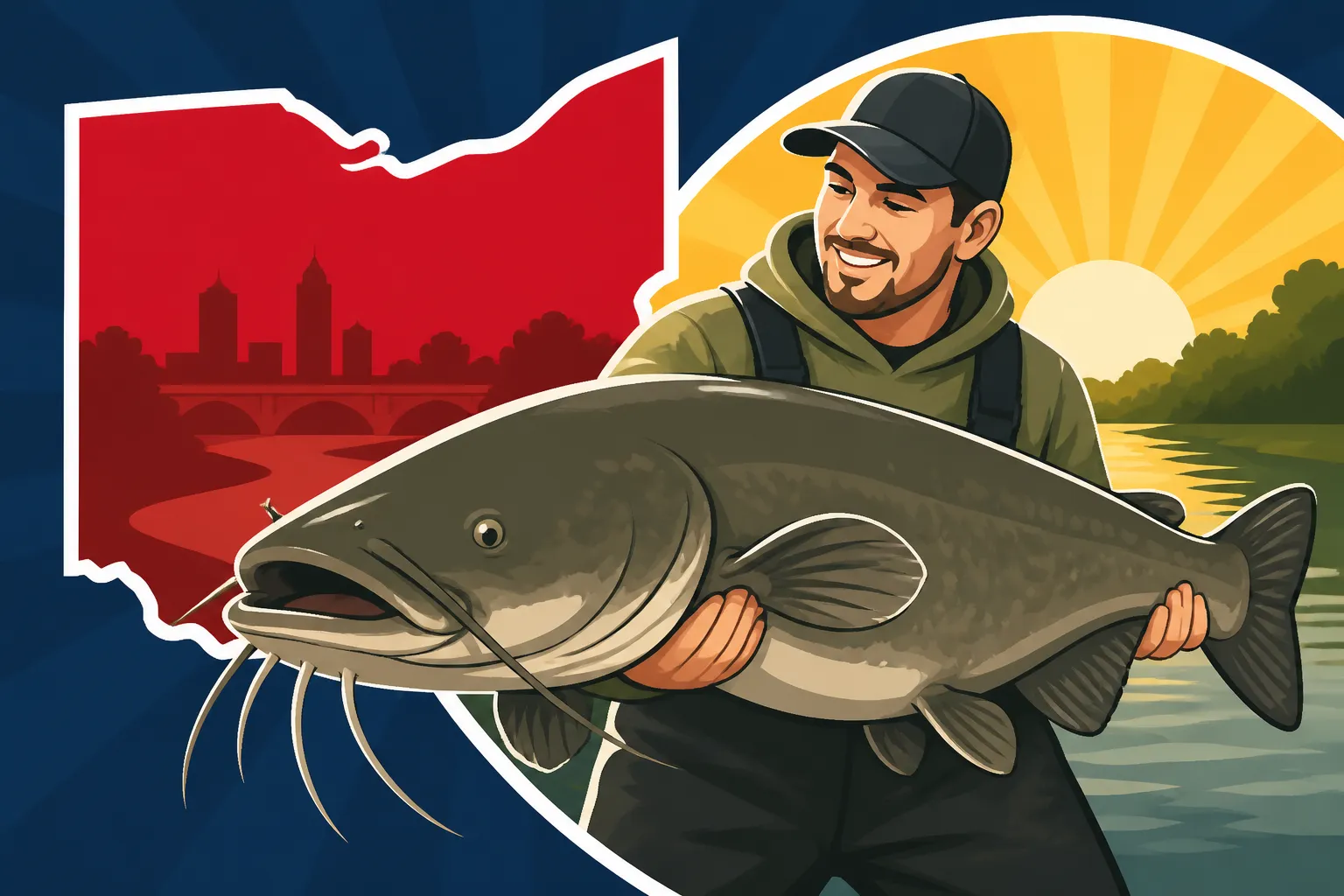
The current Ohio state record for a flathead catfish stands at an impressive 76.5 pounds. This colossal fish was caught from the mighty Ohio River, a legendary waterway known for producing truly gargantuan catfish. Imagine the fight, the sheer adrenaline of reeling in a fish that heavy, a beast that could practically pull you out of the boat! It's a testament to the incredible angling opportunities that exist right here in our state.
This record isn't just a number; it represents a pinnacle of achievement for dedicated catfish anglers. It's a goal to strive for, a benchmark that inspires countless hours on the water, targeting those deep holes and submerged structures where these giants lurk. The Ohio River, specifically, holds a certain mystique for big flatheads, offering the perfect habitat for them to grow to such immense sizes. Many anglers will tell you that the larger, mature flatheads often prefer live bait, like robust sunfish or sturdy suckers, which truly adds to the excitement of the hunt. If you're looking to challenge this record, you're not just fishing; you're embarking on a quest.
The History of Ohio's Record Flatheads
Ohio has a rich history of producing impressive flathead catfish, with the record being broken and reset over the decades as anglers refine their techniques and explore new waters. Each record-breaking fish tells a story of perseverance and an intimate understanding of these powerful creatures. While the specific details of every previous record are a bit hazy for us now, the trend has always been towards bigger, more formidable fish. This isn't just due to better angling, but also to improved conservation efforts and a healthy population of these native predators.
The very nature of flathead catfish, with their long lifespans and predatory habits, means they have the potential to grow to immense sizes, especially in nutrient-rich river systems like the Ohio River. They're often referred to as "river monsters" for good reason! Their habitat preferences – typically deep, slow-moving water with plenty of cover like logjams, rock piles, or bridge pilings – allow them to ambush prey and grow undisturbed. Understanding these preferences, as discussed in our Ohio Flathead Catfish Identification guide, is crucial for anyone hoping to land a true leviathan.
The Challenge of Catching a Record Flathead
Let's be real, catching a fish that weighs over 70 pounds is no small feat. It requires specialized gear, an intimate knowledge of flathead behavior, and a whole lot of grit. You can't just throw out a worm on a spinning rod and expect to pull in a fish of this magnitude.
First, your tackle needs to be up to the task. We're talking heavy-duty rods, often in the 7 to 9-foot range with a stout backbone, paired with large conventional or heavy-duty spinning reels capable of holding hundreds of yards of strong braided line. Many anglers swear by 80-pound test or heavier braided line, which you can easily find on Amazon, for its incredible strength and minimal stretch, giving you direct control over these powerful fish. Live bait is almost universally preferred for trophy flatheads. Large suckers, bluegills, or carp, hooked strategically, are often the key. Positioning your bait correctly in known flathead haunts, perhaps near submerged timber or deep scour holes, is paramount. Patience is also a huge factor; sometimes you have to wait hours, even all night, for that one memorable bite.
The fight itself is legendary. A flathead of record size will test your endurance and your gear to its absolute limits. They often dive deep, using the current and any available structure to their advantage, making for a prolonged tug-of-war. Landing one often requires a sturdy net or, for the truly massive ones, a careful hand-landing technique. Remember, conservation is key, even when chasing records. If you plan to release a fish of this size, ensure you have the proper tools and knowledge for a quick and safe release. Our guide on Ohio Catfish Fishing Techniques offers more insights into battling these giants.
The Official Process for Certifying an Ohio State Record Fish
So, you've done it. You've landed what you believe might be a new Ohio state record flathead catfish. The adrenaline is pumping, your arms are aching, and you're staring at a fish that looks like it belongs in a museum. What now? The exhilaration can quickly turn to a flurry of "what-ifs" and "how-tos." Don't worry, the Ohio Department of Natural Resources (ODNR) Division of Wildlife has a clear, albeit rigorous, process for certifying state record fish. This isn't just about weight; it's about integrity and accuracy.
The very first and most crucial step is to get an accurate, certified weight. This isn't the time for your bathroom scale or a guessing game. The fish must be weighed on a scale that has been certified by the Ohio Department of Agriculture, typically found at bait shops, marinas, or grocery stores with certified scales. The scale needs to be inspected and sealed for accuracy. You'll need to locate one quickly, as the fish ideally needs to be weighed as soon as possible after capture.
Beyond the weight, identification is paramount. A wildlife officer or an ODNR fisheries biologist must positively identify the species of fish. This is particularly important for catfish, as there are different species like channel, blue, and flathead catfish, and they all have their own record categories. You'll also need to measure the fish, providing both length and girth measurements. Finally, a thorough application needs to be filled out, including details about where and when the fish was caught, the bait used, and contact information for the angler. It's a comprehensive process designed to leave no doubt.
What to Do Immediately After Catching a Potential Record
Picture this: You're out on the Ohio River, perhaps targeting big blue catfish, when suddenly your heavy rod doubles over. After an epic battle, you haul in a flathead that looks absolutely enormous. Your first thought might be to celebrate, but if you suspect a record, every second counts.
1. Keep the Fish Alive and Healthy (if possible): While a record is about weight, if you plan to release the fish after certification, keeping it alive is crucial. If not, keeping it fresh is key. Have a large livewell, a cooler with ice (for freshness), or a method to keep the fish comfortable. A fish's weight can decrease over time as it loses moisture.
2. Document Everything: Take clear photos and videos immediately. Get shots of the fish from multiple angles, next to recognizable objects for scale, and with you, the angler. Note the exact location (GPS coordinates if possible), date, and time of capture.
3. Locate a Certified Scale: This is non-negotiable. Don't waste time driving around with a dead fish if you want an accurate weight. Call ahead to local bait shops, marinas, or even grocery stores to confirm they have a certified, sealed scale. The scale must be zeroed out before weighing, and if possible, witnessed by another person. Many serious trophy hunters even carry their own small, certified digital scale from Amazon for preliminary checks, though the official weigh-in needs a larger, permanently certified scale.
4. Contact the ODNR Division of Wildlife: As soon as you have a verified weight and good photos, reach out to your nearest ODNR district office or a fisheries biologist. They will guide you through the next steps, including species verification and the formal application process. They may need to come to you, or you may need to transport the fish to a designated location. The faster you act, the better your chances of a successful certification.
The Allure of Flathead Catfish: Why They're Trophy Fish
Flathead catfish are truly remarkable creatures, embodying everything that makes big game fishing so captivating. They are powerful, cunning, and often elusive, making every catch a significant accomplishment. It's not just their size that draws anglers; it's their unique characteristics and the challenge they present.
Unlike their scavenger cousins, the channel catfish, flatheads are ambush predators. They prefer live bait and actively hunt, often holding tight to structure, waiting for an unsuspecting meal to swim by. This predatory nature makes them incredibly strong fighters. Hook into a large flathead, and you're in for a battle of wills, often described as trying to reel in a log that suddenly comes to life. Their broad, flat head and powerful, muscular body are perfectly adapted for pinning prey and resisting capture. Catching one requires heavy gear, strategic bait presentation, and the patience of a saint.
For many, the pursuit of a trophy flathead is a lifestyle. It's about spending nights on the river, under the stars, listening to the sounds of nature, and waiting for that tell-tale tap on the rod tip that signals a behemoth has taken the bait. The camaraderie among flathead anglers is also strong, with stories of epic battles and monster catches shared with passion. There's a deep respect for these fish and the wild places they inhabit.
Identification: Knowing Your Flathead Catfish
Before you can claim a state record, you need to be absolutely certain of what you've caught. While the term "catfish" is broad, distinguishing a flathead from a channel or a blue catfish is critical for record purposes and even for understanding their behavior.
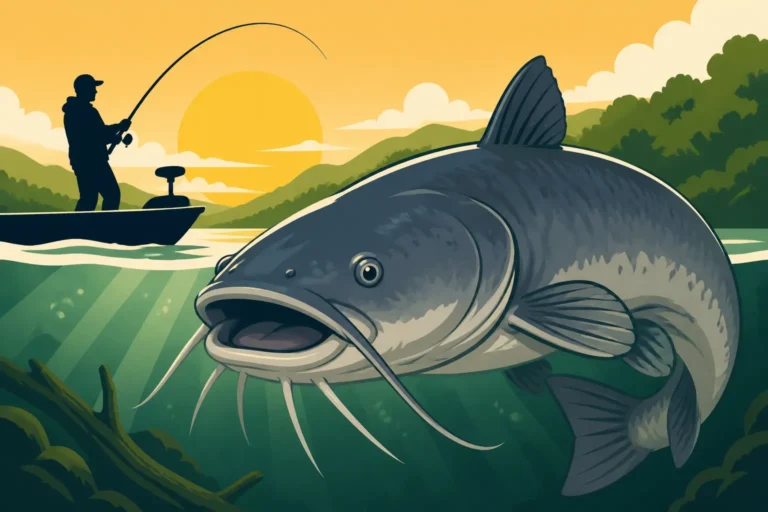
Flatheads are quite distinct. Their most defining characteristic, as their name suggests, is their noticeably flattened head, which is broader than it is high. Their lower jaw protrudes beyond the upper jaw, giving them a grumpy, bulldog-like appearance. Their eyes are relatively small. In terms of color, they typically range from mottled yellow and brown to olive green, with darker backs and lighter bellies. The tail fin is another key identifier: it's typically square or very slightly notched, unlike the deeply forked tail of a channel catfish or the somewhat forked tail of a blue catfish.
Their skin is smooth and scaleless, and they have dark barbels (whiskers) around their mouths. Understanding these distinctions, as highlighted in Ohio Channel Catfish Identification vs. Ohio Blue Catfish Identification, is essential for accurate reporting and simply knowing what you're targeting. Misidentifying your catch could lead to disappointment if you think you've broken a record in one category only to find out it belongs to another.
The Best Habitats for Monster Flatheads
If you're dreaming of a record-breaking flathead, you need to know where to find them. These solitary predators are creatures of habit, preferring specific types of environments that offer both cover and ample food sources.
The Ohio River is, without a doubt, the prime location for trophy flatheads in Ohio. Its vastness, deep channels, numerous logjams, and robust baitfish populations create the perfect environment for these fish to thrive and grow to incredible sizes. Other large river systems, like the Muskingum and Scioto, can also hold big flatheads, particularly in their lower reaches near their confluence with the Ohio River.
Within these rivers, focus on areas with significant current breaks and underwater structure. Look for:
- Logjams and Woody Debris: Fallen trees and submerged branches provide excellent ambush points and protection from strong currents.
- Deep Holes and Scour Channels: These are often found downstream of wing dams, bridge pilings, or sharp river bends, where currents have carved out deeper depressions.
- Rock Piles and Riprap: These provide crevices for baitfish and offer flatheads a place to hide and ambush.
- Bridge Pilings: The turbulent water and deep scour holes around bridge supports are classic flathead hangouts.
Fishing these areas, particularly at night, and presenting a large, live baitfish effectively, significantly increases your chances of hooking into a truly massive flathead. Our Ohio River Fishing Guide can help you pinpoint some of these promising locations.
Beyond the Record: Chasing Monster Flatheads in Ohio
Even if you don't break the state record, the pursuit of large flathead catfish in Ohio is an incredibly rewarding endeavor. These fish offer an unparalleled fight, the thrill of the hunt, and the satisfaction of landing a truly impressive specimen. Ohio's waters consistently produce monster flatheads that provide memories for a lifetime, whether they make it into the record book or just a photo album.
The beauty of flathead fishing isn't solely in the weight on the scale but in the entire experience. It's the tranquility of a night on the water, the sudden, violent strike, and the epic battle that ensues. It’s about understanding the subtle cues of the river, the behavior of the fish, and continually honing your skills. Every big flathead is a trophy, regardless of its official standing.
Ohio is blessed with fantastic flathead fishing opportunities. From the vast expanse of the Ohio River to the larger reservoirs and deeper inland rivers, the potential for a memorable catch is always there. So gear up, study your waters, and embrace the challenge. Who knows, maybe your next cast will bring up a contender for the title.
Essential Gear for Trophy Flathead Fishing
Landing a flathead in the upper weight classes requires gear that's up to the incredible stress these fish put on it. Skimping on tackle will lead to heartbreak and lost fish.
Here's a breakdown of what you'll need:
- Rods: Look for heavy to extra-heavy power, fast action rods, usually 7 to 9 feet long. Brands known for their catfish-specific rods are a good starting point. You need the backbone to turn a large fish away from snags.
- Reels: Large, conventional baitcasting reels (like a 6500 series or larger) or heavy-duty spinning reels are necessary. They need a strong drag system and high line capacity. Many anglers prefer reels with a bait clicker for sensing bites while letting the fish run.
- Line: Braided line is almost a must for flathead fishing due to its strength-to-diameter ratio and lack of stretch, which provides direct feel. Opt for 65 lb test or higher; 80-100 lb test is not uncommon for trophy hunters. For leaders, heavy monofilament or fluorocarbon (50-80 lb test) can provide abrasion resistance around structure. You can find robust lines and reels on Amazon that are specifically designed for these powerful species.
- Hooks: Circle hooks are preferred for catfishing, especially when using live bait, as they are designed to hook in the corner of the fish's mouth, minimizing harm and making release easier. Sizes typically range from 7/0 to 10/0 or even larger for big baits.
- Weights: Heavy sinkers (pyramid, no-roll, or flat sinkers) are needed to hold your bait on the bottom in current. Expect to use 3-8 ounces or more, depending on the river flow.
- Other Essentials: A large, sturdy landing net (with a wide hoop and deep mesh), heavy-duty pliers or jaw spreaders for hook removal, a good headlamp for night fishing, and a sturdy rod holder are all critical. And of course, don't forget your Ohio Fishing License Guide for Residents and Nonresidents!
Techniques for Enticing Giant Flatheads
Flatheads are particular eaters, preferring live, healthy bait. Presenting that bait effectively is key.
- Bottom Rigging with Live Bait: This is the most popular and effective method. Use a Carolina rig or a three-way swivel rig. Hook your live bait (a 6-10 inch bluegill, sucker, or carp) through the back or lips, ensuring it stays lively. Cast it out into a flathead's suspected lair and let it settle. The current will allow the bait to swim naturally.
- Anchoring Upstream of Structure: Position your boat or set up on the bank upstream from a promising logjam or deep hole. Allow your bait to drift naturally into the strike zone. This requires careful boat positioning in river current.
- Night Fishing: Flatheads are predominantly nocturnal predators. While they can be caught during the day, your best chances for a true giant will often come after dark, when they become more active.
- Patience and Persistence: Flathead fishing is not for the faint of heart. You might sit for hours without a bite, but when that rod tip finally bows over, all the waiting will be worth it. Pay close attention to your rod for subtle taps before the big, aggressive strike.
Understanding the behavior of their preferred forage can also be very helpful. Check out Catfish Feeding Patterns at Night for more insights into how these big predators operate. Every outing is a chance to learn and refine your approach, getting one step closer to your own record-breaking catch.
| Category | Requirement | Key Action for Angler |
|---|---|---|
| Identification | Fish must be positively identified as a flathead catfish. | Take clear photos, keep the fish, contact ODNR for biologist verification. |
| Weighing | Must be weighed on a scale certified by the Ohio Department of Agriculture. | Immediately locate a local bait shop, marina, or grocery store with a certified, sealed scale. |
| Measurements | Length and girth measurements required. | Use an accurate tape measure to record both dimensions. |
| Witnesses | Capture and weighing should ideally be witnessed by at least one other person. | Bring a fishing buddy or have the scale operator witness the weigh-in. |
| Application Form | Complete the official ODNR Division of Wildlife state record fish application form. | Obtain the form from the ODNR website or district office and fill it out completely, providing all requested details. |
| Photos | High-quality photographs of the fish, angler, and weighing process. | Capture multiple clear photos from different angles, showing the fish, the angler, and the scale reading. |
| Contact ODNR | Contact the nearest ODNR Division of Wildlife district office or a fisheries biologist as soon as possible after capture and initial weighing. | Have their contact information readily available on your phone. |
| Ethical Considerations | While not a strict record requirement, practicing responsible angling and handling, especially if releasing the fish, is encouraged. If harvesting, ensure proper storage for consumption. | Understand proper fish handling techniques. If releasing, minimize time out of water. |
Disclaimer
This article is for general informational purposes only and does not constitute professional advice. Laws, prices and regulations vary by location and change over time. Consult a qualified professional for guidance on your specific situation.