Do Ohio Lakes Have Tiger Muskie?
That moment you hook into something that feels truly massive, a fish that pulls like a freight train and flashes a glimpse of an unusual pattern, can be exhilarating and confusing all at once. For many Ohio anglers, the question often arises: was that a muskie, or something else entirely? Specifically, a lot of folks wonder if our beautiful Ohio lakes are home to the legendary tiger muskie. This comprehensive guide is here to unravel that mystery, confirming whether these striped predators swim in our waters and, if so, where to find them and how to land one of your own.
The Elusive Tiger Muskie: A Hybrid Explained
Before we dive into their presence in Ohio, let's get a handle on what a tiger muskie actually is. It's not just a fancy name for a regular muskie; it's a distinct, albeit naturally rare, hybrid. Understanding this distinction is key to appreciating their unique place in our waterways.
What Exactly is a Tiger Muskie?
A tiger muskie is the result of a cross between a true muskellunge (the common "muskie" we often talk about) and a northern pike. Think of it as nature's perfect angler-attracting mash-up. These fish are sterile, meaning they cannot reproduce on their own. This is a crucial point because it means any sustained population of tiger muskie in a water body is almost certainly due to stocking efforts by wildlife agencies. They rarely occur naturally in significant numbers.
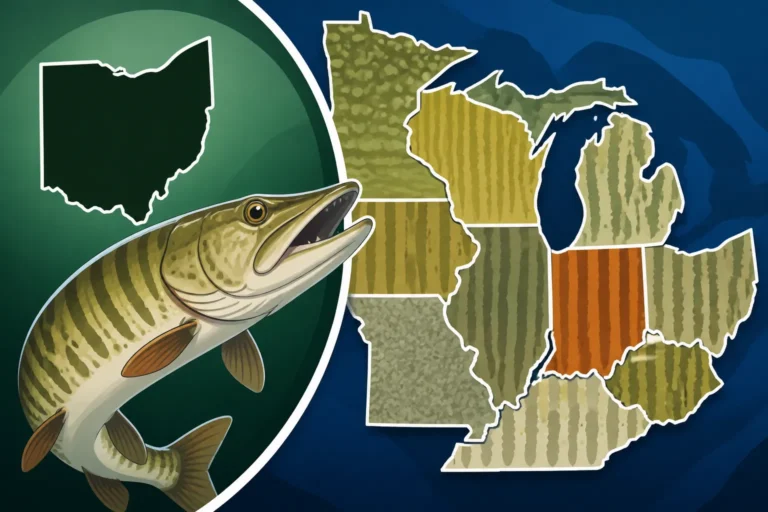
What makes them so distinctive is their appearance. They boast a striking pattern of vertical, dark stripes or blotches on a lighter background, resembling the camouflage of a tiger – hence the name! This pattern is different from the true muskie, which typically has spots, bars, or is clear-sided, and definitely different from a northern pike, which tends to have lighter bean-shaped spots on a dark background. They also tend to be a bit more aggressive than a pure muskie, growing incredibly fast and putting up an incredible fight when hooked. If you've ever wondered What a Tiger Muskie Is, you're now getting the full picture!
Why Anglers Love Tiger Muskie
There's something truly special about hooking a tiger muskie. For starters, their rarity makes them a prized catch. They combine the powerful, relentless fight of a muskie with what many perceive as an even more aggressive nature. This means they often strike lures with incredible force and provide a memorable battle. Because they are hybrids, they are often thought to be hardier and grow faster than purebred muskies, reaching impressive sizes in a shorter amount of time.
Many anglers are drawn to the challenge of chasing "the fish of 10,000 casts," and the tiger muskie adds an extra layer of mystique to that pursuit. Imagine the thrill of seeing those unmistakable stripes emerge from the depths! It's not just about the size, though they can get big; it's about the unique combination of beauty, power, and the sheer challenge of targeting a fish that is often stocked in limited numbers. Their reputation for hard hits and acrobatic fights has cemented their status as a dream catch for many freshwater predator anglers.
Tiger Muskie vs. Northern Pike vs. True Muskie Identification
One of the biggest challenges for anglers, especially those new to targeting these toothy critters, is telling them apart. Mistaking a northern pike for a muskie, or vice-versa, can lead to serious legal trouble if you keep a fish that's out of season or below the legal size limit for its species. The tiger muskie adds another layer of complexity with its hybrid features. Knowing the key differences can save you a headache and ensure you're compliant with Ohio Muskie Minimum Length Limit on Inland Lakes or Ohio Muskie Daily Bag Limit.
Here's a breakdown of the primary identification features:
| Feature | Northern Pike | Tiger Muskie | Muskellunge (True Muskie) |
|---|---|---|---|
| Body Pattern | Light spots (bean-shaped) on a dark background | Distinct dark, vertical bars or blotches on a lighter background | Dark spots, bars, or clear-sided on a lighter background |
| Tail Fin | Rounded or slightly forked, often spotted | More pointed lobes, often spotted | More pointed lobes, generally not spotted |
| Scales on Cheek | Fully scaled | Fully scaled on upper half, often bare on lower half | Scaled only on upper half or less |
| Scales on Operculum (Gill Cover) | Fully scaled | Scaled only on upper half or less | Scaled only on upper half or less |
| Pores on Underside of Jaw | 2-5 on each side | 6-9 on each side | 6-9 on each side |
The most reliable visual cues for telling them apart are the patterning, the scaling on the cheeks and operculum, and the number of pores under the jaw. For a more detailed look at the purebred differences, you might want to check out Ohio Muskie vs Northern Pike Identification. Always remember, when in doubt, it's best to safely release the fish or, if regulations permit and you're confident in your identification, consult the latest Ohio fishing regulations booklet.
Ohio's Tiger Muskie Program: Stocking and Locations
So, do Ohio lakes actually have tiger muskie? The short answer is yes! But not everywhere, and not through natural reproduction. Their presence is a direct result of carefully managed stocking programs.
Ohio's Stocking Program and History
The Ohio Department of Natural Resources (ODNR) Division of Wildlife has a long-standing commitment to providing diverse and exciting fishing opportunities for anglers across the state. Part of that commitment includes stocking various fish species, and tiger muskie have occasionally been part of that plan. Because tiger muskie are sterile, they need to be introduced into lakes to establish a fishery. This means that if you're looking to target them, you'll need to know which lakes receive these stockings.
Historically, the ODNR has stocked tiger muskie in various waters, often as a management tool to create a trophy fishery or to control populations of certain forage fish. These stocking efforts are carefully planned, taking into account habitat suitability, angler demand, and the overall ecological balance of the lake. While stocking schedules can change, the goal is always to provide a quality fishing experience. It's a fantastic program that gives anglers a shot at catching a truly unique fish, something you wouldn't necessarily expect in inland Ohio.
Where to Find Stocked Tiger Muskie in Ohio
While the ODNR's stocking efforts are dynamic and can shift from year to year based on fish availability and management goals, there are several Ohio lakes that have historically been known for tiger muskie stockings, or at least for holding a population of them. Anglers hoping to tangle with these striped predators should focus their efforts on these known waters.
Lakes that have seen tiger muskie stockings in the past include:
- Pymatuning Reservoir (Ohio side): This large border lake often receives various muskie stockings, and tiger muskie have been part of that mix. Its vast, diverse habitat makes it a prime location.
- West Branch Reservoir: Another consistent performer for muskie fishing in general, West Branch has historically been a strong candidate for tiger muskie.
- Leesville Lake: Known for its challenging muskie fishing, Leesville has also been a recipient of tiger muskie, offering a different angling experience within its clear waters.
- Cowan Lake: A smaller lake, Cowan has also had tiger muskie introduced, creating a more intimate fishing environment for these powerful hybrids.
It's absolutely essential to consult the most current Ohio fishing regulations or the ODNR Division of Wildlife's official website for the latest stocking reports. These reports will give you the most up-to-date information on which lakes are currently stocked with tiger muskie, and which have established populations. Fishing forums and local bait shops around these lakes are also excellent resources for current conditions and recent stocking information. Sometimes, you'll even find specific lures or gear recommended for these lakes on sites like Amazon, tailored to the local conditions. For a broader view of where to find their purebred cousins, you might explore Best Ohio Lakes for Muskie Fishing Overall.
Natural Reproduction?
Given that tiger muskie are a hybrid species, the question of natural reproduction is a straightforward one: no, they do not naturally reproduce. Tiger muskies are sterile, a characteristic typical of many hybrid animals. This means that every tiger muskie you encounter in an Ohio lake is there because it was stocked by the state's wildlife division.
This fact has significant implications for how these fisheries are managed. If a lake's tiger muskie population dwindles, it will only be replenished through continued stocking. This is why paying attention to stocking reports and supporting conservation efforts is so vital. Unlike northern pike or purebred muskies, which can spawn and create self-sustaining populations, the tiger muskie relies entirely on human intervention for its existence in Ohio's waters. So, while it's exciting to catch one, remember that it's a testament to a successful stocking program rather than a thriving wild population.
Hunting for Stripes: Techniques and Tackle for Ohio Tiger Muskie
So you've learned they're out there, and where to look. Now, how do you actually go about catching one of these magnificent striped fish? Targeting tiger muskie isn't just about luck; it's about preparation, patience, and employing the right techniques and gear.
Best Techniques and Lures
Fishing for tiger muskie is very similar to fishing for their purebred muskie relatives, with a few nuances that cater to their often aggressive nature. These fish are apex predators, so you'll be throwing big baits designed to mimic their prey.
-
Casting Large Baits: This is the bread and butter of muskie fishing. Large spinnerbaits (bucktails), jerkbaits, glide baits, and crankbaits are highly effective. Tiger muskie are known for their strong strikes, and these baits often provoke an aggressive reaction.
- Bucktails: These are often the first choice for many muskie anglers. They create a lot of flash and vibration, especially when retrieved quickly. Brands offer a wide array of colors and blade combinations. You can find excellent options on Amazon.
- Jerkbaits: Designed to be worked with rod snaps and pauses, jerkbaits imitate a wounded baitfish. These are great for eliciting strikes from hesitant fish or in colder water.
- Crankbaits: Large diving crankbaits can be trolled or cast to cover deeper water or mimic larger forage.
- Soft Plastics: Huge soft plastics, often rigged with weighted hooks, can also be very effective, especially when fished slowly over cover.
-
Trolling: On larger lakes like Pymatuning or West Branch, trolling can be an incredibly efficient way to cover water and locate active tiger muskie. Use large crankbaits that dive to different depths, or even large bucktails behind planer boards. The key is to match your lure depth to where the fish are holding, often along weed lines, drop-offs, or suspended over open water.
-
The Figure-Eight: This technique is paramount for any muskie angler, and doubly so for tiger muskie. Many times, a muskie will follow your lure right up to the boat but won't strike. By performing a large, aggressive figure-eight motion with your rod tip in the water next to the boat, you can often trigger a follow-up strike. It's exhilarating and often the difference between a follow and a catch. For more detailed lure advice, check out Best Lures for Ohio Muskie.
Prime Seasons and Conditions
Timing is everything when chasing these elusive fish. Knowing when they're most active can dramatically increase your chances of success.
-
Spring (Post-Spawn): While tiger muskie don't naturally spawn, their activity often mirrors that of true muskies. As water temperatures rise in late spring (typically late April through June), tiger muskie become very active, feeding heavily after a long winter. They'll often be found in shallower bays and around new weed growth.
-
Summer: Summer fishing can be good, especially during low-light conditions (dawn, dusk, and even night fishing). As water warms, they might move to deeper haunts or seek out cooler water near thermoclines or spring-fed areas. Early morning and late evening are often prime times.
-
Fall (Peak Season): This is arguably the best time to target tiger muskie in Ohio. As water temperatures drop in September and October, these fish enter their "feedbag" mode, bulking up for winter. They become incredibly aggressive, and large baits fished slowly can be exceptionally effective. This is when many trophy tiger muskie are caught. This aligns well with When Muskie Fishing Peaks in Ohio.
-
Weather Patterns: Overcast days, fronts moving in, or periods of stable weather following a cold snap can often trigger feeding activity. Barometric pressure changes can also play a role, making them more active just before a storm. Pay close attention to local weather forecasts and water temperatures.
Essential Gear for Tiger Muskie Angling
You can't bring a knife to a gunfight, and you certainly can't bring ultralight tackle to a muskie hunt. This is heavy-duty fishing, and your gear needs to be up to the task.
- Rod and Reel: You'll need a stout, heavy-action baitcasting rod, typically 7'6" to 9' in length, capable of handling large lures. Pair this with a high-quality baitcasting reel with a strong drag system and a high line capacity. Check out Best Rod and Reel Setup for Ohio Muskie for specifics.
- Line: Braided line, in the 65-100 lb test range, is standard. Its strength, low stretch, and abrasion resistance are crucial for muskie fishing.
- Leaders: A heavy-duty fluorocarbon or steel leader is non-negotiable. Muskie and tiger muskie have incredibly sharp teeth that will easily slice through mono or braid. Leaders should be at least 12-18 inches long.
- Net: A large, muskie-specific landing net is absolutely essential for safe landing and handling. These nets have wide openings and often rubberized mesh to protect the fish. You can find robust options on Amazon. Consider Best Landing Net for Ohio Muskie Fishing for more details.
- Tools: Long-nosed pliers, bolt cutters (for cutting hooks if necessary), and hook removers are critical for safely unhooking these toothy predators.
- Gloves: Heavy-duty gloves can protect your hands from teeth, gill plates, and sharp fins during handling.
Catch and Release for Tiger Muskie
Given their rarity and the investment involved in stocking them, catch and release is highly encouraged for tiger muskie. These are trophy fish, and ensuring their survival contributes to a sustainable fishery for all.
- Minimize Fight Time: Use appropriate tackle to bring the fish in as quickly as possible without over-stressing it.
- Netting: Use a large, soft-mesh landing net. Avoid lifting the fish by the head or tail, which can cause internal damage.
- In-Water Release: Keep the fish in the water as much as possible, especially during unhooking and photography. If you must remove it for a quick photo, do so gently, supporting its body horizontally.
- Quick Unhooking: Have your tools ready. Remove hooks carefully and quickly. If a hook is deeply embedded, cut the hook rather than tearing flesh.
- Revival: Hold the fish gently in the water, supporting its belly, and allow water to flow over its gills until it swims away under its own power. Do not thrust it back and forth. You can learn more about How to Revive a Muskie Before Release.
Identification and Conservation: Knowing Your Catch
The thrill of landing a large, powerful fish is undeniable. But with that excitement comes the responsibility of accurate identification and proper conservation.
Key Visual Cues for Tiger Muskie
Reiterating the main points from earlier, here's what to look for when you pull up a potentially striped giant:
- Pattern is Paramount: The most distinguishing feature of a tiger muskie is its unique pattern. Look for dark, distinct, often vertical bars or wavy blotches on a lighter, typically yellowish or greenish-gold body. This is a clear deviation from the spotted or barred true muskie and the lighter, bean-shaped spots of a northern pike.
- Cheek and Operculum Scaling: This can be tricky to see clearly on a struggling fish, but it's a scientific tell. Remember the general rule: northern pike have fully scaled cheeks and operculum. True muskies have scales only on the upper half or less of both. Tiger muskies usually fall in between, often with fully scaled upper half of the cheek and operculum, but varying degrees of bareness on the lower halves.
- Jaw Pores: The number of sensory pores on the underside of the jaw is another reliable identifier. Tiger muskie, like true muskies, typically have 6-9 pores per side, while northern pike have fewer (2-5).
Take a moment to truly observe the fish. A quick glance might be deceiving, especially if the fish is thrashing. But those tiger-like stripes are usually quite evident once you get a good look.
What to Do If You're Unsure
It happens to the best of us. You're out on the water, you catch a fish, and you're just not 100% sure what it is. When it comes to muskie, pike, and their hybrids, uncertainty can be costly, both for your wallet (fines for misidentification) and for the fish's well-being if released improperly.
- Default to Conservation: If you can't positively identify a fish as a tiger muskie, northern pike, or true muskie, the safest bet is always to assume it's a species with the most stringent regulations, or simply release it unharmed. Better safe than sorry.
- Consult Regulations: Always carry a copy of the current Ohio Fishing Regulations Every Angler Should Know or have access to it on your phone. The regulations often include diagrams or descriptions to help with identification. Know the size and bag limits for all three species before you go fishing.
- Take a Photo: If you're able to quickly and safely do so while the fish is in the net or still in the water, take a clear photo of its pattern, head, and tail. This can help with later identification by an expert if needed. But prioritize the fish's safety over the perfect shot.
- Release Promptly: If you're at all unsure, or if it's a catch-and-release only fishery, release the fish as quickly and carefully as possible. Prolonged handling significantly reduces its chances of survival.
- Learn from Experience: Each fish you catch, identify, and release (or keep, if legal) is a learning opportunity. The more you encounter these fish, the more confident you'll become in telling them apart. Joining local fishing clubs or online forums can also connect you with experienced anglers who can offer advice and identification tips.
Remember, the goal is not just to catch fish, but to understand and respect the amazing aquatic life that Ohio offers. By being informed and responsible, we can all contribute to a thriving fishery for years to come.
Disclaimer
This article is for general informational purposes only and does not constitute professional advice. Laws, prices and regulations vary by location and change over time. Consult a qualified professional for guidance on your specific situation.