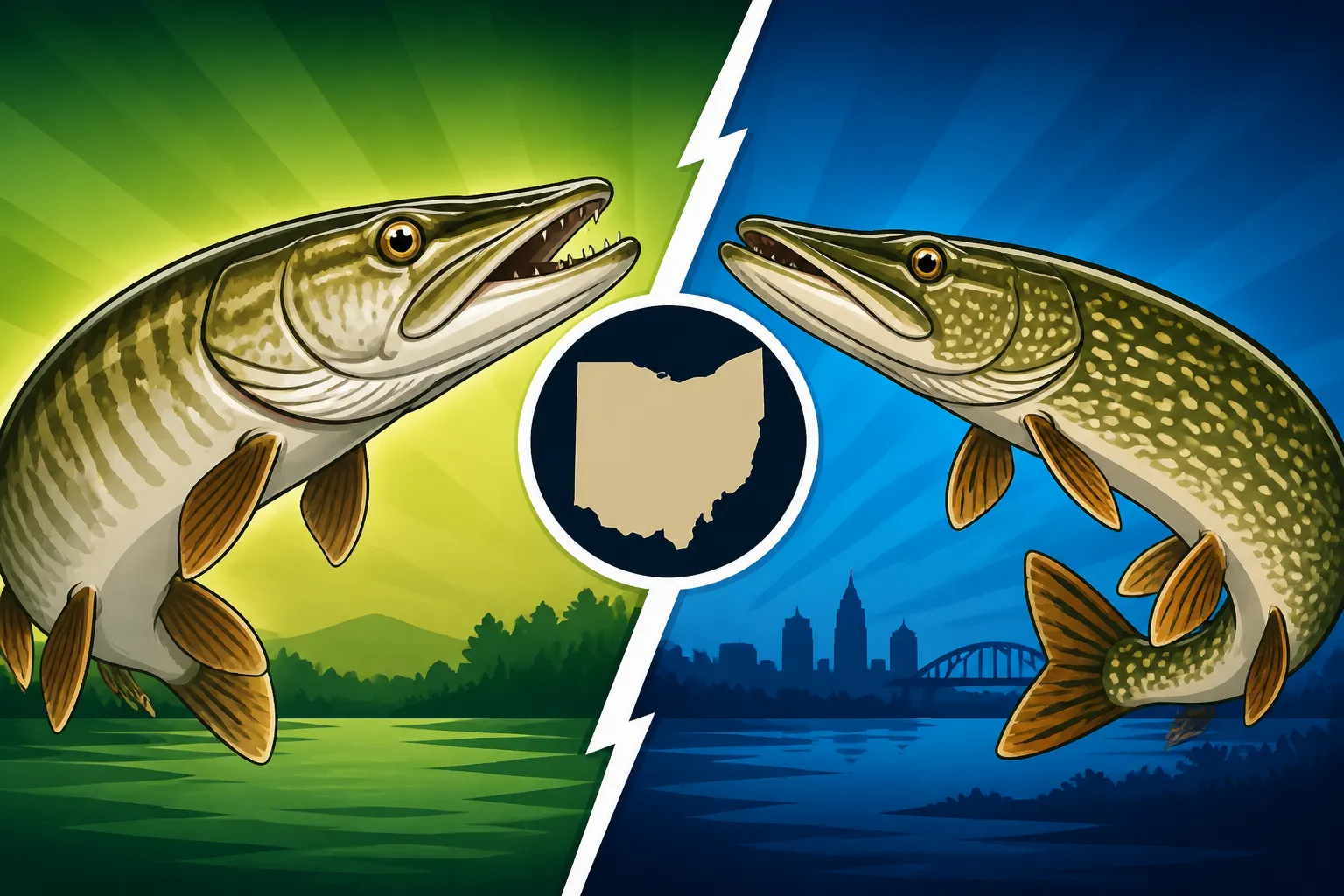
Muskie vs Northern Pike Identification
It's incredibly frustrating when you're out on the water, you've landed a magnificent toothy predator, and a nagging doubt creeps in: is this a muskie or a northern pike? These two fish, both part of the Esox family, are often confused by even experienced Ohio anglers due to their similar elongated bodies and predatory appearance. This guide is here to clear up that confusion, giving you the definitive features to confidently identify your catch, whether you plan to release it or take it home for dinner.
The Initial Conundrum: Why Anglers Confuse Muskie and Northern Pike
Picture this: you've been working a weed line or a submerged timber structure at a lake like Leesville or West Branch Reservoir, and suddenly, you've got a fierce fight on your hands. You boat a long, sleek, sharp-toothed fish, and your adrenaline is pumping. In that moment of excitement, trying to discern subtle differences between a muskie and a northern pike can feel like a pop quiz you didn't study for. They both share that unmistakable "pike" look – a long, torpedo-shaped body, a duck-bill-like snout, and sharp teeth that demand respect when handling.
Many anglers, especially those new to pursuing these apex predators in Ohio waters, simply lump them together. They're both aggressive, ambush predators that hunt similar prey and often occupy similar habitats. This close resemblance is partly why they're so often mistaken for one another, and why understanding the subtle but critical differences is so important, not just for bragging rights, but for adhering to Ohio Fishing Regulations Every Angler Should Know, as size and bag limits can differ.
It's not just a matter of curiosity; correct identification can be crucial for legal compliance. Ohio has specific regulations for muskie, including minimum length limits that are generally larger than those for northern pike, if any exist. Misidentifying your catch could lead to unknowingly violating a regulation, which is something no angler wants. Plus, knowing what you've caught allows you to better understand the fish's behavior, preferred habitat, and how to target it effectively in the future.
Key Visual Indicators: Distinguishing Markings and Body Shape
While muskie and northern pike share a general body plan, a closer look at their patterns, coloration, and even the shape of their tail fins can often provide the first clues to their identity. These aren't always definitive on their own, as individual fish can vary, but they're excellent starting points for identification.
Understanding Body Pattern and Coloration
Northern pike generally exhibit a darker body coloration, often a deep green to olive green, adorned with distinct, lighter, bean-shaped spots or streaks. Think of it as light spots on a dark background. These spots can sometimes merge, creating a mottled appearance, but the overall impression is that of a dark fish with lighter markings. Their fins also tend to have dark spots or blotches, especially the dorsal, caudal, and anal fins. This camouflaged pattern helps them blend into vegetated cover where they often ambush prey.
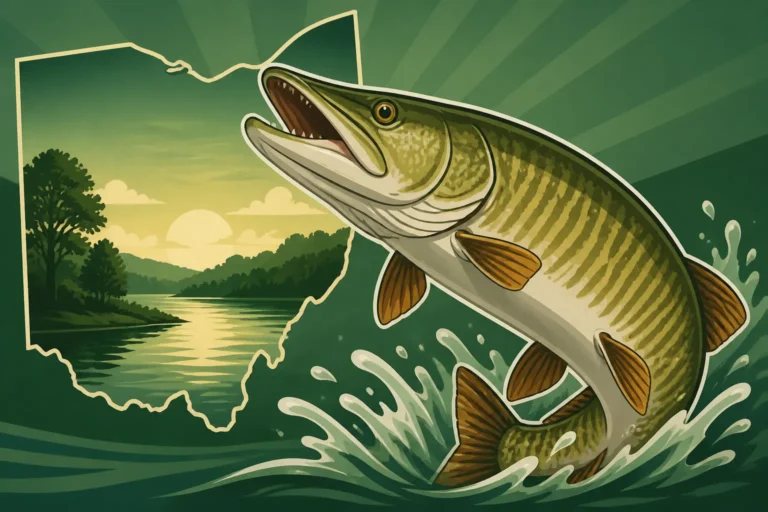
Muskellunge, on the other hand, typically display a lighter background color, usually a greenish-silver to brownish-silver, with darker markings. These markings can take the form of vertical bars, spots, or blotches, creating a pattern of dark markings on a lighter background. It's often described as a variable pattern, and some muskies can be quite clear-bodied with minimal markings, known as "clear" or "silver" muskies. Their fins are usually unmarked or have very faint patterns. This difference in primary pattern is one of the most immediate visual cues, though it can be tricky with very young or exceptionally patterned specimens. For a deeper dive into these elusive fish, check out our Ohio Muskie Fishing Guide.
Tail Fin Shape as a Clue
Another often-overlooked but helpful visual cue is the shape of the caudal (tail) fin. While both fish have forked tails, the degree of the fork can be telling. Northern pike tend to have a more deeply forked, almost V-shaped tail fin, with noticeably pointed lobes. This deep fork is characteristic and can be quite pronounced, giving their tail a more angular appearance. This fin structure is thought to aid in quick bursts of speed, essential for their ambush hunting style.
Muskellunge typically have a less pronounced, more rounded or shallowly forked tail fin. The lobes are often less pointed, appearing more rounded at the tips. Imagine a U-shape rather than a sharp V. While still distinctly forked, it doesn't have the same dramatic V-cut as a pike's. Again, this isn't a hard and fast rule for every single fish, but when combined with other indicators, it adds to the overall picture. These subtle differences contribute to why anglers are so passionate about their Ohio State Record Muskie Length and Weight pursuits.
Getting Up Close: Gill Plate and Jaw Pores as Definitive Tells
When the markings and tail fin don't give you a clear answer, or if you simply want to be absolutely certain, you'll need to get a bit closer to your catch (with extreme caution, of course, given their sharp teeth!). The most reliable methods for distinguishing muskie from northern pike involve examining the scale patterns on their cheeks and gill covers, and counting the sensory pores on the underside of their lower jaw. This is where the definitive identification truly happens.
Examining Scale Patterns on the Cheek and Gill Plate
This is arguably the most reliable and consistent feature to differentiate the two species. You'll need to carefully look at the cheek (the area just below the eye and behind the mouth) and the operculum or gill plate (the bony flap covering the gills).
For a northern pike, both the entire cheek and the entire gill plate will be fully scaled. This means you'll see a complete covering of scales on both these areas. Think of it as a solid shield of scales. This full scaling is a consistent trait across all northern pike, making it an excellent identifier.
Muskellunge, however, have a different arrangement. Their entire cheek will be scaled, similar to a pike. But when you look at the gill plate, only the upper half will be scaled, while the lower half will be bare of scales. It's like a dividing line, with scales above and no scales below on the gill plate. This partial scaling on the gill plate is the most critical anatomical difference and the go-to method for positive identification. You might want to grab a fishing guide for a quick refresher, perhaps one you can find on Amazon, if you're out on the water.
| Feature | Northern Pike | Muskellunge |
|---|---|---|
| Body Pattern | Light, bean-shaped spots on a dark background | Dark spots, bars, or blotches on a lighter background |
| Caudal (Tail) Fin | More deeply forked, V-shaped with pointed lobes | Less deeply forked, U-shaped with more rounded lobes |
| Cheek Scaling | Fully scaled | Fully scaled |
| Gill Plate Scaling | Fully scaled | Upper half scaled, lower half bare |
| Jaw Pores | Usually 5 or fewer per side | Usually 6-10 or more per side |
Counting Jaw Pores
Another highly reliable method, often used in conjunction with the gill plate scaling, is counting the sensory pores on the underside of the lower jaw. These small pores are part of the lateral line system and are used by the fish to detect vibrations in the water.
On a northern pike, you will typically find five or fewer sensory pores on each side of the underside of the lower jaw. These pores are usually small and may require a close inspection. Sometimes, they might have four or even three, but five is a common maximum. This relatively low number of pores is a key characteristic.
Muskellunge, by contrast, possess a higher number of these pores. You will usually find six to ten, or sometimes even more, sensory pores on each side of the underside of their lower jaw. These can be more prominent than those on a pike. Counting these pores, especially when combined with the gill plate examination, provides an almost foolproof identification method. If you're struggling to see these small details, a clear photo can help once you're back home, or consider a small, waterproof magnifying glass from Amazon for your tackle box. These precise identifiers are essential for proper management and for understanding the Muskie Growth Rate in Ohio Lakes.
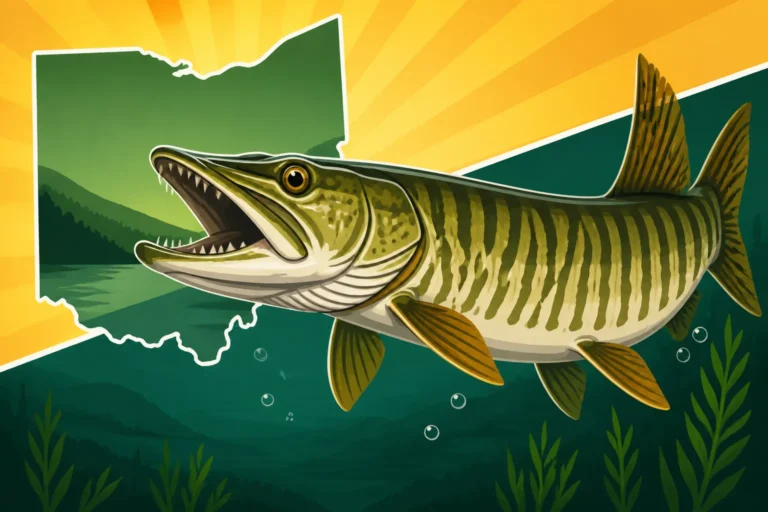
It's worth noting that hybrid tiger muskies, which are a cross between a muskie and a northern pike, will exhibit a mix of these characteristics. They often have a tiger-striped pattern and might have an intermediate number of jaw pores or a mix of scaling patterns on the gill plate. Knowing What a Tiger Muskie Is is a whole other layer of identification!
Geographic Considerations: Where You're Likely to Find Each in Ohio
While the anatomical differences are definitive, knowing where each species typically thrives in Ohio can also give you a hint. Both are predatory fish, but their preferred habitats, while overlapping, do have some distinct tendencies. Understanding their distribution helps in anticipating what you might catch and focusing your efforts.
Typical Habitats for Northern Pike in Ohio
Northern pike in Ohio are often found in cooler, shallower waters with abundant weed growth, submerged timber, or other forms of cover. They love to lurk in thick vegetation, waiting to ambush unsuspecting prey. Lakes and reservoirs with extensive shallow flats and dense aquatic plants are prime pike territory. They can be found in various waters across Ohio, though their populations are generally not as widespread or numerous as some other species.
Some of the smaller, shallower lakes and backwater areas of larger rivers might hold good numbers of northern pike. While they do exist in larger bodies of water, they tend to stick to the weedy bays and protected inlets. If you're fishing in a clear, cool, relatively shallow lake with lots of cover, your chances of encountering a northern pike are higher. Knowing the Ohio Northern Pike Range and Habitat can save you a lot of time.
Prime Muskie Waters in Ohio
Muskellunge in Ohio, especially trophy-sized ones, are often associated with larger, deeper reservoirs and lakes, sometimes with clearer water. They still appreciate structure like weed lines, submerged points, rock humps, and standing timber, but they often range over larger areas than northern pike. Ohio has some truly fantastic muskie fisheries that are actively managed to support these impressive fish. These include well-known spots like Leesville Lake, West Branch Reservoir, Piedmont Lake, and Alum Creek Lake.
Lake Erie also holds muskie, though they are less commonly targeted by the average angler than walleye or perch. The larger size and deeper nature of these muskie-focused waters often mean they can grow to impressive sizes. If you're out chasing a true trophy, you're likely targeting a body of water known for its muskie potential. Learning How Big Muskie Get in Ohio Lakes will definitely inspire you to seek out these specific destinations. When planning your trip, consider what types of Best Lures for Ohio Muskie you'll need, as these can differ from pike presentations.
Even with the geographical leanings, it's entirely possible to catch both species in the same body of water, especially in larger, diverse ecosystems. This is why knowing the definitive identification features is so crucial. Always be prepared to handle either species responsibly, and remember that regardless of which toothy critter you've landed, proper fish handling techniques are key to ensuring its survival if you're practicing catch and release. Also, remember to double-check those Ohio Statewide Bag and Size Limits before deciding to keep any fish. If you are ever in doubt, the safest bet is to release the fish unharmed.
Disclaimer
This article is for general informational purposes only and does not constitute professional advice. Laws, prices and regulations vary by location and change over time. Consult a qualified professional for guidance on your specific situation.