What a Hybrid Striped Bass Is
Ever been out on an Ohio lake, battling a fish that pulls like a freight train, and wondered if you just landed a walleye on steroids, or maybe a super-sized white bass? Chances are, you might have tangled with a hybrid striped bass. These hard-fighting fish are gaining popularity across Ohio, offering an exhilarating challenge to anglers. This guide is here to demystify these remarkable fish, explaining exactly what a hybrid striped bass is, why they thrive in our waters, and how you can get in on the action.
Understanding the Basics: What Exactly is a Hybrid Striped Bass?
Let's cut right to it. A hybrid striped bass isn't a naturally occurring species that just popped up in our rivers one day. Instead, it's a fascinating crossbreed, intentionally created to give us anglers an incredible fighting fish and a fantastic addition to our fisheries. Think of it like a carefully engineered super-fish, combining the best traits of its parents. For years, anglers have been drawn to the powerful runs of pure striped bass, but these fish often require very specific, expansive habitats. On the other hand, white bass are abundant in many Ohio waters and provide good sport, but don't quite reach the same trophy size or sheer power. The hybrid steps in to fill that gap.
The Parentage: Stripers and White Bass
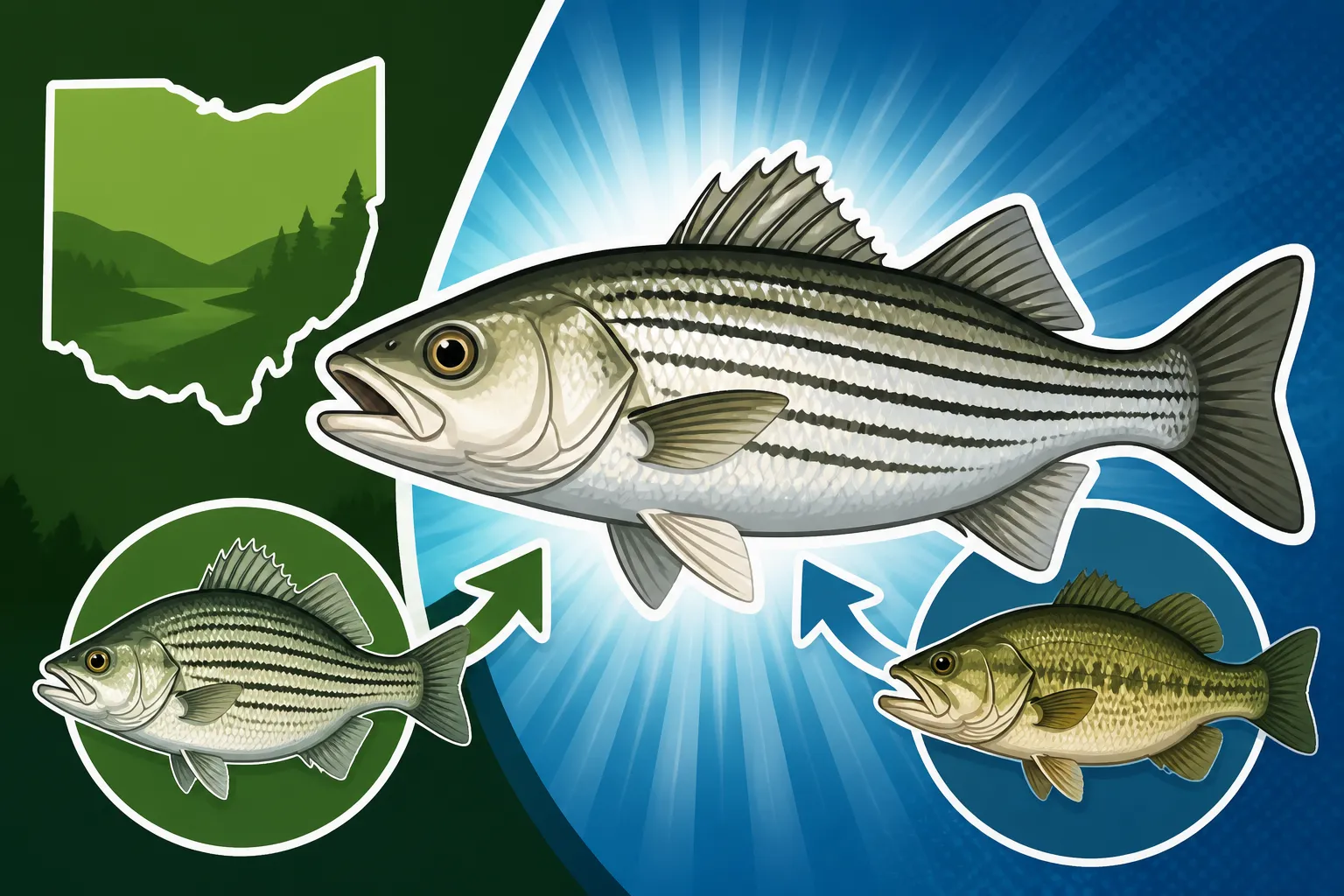
At its core, a hybrid striped bass is a genetic marvel, a cross between a true striped bass (often referred to simply as a "striper") and a white bass. In most Ohio stocking programs, the hybrid produced is often called a "wiper," which is the result of a male white bass fertilizing the eggs of a female striped bass. There's also a less common cross known as a "sunshine bass," which is the opposite – a male striped bass and a female white bass. The primary goal of creating these hybrids is to combine the fast growth rate and incredible fighting spirit of the striped bass with the hardiness and adaptability of the white bass. This genetic blend results in a fish that can tolerate a wider range of water conditions and temperatures than a pure striper, making them suitable for many of Ohio's inland lakes and reservoirs.
While these hybrids are predominantly stocked by state wildlife agencies, including the Ohio Department of Natural Resources (ODNR), to enhance recreational fishing opportunities, it's also worth noting that some natural hybridization can occur where both parent species exist. However, the vast majority of hybrid stripers you'll encounter in Ohio waters are the direct result of carefully managed aquaculture programs. These programs ensure a steady supply of robust, fast-growing fish that provide excellent angling opportunities, often reaching impressive sizes much quicker than many other game fish. Their aggressive nature and willingness to strike a variety of baits make them a popular target for many anglers looking for a serious battle.
Key Identification Features
Identifying a hybrid striped bass can sometimes be a bit tricky, especially if you're not intimately familiar with its parent species. Many anglers have moments of confusion, wondering if they've caught a giant white bass or a particularly small pure striper. However, there are some distinct characteristics that, once you know them, make identification much easier. The goal is to avoid any mix-ups, particularly since Ohio Statewide Bag and Size Limits can vary significantly between species.
The most telling feature is often their stripe pattern. While pure striped bass typically have solid, unbroken lateral lines running from gill to tail, and white bass usually have fainter, often interrupted lines, the hybrid striped bass falls somewhere in between. Their stripes are usually distinct, but they will often appear broken, irregular, or disjointed, especially below the lateral line. Some stripes might be solid, while others are clearly fragmented or wavy. This broken-line pattern is a key indicator. They also tend to have a deeper, more robust body shape than a white bass, but aren't as elongated as a typical pure striper. Their head is usually more conical than a white bass, and their overall coloration can range from silvery-white to a more greenish-bronze on the back, depending on water clarity and diet. Pay close attention to these subtle differences, and you'll quickly become adept at telling them apart from other species you might encounter. If you want a deeper dive, check out Ohio White Bass and Hybrid Striper Identification.
| Feature | Hybrid Striped Bass (Wiper) | Pure Striped Bass | White Bass |
|---|---|---|---|
| Stripe Pattern | Broken, irregular, or disjointed | Usually solid, unbroken | Fainter, often broken or faint |
| Body Shape | Deep-bodied, robust | More elongated, streamlined | More compressed, less robust |
| Size Potential | Intermediate, often large (10-20+ lbs) | Largest (20-60+ lbs) | Smallest (1-3 lbs, rarely larger) |
| Coloration | Silvery-white, greenish-bronze back | Silvery, darker grey/blue back | Silvery, sometimes yellowish fins |
| Tooth Patch on Tongue | Two distinct patches | Two distinct patches | One distinct patch (or none) |
Why Ohio Loves the Hybrid Striper: Stocking and Habitat
Ohio's anglers have a special appreciation for hybrid striped bass, and for good reason. These fish provide an incredible angling experience that many other species just can't match. Their aggressive nature, powerful fight, and willingness to chase down baits make them a prime target for those seeking excitement on the water. Beyond the thrill, they also represent a successful management strategy by the state to maximize the fishing potential of its diverse waterways.
Ohio's Stocking Programs
The Ohio Department of Natural Resources (ODNR) has actively embraced hybrid striped bass stocking programs because these fish offer a unique blend of attributes that benefit both the ecosystem and the fishing community. Unlike pure striped bass, which require huge, open water systems and often migrate long distances to spawn, hybrid stripers thrive in many of Ohio's large reservoirs and inland lakes. They grow remarkably fast, often reaching double-digit weights in just a few years, providing a substantial target for anglers much sooner than other slow-growing trophy species. This rapid growth also means they quickly become a top-tier predator, helping to control populations of prolific baitfish like gizzard shad, which can sometimes overpopulate certain impoundments.
The decision to stock Does Ohio Stock Hybrid Striped Bass? in particular lakes isn't random; it's a calculated effort to create robust fisheries where they can flourish and provide consistent action. Reservoirs like Alum Creek Lake, Hoover Reservoir, and West Branch Reservoir are well-known for their hybrid striper populations, thanks to these deliberate stocking efforts. These waters provide the deep, open-water habitat that hybrids prefer, along with ample forage. The ODNR monitors these populations closely, ensuring that stocking rates are appropriate to maintain a healthy balance, offering a sustainable and exciting fishery for years to come. The result is a vibrant fishery where anglers can consistently target powerful, hard-fighting fish that provide both a challenge and excellent table fare.
Preferred Habitats and Behavior
Understanding where hybrid striped bass like to hang out and how they behave is absolutely crucial for any angler hoping to catch them in Ohio. These are not bottom dwellers, nor are they typically found hiding in dense weed beds like a largemouth bass. Instead, hybrid stripers are creatures of the open water, often found suspending in the water column or patrolling main lake points and humps. They have a strong preference for areas with good current or oxygen levels, often congregating near dam outflows, spillways, or main lake basins where deeper water is available. This is why you'll frequently find them in large, deep reservoirs where expansive open water and plentiful baitfish populations exist.
Their behavior is largely driven by their voracious appetite and schooling instincts. Hybrid stripers are aggressive, schooling predators that constantly chase down baitfish. They’ll often hold near underwater structures, submerged roadbeds, or channels, using these features as ambush points to herd schools of shad. Once they locate a school of bait, they'll often "bust" on the surface, creating a chaotic feeding frenzy that can be seen from a distance – a sure sign that hybrids are actively feeding. This makes them a prime target for techniques that imitate fleeing baitfish. Understanding their nomadic, schooling behavior means that staying mobile and covering water is often more effective than sitting in one spot, especially when they are actively chasing prey. They are one of those Fish That Bite Best in Warm Summer Water in Ohio, often really getting active when the heat turns up.
Fishing for Hybrid Striped Bass in Ohio: Techniques and Tackle
When it comes to hybrid striped bass, you need to be prepared for a fight. These aren't dainty nibblers; they hit hard and pull harder, often making long, drag-screaming runs. This means your tackle choice and fishing techniques need to be up to the task. Successfully landing these powerful fish requires a combination of robust gear and an understanding of their aggressive feeding habits.
Gear Essentials for Hybrid Stripers
To effectively target hybrid striped bass in Ohio, you'll want to lean towards a medium-heavy to heavy action rod, usually in the 6'6" to 7'6" range. This rod length provides the leverage needed to cast heavier lures and, more importantly, to control a powerful fish during a fight. A good quality spinning reel in a 3000 to 4000 series size, or a sturdy baitcasting reel capable of handling braided line, is essential. The reel's drag system is paramount – it needs to be smooth and capable of handling sustained pressure without faltering. You can find excellent options for a reliable spinning reel on Amazon, often with reviews from other hybrid striper anglers.
For fishing line, many seasoned hybrid striper anglers opt for braided line. Its no-stretch property allows for incredible sensitivity, helping you detect subtle bites, and its strength-to-diameter ratio means you can use a thinner, stronger line, which casts further. A good rule of thumb is 20 to 30-pound test braid, often paired with a fluorocarbon leader of 12 to 20 pounds. The fluorocarbon leader provides stealth in clear water and offers a bit more abrasion resistance against any structures or the fish's rough mouth. While you might consider using a heavier leader if you're consistently breaking off, the key is balancing strength with presentation. For a comprehensive overview, checking out a Best Ohio Fishing Gear and Tackle Guide can also provide valuable insights into setting up your complete system.
Popular Baits and Lures
Hybrid striped bass are opportunistic predators, meaning they'll hit a wide variety of baits and lures, especially those that mimic their natural forage: shad and other small baitfish. This gives you a lot of flexibility when you're out on the water. For live bait enthusiasts, shad are king. If you can net or catch fresh gizzard shad or threadfin shad, they are often irresistible to hungry hybrids. Shiners and large minnows can also be effective, fished under a bobber or on a bottom rig. The key with live bait is to present it naturally, allowing it to swim freely or drift with the current, mimicking an easy meal.
When it comes to artificial lures, the options are plentiful and exciting. Swimbaits, both soft plastic and hard-bodied, that closely resemble shad are incredibly effective. Often, a 4-6 inch swimbait on a jig head or rigged weedless can entice powerful strikes. Crankbaits that dive to the depth where fish are holding, particularly those with a tight wobble, can also be dynamite. Silver, white, and chartreuse patterns often work well, mimicking the flash of baitfish. Spoons, especially casting spoons and jigging spoons, are another go-to, particularly when hybrids are suspended in deeper water or busting on the surface. For topwater action, when hybrids are really keying in on surface bait, large poppers, walk-the-dog style baits, and even prop baits can lead to explosive strikes. Don't be afraid to experiment with different sizes and colors, and you can stock up on a wide array of these effective Best Lures for Ohio Fishing through platforms like Amazon, ensuring you have the right tool for any situation.
Effective Fishing Techniques
Fishing for hybrid striped bass requires a mix of strategy and adaptability, largely because their movements are often dictated by baitfish and schooling behavior. One of the most common and exhilarating techniques is casting and retrieving. When you spot hybrids busting on the surface, aggressively chasing bait, throwing a topwater lure, spoon, or swimbait into the fray can lead to instant hook-ups. A fast, erratic retrieve often mimics a fleeing baitfish and triggers an instinctual strike. Look for bird activity, as diving gulls or terns often indicate baitfish pushed to the surface by feeding hybrids.
Trolling is another highly effective method, especially when hybrids are scattered or holding deeper in the water column. Using crankbaits, swimbaits, or even umbrella rigs behind the boat allows you to cover vast amounts of water and present baits at specific depths. Pay close attention to your fish finder to locate schools of bait and suspended hybrids, then adjust your lure depth accordingly. Many anglers will also use a technique called "bottom bouncing" or "drift fishing" with live bait, especially when fish are relating to specific underwater structures like humps, channels, or points. This involves drifting with the wind or current, allowing your bait to be presented naturally near the bottom or suspended off a three-way swivel rig. Regardless of the method, staying mobile and observing your surroundings for signs of activity are paramount to consistent success when targeting these dynamic Ohio game fish.
Regulations and the Future of Hybrid Stripers in Ohio
Fishing for hybrid striped bass in Ohio is a fantastic experience, but it's vital to always be mindful of the rules and regulations set forth by the ODNR. These regulations are in place to ensure healthy fish populations for everyone, both today and for future generations of anglers. Ignoring them can lead to serious fines and penalties, so it's always worth taking a moment to familiarize yourself with the current guidelines before you head out.
Current Ohio Regulations
Navigating fishing regulations can sometimes feel like a chore, but it's a non-negotiable part of responsible angling. When it comes to hybrid striped bass, Ohio has specific rules regarding daily bag limits and minimum size requirements, which can vary from other species like white bass or even pure striped bass if they were present. These limits are subject to change, so always, always refer to the most current Ohio Fishing Regulations booklet or the ODNR website before your trip. For example, some lakes might have a more restrictive limit than others, or the size minimum could be higher depending on the specific management goals for that body of water.
It's also why proper identification is so important. As we discussed earlier, telling a hybrid striped bass from a white bass can be tricky, but it's crucial for compliance with the law. If you mistakenly keep an undersized hybrid, thinking it's a legal white bass, you could face a violation. Always carry a copy of your Ohio Fishing License Guide and the latest regulations, either digitally on your phone or a physical copy, to avoid any confusion. Wildlife officers are out on the water ensuring compliance, and they expect anglers to know the rules. Being prepared not only keeps you on the right side of the law but also contributes to the sustainability of this exciting fishery. Understanding Ohio Fishing Regulations Every Angler Should Know is foundational for any successful fishing trip.
Conservation and Management Efforts
The presence of a thriving hybrid striped bass fishery in Ohio is a testament to effective conservation and management strategies. The ODNR's proactive stocking programs are at the forefront of these efforts, ensuring that suitable waters are regularly replenished with these fast-growing, hard-fighting fish. These programs are not just about putting fish in the water; they are carefully designed based on scientific research into fish biology, habitat capacity, and angler demand. By stocking hybrids, the ODNR is creating a dynamic recreational opportunity in lakes and reservoirs that might not otherwise support a trophy-level game fish of this caliber.
Beyond stocking, ongoing management includes monitoring fish populations, assessing growth rates, and adjusting regulations as needed to maintain ecological balance and fishing quality. This commitment to sound fisheries management means that the hybrid striped bass fishery in Ohio is a sustainable resource, providing countless hours of enjoyment for anglers. As responsible anglers, our role extends to respecting these efforts. This means adhering to bag and size limits, practicing catch-and-release thoughtfully (especially for larger, trophy-sized fish if you're not planning to keep them for consumption), and reporting any unusual observations or concerns to the ODNR. By working together, we can ensure that the excitement of catching a powerful hybrid striped bass continues to be a highlight of Ohio fishing for many years to come.
Disclaimer
This article is for general informational purposes only and does not constitute professional advice. Laws, prices and regulations vary by location and change over time. Consult a qualified professional for guidance on your specific situation.