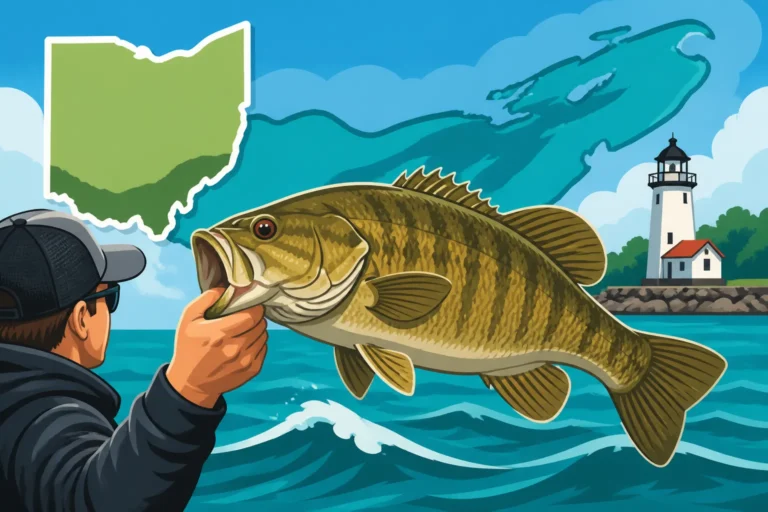
Ohio Smallmouth Bass Fishing Guide
For many Ohio anglers, the quest for smallmouth bass isn't just about catching fish; it's about the challenge, the heart-pounding strike, and the sheer power of these bronzeback warriors. If you've ever felt that powerful tug on your line, only to see a smallmouth leap and dive with incredible acrobatics, you know exactly what I mean. This comprehensive guide is here to unravel the mysteries of Ohio's smallmouth bass, providing you with the knowledge and tactics to consistently hook into these aggressive, hard-fighting fish, no matter where you cast your line across the Buckeye State.
Introduction to Ohio Smallmouth Bass
Smallmouth bass, often affectionately called "brongebac ks" due to their distinctive coloring, are a prized game fish across Ohio. They’re renowned for their feisty nature and acrobatic fights, making them a favorite target for anglers seeking a real challenge. Unlike their largemouth cousins, smallmouth prefer cooler, clearer waters with rocky or gravel bottoms, and they aren't afraid of current, making rivers and certain areas of Lake Erie prime real estate.
Distinguishing Smallmouth from Largemouth Bass
One of the first things many new anglers in Ohio wonder is, "How do I tell the difference between a smallmouth and a largemouth bass?" It’s a valid question, as both are prominent species, but their habitats and behaviors can be quite different. The most obvious visual cue is the jawline: on a largemouth, the corner of the mouth extends past the back of the eye, while on a smallmouth, it typically doesn't. Think of it like a subtle smile versus a wide grin. You can read more about how to distinguish them in our guide on How to Tell a Largemouth From a Smallmouth Bass.
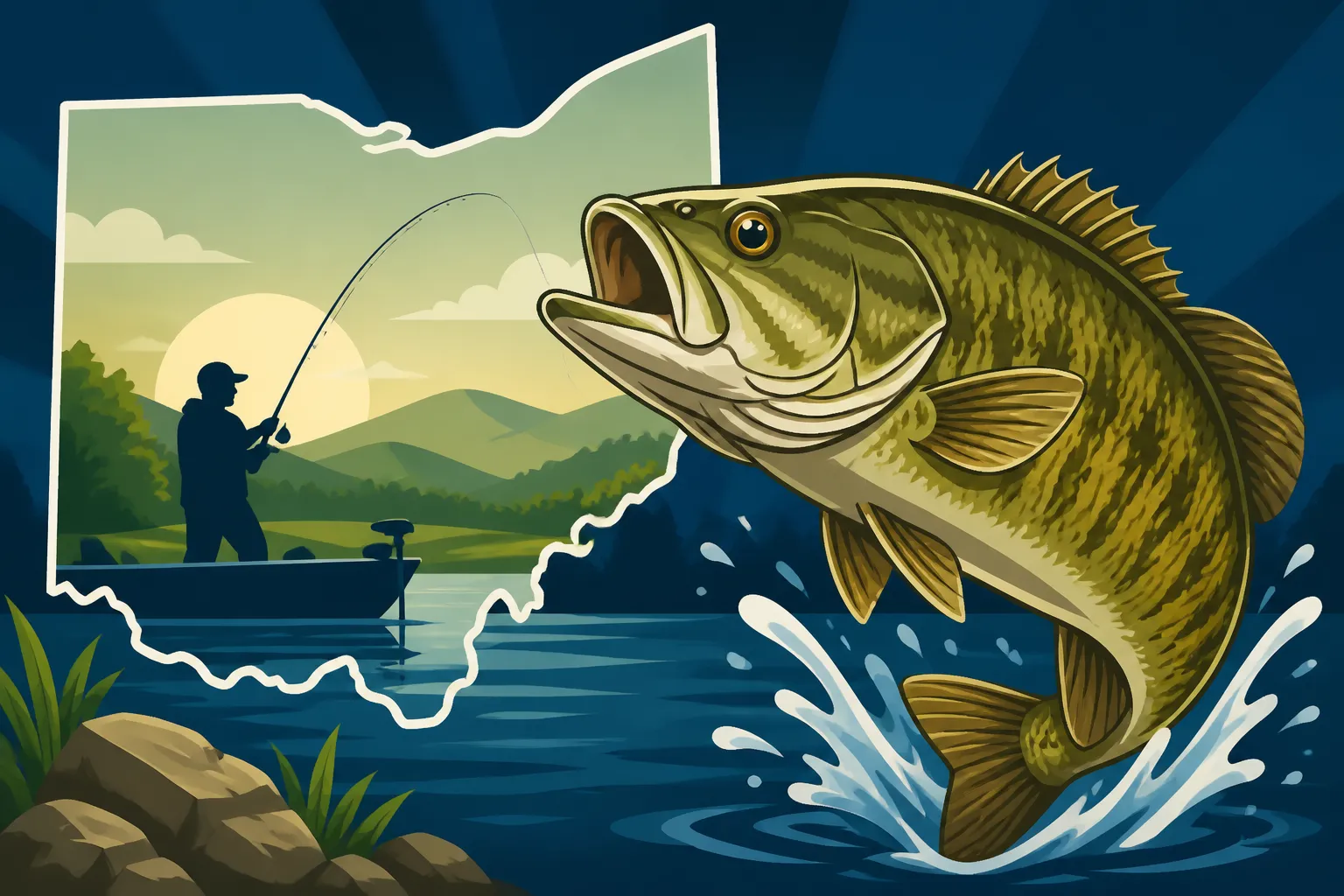
Beyond the mouth, you'll notice differences in coloration and body shape. Smallmouth often have vertical stripes or blotches on their sides, ranging from bronze to olive-green, with a more streamlined, torpedo-shaped body. Largemouth, conversely, usually have a prominent horizontal dark stripe down their side and a chunkier, deeper body profile, often appearing greener in color. These subtle differences aren't just cosmetic; they reflect their preferred environments and feeding habits, which in turn dictate where and how you’ll try to catch them.
The Thrill of Smallmouth Fishing in Ohio
There's a reason so many anglers specifically target smallmouth bass in Ohio – they're just plain fun to catch! The moment a smallmouth strikes, it's often with a sudden, aggressive thump that sends a jolt right up your arm. What follows is a battle of wills, as these fish are notorious for their aerial displays, leaping clear of the water, shaking their heads violently, and making powerful, unexpected runs. It's a completely different fight compared to the bulldogging strength of a largemouth.
Fishing for smallmouth demands a certain level of finesse, but also the readiness to handle an explosive fight. It's not uncommon to hear stories of anglers losing smallmouth right at the boat or shore because they weren't prepared for the last-ditch effort the fish would make. This unpredictable, high-energy battle keeps anglers coming back for more, constantly refining their techniques and gear in pursuit of that next adrenaline-pumping hookup. It's this unique combination of challenge and reward that makes smallmouth bass a truly special species in Ohio's waters.
Where to Find Smallmouth Bass in Ohio
Ohio offers a fantastic variety of waters for smallmouth bass, from the expansive waters of Lake Erie to countless clear, rocky rivers and streams. Knowing where to look is half the battle when targeting these elusive, hard-fighting fish. Their preference for cooler, cleaner water with structure means they aren’t found just anywhere, but once you pinpoint their preferred haunts, you’ll be in for some exciting action.
Lake Erie's Smallmouth Haven
When you think of Lake Erie fishing, walleye might be the first thing that comes to mind, but the lake is also a world-class smallmouth fishery, especially in its deeper, rockier areas. The western basin, particularly around the islands like Kelleys Island and South Bass Island, is legendary for its trophy smallmouth. These areas provide the perfect blend of rocky shoals, clear water, and abundant forage that smallmouth thrive on. Many anglers will head out specifically for the bronzebacks, knowing that a true giant could be lurking in those depths. If you're wondering, Does Lake Erie Have Good Smallmouth Bass Fishing?, the answer is an emphatic yes!
Moving eastward into the central basin, smallmouth can still be found around rocky points, ledges, and offshore structure. The key is to look for areas with current breaks and sudden depth changes, as these spots often concentrate baitfish and provide ambush points for smallmouth. Don't be afraid to explore, either from a boat or by casting from shore near rocky outcroppings. The vastness of Lake Erie can be intimidating, but focusing on these specific types of structure will significantly increase your odds of success.
Rivers and Streams Across Ohio
Beyond Lake Erie, Ohio's rivers and larger streams are incredible smallmouth factories. Rivers like the Muskingum, Mohican, Olentangy, Scioto, and Maumee offer miles of prime smallmouth habitat. These river systems typically feature the clear, flowing water, rocky bottoms, and gravel beds that smallmouth adore. Look for areas with current breaks such as eddies, submerged boulders, log jams, and undercut banks. These are prime spots where smallmouth will lie in wait for baitfish or crayfish to be swept by.
Creek mouths where smaller tributaries enter a larger river are also fantastic spots, especially after a rain when cooler, oxygenated water and new food sources wash in. Smallmouth in rivers are often incredibly strong due to constantly battling the current, making for an even more exhilarating fight. You can find smallmouth in many of Ohio’s waterways, but focusing on those with a good current and plenty of natural structure is your best bet for consistent action. Always check local regulations, as river fishing can sometimes have specific rules.
Inland Lakes and Reservoirs with Smallmouth
While less common than in Lake Erie or rivers, several inland lakes and reservoirs in Ohio also hold respectable populations of smallmouth bass. These are typically deeper, clearer bodies of water with plenty of rock or gravel structure. Lakes like Alum Creek Lake, Hoover Reservoir, and LaDue Reservoir are known for their smallmouth populations. In these environments, smallmouth often relate to offshore humps, rock piles, main lake points, and deep break lines.
Fishing these inland lakes often requires a bit more searching, as smallmouth can be more spread out. Utilizing your electronics, if you have them, to locate subtle changes in bottom composition or structure can be a huge advantage. They might not offer the sheer numbers of Lake Erie, but these inland gems can still produce quality fish for the patient and persistent angler. Remember to also look for areas with sparse weed growth mixed with rock, as this transitional habitat can be very attractive to smallmouth looking for cover and food. Our article on Best Ohio Lakes for Bass Fishing provides more excellent locations.
Understanding Smallmouth Bass Behavior and Biology
To consistently catch smallmouth bass in Ohio, it helps to understand a bit about how they live their lives. Their biology and behavior dictate their movements, feeding patterns, and where they choose to hold. Knowing these aspects can help you predict where they’ll be and what they might be willing to bite on.
Smallmouth Bass Habitat Preferences
Smallmouth bass are quite particular about where they live. They thrive in cooler, clearer water than their largemouth cousins, and they absolutely love rocky environments. Think about it: smooth, clean rocks provide excellent hiding spots for crayfish, which are a primary food source. Rocky bottoms also offer solid structure that fish can relate to, whether it's a deep boulder pile, a rocky point, or a ledge drop-off. You can delve deeper into their preferred hangouts in Smallmouth Bass Habitat Preferences.
Beyond rocks, they also appreciate current. In rivers, smallmouth will often orient themselves facing upstream, holding in eddies or behind submerged rocks, waiting for food to drift by. In lakes, they'll seek out current generated by wind, especially on windy points or along breakwalls. They're not fans of heavy, dense vegetation that largemouth often inhabit; instead, they prefer open water with scattered cover. This preference is key to understanding where to present your lures.
Diet and Feeding Patterns
Smallmouth bass are opportunistic predators with a diverse diet, but they have a few clear favorites. Their absolute go-to meal is crayfish. If there are crayfish present, you can bet smallmouth are hunting them. This is why so many successful smallmouth lures mimic crayfish in both appearance and action. Next on the menu are various baitfish like shad, shiners, gobies (especially in Lake Erie), and juvenile panfish. Insects can also be a significant part of their diet, especially in rivers and streams, where nymphs, larvae, and even terrestrial insects can fall into the water. For more details, check out What Smallmouth Bass Eat in Ohio Lakes.
Their feeding patterns are often influenced by light conditions and water temperature. They tend to be most active during dawn and dusk, or on overcast days, when they can ambush prey more effectively. In terms of temperature, they prefer water ranging from the mid-50s to low-70s Fahrenheit. Outside of these ranges, they might become less active, moving deeper or into more sheltered areas. Understanding these preferences allows you to choose the right baits and target the best times to fish.
Spawning Behavior and Seasonal Movements
Smallmouth bass typically spawn in the spring when water temperatures reach the upper 50s to low 60s Fahrenheit. In Ohio, this usually means late April through June, depending on the specific body of water and yearly weather patterns. Males construct nests in gravel or sandy areas, often near protective structure like rocks or logs, in relatively shallow water. They then guard these nests aggressively, making them highly vulnerable to anglers during this period.
After spawning, smallmouth will often move into their summer patterns, seeking deeper, cooler water in lakes or stronger currents and deeper pools in rivers. As fall approaches and water temperatures begin to drop, they’ll enter a pre-winter feeding frenzy, bulking up for the colder months. This is often an excellent time for aggressive fishing, as they are actively feeding. In winter, they become less active, retreating to the deepest, most stable parts of their environment. Understanding these seasonal movements is crucial for successful smallmouth fishing throughout the year in Ohio.
Essential Gear for Ohio Smallmouth Bass Fishing
Having the right tools for the job can make a huge difference in your smallmouth bass success. While you don't need to break the bank, investing in quality gear tailored for these hard fighters will enhance your experience and your catch rates. From rods and reels to the perfect line, every component plays a role.
Rod and Reel Combinations
For smallmouth bass, a versatile rod and reel setup is key. Generally, a medium to medium-heavy action spinning rod, around 6'6" to 7'2" in length, is a fantastic all-around choice. This length provides good casting distance and enough leverage to handle strong runs, while the medium action offers enough sensitivity to feel subtle bites and enough backbone to set the hook. A fast action tip is often preferred, as it allows for quicker hook sets, which can be crucial when dealing with a smallmouth's notorious head shakes.
Pair that rod with a quality spinning reel in the 2500 to 3000 size range. Look for a reel with a smooth drag system, as smallmouth will test it frequently. A smooth retrieve is also important for working various lures effectively. Many anglers find reliable and affordable options for both rods and reels on Amazon, making it easy to build a solid setup without needing to visit multiple specialty shops.
Fishing Line Choices
Choosing the right fishing line for smallmouth bass can be a bit of a balancing act between sensitivity, strength, and castability. Fluorocarbon line, typically in the 6-10 lb test range, is an excellent primary choice. It offers low stretch for incredible sensitivity, making it easier to detect those light bites, and it's nearly invisible underwater, which is a huge advantage in clear smallmouth waters. Its abrasion resistance is also a plus when fishing around rocky structure.
Another popular option is braided line, often in the 10-15 lb test range, with a fluorocarbon leader of 6-10 lb test. The braid provides extreme sensitivity and exceptional casting distance, especially with lighter lures. The fluorocarbon leader maintains the stealth necessary for clear water and offers abrasion resistance where it counts – near the lure. Some anglers will also opt for monofilament in the 8-12 lb range, especially for topwater baits, as its buoyancy keeps lures riding high, but it lacks the sensitivity and invisibility of fluorocarbon.
Tackle Box Essentials and Lures
Your tackle box for smallmouth bass should be stocked with a variety of lures that mimic their natural prey: crayfish and baitfish. Here's a quick rundown of some must-haves:
- Jigs: Tube jigs, hair jigs, and Ned rigs are absolute smallmouth killers. Tubes and Ned rigs mimic crayfish perfectly when hopped along the bottom.
- Crankbaits: Small, shallow-running crankbaits in natural baitfish or crayfish patterns are effective for covering water.
- Spinnerbaits & Chatterbaits: These can be great for aggressive fish, especially in stained water or around cover.
- Soft Plastics: Grubs, paddle tail swimbaits, and finesse worms rigged on a drop shot or jig head are incredibly versatile.
- Topwater Lures: Poppers, walk-the-dog baits, and prop baits can provide explosive surface strikes, especially during low-light conditions.
Consider carrying a variety of sizes and colors to match different conditions. Natural colors (green pumpkin, brown, watermelon, smoke) are often best, but don't shy away from brighter colors (chartreuse, orange) in stained water or during aggressive feeding periods. A good selection of hooks, weights, and swivels is also essential for various rigging options. For a complete collection of tackle, you can find almost anything you need on Amazon.
Top Techniques for Catching Smallmouth Bass
Smallmouth bass fishing is an art form, demanding versatility and adaptability. There's no single magic bullet, but a range of techniques will put you in contention for some incredible catches. Whether you prefer a subtle finesse approach or a more aggressive power fishing style, there’s a technique perfectly suited for bronzebacks.
Finesse Techniques: Drop Shot and Ned Rig
When smallmouth are finicky, pressured, or holding deep, finesse techniques are your best friends. The drop shot rig is incredibly effective because it presents your bait horizontally at a specific depth, keeping it tantalizingly in the strike zone without needing constant movement. A small, soft plastic worm or minnow imitation nose-hooked on a small, sharp hook above a sinker can be deadly. You can gently shake the rod tip to make the bait quiver in place, driving nearby smallmouth crazy. This technique is particularly effective in clear water or when fish are suspended over structure. Learn more about How to Fish a Drop Shot for Smallmouth Bass.
The Ned Rig is another finesse powerhouse, especially popular for its ability to mimic a small, foraging creature on the bottom. It consists of a small mushroom-shaped jig head paired with a short, buoyant soft plastic stick bait. The unique design allows the bait to stand up straight off the bottom, creating an irresistible presentation. It's incredibly simple to fish: cast it out, let it sink, and then slowly drag or hop it along the bottom. Smallmouth often pick it up as it falls or during the pause, so pay close attention to your line for subtle taps or twitches. It's a fantastic technique for targeting smallmouth in a variety of depths and conditions. We have a dedicated guide on How to Fish a Ned Rig for Ohio Smallmouth Bass.
Power Fishing: Crankbaits and Spinnerbaits
When smallmouth are aggressive and actively feeding, power fishing techniques allow you to cover water quickly and draw reaction strikes. Crankbaits are ideal for this. Shallow-diving crankbaits work well along rocky shorelines, over submerged structure, or through shallow river rapids. Deeper-diving models are excellent for probing offshore humps, ledges, and deeper breaks in larger lakes. Choose colors that mimic baitfish or crayfish, and experiment with different retrieves – a steady retrieve, stop-and-go, or even bumping the crankbait off rocks can trigger strikes. The erratic deflections often imitate a fleeing or wounded prey, which smallmouth find irresistible.
Spinnerbaits are another excellent power fishing tool, especially in areas with current or stained water. Their flashing blades and vibrating skirts create a lot of commotion, attracting smallmouth from a distance. They are also highly effective for covering larger areas quickly and can be fished through relatively heavy cover without snagging. Try different blade combinations (Colorado for thump, Willowleaf for flash) and skirt colors until you find what the fish are reacting to. A fast retrieve can trigger reaction strikes, while a slower, more deliberate retrieve might be better for less active fish. Both crankbaits and spinnerbaits are fantastic for locating active fish quickly.
Topwater and Jerkbait Action
There's nothing quite like a smallmouth blowing up on a topwater lure – it's one of the most exciting ways to catch them! Topwater baits like poppers, walk-the-dog style lures (e.g., Zara Spook), and prop baits are incredible during low-light conditions (dawn, dusk) or on overcast days when fish are willing to come to the surface. The key is to work them with an erratic, stop-and-go retrieve that mimics a struggling baitfish or insect. Patience is crucial; after a cast, let the lure sit for a few seconds before initiating your retrieve, as the splashdown itself can often draw attention.
Jerkbaits, on the other hand, are designed to suspend or slowly float/sink in the water column and are fished with a "twitch-twitch-pause" retrieve. This erratic action, followed by a tantalizing pause, often triggers predatory instincts in smallmouth. They are particularly effective in cooler water, during pre-spawn, or when fish are relating to specific cover. Experiment with the length of your pauses, as sometimes a longer pause is what it takes to convince a hesitant smallmouth to strike. Both topwater and jerkbaits require a bit of finesse in their presentation, but the rewards are often spectacular.
Seasonal Strategies for Ohio Smallmouth Bass Fishing
Understanding the annual cycle of smallmouth bass is paramount to consistent success. Their behavior shifts dramatically with the seasons, influenced by water temperature, spawning patterns, and forage availability. Adapting your approach to these seasonal changes will put you in the best position to catch them throughout the year in Ohio.
Spring: Pre-Spawn and Spawn
Spring in Ohio is an exciting time for smallmouth anglers. As water temperatures climb into the 40s and 50s Fahrenheit, smallmouth begin to move out of their wintering grounds and into shallower areas in search of food and warmer water. This is the pre-spawn period, characterized by aggressive feeding as they bulk up for spawning. Look for them on main lake points, rocky flats adjacent to deep water, and creek mouths. Crankbaits, jerkbaits, and even larger soft plastic swimbaits can be highly effective during this time, as smallmouth are willing to chase a meal.
As water temperatures reach the upper 50s and low 60s, smallmouth begin to spawn. They move into shallow, protected areas with gravel or rocky bottoms to build nests. While they are guarding their nests, they can be highly aggressive, striking at anything that comes too close. However, fishing for bedding smallmouth can be controversial, as it makes them easy targets and can disrupt the spawning process. Many anglers choose to avoid targeting bedding fish to ensure healthy populations for the future, especially given the Ohio Largemouth and Smallmouth Bass Minimum Length Limit and Ohio Bass Daily Limit on Inland Lakes regulations. After the spawn, males remain on the nests for a short period, guarding fry, while females often move to nearby deeper structure to recover.
Summer: Post-Spawn and Deep Water
As summer fully sets in and water temperatures rise into the 70s, smallmouth move into their post-spawn and summer patterns. In lakes, this often means they relocate to deeper, cooler water, relating to offshore humps, rock piles, deep ledges, and transition areas where hard bottom meets soft. You'll need to use your electronics to find these subtle structures and schools of baitfish. Drop shots, Ned rigs, and deep-diving crankbaits are excellent for probing these deeper zones. Early mornings and late evenings can also offer opportunities for shallow-water action as smallmouth move up to feed.
In rivers, summer smallmouth will still be found in areas with current, but they may move to deeper pools, shady undercut banks, and around large boulders that break the flow. Topwater lures can be fantastic in rivers during low light, while jigs, tubes, and small spinnerbaits worked through deeper runs are productive during the day. Consider fishing during weekdays or less popular times to avoid heavy recreational boat traffic, which can spook fish.
Fall: Feeding Frenzy and Winter Prep
Fall is arguably one of the best times of year to target smallmouth bass in Ohio. As water temperatures begin to drop, smallmouth sense the approaching winter and enter a feeding frenzy, actively trying to pack on weight. They become incredibly aggressive and will often chase down lures with abandon. Look for them on offshore humps, main lake points, and rocky flats, where baitfish are congregating. They'll often be found slightly shallower than their summer haunts but still relating to significant structure.
Jerkbaits become incredibly effective in the fall, mimicking a dying baitfish with their erratic action and pauses. Crankbaits, spinnerbaits, and swimbaits are also excellent choices for covering water and triggering aggressive strikes. As temperatures continue to drop into late fall, smallmouth will begin their migration to deeper wintering holes. Finding these staging areas can lead to incredible days, as fish will often school up tightly. Don't overlook these colder months for some of the biggest smallmouth of the year.
Conservation and Responsible Angling
As dedicated anglers, we all share a responsibility to protect Ohio's incredible smallmouth bass fisheries. Practicing responsible angling ensures that these powerful fish will continue to thrive for generations to come, providing countless thrills for future fishermen and women. It's about more than just catching fish; it's about being a good steward of our natural resources.
Catch and Release Best Practices
Smallmouth bass are a prime candidate for catch and release, especially the larger, older fish that are crucial for a healthy breeding population. If you choose to release your catch, doing so properly is essential for the fish's survival. Always handle the fish as little as possible, and with wet hands to protect its slime coat, which acts as a barrier against disease. Avoid touching their gills or eyes.
When unhooking, use pliers or a dehooking tool to quickly remove the hook. If the hook is deeply swallowed, consider cutting the line as close to the hook as possible rather than tearing the fish's internal organs. Support the fish horizontally, especially larger ones, and quickly get them back into the water. If the fish seems stunned or weak, hold it gently upright in the water, facing into a mild current if possible, until it regains its strength and swims away on its own. Seeing a healthy smallmouth swim away powerfully is just as rewarding, if not more, than the initial catch.
Understanding and Adhering to Regulations
Ohio has specific fishing regulations in place to manage its fish populations, including smallmouth bass. These regulations often include daily bag limits (how many fish you can keep in a day) and minimum size limits (the smallest fish you can legally keep). These limits are designed to protect younger fish, allowing them to grow to maturity and reproduce, and to prevent overfishing of larger, spawning adults. Our guide to Ohio Statewide Bag and Size Limits is a critical read.
It is every angler's responsibility to know and follow these rules. Before each fishing trip, especially if you're visiting a new body of water, take a moment to review the current Ohio fishing regulations booklet or check the Ohio Department of Natural Resources (ODNR) website. Regulations can vary by water body; for instance, some specific lakes or rivers might have different rules than the general statewide limits. Ignoring these rules can lead to fines and harm the fishery you love to enjoy.
Protecting Smallmouth Habitat
The quality of smallmouth bass fishing is directly linked to the health of their habitat. Keeping our waterways clean and free of litter is a fundamental part of habitat protection. Never leave behind fishing line, lures, bait containers, or any other trash. Monofilament line, in particular, can be a serious hazard to wildlife. Pack out everything you pack in, and if you see litter, consider picking it up, even if it's not yours.
Beyond litter, supporting efforts to maintain water quality and prevent pollution is vital. Runoff from agricultural areas or urban development can introduce harmful chemicals and sediment into smallmouth waters, impacting their food sources and spawning grounds. Advocating for responsible land use and conservation practices helps ensure that the clear, rocky environments smallmouth depend on remain healthy. By being mindful of our impact, we contribute to a thriving fishery for everyone.
Common Challenges and Troubleshooting
Even with the best gear and knowledge, smallmouth bass fishing can present its fair share of challenges. These fish can be finicky, weather patterns can shift, and techniques that worked yesterday might not work today. Learning to troubleshoot and adapt on the fly is a hallmark of a successful smallmouth angler.
Dealing with Finicky Fish
We've all been there: you know the smallmouth are there, you see them on your electronics, or you even spot them visually, but they just won't bite. Finicky fish are one of the most common frustrations in smallmouth fishing. When this happens, it's time to slow down and downsize. If you're power fishing with crankbaits, switch to a finesse presentation like a Ned rig or a drop shot. Use smaller baits, lighter line, and slower retrieves.
Sometimes, a subtle change in color can make a huge difference. If you're using a brightly colored jig, try a more natural green pumpkin or brown. Another tactic is to change your retrieve cadence – perhaps a longer pause with a jerkbait, or letting a tube jig sit motionless on the bottom for an extended period. Don't be afraid to experiment. If one technique isn't working, try another. Smallmouth can be moody, and sometimes it's just about finding that one thing they will react to.
Weather and Water Conditions
Weather and water conditions play a huge role in smallmouth behavior. A sudden cold front, for instance, can shut down the bite almost completely. When this happens, fish often move deeper and become less active. Your best bet is to switch to slower presentations, target deeper structure, and be patient. Overcast days, on the other hand, can often trigger smallmouth to feed more actively, as the reduced light allows them to feel more secure in shallower water.
Water clarity is another major factor. In clear water, line visibility and subtle presentations are crucial. You'll want to use fluorocarbon leaders and natural bait colors. If the water becomes stained or muddy after a rain, smallmouth might rely more on their lateral line to detect vibrations. This is when baits with more thump and flash, like spinnerbaits, chatterbaits, or even dark-colored jigs, can become more effective. Always observe the conditions and adjust your approach accordingly.
Snags and Break-offs
Fishing for smallmouth often means fishing around rocky structure, and with rocks come snags. Losing lures and breaking off fish is an inevitable part of the game, but you can minimize it. When fishing jigs or tubes on the bottom, try to maintain constant contact with your lure. If you feel it hit a rock, lift your rod tip slightly and jiggle it gently to try and walk it over the obstruction. If it gets truly snagged, point your rod tip directly at the snag, pull the line tight, and then quickly pluck the line like a guitar string. This often frees the lure.
Using slightly heavier line than you think you need, especially in abrasive environments, can also help. A 10 lb fluorocarbon leader might be better than an 8 lb leader if you're constantly getting frayed lines. Also, check your line frequently for nicks and abrasions, especially after reeling in through heavy cover. Tie fresh knots when needed. While frustrating, every snag is a lesson in how to present your lure more effectively in challenging terrain. Many anglers buy their terminal tackle and soft plastics in bulk from Amazon to ensure they always have replacements on hand.
Table: Ohio Smallmouth Bass Lure Selection Guide
| Lure Type | Best Conditions | Target Depth | Retrieve Style | Smallmouth Prey Mimicked | Key Benefits |
|---|---|---|---|---|---|
| Ned Rig | Finicky fish, pressured water, clear/cold water | Bottom | Drag, subtle hops, short pauses | Crayfish, small baitfish | Highly effective, subtle, stands up off bottom |
| Drop Shot | Suspended fish, deep water, precise depth targeting | Mid-column to Bottom | Stationary quiver, slight lifts, dead sticking | Minnows, worms, larvae | Presents bait horizontally, stays in strike zone |
| Jerkbait | Cooler water, pre-spawn, post-spawn, clear water | Shallow to Mid-column | Twitch-twitch-pause, erratic pulls | Baitfish | Erratic action triggers reaction strikes, suspends appealingly |
| Crankbait | Actively feeding fish, covering water | Shallow to Deep | Steady retrieve, stop-and-go, bump structure | Baitfish, crayfish | Quickly locates active fish, deflects off cover |
| Tube Jig | Rocky bottoms, current, imitating crayfish | Bottom | Hop, drag, drift with current, shake | Crayfish | Versatile, excellent crayfish imitation |
| Spinnerbait | Stained water, wind, active fish, covering cover | Shallow to Mid-column | Steady retrieve, slow roll, rip-and-fall | Baitfish | High vibration/flash, weedless for covering water |
| Topwater Lure | Low light, calm water, aggressive fish | Surface | Walk-the-dog, pop-and-pause, erratic splashing | Baitfish, insects | Exciting strikes, draws fish from cover |
Disclaimer
This article is for general informational purposes only and does not constitute professional advice. Laws, prices and regulations vary by location and change over time. Consult a qualified professional for guidance on your specific situation.