Ohio Bluegill and Sunfish Identification
It’s a scenario every Ohio angler has faced: you reel in a beautiful, colorful panfish, and while you know it’s undoubtedly a sunfish, you find yourself scratching your head. Is it a bluegill? A pumpkinseed? A green sunfish? The world of sunfish can be a bit of a kaleidoscope, with many species sharing similar characteristics, leading to confusion about what you've actually caught. This guide is dedicated to clearing up that mystery, providing you with clear, practical identification tips for bluegill and the most common sunfish species found throughout the diverse waters of Ohio.
The Bluegill: Ohio's Most Recognizable Panfish
Ah, the bluegill! For many, this is the quintessential panfish, the fish that sparked a lifelong love for angling. They’re ubiquitous across Ohio, found in virtually every pond, lake, and slow-moving river. But even the mighty bluegill can be mistaken for its sunfish cousins if you don't know what to look for. Let's break down what makes a bluegill a bluegill.
Distinctive Physical Traits of Bluegill
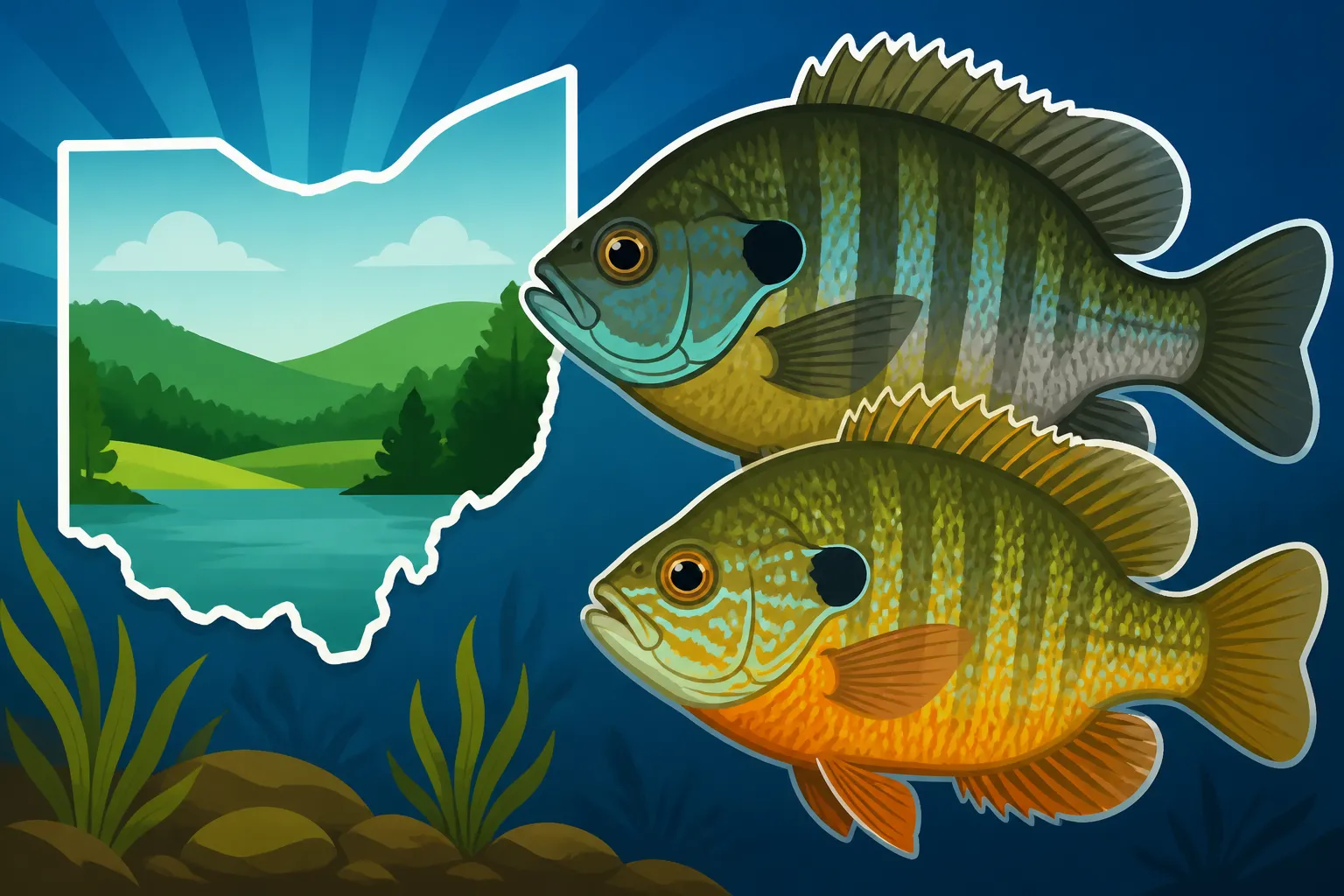
When you catch a bluegill, the first thing you might notice is its distinct, often vibrant, appearance. Their body shape is typically deep and laterally compressed, almost like a disc or a dinner plate turned on its side. This round, flattened profile is a classic bluegill characteristic. While their overall body color can vary wildly depending on the water clarity, diet, and even the fish's mood – ranging from a deep olive-green to a light golden brown – there are a few consistent features.
One of the absolute key identifiers for a true bluegill is the small, dark, inky-black spot located on the posterior edge of its opercular flap, often called the "ear flap." This spot is solid black, without any distinct red, orange, or white margin around it, which is crucial for differentiating it from other sunfish. Another tell-tale sign is the blue-green iridescent sheen often visible on the gill plates and chin, which gives the bluegill its fitting name. Look closely, and you might also spot several dark, often indistinct, vertical bars or stripes running down their sides. These bars tend to be more pronounced in males, especially during the spawning season when their colors become incredibly intense. Finally, bluegill possess comparatively long, pointed pectoral fins that, when folded forward, can often extend past the front of their eye. Their mouth is relatively small and terminal, meaning it's located at the very front of their snout, perfectly designed for nipping at insects and small invertebrates.
Common Habitats and Behaviors
Bluegill are true champions of adaptability, thriving in a wide range of aquatic environments across Ohio. You'll typically find them preferring clear, warm waters that offer plenty of submerged vegetation, fallen timber, rock piles, or artificial structures like docks and brush piles. These areas provide both cover from predators and an abundant food source. They are often found in the shallower reaches of lakes, ponds, and slow-moving rivers, especially around weed beds or areas with ample shaded cover.
Bluegill are known for their social nature, frequently schooling together, particularly the younger fish. This schooling behavior can lead to incredible days on the water where you catch fish after fish from the same spot. They are generally aggressive feeders, especially when compared to some other fish, and will readily strike at a variety of baits and lures, making them a fantastic target for beginners and seasoned anglers alike. During the warmer months, you might observe their fascinating nesting behavior: male bluegill will fan out circular depressions on the bottom in shallow areas, often forming large colonies of these "beds." This is where they guard their eggs and fry, and it's also a prime time to catch them, though anglers should practice catch-and-release to protect these spawning fish. If you're keen to learn more about this period, check out our guide on When Bluegill Spawn in Ohio.
Bluegill vs. Other Panfish: Quick Distinctions
While bluegill are a type of sunfish, they are distinct from other common panfish you'll encounter in Ohio. The most frequent confusion arises when trying to tell them apart from crappie. A key difference lies in their dorsal fins: bluegill have one continuous dorsal fin, while crappie – both black and white – possess two distinct dorsal fins, one spiny and one soft-rayed, that are clearly separated or only slightly joined. Crappie also tend to have a more elongated, thinner body profile compared to the bluegill's rounder, deeper body. If you want to dive deeper into crappie, our Ohio Crappie Fishing Guide has you covered.
Another common panfish, the rock bass, is also often mistaken for a bluegill. However, rock bass have noticeably larger mouths that extend well past the front of their eye, and perhaps their most striking feature is their prominent red eyes. These distinctions are usually quite obvious once you know what to look for. When it comes to differentiating bluegill from their sunfish cousins, the opercular flap remains your best friend, as you'll see in the next section where we delve into the wider world of Ohio sunfish.
Unpacking the "Sunfish" Umbrella: Beyond Bluegill
The term "sunfish" is actually a broad classification that includes bluegill, crappie, and many other smaller, disc-shaped fish. In Ohio, beyond the common bluegill, you'll encounter several other fascinating and often beautifully colored sunfish species. Each has its own quirks and identifying marks.
Green Sunfish: The Aggressive Imposter
Often mistaken for bluegill, the green sunfish is a hardy and widespread species in Ohio. Its body is typically a greenish-bronze, sometimes with a faint mottling pattern, and it can exhibit blue spots along its sides, especially on younger fish. However, the most definitive characteristic of a green sunfish is its mouth. Unlike the bluegill's small, neat mouth, the green sunfish has a comparatively large mouth, so large that it typically extends back beyond the front edge of its eye. Its opercular flap is also key: it will have a black spot, similar to a bluegill, but this spot is almost always bordered by a distinct, often bright, orange or yellow margin. This contrast is a dead giveaway.
Green sunfish are incredibly adaptable and often thrive in less pristine environments where other sunfish might struggle. You'll find them in muddy ponds, slow-moving creeks, ditches, and even stagnant water, often where cover is less abundant. They are notoriously aggressive, sometimes even earning the nickname "pond piranhas" for their willingness to strike at baits much larger than themselves. Their robust, slightly more elongated body shape, sometimes described as "bass-like," also helps distinguish them from the rounder bluegill.
Pumpkinseed Sunfish: A Splash of Color
If you're looking for a genuinely vibrant fish, the pumpkinseed sunfish is a show-stopper. These fish are perhaps the most colorful of Ohio's sunfish, almost appearing as if they've been painted. Their bodies are typically covered in bright orange, red, and blue spots, often contrasting sharply with an olive-green or golden background. The cheeks and opercles often display beautiful, iridescent blue-green wavy lines, adding to their intricate pattern.
However, the definitive feature of the pumpkinseed is its opercular flap. Like the green sunfish, it has a prominent black spot on the ear flap, but this black spot is almost always bordered by a vivid, scarlet or orange-red margin. This bright "ear tag" is unmistakable. Their pectoral fins are typically shorter and more rounded than those of a bluegill, and their mouth is small, similar in size to a bluegill's. Pumpkinseeds generally prefer clear, heavily vegetated lakes, ponds, and slow-moving streams, often found foraging in weed beds for small snails and insects. Their stunning coloration makes them a joy to catch and identify.
Longear Sunfish: The Ear-Flap King
As their name suggests, the longear sunfish boasts an impressively elongated opercular flap. This "ear" often extends far back, sometimes dramatically so, and typically features a distinct white or orange margin around its edge. This exaggerated flap is arguably its most defining characteristic and makes it quite easy to distinguish from other sunfish once you've seen one.
Beyond the ear flap, longear sunfish are incredibly colorful, especially the males during spawning. Their bodies often feature brilliant blue-green and orange markings, with squiggly blue lines on the face similar to a pumpkinseed, though usually more pronounced. Their mouths are small, much like a bluegill's. While not as common in large lakes as bluegill or green sunfish, you'll primarily find longear sunfish in clear, rocky streams and small to medium-sized rivers, though they can also inhabit vegetated lakes. Their preference for flowing water sets them apart somewhat from their cousins who prefer stiller waters.
Redear Sunfish: The Shellcracker
The redear sunfish, often affectionately known as the "shellcracker" due to its dietary preference for snails and mussels, is another significant sunfish species in Ohio. While not as flashy as the pumpkinseed or longear, it possesses its own unique charm and identifying features. Their body coloration is generally more subdued, typically an olive-green to bronze, without the intense speckling or wavy lines seen on pumpkinseeds. They have a deeper body profile than a bluegill, giving them a more robust appearance.
The most distinctive feature of the redear is the red or orange spot found on the posterior edge of its opercular flap. This spot is usually a crescent or a patch of color, rather than the full, vibrant margin seen on a pumpkinseed. It's often less intense than a pumpkinseed's "ear tag" and sometimes appears more as a deep red or rust color. Redear sunfish also typically have long, pointed pectoral fins, much like a bluegill, which can sometimes add to the confusion. These fish prefer clear, warmer waters with soft, muddy, or sandy bottoms and abundant aquatic vegetation. Their specialized diet and often larger size make them a rewarding catch for anglers. For a deeper comparative look at these species, you might find our article on Difference Between Bluegill and Sunfish helpful.
Key Identification Markers for Ohio Sunfish
Now that we've introduced the various players, let's zoom in on the specific features that will help you confidently identify each sunfish species you encounter in Ohio. These markers are your go-to checklist when a fish comes to hand.
Opercular Flap Ear Flap Features
The opercular flap, or "ear flap," is perhaps the single most critical identification feature for sunfish in Ohio. It's like a unique fingerprint for each species.
- Bluegill: This fish will have a solid, inky black spot on its opercular flap. There will be no discernable colored margin (red, orange, or white) around this black spot. It's a clean, dark patch.
- Green Sunfish: Look for a black spot on the opercular flap, but crucially, this black spot will be bordered by a distinctive, often bright, yellow or orange margin. The contrast between the black and the bright edge is a key identifier.
- Pumpkinseed Sunfish: The pumpkinseed's opercular flap is famous for its vibrant coloration. It will feature a prominent black spot that is rimmed by a brilliant, often scarlet or orange-red margin. This fiery "ear tag" is almost always a surefire way to identify a pumpkinseed.
- Longear Sunfish: The name says it all. The longear sunfish has an exceptionally long opercular flap that extends significantly backward, sometimes resembling an elongated ear. This long flap typically has a thin, often white or orange, margin.
- Redear Sunfish: The redear's opercular flap will also have a spot of color, usually a red or orange crescent or patch, at its posterior edge. This color is generally less vivid and less of a distinct "margin" than what you'd see on a pumpkinseed. It's more of a solid, colored spot on the flap itself.
Pectoral Fin Shape and Length
While not as definitive as the opercular flap, the shape and length of the pectoral fins (the fins just behind the gills) can offer additional clues, especially when differentiating between bluegill and a few of its look-alikes.
- Bluegill: Their pectoral fins are notably long and pointed. If you carefully fold a bluegill's pectoral fin forward, it will often reach or even extend beyond the front of its eye. This length is a good indicator.
- Redear Sunfish: Similar to bluegill, redear also possess long, pointed pectoral fins. This can sometimes make them harder to distinguish from bluegill based on fin shape alone, requiring you to rely more heavily on the opercular flap and body coloration.
- Pumpkinseed Sunfish: In contrast to bluegill and redear, pumpkinseed sunfish generally have shorter, more rounded pectoral fins. They won't extend as far forward when folded.
- Green Sunfish: Their pectoral fins tend to be intermediate in length, often shorter and more rounded than a bluegill's, but perhaps not as dramatically short as a pumpkinseed's.
Mouth Size and Shape
The size and shape of a sunfish's mouth can be a very clear differentiator, particularly when comparing bluegill to green sunfish.
- Bluegill: Characterized by a small, delicate, and terminal mouth. It's perfectly proportioned for sipping small insects and larvae from the water's surface or vegetation. The mouth rarely extends back past the front of the eye. You might see a lot of small mouths on Amazon for panfish jigs designed for these delicate feeders.
- Green Sunfish: This is where the green sunfish stands out. It possesses a much larger, bass-like mouth that almost always extends back beyond the front edge of its eye. This larger mouth reflects its more aggressive feeding habits and its ability to consume larger prey items.
- Pumpkinseed Sunfish: Like the bluegill, pumpkinseeds have a relatively small mouth, suited for their diet of small invertebrates.
- Longear Sunfish: Longears also feature a small mouth, consistent with their diet of aquatic insects and small organisms.
- Redear Sunfish: Redears have a small, somewhat downward-pointing mouth, specifically adapted for crushing the shells of snails and mussels. While small, its structure is designed for powerful crushing, a unique adaptation among sunfish.
Body Shape and Coloration Patterns
While body shape and overall coloration can be highly variable due to environmental factors, there are general patterns that contribute to identification.
- Bluegill: Deep-bodied and very compressed, giving them that classic "dinner plate" shape. Their bodies are typically olive-green to golden, often with several indistinct vertical bars. The blue sheen on their gill plates and chin is a key color marker.
- Green Sunfish: More elongated and robust than a bluegill, sometimes described as having a "stocky" or "bass-like" build. Their color is usually a greenish-bronze, sometimes with a yellowish belly, and they might have scattered blue spots on their sides.
- Pumpkinseed Sunfish: Generally deep-bodied and compressed, similar to a bluegill, but often appears more "chunky." Their coloration is a spectacle of orange, red, and blue speckles over an olive or golden background, with distinctive iridescent blue-green wavy lines on their face and opercles.
- Longear Sunfish: Deep-bodied and compressed, often exhibiting incredibly vibrant and contrasting colors, especially in males. Expect brilliant blues, oranges, and reds, along with distinctive facial markings.
- Redear Sunfish: Typically a deeper-bodied fish than a bluegill, with a somewhat stockier appearance. Their coloration is usually more subtle, an olive-green to bronze, lacking the intense patterns or bright facial lines of pumpkinseeds or longears.
Why Accurate Identification Matters for Ohio Anglers
You might be thinking, "They're just panfish, why does it matter exactly which kind I caught?" The truth is, knowing your sunfish species goes beyond simple curiosity; it has practical implications for your fishing success, adherence to regulations, and even contributing to conservation efforts in Ohio.
Understanding Regulations and Daily Limits
While many sunfish species in Ohio often fall under a general "panfish" category with broad daily limits, there can still be subtle differences or combined limits that become critical. For instance, sometimes crappie, which are also panfish, might have slightly different rules depending on the water body. Misidentifying your catch could, at worst, lead to unknowingly exceeding a specific limit or keeping a fish that falls under a protected category.
Consider a scenario: you're having an incredible day, pulling in fish after fish. If you're confidently identifying bluegill versus, say, green sunfish or even juvenile bass, you can ensure you're compliant with the statewide limits that apply to each species. Being knowledgeable about species-specific rules, such as those covered in Ohio Fishing Regulations Every Angler Should Know or Crappie and Panfish Daily Limits, ensures you're a responsible angler and helps preserve healthy fish populations for everyone. It's better to be sure than to inadvertently break a rule designed to protect our fisheries.
Targeting Specific Species for Better Success
Different sunfish species, despite their similarities, often have distinct preferences when it comes to habitat, diet, and even how aggressively they feed. If you can accurately identify what you're catching, you gain invaluable insight into what you should be targeting next. For example, if you're consistently catching aggressive green sunfish in a shallow, somewhat turbid pond, you know that focusing on heavier cover with more robust baits might continue to yield results. Conversely, if you're pulling delicate bluegill from clear, vegetated pockets, you'll want to refine your presentation with smaller, more subtle baits.
This knowledge allows you to adapt your techniques and choose the most effective baits and locations. You can switch up your approach, perhaps trying tiny jigs for bluegill, or a small crankbait for those feisty green sunfish. This precision not only increases your catch rate but also makes you a more skilled and observant angler. If you know that redear sunfish are in the area, you might switch to a bait that mimics snails, leveraging their "shellcracker" reputation. Accurate identification transforms your fishing from a guessing game into a more strategic and rewarding pursuit. For tips on general panfishing, check out Ohio Fishing Techniques for Beginners.
Contributing to Conservation Efforts
As anglers, we are often the eyes and ears of our waterways. By accurately identifying the fish we catch, we play a small but significant role in broader conservation and fisheries management efforts. Wildlife agencies rely on angler reports, surveys, and general observations to track fish populations, understand distribution changes, and monitor the health of ecosystems. If you notice an unusual species, or a species appearing in waters where it wasn't historically found, accurate identification is the first step in reporting that observation.
Even simply knowing the species you're catching helps agencies gauge the success of stocking programs, the impact of environmental changes, or the presence of invasive species. Your personal knowledge of Ohio's aquatic biodiversity helps foster a greater appreciation for these resources and encourages responsible stewardship. Every fish you identify correctly adds a tiny piece to the larger puzzle of understanding and protecting Ohio's precious aquatic life.
Tips for On-the-Water Identification
When you're out on the water, things happen fast. A fish comes in, you want to identify it, maybe snap a quick photo, and then get it back in the water. Having a few tricks up your sleeve can make this process efficient and accurate.
Observing Behavior and Habitat Cues
Before you even get the fish in your hands, the context of the catch can provide valuable clues. Where did you catch it? Was it from a densely weeded shallow flat in a clear lake, or from the murky waters of a small, slow-moving creek with lots of submerged debris? Bluegill often prefer the former, while green sunfish are more tolerant of the latter. Pay attention to the water body type – a large reservoir versus a small farm pond, or a fast-flowing river versus a still backwater pond. Different sunfish species have preferred habitats, and knowing these general preferences can narrow down your possibilities instantly. For example, if you're fishing in pristine, vegetated waters that are perfect for families, you're likely to find bluegill. Check out Best Ohio Lakes for Families for more insights into such spots.
How did the fish bite? Was it a delicate nibble, often characteristic of a cautious bluegill, or a fierce, aggressive strike that almost ripped the rod from your hand, which might point towards a feistier green sunfish? While not foolproof, these behavioral cues, combined with the habitat, can sometimes give you a strong inclination towards one species over another even before you get a close look.
Photography and Field Guides
In today's digital age, your smartphone is an incredibly powerful identification tool. If you're unsure about a fish, gently hold it (ensuring your hands are wet to protect its slime coat) and snap a clear photo from the side. Try to get a good shot that clearly shows the opercular flap, the mouth, and the overall body shape and coloration. Later, you can compare this photo to images in a reliable field guide or online resources.
Many state wildlife agencies, including the Ohio Department of Natural Resources, offer excellent online fish identification guides, often with high-quality photographs and detailed descriptions. You can also find waterproof, physical field guides that are perfect for keeping in your tackle box or boat bag – these are often available on platforms like Amazon. Having one handy means you can quickly reference it right there on the spot. Don't be afraid to take a moment to confirm; it’s part of the learning process and makes you a better angler.
Essential Gear for Close Examination
A few small items in your tackle box can make a big difference in on-the-water identification. First, consider bringing a small, flexible ruler or a tape measure. While primarily for checking length limits, it can also help you gauge proportions, like whether the mouth extends past the eye or the pectoral fin length, which are crucial for sunfish identification.
Polarized sunglasses are another invaluable tool. They don't directly help with handling the fish, but they cut through glare on the water, allowing you to potentially see fish swimming, observe their general shape, and sometimes even catch glimpses of their coloration patterns before you cast. This can give you an educated guess before the fish is even hooked. Finally, a neutral-colored towel or a small, soft mat can provide an excellent background for quick photos, making the fish's features stand out. Many fishing tool kits, conveniently found on Amazon, include useful items like hook removers and pliers, which are essential for safely de-hooking fish and can give you a moment to examine your catch without causing undue stress, ensuring a quick and healthy release.
Disclaimer
This article is for general informational purposes only and does not constitute professional advice. Laws, prices and regulations vary by location and change over time. Consult a qualified professional for guidance on your specific situation.