Smallmouth Bass Habitat Preferences
Finding smallmouth bass in Ohio can sometimes feel like a puzzle, especially if you're used to targeting their largemouth cousins. These bronzebacks have very specific preferences when it comes to their living arrangements, and if you're not clued into what they're looking for, you might spend a lot of time casting to empty water. This comprehensive guide is here to demystify smallmouth bass habitat preferences in Ohio, helping you understand exactly where to focus your efforts for a more successful and rewarding day on the water.
The Core Elements of Smallmouth Bass Habitat
Smallmouth bass aren't just any fish; they're creatures of habit and particular about their surroundings. Understanding the foundational elements that define a prime smallmouth hangout is the first step to consistently finding them, whether you're on a vast reservoir or a meandering creek. These aren't just random preferences; they're deeply tied to their survival, feeding efficiency, and comfort.
Water Temperature and Oxygen Levels
Temperature is arguably one of the most critical factors influencing where smallmouth bass will be found. They are often referred to as "coldwater" bass, thriving in cooler, well-oxygenated environments compared to largemouth bass. Their optimal temperature range is typically between 65 and 72 degrees Fahrenheit, though they can tolerate a wider spectrum. If the water gets too warm, say consistently above 75 degrees, you'll find them retreating to deeper, cooler sections or areas with significant current that brings in more oxygen. This is why you often find them holding near cold springs or at the mouths of cooler tributary streams in summer.
Conversely, as temperatures drop in late fall and winter, their metabolism slows significantly, and they seek out deeper, more stable thermal zones. These deeper areas act like a sanctuary, offering a consistent environment where they can conserve energy. Low oxygen levels, which can be exacerbated by warm, stagnant water, are a definite no-go for smallmouth. They need that fresh, well-aerated water to thrive, which is another reason why current and moving water features are so attractive to them. When you're out on the water, a good fish finder with a temperature gauge can be your best friend in locating these ideal thermal bands.
Water Clarity and Current
Unlike largemouth bass, which can often be found lurking in murky, weed-choked waters, smallmouth bass generally prefer clear to moderately clear water. They are primarily sight feeders, relying heavily on their keen eyesight to spot prey like crayfish, minnows, and insect larvae. Clearer water allows them to hunt more effectively, giving them an advantage over their prey and making them more confident in their surroundings. If you're fishing a river after a heavy rain and the water is muddy, it's often best to seek out tributaries that clear up faster or wait for the main river to settle down.
Current is another non-negotiable for smallmouth bass, especially in rivers and streams, but even in larger lakes and reservoirs, subtle currents play a role. Current brings fresh oxygen, carries food past their ambush points, and helps them orient themselves. They won't usually be found fighting the strongest currents head-on. Instead, they position themselves strategically in "current breaks" – areas where the main flow is disrupted, creating a calmer pocket of water. This could be behind a large boulder, in the eddy created by a log jam, or on the downstream side of a point. These spots offer them a perfect balance: the benefits of passing food and oxygen without expending too much energy battling the flow. You'll find that understanding these specific current dynamics is key to pinpointing their exact holding locations.
Structure is King: Where Smallmouth Bass Hide and Hunt
When we talk about smallmouth bass, the word "structure" should immediately come to mind. These fish are magnets for it. Unlike largemouth that might roam open water or dense vegetation, smallmouth almost universally associate with some form of hard structure. This isn't just a preference; it's a fundamental aspect of their survival, providing cover from predators, ambush points for prey, and a refuge from strong currents or harsh sunlight. If you're not finding structure, you're likely not finding smallmouth.
Rocky Bottoms and Boulders
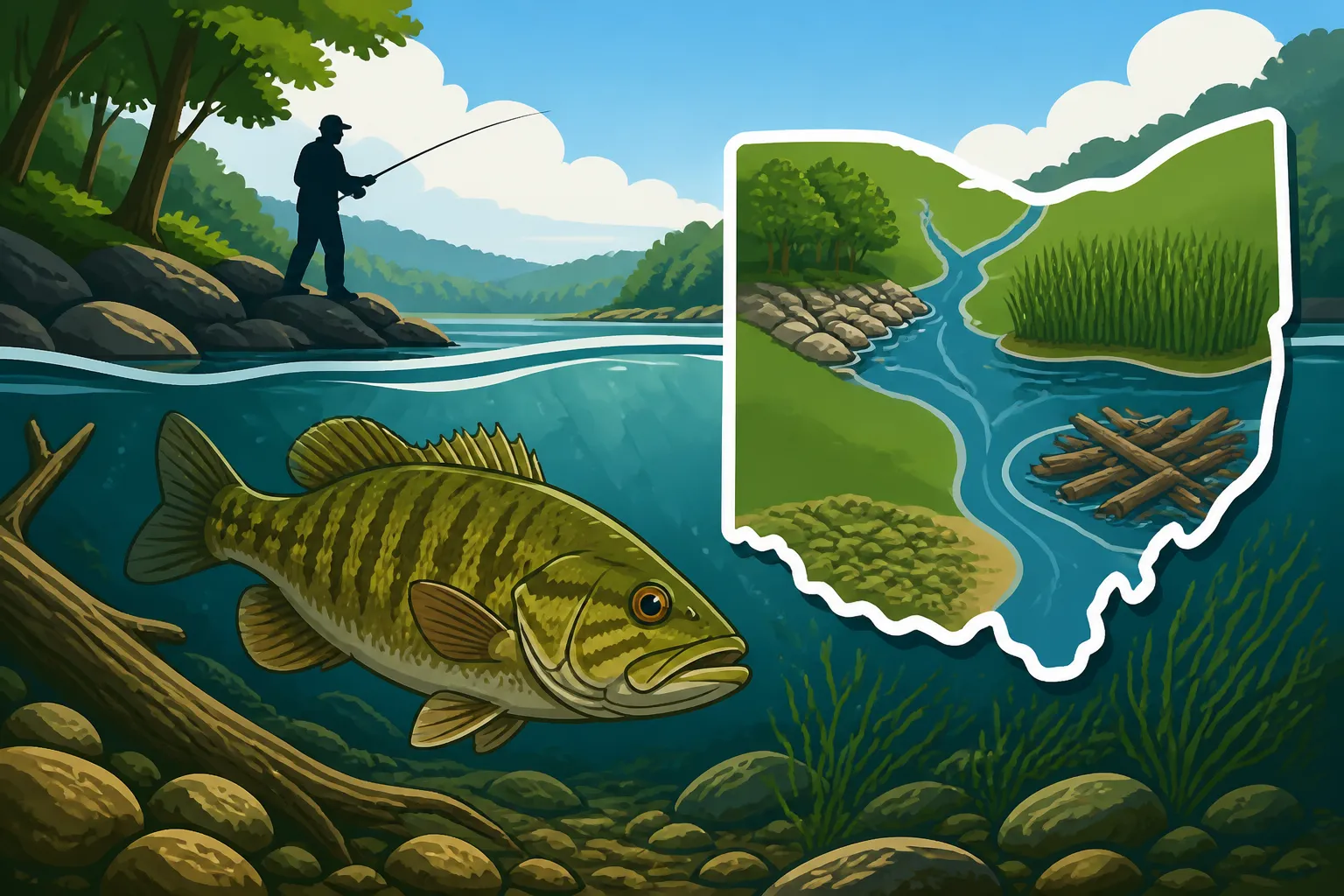
If there’s one habitat feature synonymous with smallmouth bass, it’s rocks. They absolutely adore rocky bottoms, ranging from small gravel to large boulders and rock piles. These environments offer everything a smallmouth needs. The crevices and gaps between rocks provide excellent hiding spots from overhead predators like eagles or ospreys, as well as from larger fish. More importantly for the angler, these rock structures are prime ambush points. A smallmouth can tuck itself behind a boulder, out of the main current, and dart out to intercept an unsuspecting minnow or crayfish drifting by. You'll often find them holding right at the edge of the current where it meets the slack water created by a rock.
Furthermore, rocky areas are teeming with the smallmouth's favorite meal: crayfish. These crustaceans hide under and around rocks, making these areas natural feeding grounds. When fishing rocky stretches, pay attention to variations – changes in rock size, the presence of larger boulders, or areas where rocks transition to gravel. These subtle differences can often indicate a prime holding area. Look for current seams created by larger rocks in rivers, or rocky points and reefs in lakes. A simple jig with a soft plastic crayfish imitation worked slowly over these rocky bottoms can be deadly. If you're ever looking to expand your tackle box with specific baits for these rocky havens, checking Amazon for popular crayfish lures is a great idea. For a broader look at techniques, our Ohio Smallmouth Bass Fishing Guide covers a lot of ground on this.
Wood Cover and Submerged Vegetation
While rocks are paramount, smallmouth bass also utilize other forms of hard cover, particularly wood. Fallen trees, log jams, and submerged brush piles in rivers and lakes can be excellent smallmouth magnets. Similar to rocks, wood provides current breaks, shade, and ambush opportunities. However, there's a distinction: unlike largemouth, smallmouth typically don't prefer dense wood cover. They like open access to current and clear water, so a log jam with some open pockets or a single fallen tree on a rocky bank is often more productive than a thick, impenetrable brush pile.
Submerged vegetation can also hold smallmouth, but again, with a caveat. They generally prefer sparse grass beds or the outer edges of weed lines, especially where these weeds transition into rock or open water. Dense, thick mats of vegetation that choke out light and oxygen are usually avoided. Instead, think about isolated clumps of coontail or milfoil on a rocky flat, or the distinct edge where a weed bed drops off into deeper water. These transition zones provide cover without sacrificing the clear water and current flow that smallmouth prefer. In the spring, these sparse weed edges can be critical, as they warm faster and provide early season cover.
Ledges, Drop-offs, and Humps
Underwater topography plays a massive role in where smallmouth bass reside, especially in larger lakes and reservoirs. Ledges, sharp drop-offs, and humps are like highways and neighborhoods for these fish. A ledge, which is essentially an underwater cliff, provides a perfect vertical structure that smallmouth can relate to. They can hold at various depths along the face of the ledge, depending on temperature, light, and prey movement. The top edge of a ledge offers quick access to shallower feeding flats, while the base provides deep-water refuge.
Drop-offs, similar to ledges but often more gradual, serve a similar purpose, allowing smallmouth to move quickly between deep, cool water and shallower feeding areas. Humps, which are underwater hills or mounds that rise from the bottom, are essentially offshore magnets for smallmouth. These isolated structures act as current breaks and attract baitfish, making them prime feeding stations. Smallmouth will often cruise the top and sides of humps, especially during low light or when baitfish are concentrated there. Learning to read your fish finder to locate these subtle changes in depth is an invaluable skill for any angler targeting smallmouth in Ohio's larger bodies of water. Knowing when and where to deploy your gear effectively on these structures is key to success.
River and Stream Habitat Preferences in Ohio
Ohio is blessed with a fantastic network of rivers and streams, many of which hold robust populations of smallmouth bass. Fishing these flowing waters requires a slightly different approach than lakes, as current becomes an even more dominant factor. Understanding how smallmouth relate to the dynamic environment of a river is essential for consistent success. The way the water moves, and how it interacts with the bottom, dictates almost everything.
Riffles, Runs, and Pools
Rivers are typically composed of a series of distinct zones: riffles, runs, and pools. Smallmouth bass utilize all of them, but they position themselves strategically within each.
Riffles are shallow, fast-moving sections where water tumbles over rocks, creating oxygen and dislodging food. Smallmouth rarely hold directly in the heaviest part of a riffle, but they will position themselves at the tail end of a riffle, where the faster water transitions into a deeper run or pool. This allows them to ambush food swept downstream without fighting the strong current.
Runs are deeper, smoother-flowing sections of river, often downstream from a riffle. These are prime feeding lanes. Smallmouth will often hold along the edges of runs, especially where the current slows or where there's a seam formed by structure. They're looking for that conveyer belt of food.
Pools are the deepest, slowest-moving sections of a river. While smallmouth love current, pools provide critical refuge, especially in harsh conditions (hot summers, cold winters) or after heavy rains when other areas are unfishable. They'll gravitate to the deepest parts of pools, especially if there's rock or wood structure providing cover. The head of a pool, where the current first slows, and the tail of a pool, where the water begins to speed up again into the next run or riffle, are often high-percentage areas. Targeting these spots effectively is crucial for success on Ohio's smallmouth rivers.
Bank Cover and Overhangs
Beyond the main river channels, the banks themselves offer crucial habitat. Undercut banks, where the current has eroded the soil beneath the surface, provide excellent overhead cover and shade. Smallmouth love to tuck themselves into these dark, cool pockets, waiting to ambush prey that swims too close. Similarly, fallen trees or overhanging branches that extend over the water create shade and drop leaves or insects into the current, attracting both baitfish and smallmouth. These spots are often most productive during bright, sunny days when the bass are seeking refuge from direct sunlight.
When you're walking or floating a river, always pay close attention to the shoreline. A stretch of plain, featureless bank might yield nothing, but a single overhanging sycamore or a section of bank with several large rocks and an undercut can hold multiple fish. These micro-habitats within the larger river system are often overlooked but can be incredibly productive. For more insights on fishing Ohio's major waterways, including rivers, check out our Ohio River Fishing Guide.
Lake and Reservoir Habitat Preferences in Ohio
While rivers are classic smallmouth territory, Ohio also boasts numerous lakes and reservoirs that hold thriving populations of bronzebacks. Fishing smallmouth in these larger, often stiller, bodies of water presents a different challenge and requires understanding how they relate to the more expansive, yet equally structured, environments. These preferences can vary quite a bit from river systems, even if the underlying principles of cover, current, and food remain the same.
Main Lake Points and Shoals
In lakes and reservoirs, main lake points are absolute magnets for smallmouth bass. These are areas where the shoreline extends significantly into the main body of the lake, often featuring a gradual slope or a sharp drop-off. Points act as natural funnels for baitfish and provide excellent ambush locations. Smallmouth will often cruise the contours of these points, especially where the wind or subtle currents push baitfish against them. The wind-blown side of a point, in particular, can be extremely productive as it concentrates food.
Shoals, which are shallow areas or reefs away from the main shoreline, are another prime target. These underwater islands can be small or vast, and they attract baitfish, which in turn attracts smallmouth. A shoal with a rocky composition, especially one that rises sharply from deeper water, is almost guaranteed to hold fish. These are classic spots where you can catch multiple smallmouth, particularly during the early morning or late evening when they are actively feeding. Understanding how to interpret your sonar to locate these subtle underwater features can make all the difference, making tools like those available on Amazon for marine electronics very popular. These areas are a major reason why many consider these spots among the Best Ohio Lakes for Smallmouth Bass.
Offshore Humps and Reefs
As smallmouth bass often prefer deeper, cooler water in lakes, especially during the warmer months, offshore humps and reefs become crucial habitat. These are isolated underwater structures that don't connect to the shoreline but rise significantly from the surrounding bottom. They act as "fish hotels" in otherwise featureless open water. Smallmouth will relate to these humps for protection, ambush points, and access to deeper water, all while being close to areas where pelagic baitfish might roam.
Locating these offshore structures typically requires good electronics. A quality fish finder can reveal these humps, as well as any fish or bait schooled around them. Once located, targeting them involves precise boat positioning and casting or vertical jigging techniques. Smallmouth will often hold on the wind-blown side of a hump, or along the steepest drop-off. Fishing around these deep-water structures can be a fantastic way to find bigger, less pressured fish, especially when the shallow bite slows down. It's a game of patience and precision, but the rewards can be significant. This really ties into advanced techniques discussed in Reading Ohio Fish Finders and Electronics.
Transition Zones
Smallmouth bass, like many fish, often key in on "transition zones" – areas where one type of habitat or bottom composition shifts to another. These can be incredibly productive because they offer a diverse range of resources and often concentrate baitfish. Imagine a rocky point that gradually turns into a sand flat, or a sparse weed line that meets a rocky bottom. These are classic smallmouth havens. The transition from one habitat to another provides a varied menu of food, different types of cover, and often subtle changes in depth or current that smallmouth exploit.
For example, a sudden transition from a hard rock bottom to a soft mud bottom can indicate a change in depth or food availability, concentrating fish along that seam. Similarly, the edge where a defined weed line ends and opens into clear water is a prime ambush point. These zones provide the best of both worlds – the cover and food associated with one type of habitat, combined with the clear water and access to deeper areas preferred by smallmouth. Always keep an eye out for these subtle shifts in composition when you're on the water; they often indicate the presence of a healthy smallmouth population.
Seasonal Movements and Habitat Shifts
Smallmouth bass aren't static residents; their habitat preferences shift dramatically throughout the year in response to changing water temperatures, spawning cycles, and food availability. Understanding these seasonal movements is perhaps the most critical piece of the puzzle for consistent smallmouth fishing in Ohio. What works in spring won't necessarily work in summer, and knowing why they move will inform your entire approach.
Spring Spawning and Post-Spawn
As winter loosens its grip and water temperatures begin to climb into the 50s and low 60s, smallmouth bass start their migration toward shallower water for their annual spawn. They'll seek out protected bays, coves, and river eddies with firm, rocky, or gravel bottoms, often near wood or rock cover for protection. Males will fan out nests, called "redds," in these areas, typically in 2 to 15 feet of water, and guard them aggressively. This period, when water temperatures reach the upper 50s, is when Water Temperature That Triggers Bass Spawning in Ohio really kicks into gear for smallmouth.
After the spawn, both male and female smallmouth enter a post-spawn recovery phase. The females will often retreat to slightly deeper water near the spawning grounds to recuperate, while males continue to guard the fry for a period before moving off. During this time, smallmouth can be somewhat lethargic, making them a bit tougher to catch. They'll often be found relating to the first available deep water or hard cover adjacent to their spawning flats. Think about rocky points, isolated boulders, or the deeper edges of those spring staging areas. They need to regain energy, so finding those pockets where they can rest and feed without expending too much effort is key.
Summer Patterns
Ohio's summers can get hot, and smallmouth bass, true to their "coldwater" preference, react by seeking refuge from the heat. As water temperatures push into the mid-70s and beyond, smallmouth will generally move to deeper, cooler water. In rivers, this means concentrating in larger, deeper pools with good current flow, or congregating around cold springs if available. They’ll still be relating to structure like large boulders, deep log jams, and undercut banks for shade and current breaks.
In lakes and reservoirs, the summer pattern typically means smallmouth move to offshore structures: deep points, humps, ledges, and submerged reefs. They'll often suspend over deeper water or hold tight to the bottom in 20-40 feet of water or more, especially during the brightest parts of the day. Early mornings and late evenings might see them move shallower onto the tops of humps or points to feed aggressively, offering opportunities for topwater action. For instance, knowing the Best Time of Day for Topwater Bass Fishing in Ohio can transform a slow summer day into a fantastic one, particularly for those shallower feeding windows. During the midday heat, though, they'll be down deep, so adjust your presentations accordingly with vertical jigs or deep-diving crankbaits.
Fall Feeding Frenzy and Wintering Holes
As autumn arrives and water temperatures begin to drop again, smallmouth bass enter a period of aggressive feeding. This is often referred to as the "fall feeding frenzy" as they gorge themselves to build up fat reserves for the upcoming winter. They'll become much more active and can be found in a wider variety of habitats, often moving back shallower than in summer, but still relating closely to prominent structure. In rivers, they'll concentrate in deeper runs and pools, particularly those with plenty of rocky cover. In lakes, they'll hammer baitfish on points, humps, and ledges.
As winter truly sets in and water temperatures dip below 40 degrees, smallmouth retreat to their wintering holes. These are typically the deepest, most stable parts of a lake or river, often associated with significant rock structure, large log jams, or deep, slow eddies. Their metabolism slows dramatically, and they become much less active, but they can still be caught by anglers employing slow, vertical presentations. These wintering locations offer consistent temperatures and minimal current, allowing the fish to conserve energy during the harshest months. Understanding these shifts is crucial for any Ohio angler seeking to consistently catch these feisty fighters.
Key Smallmouth Bass Habitat Preferences by Water Type and Season
Knowing the general preferences is one thing, but applying them based on the specific water you're fishing and the time of year can greatly improve your success. Here’s a quick overview of what to look for:
| Water Type | Season | Preferred Habitat Features | Key Characteristics |
|---|---|---|---|
| Rivers & Streams | Spring | Protected eddies, tailouts of riffles, shallow gravel/rocky flats, undercut banks near spawning areas. | Seeking warmer water for spawning, less focus on heavy current, good cover for nests. |
| Summer | Deeper pools with current breaks (large boulders, log jams), shaded undercut banks, mouths of cooler tributaries, main river channels with constant flow. | Seeking cool, oxygenated water; tight to current breaks, shade is crucial. | |
| Fall | Deeper runs and pools with ample rock/wood structure, transition areas between riffles and runs, main channel banks with cover. | Aggressive feeding; often shallower than summer but still structure-oriented; following baitfish. | |
| Winter | Deepest, slowest eddies in pools, large log jams in deep bends, areas with stable temps and minimal current. | Seeking thermal refuge; extremely lethargic; need minimal energy expenditure. | |
| Lakes & Reservoirs | Spring | Rocky points, shallow rocky flats in protected coves, main lake points with gradual slopes, sparse weed edges adjacent to deeper water. | Moving to shallow areas for spawning; good sun penetration and structure are key. |
| Summer | Offshore humps, deep main lake points, submerged ledges and drop-offs, deep rocky reefs, areas with thermocline. | Seeking cooler, deeper water; relating to offshore structure; dawn/dusk shallow for feeding. | |
| Fall | Main lake points, offshore humps, ledges, rocky shorelines, often shallower than summer but still near deep water access. | Aggressive feeding; following baitfish schools; wider range of depths. | |
| Winter | Deepest basins of the lake, severe drop-offs, isolated deep humps, areas with consistent thermal stability. | Seeking deep, stable water; minimal activity. |
This table should give you a quick reference point no matter where or when you're casting your line for smallmouth bass in Ohio. Remember, these are general guidelines, and the best way to confirm is always to get out on the water and observe. Experimentation, combined with a solid understanding of these habitat preferences, will lead to more successful outings. For those looking to fine-tune their approach even further, articles like Best Techniques for Ohio Smallmouth Bass offer additional strategic advice.
Disclaimer
This article is for general informational purposes only and does not constitute professional advice. Laws, prices and regulations vary by location and change over time. Consult a qualified professional for guidance on your specific situation.