Lake Erie Walleye Bag Limits
Fishing Lake Erie for walleye is an experience many Ohio anglers dream about, but nothing sours a perfect day on the water faster than confusion over fishing regulations. Trying to keep up with the ever-changing rules, especially when it comes to something as critical as walleye bag limits, can be incredibly frustrating. This guide is here to untangle the complexities of Ohio's Lake Erie walleye bag limits, helping you understand the current rules, why they exist, and how to stay on the right side of the law so you can focus on catching those prized fish.
Understanding Walleye Regulations on Lake Erie
The vast expanse of Lake Erie, with its incredibly rich walleye fishery, is a crown jewel for anglers not just in Ohio, but across the Great Lakes region. However, managing such a dynamic and valuable resource requires a careful hand, and that's precisely why regulations, like those for walleye bag limits, are put in place. It's not about making things complicated for us; it's about ensuring that future generations can enjoy the same phenomenal fishing we do today. Ignoring these rules isn't just a legal risk, it's a threat to the health of the fishery itself.
The Importance of Annual Updates
One of the biggest headaches for seasoned and new anglers alike is the fact that walleye regulations on Lake Erie aren't set in stone for years on end. Instead, they often change annually. This can feel like a moving target, right? You get used to one set of rules, and then suddenly, come spring, everything's different. But there's a really good reason for this adaptive approach. The walleye population in Lake Erie is incredibly responsive to environmental changes, spawning success, and fishing pressure. The Ohio Department of Natural Resources (ODNR) Division of Wildlife, in conjunction with other Great Lakes states and Canadian provinces, meticulously monitors these factors.
These annual adjustments are crucial for maintaining the delicate balance of the ecosystem. If walleye numbers are booming, the limits might be more generous, allowing anglers to harvest more fish. If there's been a few tough spawning years, or if the population shows signs of stress, then the limits might tighten to allow the fish to rebound. It's a proactive, science-driven approach, even if it does mean we have to stay on our toes every year. For example, if you fish the Western Basin, you know how quickly things can change with the spring spawn, and these regulations are designed to protect those crucial moments. This commitment to continuous monitoring and adjustment is key to sustaining Lake Erie's reputation as the "Walleye Capital of the World."
Where to Find the Latest Information
Given that regulations can shift, knowing where to get the most accurate, up-to-date information is paramount. It’s easy to rely on what you heard from a buddy at the bait shop or an old regulation booklet you have lying around, but that’s a recipe for disaster. The official source for all Ohio fishing regulations is the Ohio Department of Natural Resources (ODNR) Division of Wildlife. They publish a comprehensive fishing regulations booklet every year, which is available both in print and digitally.
You can usually pick up a physical copy at most bait and tackle shops, sporting goods stores, or ODNR district offices. However, the most reliable and immediate source is always their official website. They typically have a dedicated section for current fishing regulations, often presented in an easy-to-read PDF format. It’s always a good idea to download the current year's booklet or at least have the webpage bookmarked on your phone or tablet. Before every season, and especially if you're planning a trip to a different part of the lake or state, double-checking these resources is an absolute must. For specific details on other areas, you might also want to consult the guide on Ohio Fishing Regulations Every Angler Should Know.
Ohio's Specific Walleye Bag and Size Limits
Okay, let's get down to the nitty-gritty: the actual numbers you need to remember when you're out on Lake Erie. This is where most anglers feel the pressure, constantly counting fish and measuring them against the rule. It's totally understandable to be a bit anxious about this, especially when you're on a hot bite and the fish are coming fast. But knowing these specifics will give you confidence and keep you out of trouble with wildlife officers.
Current Daily Bag Limits Explained
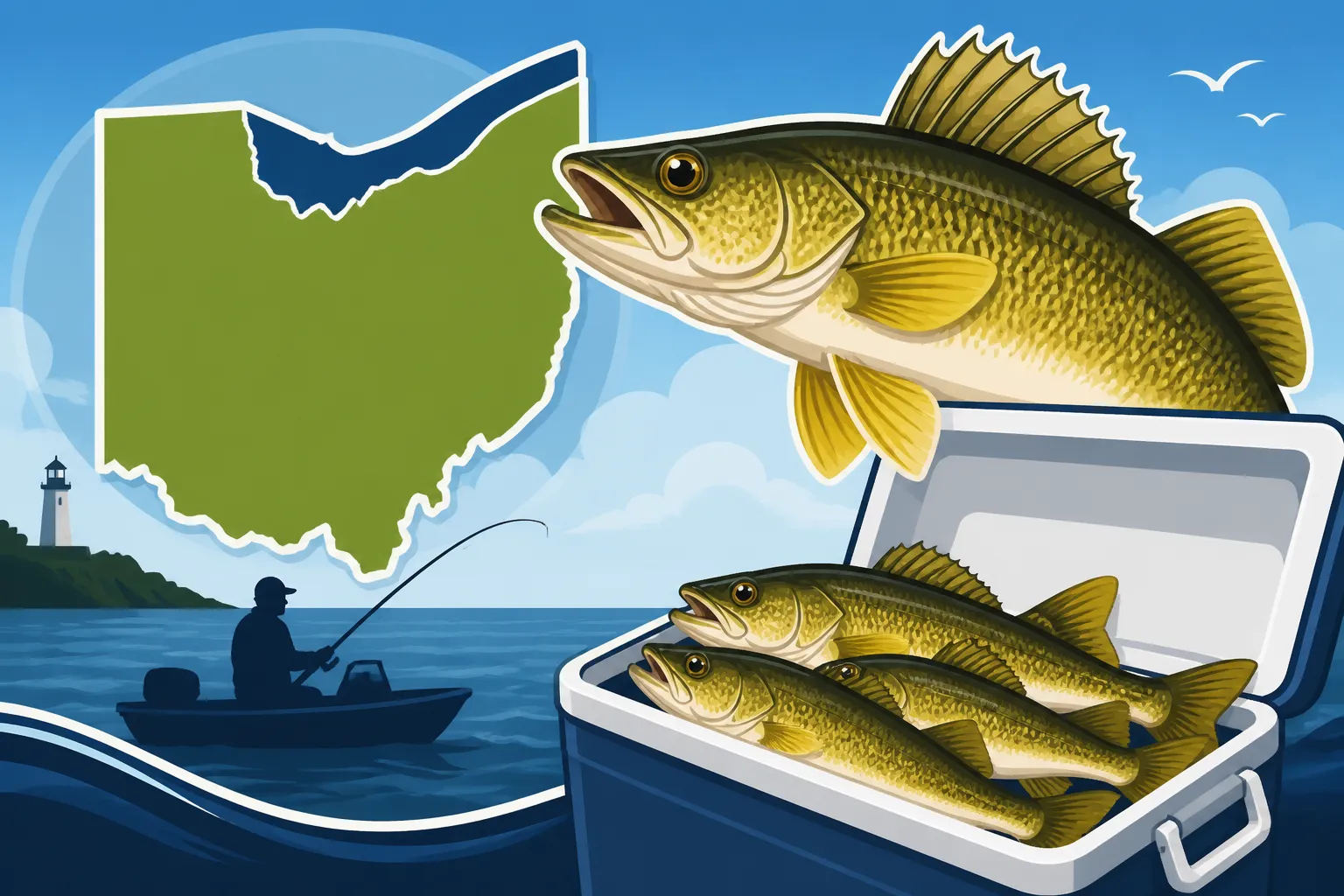
The daily bag limit refers to the maximum number of walleye you are permitted to harvest and keep in a single day. This number isn't arbitrary; it's carefully calculated based on population health and harvest goals. For Lake Erie walleye, these limits can vary, but generally, Ohio has had a consistent approach for the past few years, often allowing six walleye per angler per day. This limit applies to all anglers, regardless of whether you're a resident or non-resident, or if you're fishing from shore, a private boat, or a charter.
It's vital to remember that "daily bag limit" means what you possess per day, not necessarily what you've kept over multiple days if you're on an extended trip. If you're staying at a lodge for three days, you can only have three daily limits in your possession. This is sometimes referred to as a "possession limit" when discussing fish that are no longer actively being fished for, such as those stored at a cabin or frozen at home. Always check the official Ohio Statewide Bag and Size Limits for the current year.
Example scenario: Imagine you're out with three buddies on a beautiful July morning near the Western Basin. Each of you has your Ohio Fishing License Guide for Residents and Nonresidents in hand. If the daily bag limit is six walleye per person, then as a group of four, you could collectively possess up to 24 walleye at the end of the day. If one person catches nine walleye but releases three, while another only catches three, you're still good as long as no single person has more than six in their livewell at any point.
Minimum Size Requirements: No Short Fish Allowed
Beyond just how many you can keep, there's also the critical question of how big those fish need to be. This is the minimum length limit, and it's designed to protect juvenile fish, allowing them to grow to maturity and spawn at least once before being harvested. For Lake Erie walleye, the minimum size limit is typically 15 inches. This means any walleye you catch that measures less than 15 inches from the tip of its nose to the tip of its tail (with the tail compressed, or pinched) must be immediately released back into the water.
This is where a good measuring board comes in handy. You can find reliable, durable options on platforms like Amazon that are specifically designed for quick, accurate fish measurements. Trying to eyeball it or use a bent-up tape measure is just asking for trouble. If you're caught with an undersized fish, even if it's just by an inch, it's considered a violation. It's better to be safe than sorry, so if a fish is on the cusp, err on the side of caution and let it go. Remember, precise measurement is key to compliance with Ohio Lake Erie Walleye Minimum Length Limit.
Special Considerations: Tournaments and Possession Limits
Sometimes, you're not just out for a casual day of fishing; maybe you're participating in a tournament or planning an extended fishing vacation. These scenarios often introduce additional layers to the bag and size limits.
For fishing tournaments, organizers are often required to obtain special permits from the ODNR, and these permits might include specific rules that differ slightly from the general public regulations, especially concerning live weigh-ins and immediate release protocols. Anglers participating in tournaments should always review the specific rules provided by the tournament organizers, as well as the standard ODNR regulations, to ensure compliance. You can learn more about this in the Ohio Fishing Tournament Permit Requirements guide.
Possession limits become relevant if you're staying multiple days and keeping fish. As mentioned earlier, while your daily bag limit might be six walleye, your possession limit is generally tied to that daily limit. This means if you fish for three days and keep six walleye each day, you can legally have 18 walleye in your freezer or cooler at your cabin. However, once you leave the area or are no longer actively engaged in fishing, certain states might have different possession limit interpretations, so it's always best to be clear. Ohio's regulation typically states that an angler may not possess more than their daily bag limit while fishing or on the water. Once the fish are processed and at your permanent residence, the possession limit usually loosens, but it’s always wise to confirm the exact wording in the current regulations booklet.
Table: Ohio Lake Erie Walleye Regulations (Typical)
| Regulation Type | Lake Erie (Ohio Waters) | Notes |
|---|---|---|
| Daily Bag Limit | 6 Walleye per angler | Applies year-round unless otherwise specified by emergency order. |
| Minimum Size | 15 inches | Walleye under this length must be immediately released. |
| Possession Limit | 6 Walleye per angler (while actively fishing) | Higher possession limits may apply at your permanent residence. |
| Season | Open year-round | Always check for emergency closures or special seasons. |
Note: Always consult the current Ohio Fishing Regulations booklet or ODNR website for the most up-to-date and authoritative information. Regulations can change annually.
Why Walleye Limits Change: Science and Conservation
It can be frustrating when you feel like the rules are constantly shifting, but these changes aren't made on a whim. The dynamic nature of walleye bag and size limits on Lake Erie is a testament to the sophisticated scientific management and conservation efforts that underpin the health of this world-class fishery. It’s a delicate dance between environmental factors, fish biology, and the desire to provide ample fishing opportunities for anglers.
The Role of Population Surveys
At the heart of any regulation change are extensive, ongoing population surveys. Scientists and biologists from the ODNR and their counterparts in other states (like Michigan, Pennsylvania, and New York) and Ontario conduct rigorous assessments throughout the year. They use various methods, including gill netting, trawling, and electrofishing, to sample different age classes of walleye. These surveys provide critical data on:
- Year Class Strength: How many fish were successfully hatched and survived from a particular spawning year. A strong year class means more fish will be recruiting into the catchable population in a few years.
- Growth Rates: How quickly walleye are growing, which can be influenced by food availability and water temperatures.
- Mortality Rates: How many fish are dying from natural causes, predation, and, importantly, fishing pressure.
- Spawning Success: The overall health and reproductive success of the adult walleye population.
All of this information is then fed into complex population models, which help fishery managers predict how the walleye population will fare in the coming years. If the models show a robust, growing population, limits might be adjusted upwards. Conversely, if projections indicate a decline, or if certain year classes are weak, then managers will likely implement more conservative limits to ensure the long-term sustainability of the fishery. This scientific rigor ensures that decisions are data-driven, aiming for optimal balance. For a deeper dive into walleye biology, check out our guide on Walleye Size and Age Growth Rates on Lake Erie.
Environmental Factors and Their Impact
Lake Erie is a massive, complex ecosystem, and its walleye population is incredibly sensitive to a myriad of environmental factors. These can influence everything from spawning success to food availability, ultimately impacting how many walleye are available for anglers to catch. Understanding these factors helps us appreciate why regulations need to be flexible.
One of the most significant factors is water temperature. Ideal temperatures are crucial for successful walleye spawning and egg development. Unseasonably cold springs can delay spawning or reduce egg viability, while rapid temperature fluctuations can stress fish. Changes in water levels also play a role, affecting spawning habitat in tributary rivers like the Maumee River. Too low, and access is restricted; too high, and eggs might be washed away. Another key factor is prey availability. Walleye are predatory fish, and their diet heavily influences their growth and overall health. Fluctuations in the populations of baitfish like emerald shiners or gizzard shad directly impact the walleye's ability to thrive. Climate change, with its potential to alter weather patterns and water conditions, is an ongoing concern for fishery managers. These environmental variables are constantly monitored and are major contributors to the discussions that lead to annual regulation updates.
Interstate and International Cooperation
Lake Erie isn't just Ohio's lake; it's shared by four U.S. states (Ohio, Michigan, Pennsylvania, New York) and the Canadian province of Ontario. Managing a fishery of this magnitude requires a monumental effort in cooperation. Imagine the chaos if each state or province set its own wildly different regulations without consulting the others! The Great Lakes Fishery Commission (GLFC) and its Lake Erie Committee (LEC) serve as crucial coordinating bodies.
Representatives from all jurisdictions meet regularly to share data, discuss population assessments, and agree upon a Total Allowable Catch (TAC) for walleye each year. This TAC is then divided among the jurisdictions based on historical harvest levels and the distribution of the walleye population. Once Ohio receives its allocated share, the ODNR then sets its specific daily bag and size limits to ensure that the state's harvest remains within its agreed-upon quota. This collaborative approach ensures that the entire lake's walleye population is managed cohesively and sustainably, preventing one area from over-harvesting at the expense of another. This kind of unified management is what truly makes Lake Erie a success story for walleye.
Navigating Enforcement and Common Misconceptions
Knowing the rules is one thing, but understanding how they're enforced and dispelling common myths is another entirely. Nobody wants to face a wildlife officer with a guilty conscience, or worse, a citation because of a misunderstanding. It's easy to fall prey to old wives' tales or assume things, but when it comes to fishing regulations, assumptions can cost you.
What Happens If You Exceed the Limit
Let's be blunt: fishing without adherence to the bag and size limits is a serious offense. Wildlife officers, often referred to as game wardens, patrol Lake Erie regularly, both on the water and at boat ramps, checking licenses and catches. They are highly trained professionals dedicated to protecting our natural resources.
If you are found to be in possession of more than the daily bag limit of walleye, or fish that are under the minimum size, you can expect consequences. Typically, the first offense for exceeding a bag limit or possessing undersized fish is a misdemeanor charge. This usually carries a fine, which can range from a couple of hundred dollars to much more, depending on the severity and number of fish involved. Beyond the fine, you might also have your fishing license suspended or revoked for a period, and in some cases, your fishing equipment (rods, reels, even your boat) could be confiscated. It’s a scenario no angler wants to face. These penalties are designed to be a deterrent and reinforce the importance of conservation. Understanding the Ohio Fine for Fishing Without a License gives you an idea of the seriousness of violations.
Hypothetical Scenario: Imagine you're wrapping up a great day of fishing, and you’ve got seven walleye in your cooler, mistakenly thinking the limit was seven. A wildlife officer at the launch ramp asks to inspect your catch. Upon counting, they find one fish over the limit. Even though it was an honest mistake, you're still liable. You might get a citation, a fine, and have that seventh fish confiscated. It’s a painful lesson, but one that could have been avoided by simply knowing the current regulation.
Checking Your Catch: Best Practices
To avoid any awkward encounters with wildlife officers, or simply to ensure you're doing your part for conservation, implementing some best practices for checking your catch is essential.
First and foremost, count and measure every fish as soon as it's landed. Don't wait until you're back at the dock. Have your measuring board readily accessible in your boat. If you catch a walleye that's clearly undersized, release it immediately with as little handling as possible. If it's borderline, measure it carefully. If it's even a hair short of 15 inches, let it go. Remember, fish shrink slightly when they cool, so a fish that measures exactly 15 inches warm might be slightly less once chilled. Err on the side of caution.
Consider investing in a good fish counter if you're prone to losing track, especially if you're fishing with multiple people. A simple clicker counter or even a dedicated app on your phone can help keep tabs on your collective catch. When you're cleaning fish, keep the fillets in a manner that allows for species identification and counting if necessary, especially if you're cleaning them at a public facility. Some regulations require a patch of skin to remain on fillets for identification purposes if you're not at your permanent residence. Always double-check this in the regulations. You can find excellent digital scales and fillet knives on Amazon to help with processing your catch responsibly.
Common Mistakes Anglers Make
Even experienced anglers can sometimes stumble when it comes to regulations. Here are a few common pitfalls that people encounter with Lake Erie walleye limits:
- Outdated Information: Relying on last year's regulations booklet or what someone told you years ago. Always check the current year's rules, especially around January 1st when new rules often take effect.
- Mistaking Lake Erie Limits for Inland Lake Limits: While Lake Erie has a general walleye limit, inland lakes and reservoirs might have different rules for walleye or saugeye. Don't assume. For instance, some lakes like Alum Creek Lake have no minimum length for walleye and saugeye. Our guide on Which Ohio Lakes Have No Minimum Length for Walleye and Saugeye provides more specifics.
- Confusion with Other Species: Accidentally keeping a saugeye or a large white bass, mistaking it for a walleye, and then exceeding the walleye limit. Familiarize yourself with fish identification, particularly the difference between walleye, saugeye, and sauger. Our guide on Saugeye vs Walleye Identification can help.
- Improper Measurement: Not compressing the tail when measuring, leading to an inaccurate reading. The measurement is always from the tip of the nose to the tip of the compressed tail.
- Charter Boat Misunderstandings: On a charter, the captain and crew are typically very good about keeping track of the catch, but it's still your responsibility as an angler to know the rules and ensure your individual limit isn't exceeded. Never assume the charter will handle everything if you're confused. Always ask questions if something isn't clear.
Planning Your Trip Around Walleye Limits
Knowing the limits isn't just about compliance; it's also about strategic fishing. Incorporating bag and size limits into your trip planning can enhance your overall experience, making you a more effective and responsible angler. It helps you decide what gear to bring, how to approach your day, and what to do with your catch.
Adjusting Your Strategy for Different Seasons
The walleye limits generally remain consistent throughout the open season on Lake Erie, but your fishing strategy might need to adapt to the season to ensure you're catching legal fish and making the most of your limit.
- Spring (Post-Spawn): In the weeks following the walleye spawn, fish are often hungry and aggressive as they recover. This can lead to hot bites and a lot of fish. If you're encountering many smaller, pre-spawn male walleye that might be undersized, you might need to adjust your bait or technique to target larger fish. Deeper presentations or larger baits might help cull out the smaller ones, although no method is foolproof. This is also a great time to review the Ohio Fishing Season Dates and Effective Periods.
- Summer (Open Water): During the peak summer months, walleye are often scattered and feeding heavily on baitfish in deeper, open water. Trolling is a popular and effective method. You'll likely encounter a mix of sizes, and having your measuring board ready for quick checks is paramount. Focus on efficiency and gentle release of undersized fish.
- Fall (Pre-Winter Feed): As water temperatures drop, walleye often go on a strong feeding binge, putting on weight for winter. This can be a fantastic time for trophy-sized fish. You might find fewer "shorts" but when you do, treat them with care as they're trying to pack on calories. If you're specifically targeting bigger fish, consider using larger profile baits or targeting areas where bigger walleye are known to congregate. Our guide on Best Lures for Ohio Fishing can provide some good ideas.
No matter the season, the key is to be prepared to release fish, especially if you hit your limit quickly. Keeping fish alive in your livewell until you're ready to head in gives you options, but once you've reached your daily limit, all subsequent walleye must be immediately released.
Gear and Technique Considerations
Beyond the standard rods, reels, and bait, there are specific items and techniques that can help you comply with walleye limits and practice responsible angling on Lake Erie.
- Accurate Measuring Device: This cannot be stressed enough. A good quality, rigid measuring board is a non-negotiable piece of gear for Lake Erie walleye fishing. You can easily find these at most tackle shops or online retailers like Amazon. They often have clear markings and a small lip to butt the fish's nose against, ensuring accuracy.
- Release Tools: If you're going to be releasing fish, especially undersized ones, having the right tools makes a huge difference in their survival rate. A quality pair of long-nosed pliers or forceps for hook removal minimizes handling time and damage to the fish. A dehooking tool can be invaluable for deeply hooked fish, allowing for quicker release without putting your fingers at risk.
- Netting and Handling: Use a rubberized or knotless net to land walleye, as these are much gentler on their scales and slime coat compared to traditional knotted nylon nets. When handling fish for measurement or release, try to keep them in the water as much as possible. If you must bring them into the boat, wet your hands thoroughly before touching them to protect their protective slime layer. Avoid holding them by the eye sockets or gill plates.
- Fish Keeper/Livewell: If you plan to keep fish, a well-aerated livewell is crucial for keeping them healthy until you're back at the dock. This is particularly important for walleye, which can be sensitive to stress. A healthy livewell also gives you the option to selectively harvest your fish, perhaps releasing a smaller legal fish if you catch a larger one later in the day, as long as you don't exceed your daily bag limit at any single point.
- Understanding Catch-and-Release Practices: Even if you plan to keep your limit, you'll inevitably catch fish you need to release. Learn proper catch-and-release techniques to maximize survival. Minimize air exposure, handle the fish gently, and use appropriate tools for hook removal. If a fish appears stressed, take time to revive it in the water before letting it go.
By equipping yourself with the right knowledge and tools, you’re not just following the rules – you’re contributing to the health and longevity of Lake Erie’s incredible walleye fishery. It's about being a responsible steward of our natural resources, ensuring that the thrill of catching a Lake Erie walleye remains for generations to come.
Navigating Specific Zones and Seasonal Nuances
While Ohio's Lake Erie walleye limits are generally quite consistent across the state's jurisdiction, it's worth noting that regulations, particularly for other species or in different contexts, can sometimes have zone-specific or seasonal nuances. This section aims to address any potential confusion stemming from how other regulations might operate and how they could indirectly impact your walleye fishing strategy.
Lake Erie's Basin Divisions for Other Species
It’s true that Lake Erie is often talked about in terms of its Western, Central, and Eastern Basins. For walleye, specifically, Ohio’s daily bag and size limits apply consistently across the entire Ohio portion of Lake Erie, from Toledo all the way to Conneaut. So, you don't need to worry about different walleye limits if you're fishing near Port Clinton versus Cleveland. However, this isn't always the case for other fish species.
For example, yellow perch regulations do vary by zone on Lake Erie. The daily bag limit for yellow perch changes depending on whether you are in the Western, Central, or Eastern Basin. This is crucial for perch anglers. Our guide on Lake Erie Yellow Perch Daily Limit in the West Zone can offer more details. It's a prime example of how species-specific management works. While this doesn't directly alter your walleye limit, being aware of these distinctions for other popular species can prevent you from making assumptions that might lead to violations if you decide to target multiple species in one trip. Always verify the regulations for each species you intend to keep.
Reciprocal Agreements with Neighboring States
For anglers who venture near state lines, specifically with Michigan to the west or Pennsylvania to the east, understanding reciprocal agreements can be a critical, though sometimes confusing, aspect of fishing. These agreements are designed to allow anglers with licenses from one state to fish in certain waters of a neighboring state without purchasing a second license.
However, it is absolutely paramount to understand that while your license might be reciprocal, the regulations you must follow are almost always those of the state in whose waters you are fishing. So, if you're an Ohio resident fishing the very far western edge of Lake Erie near the Michigan border, you still need to know if you've crossed into Michigan waters. If you have, you're bound by Michigan's walleye bag and size limits, which could be different from Ohio's. Conversely, if a Michigan resident is fishing in Ohio waters, they follow Ohio's rules, even with their Michigan license. This is a common point of confusion, and ignorance is no excuse when it comes to enforcement. Always carry a GPS or mapping device to know your exact location relative to state lines if you plan to fish near a border.
Understanding the "Fishing Year" and Regulation Changes
As we’ve discussed, regulations change, and they typically do so at the start of a new "fishing year." This isn't necessarily January 1st for all regulations. For Ohio, the fishing license year runs from March 1st to the last day of February the following year. While the license validity runs on this cycle, important regulation changes, especially for species like walleye, usually take effect around March 1st or sometimes coincide with the calendar year.
The important takeaway is that you cannot simply assume that because it’s a new calendar year, the regulations have automatically updated, or that old regulations apply until your old license expires. It is your responsibility to check the most current regulations every season, especially as the calendar turns from winter to spring. The ODNR goes to great lengths to announce these changes through their publications and website. Make it a habit to look up the new rules for When the New Ohio Fishing Regulation Year Starts and download the latest guide every March. This simple step can save you a lot of grief and ensure your fishing adventures are always stress-free and legal.
The Future of Lake Erie Walleye and Angler Responsibility
Lake Erie’s walleye fishery is a global success story, and a huge part of that success lies in sound management and the cooperation of anglers. But the future health of this fishery isn't guaranteed; it depends on our continued commitment to conservation and responsible fishing practices.
Long-Term Trends and Sustainable Harvest
The incredible comeback of Lake Erie walleye from historical lows in the mid-20th century is a testament to effective management strategies, including adaptable bag and size limits. The walleye population has been robust for many years now, leading to some of the most generous limits seen in decades. This is a fantastic situation for anglers, providing ample opportunity for great catches. However, maintaining this balance requires vigilance.
Fishery biologists are constantly evaluating long-term trends, looking at everything from climate patterns and nutrient runoff to the dynamics of invasive species like the zebra and quagga mussels, which can impact the food web. The goal of current walleye limits isn't just to provide good fishing today, but to ensure that the population remains strong and healthy for decades to come. Every walleye we catch, measure, and decide to keep or release plays a role in this grander scheme. Our individual actions accumulate to impact the overall health of this treasured resource.
The Role of Catch and Release Beyond Limits
While bag limits dictate how many fish you can keep, the philosophy of catch and release, especially for fish you don't intend to eat or that are on the smaller end of the legal spectrum, is a powerful conservation tool. Even if you haven't reached your six-walleye limit, consider releasing a fish if it's borderline legal size, particularly if you have plenty of other legal fish in the cooler. These smaller, legal fish represent the future spawners and growth potential for the fishery.
Many anglers on Lake Erie voluntarily practice catch-and-release for trophy-sized walleye as well, preferring to release the largest fish to ensure they continue to contribute to the gene pool. The decision to release a fish, even a legal one, is a personal choice, but it's one that demonstrates an angler's commitment to conservation. Learning how to properly handle and release fish can dramatically increase their survival rate. This includes minimizing time out of water, using wet hands, and supporting the fish's body. These practices go hand-in-hand with adhering strictly to all regulations to secure the future of Lake Erie walleye.
Reporting Violations and Being an Advocate
Responsible angling extends beyond simply following the rules yourself; it also involves being an active participant in protecting the resource. If you witness someone actively violating fishing regulations – whether it's exceeding bag limits, keeping undersized fish, or fishing without a license – it's crucial to report it. The ODNR Division of Wildlife relies heavily on public assistance to help enforce regulations across such a large area.
You can typically report violations through a dedicated hotline (like the "Turn In Poachers" or TIP hotline in Ohio) or through the ODNR website. When reporting, try to gather as much information as possible: boat registration numbers, descriptions of individuals, specific location, and the nature of the violation. Being an advocate for ethical fishing practices also means educating fellow anglers, politely sharing information about current regulations, and encouraging responsible behavior. Together, we can ensure Lake Erie continues to thrive as a premier walleye destination. Our guide on What Happens If You Fish Without a License in Ohio details the consequences of not adhering to regulations.
Disclaimer
Please note that fishing regulations, including bag and size limits, can change. The information provided in this guide is intended for general informational purposes only and is based on typical regulations at the time of writing. Always consult the most current Ohio Fishing Regulations booklet or the official Ohio Department of Natural Resources (ODNR) Division of Wildlife website before heading out to fish to ensure you have the most up-to-date and accurate information. The author and publisher are not responsible for any errors or omissions, or for any actions taken as a result of the information presented herein.