Fishing Indian Lake, Ohio
Finding a great fishing spot in Ohio that caters to all your angling desires, from serene bank fishing to exciting boat adventures, can feel like a daunting task amidst so many options. Many anglers want a lake that offers a diverse fishery and plenty of access without feeling overwhelming. This guide is dedicated to Indian Lake, a fantastic central Ohio gem, and will walk you through everything you need to know to make your next fishing trip there a memorable success.
Welcome to Indian Lake: A Central Ohio Angler's Paradise
Indian Lake, nestled in Logan County, is a true standout for Ohio anglers. It's not just a body of water; it's a vibrant ecosystem that supports a fantastic array of fish species and offers a delightful blend of relaxation and adventure. For those of us who appreciate a good day on the water, Indian Lake provides a welcoming, accessible, and often very productive fishing experience.
The Lake's Unique Character and History
What many people don't realize about Indian Lake is its fascinating history. It wasn't always the expansive recreational lake we know today. Originally, it was a series of small, natural lakes and a vast wetland fed by the Great Miami River. In the early 19th century, efforts began to transform it into a feeder lake for the Miami and Erie Canal, which involved damming and dredging. This engineering marvel eventually created the large, relatively shallow reservoir that covers over 5,100 acres today. This rich history means that while it's a man-made lake, it has a long-standing natural foundation, giving it a unique character.
The lake is characterized by its relatively shallow depths, averaging around 10-12 feet, with a few deeper channels reaching about 20 feet. This shallow nature, combined with numerous bays, coves, and islands, creates an abundance of diverse habitats for fish. You’ll find plenty of submerged structure, weed beds, and transition areas that make for excellent fishing grounds. Unlike some deeper, colder lakes, Indian Lake warms up nicely, supporting a robust population of warm-water species, making it a reliable spot for action throughout much of the year.
Why Indian Lake is a Local Favorite
Indian Lake has earned its reputation as a local favorite for a multitude of reasons. Firstly, its accessibility is a huge draw. Being a state park, it offers ample public access, including several boat ramps, public docks, and plenty of shoreline for bank fishing. This means you don't need a fancy boat or a private dock to enjoy a day of fishing here. Families especially love it because there are many areas where kids can easily cast a line and have a good chance of catching something, which is priceless for sparking that lifelong love of fishing.
Beyond just fishing, Indian Lake State Park provides a full suite of amenities that make a trip enjoyable. There are campgrounds, picnic areas, swimming beaches, and walking trails, so it’s easy to make a full day or weekend out of your visit, even if not everyone in your group is an avid angler. The sheer diversity of species available also plays a big role in its popularity. Whether you're chasing bass, crappie, catfish, or the prized saugeye, Indian Lake consistently delivers, offering something for every type of angler. It truly lives up to its name as a central Ohio fishing paradise, providing both challenge and reward.
Targeting the Top Species at Indian Lake
Indian Lake boasts a diverse fishery, meaning you'll have plenty of options regardless of what you like to catch. The Ohio Department of Natural Resources (ODNR) Division of Wildlife actively manages these fish populations, conducting regular surveys and stocking efforts to ensure healthy and sustainable fishing opportunities. Knowing what fish are prevalent and where to find them is key to a successful outing.
Bass Beyond Belief: Largemouth and Smallmouth
If you're a bass enthusiast, Indian Lake offers some exciting opportunities, primarily for largemouth bass, but you can find smallmouth in certain areas. Largemouth bass thrive in Indian Lake's shallower, weedier waters. They love hiding in dense submerged vegetation, around fallen trees, and near the numerous docks and piers that line the shoreline. These areas provide both ambush points for prey and cover from predators, making them prime real estate for a hungry largemouth. Anglers often find success targeting the edges of weed beds in bays like Artist Island or around the dozens of smaller islands.
For smallmouth bass, you'll need to focus on areas with a bit more rock or gravel, often found around deeper points, channel edges, and rip-rap. While not as widespread as largemouth, smallmouth are present and offer a different kind of fight. Early morning and late evening are often the best times to target both species, especially during warmer months, as they become more active in cooler water. Topwater lures, jigs, spinnerbaits, and soft plastics rigged Texas or Carolina style are all excellent choices for enticing a strike from these hard-fighting fish. For more general advice, check out our guide on Ohio Largemouth and Smallmouth Bass Limits.
Crappie and Panfish: A Family Affair
Indian Lake is a phenomenal destination for crappie and other panfish like bluegill and sunfish, making it perfect for family outings or those just looking for consistent action. Both black and white crappie populations are strong here, with many anglers reporting excellent catches of slab crappie, especially during their spring spawn. These fish congregate heavily around submerged brush piles, bridge pilings, and the countless docks scattered throughout the lake. Areas like the bridges leading to Lakeview or the docks in the various channels are known crappie hotspots.
Bluegill and other sunfish are practically everywhere, making them incredibly accessible for anglers of all ages and skill levels. They're often found in the same cover as crappie, but also closer to shore in shallower water, especially during their spawning periods in late spring and early summer. A simple setup with a bobber, a small hook, and a piece of worm or a tiny jig is often all it takes to fill a bucket with these tasty panfish. For those seeking these cooperative fish, early mornings and evenings are typically productive, but panfish can be caught throughout the day. If you want to dive deeper into the tactics for these species, our Ohio Crappie Fishing Guide offers some excellent tips.
Catfish: The Bottom Dwellers of Indian Lake
For those who enjoy a strong fight and some delicious table fare, Indian Lake's catfish population won't disappoint. Channel catfish are abundant and grow to impressive sizes, with flathead catfish also present for those who prefer to tackle a true river monster. Catfish are typically found in the deeper channels, around submerged timber, and near areas with soft, muddy bottoms where they can scavenge for food. The deeper sections of the lake, particularly near the main channels and around the spillway, are prime areas.
Night fishing is often the most productive time for channel cats, as they become more active feeders after dark. For bait, cut bait (like shad or bluegill), chicken livers, and various stink baits are highly effective. For flatheads, live bait such as bluegill or suckers, fished on heavy tackle, is the preferred method. Setting out multiple lines (within legal limits, of course) with different baits in known catfish haunts can significantly increase your chances. Indian Lake offers a fantastic opportunity to land some truly hefty catfish, especially during the warmer months. You can find more specific strategies in our Ohio Catfish Fishing Techniques article.
Saugeye: A Hybrid Delight
While Lake Erie is famous for its walleye, Indian Lake shines as a prime destination for saugeye, a sterile hybrid cross between a walleye and a sauger. These fish offer the best characteristics of both parents: the fighting spirit and size potential of a walleye, with the willingness to bite of a sauger, even in murkier waters. Saugeye are one of the most sought-after species in Indian Lake, known for their excellent table quality and challenging fight. They prefer deeper areas, especially along channel edges, humps, and submerged points. They'll often school up, so when you find one, you're likely to find more.
Saugeye are particularly active during low-light conditions, such as dawn, dusk, and even after dark, but they can be caught during the day, especially on cloudy days or in deeper water. Trolling crankbaits, jigging with minnows or soft plastics, and casting blade baits are all effective methods. The mouths of the feeder creeks and the main lake basin are excellent places to start your search. Many local anglers consider the saugeye fishing at Indian Lake to be some of the best in the state. Don't forget to consult the Ohio Statewide Bag and Size Limits to ensure you're compliant with current regulations when pursuing these prized fish.
Unlocking Indian Lake's Prime Fishing Locations
Knowing what fish you're after is only half the battle; knowing where to find them is equally crucial. Indian Lake, with its sprawling waters, numerous islands, and varied shoreline, offers a multitude of hotspots. Whether you prefer fishing from the comfort of your boat or the simplicity of shore, there are plenty of productive spots to explore.
Finding Success from Shore
For anglers who prefer to keep their feet on solid ground, Indian Lake offers a surprising amount of accessible shoreline fishing. The Ohio Department of Natural Resources (ODNR) has done a great job providing public access points throughout Indian Lake State Park. One of the most popular areas for shore fishing is along the causeways and bridges, particularly the bridge connecting the mainland to Lakeview. Here, anglers can target crappie, bluegill, and even some catfish and saugeye, especially during spring and fall transitions. The bridge pilings and adjacent rip-rap provide excellent structure.
Another fantastic option for shore anglers is the area around Old Field Beach and the surrounding park grounds. You'll find designated fishing areas, docks, and plenty of open bank space. These spots are great for panfish and smaller bass. Even fishing near the marinas, like Indian Lake Marina, can be productive, as baitfish often congregate there, attracting larger predators. Remember to always be mindful of swimmers and boaters, especially during peak season, and keep an eye on signage for any specific rules for particular areas within the park.
Exploring by Boat: Marinas and Ramps
For those with a boat, Indian Lake truly opens up, offering access to its vast network of channels, bays, and open water. The lake has several well-maintained public boat ramps and private marinas that make launching a breeze. The Blackhawk Marina ramp, the Lakeview ramp, and the Moundwood ramp are among the most popular public options, providing easy access to different sections of the lake. These ramps typically have ample parking and are suitable for various boat sizes.
Once on the water, the possibilities are endless. Many anglers focus on trolling the main lake basin for saugeye, especially along the deeper channels marked on navigation charts. For bass, exploring the countless shallow bays and coves, particularly those with dense weed beds or lily pads, is highly effective. Areas like the channels around Turkeyfoot Island or the northern bays can hold significant numbers of fish. For an easier way to find services or even consider hiring a local guide who knows these waters intimately, online resources like FishingBooker can be helpful for exploring options and availability for charter services on larger lakes, or local guide services for Indian Lake.
Navigating the Channels and Islands
Indian Lake's distinctive layout, with its numerous islands and interconnected channels, creates a complex and highly productive fishery. These channels, remnants of the original river system, often hold deeper water and provide crucial migration routes and holding areas for fish. Trolling or drifting jigs and live bait along these channel edges can be incredibly effective, especially for saugeye and larger catfish. The channels also act as highways for baitfish, which in turn attracts predators.
The islands themselves are natural magnets for fish. Many of them have submerged points, rock piles, and weed lines extending from their shores, providing excellent structure. Islands like Cranberry Island, with its vast shallow flats and weed growth, are superb for largemouth bass. Others, with steeper drops, might hold smallmouth or saugeye. When approaching islands, pay attention to depth changes, current breaks, and any visible cover. The complexity of Indian Lake's channels and islands means that exploring different areas and understanding how fish use these features throughout the seasons can lead to some truly epic fishing days.
Mastering Techniques and Seasons for Indian Lake Success
To consistently catch fish at Indian Lake, it’s not just about knowing where the fish are, but also understanding when and how to target them. The techniques you use and the areas you focus on will shift dramatically throughout the year, mirroring the fish's natural behavior and migration patterns.
Spring into Action: Spawning and Pre-Spawn Tactics
Spring is arguably one of the most exciting times to fish Indian Lake, as fish shake off the winter doldrums and become incredibly active with warming water temperatures. As ice recedes (if there was any), and water temperatures climb into the 40s and 50s, the pre-spawn bite kicks into high gear. This is when species like crappie, bluegill, and even saugeye start moving into shallower areas, staging for their spawning rituals. Crappie will be found in brush piles and around docks in 4-8 feet of water, eager to strike small jigs or minnows. For specific times and dates, always check the Ohio Fishing Season Calendar.
As temperatures hit the 60s, bass begin to move onto their beds. This is an excellent time for targeting largemouth bass in the shallow, protected coves and bays with soft plastics, jigs, or spinnerbaits. Smallmouth will look for rocky areas. Saugeye, while often spawning earlier in tributary rivers, will still be active in the main lake, moving along channel edges and feeding aggressively as they recover from their spawn. Trolling crankbaits or casting blade baits in these transition areas can be highly effective. The key in spring is to follow the warming water and the fish's migration from deeper wintering grounds to shallower spawning areas.
Summer Strategies: Deep Water and Night Fishing
When the Ohio summer heat sets in, pushing water temperatures into the 70s and 80s, fish behavior changes dramatically. Many species, especially saugeye and larger bass, will move to deeper, cooler water during the day. For saugeye, this means targeting the main lake basin, especially the deeper channels and humps. Trolling crankbaits or crawler harnesses at specific depths becomes crucial. Using a fish finder to locate schools of baitfish and the saugeye feeding on them is paramount.
Night fishing truly shines in summer, especially for catfish and saugeye. As the sun sets, catfish become incredibly active, prowling the bottom in search of food. Fishing with cut bait or stink bait in the deeper channels or near the spillway can lead to some impressive catches. Saugeye also move shallower at night, often suspending over deeper water or moving onto shallower flats to feed under the cover of darkness. Trolling shallow-running crankbaits or casting stickbaits in the dark can be extremely productive. Remember to check local regulations for specific rules on Night Fishing Techniques in Ohio if you plan to extend your trip after sundown.
Fall and Winter: Transition and Ice Fishing
Fall at Indian Lake is a period of transition, often offering some of the best fishing of the year. As water temperatures cool, fish become very aggressive, feeding heavily in preparation for winter. This "fall bite" can be fantastic for all species. Bass will move back into shallower coves and along main lake points, chasing baitfish. Spinnerbaits, jerkbaits, and crankbaits are excellent choices. Saugeye will also be active, often in a similar pattern to spring, moving along channel edges and feeding aggressively.
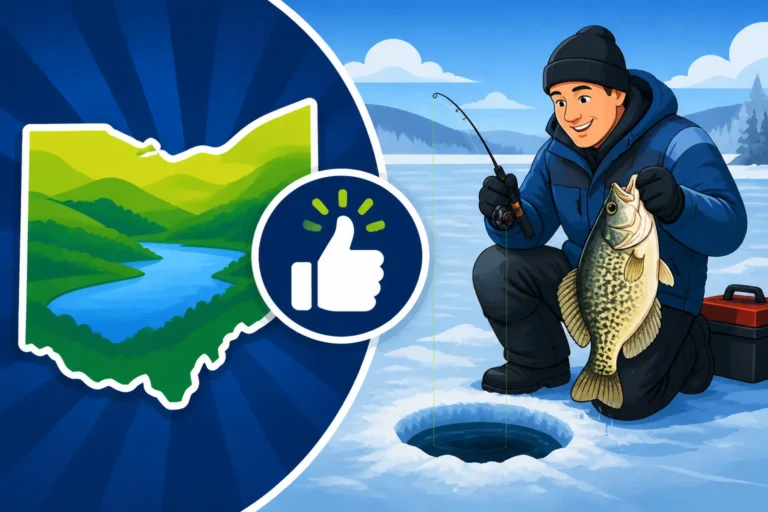
Indian Lake is also a popular destination for ice fishing, conditions permitting. While its relatively shallow depth means ice can form quickly, it also means it can be less stable in mild winters. Always prioritize safety and check ice thickness before venturing out, as covered in our Ohio Ice Fishing Guide. Once safe, ice anglers can target crappie, bluegill, and saugeye through the ice. Small jigs tipped with wax worms or minnows are incredibly effective for panfish, while larger jigs or tip-ups with live bait can entice saugeye. Fishing over brush piles and around structure in areas like Moundwood or the various coves can be very productive for ice anglers seeking a winter catch.
Planning Your Indian Lake Fishing Adventure
A successful fishing trip isn't just about what happens on the water; it's also about thorough preparation. Knowing what gear to bring, understanding the local rules, and familiarizing yourself with available services can make all the difference between a good day and a great one.
Essential Gear and Bait Recommendations
Having the right gear for Indian Lake will definitely boost your success. Given the diverse fishery, a versatile setup is often best. For panfish and crappie, a light to medium-light spinning rod (6-7 feet) with 4-6 lb test monofilament or fluorocarbon line is perfect. Small jigs (1/32 to 1/16 oz) tipped with minnows, wax worms, or small soft plastic grubs are incredibly effective.
For bass and saugeye, a medium-heavy spinning or baitcasting setup with 8-15 lb test line will give you the power and sensitivity needed. Crankbaits, spinnerbaits, jigs, and soft plastics (worms, creature baits) are staples for bass. For saugeye, try casting or trolling medium-diving crankbaits in shad or perch patterns, or jigging with minnows or soft plastics (like curly-tail grubs) along drop-offs. Don't forget a good pair of pliers for hook removal, a net, and a cooler to keep your catch fresh! For a deeper dive into general tackle, our Best Ohio Fishing Gear and Tackle Guide offers comprehensive advice.
| Species | Best Times | Common Baits/Lures | Recommended Tackle |
|---|---|---|---|
| Largemouth Bass | Spring, Fall (dawn/dusk) | Jigs, Spinnerbaits, Soft Plastics | Medium-Heavy Rod, 8-15lb Line |
| Smallmouth Bass | Spring, Fall | Crankbaits, Tubes, Grubs | Medium Rod, 8-12lb Line |
| Crappie | Spring, Fall (low light) | Minnows, Small Jigs, Wax Worms | Light Rod, 4-6lb Line |
| Bluegill/Sunfish | Year-round | Worms, Crickets, Tiny Jigs | Ultralight Rod, 2-4lb Line |
| Channel Catfish | Summer (night) | Cut Bait, Stink Bait, Live Worms | Heavy Rod, 15-30lb Line |
| Flathead Catfish | Summer (night) | Live Bluegill, Suckers | Heavy Catfish Rod, 30-50lb Braided Line |
| Saugeye | Spring, Fall (low light) | Crankbaits, Blade Baits, Jigs with Minnows | Medium-Light to Medium Rod, 8-10lb Line |
Understanding Indian Lake Fishing Regulations
Before you cast a single line, it’s absolutely critical to understand and adhere to Ohio’s fishing regulations. These rules are in place to ensure the sustainability of the fishery for everyone. First and foremost, anyone aged 16 and older needs an Ohio Fishing License Guide for Residents and Nonresidents. You can easily purchase these online, at most bait and tackle shops, or at ODNR offices. Make sure your license is current for the season you're fishing.
Beyond the license, Indian Lake, like all Ohio waters, is subject to statewide bag and size limits for various species. While Indian Lake doesn't typically have highly specialized local regulations like some of the Lake Erie zones, it's always wise to consult the current Ohio Fishing Regulations booklet, which is available online through the ODNR Division of Wildlife website. This booklet will detail daily bag limits, minimum length requirements, and any tackle restrictions. For example, knowing the specific limits for saugeye or the number of poles you can fish with is essential. Abiding by these rules ensures you're fishing legally and responsibly, helping to preserve the quality of fishing at Indian Lake for future generations.
Local Amenities and Guide Services
Indian Lake State Park is well-equipped with amenities to support a fantastic fishing trip. Beyond the boat ramps and public docks, you'll find various bait and tackle shops in the surrounding towns like Lakeview, Russells Point, and Huntsville. These local shops are invaluable resources for up-to-date fishing reports, local hot tips, and specialized baits or lures that are currently producing. They often have friendly staff who are happy to share their knowledge of the lake.
For those who are new to Indian Lake or want to maximize their chances of success, hiring a local fishing guide can be a game-changer. These professional guides spend countless hours on the water and know the lake's nuances intimately. They can put you on fish quickly, teach you effective techniques, and provide all the necessary gear. While Indian Lake may not have the large charter boat industry like Lake Erie, you can often find individual, experienced guides who specialize in inland lake fishing for species like saugeye, bass, and crappie. Websites like FishingBooker can sometimes list independent guides or smaller guiding operations, allowing you to compare options and read reviews before booking. It's a great way to learn the lake and get a head start on a successful fishing adventure!
Disclaimer
The information provided in this guide is for general informational purposes only and is subject to change. Fishing regulations, conditions, and fish populations can vary. Always consult the official Ohio Department of Natural Resources (ODNR) Division of Wildlife website or current regulations booklet for the most up-to-date and accurate information before planning your fishing trip. Exercise caution and good judgment while on the water.