Best Rocky River Steelhead Holes
Finding those elusive steelhead in the Rocky River can feel like trying to locate a needle in a very long, winding haystack, especially when the river is bustling with other anglers. It’s a common frustration to hit a promising spot only to find it barren, or worse, to see someone else pull out a chromer right where you just cast. This guide is here to unravel the mysteries of the Rocky River, helping you understand where steelhead prefer to hold, how to identify those prime "holes," and what techniques will give you the best shot at hooking into one of Ohio's most prized game fish.
Understanding the Rocky River Steelhead Migration
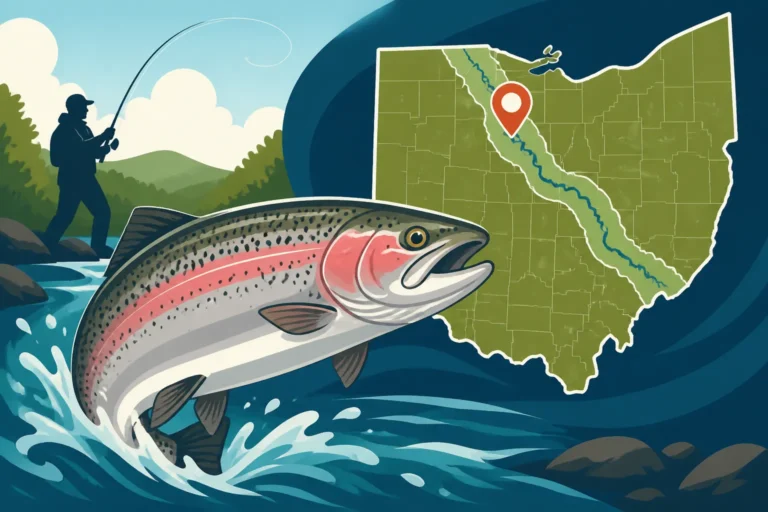
The Rocky River, flowing through Cleveland Metroparks, is renowned as one of Ohio's premier steelhead fisheries. These powerful, ocean-run rainbow trout, often called "chromers" for their silvery sheen, migrate from Lake Erie into the river system to spawn. Their arrival is a highly anticipated event for anglers across the state, but knowing when and where to intercept them is key to a successful outing.
When Steelhead Enter the River System
Steelhead typically begin their migration into the Rocky River and other Lake Erie tributaries in late fall, usually starting around October. This initial push is often triggered by cooler water temperatures and significant rainfall, which raises river levels and provides an easier path upstream. The fall run sees fish fresh from the lake, often aggressive and eager to strike. These fish will hold in deeper pools and runs, resting as they adjust to the river environment.
As winter sets in, the bite can slow, but dedicated anglers still find success. During colder months, steelhead tend to concentrate in deeper, slower-moving pools where they can conserve energy. Ice fishing can even become an option in slower sections if conditions allow, though open-water fishing often remains popular. Then, as spring approaches, typically from March through May, the steelhead activity ramps up significantly for the spawning run. This is often considered the peak season, with large numbers of fish pushing far upstream. Understanding the flow and conditions is critical during this period, as fish move rapidly. You can learn more about specific timing in our guide on When Ohio Steelhead Runs Start.
The Unique Character of the Rocky River
The Rocky River isn't just any waterway; its diverse structure creates a variety of habitats that steelhead utilize throughout their stay. From the lower, wider sections near Lake Erie to the narrower, rockier stretches upstream, the river offers distinct environments. The riverbed itself is a mix of gravel, shale bedrock, and larger boulders, all contributing to the formation of prime holding water.
Unlike some other rivers, the Rocky has a significant amount of public access thanks to the Cleveland Metroparks system, making it a favorite for many anglers. This accessibility, however, also means it can experience heavy fishing pressure, especially during peak runs. Knowing the river's ebb and flow, its pools, riffles, and current breaks, becomes a secret weapon in finding unpressured fish. The river's varying depths and currents require anglers to adapt their techniques constantly, but once you crack the code for a particular section, the rewards can be incredible.
Key Characteristics of a Productive Steelhead Hole
Identifying a prime steelhead hole isn't always about knowing a secret spot; it's more about understanding what makes a spot attractive to a steelhead. Think like a fish – they're looking for safety, food, and a place to rest out of the main current, especially during their arduous migration.
Identifying Holding Water and Current Breaks
Steelhead are powerful swimmers, but they're also opportunistic. They don't want to fight the current constantly. Instead, they'll seek out areas where the current breaks, allowing them to rest while still being close to the main flow where food might drift by. Look for obvious current seams where fast water meets slower water. These seams often form behind large rocks, fallen trees (snags), bridge pilings, or even subtle changes in the riverbed.
Deep pools, especially those at the tailout (the downstream end) of a riffle or run, are classic steelhead holding areas. The deeper water provides security from predators and allows the fish to remain comfortable even with fluctuating water levels. Undercut banks, where the river has eroded the soil beneath the bank, create perfect overhead cover and deep pockets of slow water. Overhanging branches or brush also offer similar protection. While these fish are migratory, they aren't always on the move. They stage, they rest, and they feed in these distinct "holes." If you want to dive deeper into reading the water, check out our guide on How to Read Steelhead Holding Water.
Understanding Water Flow and Clarity
The Rocky River is notoriously temperamental when it comes to flow and clarity, and these factors are huge indicators of where steelhead will be and how they'll behave. After heavy rains, the river can blow out, becoming high, fast, and muddy. In these conditions, steelhead will often drop back into Lake Erie or hold in the very slowest, deepest pools, usually close to the banks where the current is weakest. Fishing during a blown-out river can be challenging, but if you find those specific calm pockets, it can be incredibly rewarding.
Conversely, during periods of low, clear water, steelhead become much warier. They'll shy away from open, shallow areas and hold in the deepest parts of pools or under heavy cover. Stealth becomes paramount. A slight bump in flow after a small rain can be ideal, as it brings in fresh, cooler water and a bit of color, encouraging fish to move and feed. You can often find real-time flow data from USGS gauges, which is an invaluable tool for planning your trip. Knowing the Best Water Flow for Steelhead Fishing on the Rocky River is truly a game-changer. For instance, a flow between 200-500 cubic feet per second (cfs) on the Rocky River is often considered ideal for many techniques, but this can vary depending on the section and clarity. If the flow goes too high, say above 1,000 cfs, the river can become unfishable for safety and productivity reasons. Our article on What Flow Is Too High to Fish Ohio Steelhead Rivers? offers more insights.
Top Rocky River Steelhead Hotspots
Alright, let's talk about some specific stretches of the Rocky River that are known for producing steelhead. While conditions change daily, these areas consistently offer the right kind of structure and access to make them prime targets.
The Rockcliff and Cedar Point Bridge Area
This section is perhaps one of the most popular and productive areas on the entire Rocky River. It’s located in the lower portion of the river, just a short distance upstream from Lake Erie. The "Rockcliff" itself refers to the impressive shale cliffs that line the river, creating deep runs and pools as the current washes against them. This deep water provides excellent cover and holding lies for steelhead, especially early in the fall run and during higher water conditions. Anglers often target the seams along the cliff face or where the current slows down.
Just upstream from the Rockcliff is the Cedar Point Bridge. The pilings and abutments of this bridge create significant current breaks and eddies, which are natural magnets for resting steelhead. The pools around the bridge can be quite deep, offering superb winter holding water. Access here is generally good through the Cleveland Metroparks, with parking available nearby. It's a busy spot, especially on weekends, so showing up early is often beneficial. Anglers here use everything from float fishing with spawn bags to drifting jigs and soft plastics. Many local fishing reports frequently mention this area as a hotspot, and you can often see guides leading trips here, sometimes even booked through platforms like FishingBooker, thanks to its consistent productivity.
Emerald Necklace and Lagoon Park Sections
Moving further upstream, you'll encounter the Emerald Necklace and Lagoon Park areas, which offer a different character of fishing, often with slightly less pressure than the very lowest sections. The Emerald Necklace area is characterized by its winding runs, gravel bars, and a mix of deeper pools and shallow riffles. Steelhead utilize these areas heavily, particularly during the spring spawning push, as they move up onto the gravel to stage.
Lagoon Park, a bit further upstream, features more defined pools and slower-moving stretches. The lagoons themselves are typically off-limits or less productive for steelhead, but the river channels adjacent to them are excellent. You'll find good access here through the Metroparks, often with trails leading to various fishing spots along the river. This section is fantastic for anglers who enjoy wading and covering water, searching for active fish. Focus on the transition areas between fast and slow water, and any structure like submerged logs or boulders. Remember to always respect private property boundaries and only fish where public access is permitted. For a detailed look at where you can get into the river, consult our Rocky River Steelhead Fishing Access Points guide.
Upstream and Less-Pressured Areas
For those seeking a bit more solitude and willing to hike, exploring the Rocky River further upstream can yield great results, especially during peak migration. While the lower sections get the most attention, steelhead will push many miles upriver. Areas above the Lagoon Park, extending towards Strongsville and even beyond, offer a more intimate fishing experience. Here, the river narrows, and the pools become more defined, often with significant bedrock structure and fewer obvious current breaks.
These upstream sections might require more effort to reach, but the reward can be finding undisturbed fish. Look for bends in the river that create deeper outside corners, large boulder fields, or any significant changes in depth. During spawning season, these areas are prime for finding fish on or near redds (spawning beds), though remember to observe ethical catch-and-release practices and avoid disturbing spawning fish. While not as universally known as the lower stretches, experienced anglers and guides, some of whom you might find on FishingBooker, know that these less-pressured areas can hold trophy-sized steelhead that have eluded the crowds downstream.
| Rocky River Hotspot | Typical Conditions | Best Time to Fish | Key Features for Steelhead | Access & Pressure |
|---|---|---|---|---|
| Rockcliff & Cedar Point | Deeper, consistent flow | Fall, Winter, Spring | Deep runs, shale cliffs, bridge pilings, current seams | High access, very high pressure |
| Emerald Necklace | Varied flow, gravel bars | Spring (spawning), Fall | Runs, riffles, gravel beds, depth changes | Good access, moderate-high pressure |
| Lagoon Park | Slower pools, defined channels | Winter, Spring | Deep pools, eddies, submerged structure | Good access, moderate pressure |
| Upper River Sections | Narrower, more bedrock, varying | Fall, Spring | River bends, boulder fields, deep outside corners, woody debris | Moderate access (more hiking), low-moderate pressure |
Fishing Techniques for Rocky River Steelhead Holes
Once you've identified a promising steelhead hole, the next step is to present your offering in a way that entices these often finicky fish. The Rocky River's dynamics dictate that certain techniques shine brighter than others, especially when targeting fish holding in specific structures.
Drift Fishing and Float Fishing Strategies
Drift fishing, particularly with a float (often called "float fishing" or "centerpinning" if using a specialized reel), is arguably the most effective and popular method for Rocky River steelhead. The idea is to present your bait or lure naturally, allowing it to drift at the same speed as the current through the strike zone. This technique is especially potent in current seams, behind structure, and through deeper pools where steelhead are actively holding.
To execute this effectively, you need to understand where the steelhead are likely positioned within the hole. For instance, if you're fishing a deep pool, you might need to adjust your float stopper to ensure your bait is drifting just off the bottom. In a current seam, you want your float to travel precisely down that seam, allowing your bait to follow. Common baits include cured spawn sacs, single eggs, waxworms, and small jigs tipped with a maggot or soft plastic. When done correctly, your float will suddenly dip or go under, signaling a strike. The sensitivity of a good float setup, combined with a precise drift, can make all the difference, especially when fish are subtle. For a deeper dive, our guide on How to Fish a Bead Under an Indicator for Steelhead provides excellent insights into rigging and presentation.
Lure and Bait Selection for Specific Spots
While natural drift baits are hugely popular, various lures can also be incredibly effective, especially for aggressive fish or when trying to cover more water. Small inline spinners, like those from Mepps or Roostertail, are great for targeting active fish in faster runs or when searching new water. Their flash and vibration can trigger strikes from steelhead that might ignore a subtle bait.
Spoons, such as Little Cleos or Koho spoons, also have their place. Their wobbling action is irresistible to steelhead, especially in slightly deeper, slower pools or when swung through current seams. Colors can vary, but bright oranges, chartreuses, and silver often work well in clearer water, while darker patterns can be better in stained conditions. Soft plastic presentations, like Berkley Gulp! Alive! minnows or various tube jigs, are also gaining popularity. Fished under a float or bounced along the bottom with a small jig head, these can mimic natural forage and attract strikes. Ultimately, having a variety of options in your tackle box means you can adapt to whatever the Rocky River throws at you. You can find more comprehensive information on popular choices in our guide to the Best Lures for Ohio Fishing.
Seasonal Considerations for Rocky River Steelhead
Fishing the Rocky River for steelhead is a year-round proposition for the truly dedicated, but the specific tactics and even the "best" holes can shift dramatically with the seasons. Understanding these seasonal changes is crucial for maximizing your success.
Fall Run Steelhead Tactics
The fall run, typically from October through December, is an exciting time on the Rocky River. Steelhead are fresh from Lake Erie, full of energy, and often very aggressive. They haven't seen a lot of fishing pressure yet, and their primary goal is to move upstream and find comfortable holding water. During this time, the lower sections of the river, especially the Rockcliff and Cedar Point Bridge areas, are prime, as these are the first major holding areas they encounter.
Your tactics should focus on intercepting these migrating fish. Drift fishing with natural baits like cured salmon eggs (spawn sacs) or egg imitations under a float is incredibly effective. These fish are looking to feed before winter truly sets in. Aggressive fish might also hit small spoons or inline spinners presented in faster runs or the heads of pools. As water temperatures drop, fish will increasingly seek out deeper pools and current breaks to conserve energy. This is a great time to be flexible with your approach, experimenting with different depths and presentations until you find what the fish prefer. Planning your fall trip, especially if you're considering a guided outing through a service like FishingBooker, is best done well in advance, as these prime windows book up quickly.
Winter Holding and Spring Spawning
Winter fishing on the Rocky River tests an angler's dedication, but it can be incredibly rewarding. From December through February, steelhead activity slows considerably, and they become concentrated in the deepest, slowest pools. They are less active feeders but can still be enticed with a slow, methodical presentation. Stealth is even more important now, as fish are often lethargic and wary.
Tiny jigs tipped with maggots or waxworms, presented slowly under a float, are often the most effective. Even subtle twitches can trigger a strike. It's not uncommon to fish a hole for a significant amount of time before getting a single bite, but that bite can often be a large, healthy steelhead. As spring approaches (March-May), the river comes alive again with the spawning run. Fish push further upstream, into areas like the Emerald Necklace and even higher, seeking out gravel beds. Float fishing remains dominant, but fly fishing with egg patterns, nymphs, and streamers also becomes highly effective. The key is to match your presentation to the specific behavior of pre-spawn, spawning, and post-spawn fish. Many anglers rely on experienced guides, often found through BookingBooker, who know exactly where the fish are staging during these critical periods. Our comprehensive guide on Ohio Steelhead Fishing Techniques covers these strategies in detail.
Disclaimer
Fishing conditions, regulations, and fish behavior can change rapidly. Always consult the latest Ohio Department of Natural Resources (ODNR) fishing regulations before heading out. Be aware of private property boundaries and practice ethical angling, including catch-and-release, especially for spawning fish. Stay safe on the water, wear appropriate gear, and respect fellow anglers.