How to Read Steelhead Holding Water
One of the biggest frustrations for Ohio steelhead anglers is showing up at a promising river only to stare at the water, scratching your head and wondering where in the world the fish could be hiding. Steelhead are incredible fish, but they're not always out in the open, waving a flag. This guide is all about helping you decode the river, teaching you how to read steelhead holding water so you can spend less time guessing and more time presenting your offerings to hungry fish.
Understanding Steelhead Behavior and Habitat Preferences
Steelhead are fascinating creatures, driven by instinct and environmental cues. They aren't just randomly distributed throughout a river system. Instead, they actively seek out specific areas that offer a combination of safety, easy access to food, and favorable water conditions. If you can tap into this understanding, you'll be miles ahead in locating them.
The Importance of Current and Structure
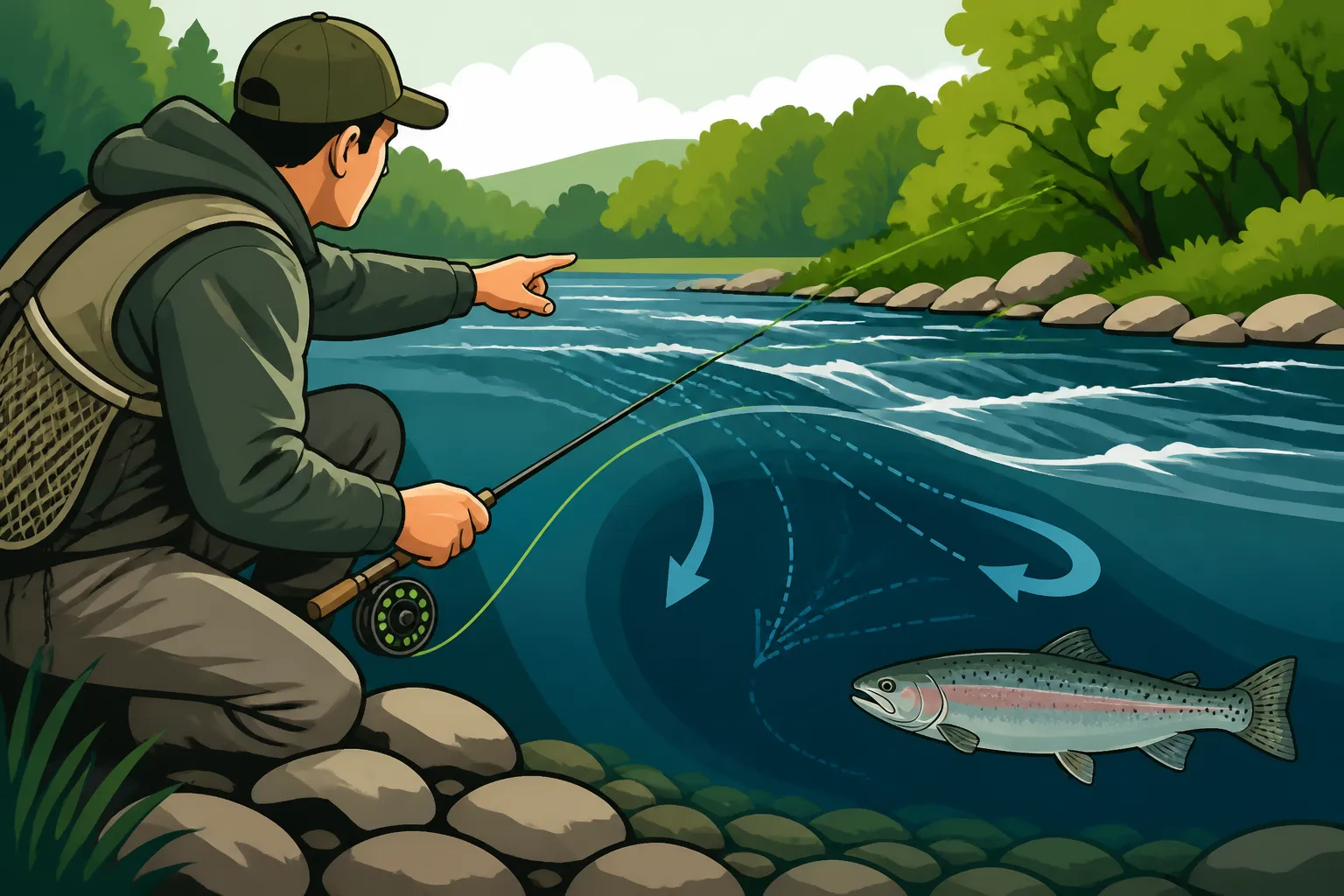
When a steelhead enters an Ohio tributary from Lake Erie, its primary concerns shift from the vastness of the lake to the dynamic flow of the river. The current, while essential for oxygen and carrying food, also expends energy. Therefore, steelhead are experts at finding "soft spots" or "current breaks" where they can hold without fighting the main flow, conserving energy while still being close enough to ambush passing prey. Think of it like a resting area next to a conveyor belt of food.
Structure, whether natural or man-made, is their best friend. This could be anything from fallen trees and log jams to large boulders, undercut banks, or even bridge pilings. These features provide vital cover, making steelhead feel secure from overhead predators like eagles or kingfishers, and offering a refuge from strong currents. A big rock in the middle of a swift run creates a perfect eddy downstream where a steelhead can comfortably sit and wait. Similarly, a deep, dark undercut bank provides a safe haven, especially for larger, more wary fish. Learning to identify these spots is crucial for knowing where to cast.
Seasonal Movements and Water Conditions
Steelhead behavior, and thus their holding patterns, are heavily influenced by the seasons and ever-changing water conditions in Ohio's rivers. What works in October might not work in January, and what's prime after a rain might be barren on a clear, low-flow day. For instance, in the early fall, when Ohio Steelhead Runs Start, fish might be more spread out, exploring the river system. As winter sets in and water temperatures drop, they tend to congregate in deeper, slower pools, seeking thermal refuge and less strenuous currents. These deeper pockets offer a more stable environment when the surface water is frigid.
Conversely, a sudden warm spell or a significant rain event can trigger fish to move upstream, often pushing them into faster, shallower runs as they search for spawning grounds or fresh feeding lanes. Water clarity also plays a huge role; in stained or muddy water, steelhead often hug the banks or move into shallower, less turbulent water where visibility is better for them to hunt. Understanding these nuances is key to adapting your approach. A great resource to track these movements and conditions is often found in localized fishing reports, which can help inform you when The Rocky River Steelhead Run Peaks or if certain rivers like the Vermilion River Steelhead Fishing Access are flowing too high.
Identifying Prime Holding Water Features
Reading water is both an art and a science, a skill honed through observation and experience. It's about looking at a stretch of river and instinctively knowing where a fish might be. While every river and every day is different, certain features consistently attract steelhead.
Riffles, Runs, and Pools
These are the fundamental building blocks of any river, and steelhead utilize each one differently. Riffles are those shallow, choppy areas where the water tumbles over rocks, oxygenating the water and dislodging insects. While steelhead might briefly move through riffles, especially smaller ones, they generally don't hold here for long periods, as it offers little cover and requires too much energy to stay put.
Runs are deeper, faster-moving sections of water, often downstream from riffles. These are classic steelhead highways and excellent feeding grounds. Steelhead will often hold in the slightly slower water on the edges of runs, or behind larger boulders within the run, darting out into the main current to intercept nymphs or swung flies. The transition zone where a riffle deepens into a run is often a fantastic spot.
Pools are the deepest, slowest sections of a river. These are critical resting and holding areas, especially in winter or during periods of low flow. Steelhead will often stack up in the deepest parts of pools, near structure, or along the current seams where the faster water transitions into the slower pool. Don't just cast to the middle of the pool; focus on the head (where the run flows in), the tail (where water exits), and any obvious cover within.
Seams, Edges, and Obstructions
Beyond the broad categories of riffles, runs, and pools, successful anglers pay attention to the subtle details. Seams are where two different current speeds meet. Imagine a faster current flowing alongside a slower one; a visible line or "seam" will form. This is prime real estate for a steelhead, as they can sit in the slower water and watch the faster lane for food without exerting much energy. These seams can be found along banks, behind large rocks, or even in the middle of wider runs.
Edges refer to the transition zones where a distinct change occurs. This might be the edge of a deep drop-off, the edge of a weed bed, or where the main current meets a calmer backwater. Undercut banks, where the water has carved out a recess beneath the bank, create a perfect overhead and side cover, making them irresistible holding spots. Often, these spots are literally right at your feet or on the far bank.
Obstructions like log jams, fallen trees, or large rock formations are magnets for steelhead. They break the current, create eddies, and offer significant cover. However, fishing these spots can be tricky due to snags. Approach them carefully, understanding that the fish will likely be tucked into the quieter water directly downstream or alongside the obstruction. Sometimes, the upstream side of a large boulder also creates a small pocket of slower water that a fish will use.
Depth and Substrate Clues
The depth of the water and the composition of the riverbed (substrate) also provide important clues. Generally, steelhead prefer deeper water for safety, especially larger fish. A deep trench, a channel, or a depression in the riverbed can be a consistent holding spot. However, don't ignore shallower water entirely, especially during low light conditions or when fish are actively migrating. A 2-3 foot deep run with good current and structure can hold plenty of fish.
The substrate refers to what's on the bottom – rocks, gravel, sand, mud. Steelhead, particularly when they're getting ready to spawn, will seek out gravel bottoms for redds (nests). Even outside of spawning season, gravel and larger rocks provide good structure for holding and are often indicative of healthy, oxygenated water. Muddy or silty bottoms are generally less desirable for holding, though fish might move through them. Pay attention to changes in bottom composition, as these transitions can also create holding lies. For instance, a rocky run transitioning into a sandy flat might have fish holding right at that interface.
Advanced Techniques for Locating Hidden Steelhead
Sometimes, the obvious spots are picked over, or the water conditions make visual detection difficult. That's when you need to employ some more advanced strategies to find those elusive chrome beauties. It's about combining keen observation with smart fishing tactics.
Polarized Lenses and Wading Safely
One of the simplest yet most effective tools for reading water is a good pair of polarized sunglasses. These lenses cut glare off the water's surface, allowing you to see into the water much more clearly. You'll be amazed at how many subtle features, like submerged rocks, depth changes, or even the flash of a fish, become visible. This is especially true on sunny or partly cloudy days. Spend time with your polarized lenses, looking at different angles into the water. Sometimes, a subtle shadow or a slight disruption in the current is all you need to spot a potential holding lie.
Wading safely is paramount when exploring new water. Always use a wading staff, especially in unfamiliar stretches or swift currents. Test the bottom before taking a step, feeling for drop-offs or slippery rocks. Steelhead rivers in Ohio can be notoriously slick, so proper studded boots or felt soles are a must. Moving slowly and deliberately also minimizes disturbance, allowing you to approach potential holding water without spooking fish. A quick movement or a clumsy splash can send wary steelhead scattering. Investing in quality wading gear, which you can often find on Amazon, is a wise decision.
Interpreting Water Color and Temperature
Water color can tell you a lot about what's happening beneath the surface. Clear water means fish are likely to be spooky and holding in deeper, more secluded spots. You'll need a stealthier approach and lighter leaders. Stained water (a slight tea color, often seen after a light rain) can be fantastic, as it gives steelhead a sense of security while still allowing them to see your presentation. This is when fish might move into shallower water or more aggressive feeding lies. However, if the water is chocolate milk brown, it might be Too Muddy for Steelhead to comfortably see or feed, and you might be better off waiting for conditions to improve.
Water temperature is another critical factor. Steelhead are cold-water fish, and their activity levels are directly tied to temperature. In very cold water (below 38-40°F), they tend to be lethargic, holding tight to the bottom in deep pools and requiring slow, deliberate presentations. As water temperatures rise into the optimal range (mid-40s to low 50s°F), they become more active, moving into faster runs and feeding more aggressively. Carrying a small water thermometer can give you a significant edge in understanding where fish might be. You can pick up a reliable, easy-to-use thermometer on Amazon to keep in your vest.
Fan Casting and Probing Likely Lies
Sometimes, you can't see the fish, and the water features aren't screaming "steelhead here!" In these situations, fan casting and systematically probing the water become essential. Start by casting upstream and letting your bait or lure drift naturally through the most likely holding water. Then, gradually adjust your casting angle, fanning out across the run or pool, covering every inch of potential water. Pay close attention to subtle takes or bumps.
This technique is especially useful in wider runs or pools where fish might be spread out. Don't be afraid to try different depths and retrieves. If you suspect fish are holding close to the bottom in a deep pocket, use enough weight to get your offering down quickly. If they seem to be suspended, lighten up your weight. Remember, the goal is to present your bait or lure to where you think the fish are, even if you can't see them. This systematic approach, especially with proper Casting Techniques for Steelhead, maximizes your chances of intercepting a hidden fish.
Common Mistakes and How to Avoid Them
Even experienced anglers can fall into traps when trying to locate steelhead. Avoiding these common missteps can drastically improve your success rate on the river.
Overlooking the "Obvious" or "Too Simple" Spots
It's easy to get caught up in the allure of those deep, dark, complex runs that seem like perfect steelhead territory. But sometimes, the fish are in the most unassuming places. How many times have you walked past a seemingly shallow, gentle riffle or a small pocket behind a roadside boulder, only to see someone else pull a fish out of it later? Steelhead, especially fresh fish just entering the river, will sometimes hold in surprisingly shallow water, particularly if there's good current and a bit of overhead cover.
Think about the water directly below a small rapids or where a feeder creek enters the main river. These "transition zones" can be goldmines. Similarly, the slower water right against the bank, often ignored by anglers focused on the main current, can hold staging fish. Don't let your preconceived notions about "perfect" steelhead water blind you to simpler, less dramatic, but equally productive spots. Always give those "too simple" spots a few casts, because sometimes, that's exactly where the fish are resting. It's often where you find overlooked Rocky River Steelhead Holes.
Fishing Too Fast or Not Adjusting to Conditions
One of the most common mistakes, especially for eager anglers, is fishing too fast. Steelhead often require a precise, slow presentation, especially in cold water. Rushing through a promising run, making only a few quick casts, and then moving on is a surefire way to miss fish. Take your time. Allow your bait or lure to drift naturally through every possible holding lie. If you get a bump or a suspicious snag, work that area thoroughly.
Equally important is the inability to adjust to changing conditions. The river is a dynamic environment. What worked in the morning might not work in the afternoon. If the water level drops, fish might move to deeper pools. If it rises, they might hug the banks. If the sun comes out, they might dive for cover. Pay attention to everything: cloud cover, wind, water clarity, temperature, and pressure. If you're not getting bites, don't just keep doing the same thing. Change your lure color, your weight, your presentation depth, or even your location. Sometimes, a subtle shift in your Ohio Fishing Techniques for Beginners can make all the difference. Remember, the fish aren't going to adjust for you; you have to adjust for them.
By really observing the river, understanding steelhead behavior, and patiently dissecting each section of water, you'll develop an intuitive sense for where these magnificent fish are hiding. It’s a skill that pays dividends across all of Ohio Walleye Fishing Guide or when exploring Best Ohio Lakes for Bass Fishing.
| River Feature | Steelhead Behavior | Prime Holding Spots | Fishing Approach |
|---|---|---|---|
| Riffles | Rarely hold, mostly travel through. | Edges where current slows, just before deepening. | Quick drifts, exploring transition zones. |
| Runs | Actively feed and travel. Seek current breaks. | Behind large boulders, along current seams, drop-offs. | Drift fishing, swinging flies, systematic casting. |
| Pools | Rest, hold in deeper water, especially in cold temps. | Deepest sections, undercuts, log jams, head/tail of pool. | Slow, deep presentations; focus on structure. |
| Current Seams | Conserve energy while watching for food. | Any visible line where fast and slow water meet. | Drift along the seam, keep bait in the "sweet spot". |
| Undercut Banks | Excellent cover from predators and strong current. | Directly under the bank, especially in deeper water. | Precise casts, subtle drifts, probing close to bank. |
| Log Jams/Boulders | Offer significant current breaks and cover. | Downstream eddies, pockets alongside the obstruction. | Careful casts to avoid snags, work pockets thoroughly. |
| Depth Transitions | Utilize changes in depth for cover and ambush points. | Where shallow water drops into a deeper channel or hole. | Vary presentation depth, explore contour changes. |
Disclaimer
The information provided in this guide is for educational and informational purposes only. Fishing regulations, conditions, and fish behavior can change. Always consult the latest Ohio Department of Natural Resources (ODNR) regulations before heading out and prioritize safety on the water.