When Ohio Steelhead Runs Start
There's nothing quite like the anticipation of the Ohio steelhead run. You've heard the whispers, seen the photos, and you're ready to hit the rivers, but the biggest question always looms: "When do they actually start running?" It can be incredibly frustrating to plan a trip, drive all the way to your favorite creek, and find nothing but empty water. This guide will help demystify the timing of Ohio's steelhead runs, breaking down the environmental factors that trigger these incredible migrations and giving you a clear idea of what to expect throughout the season.
Understanding the Steelhead Migration Trigger in Ohio
Steelhead are incredible athletes, born in the rivers but growing to impressive sizes in the vastness of Lake Erie. Their return to the tributaries each year is a natural spectacle, driven by ancient instincts and immediate environmental cues. Pinpointing the exact start date can feel like chasing a ghost, but understanding the key triggers makes it a lot less mysterious.
The Role of Water Temperature and Rainfall
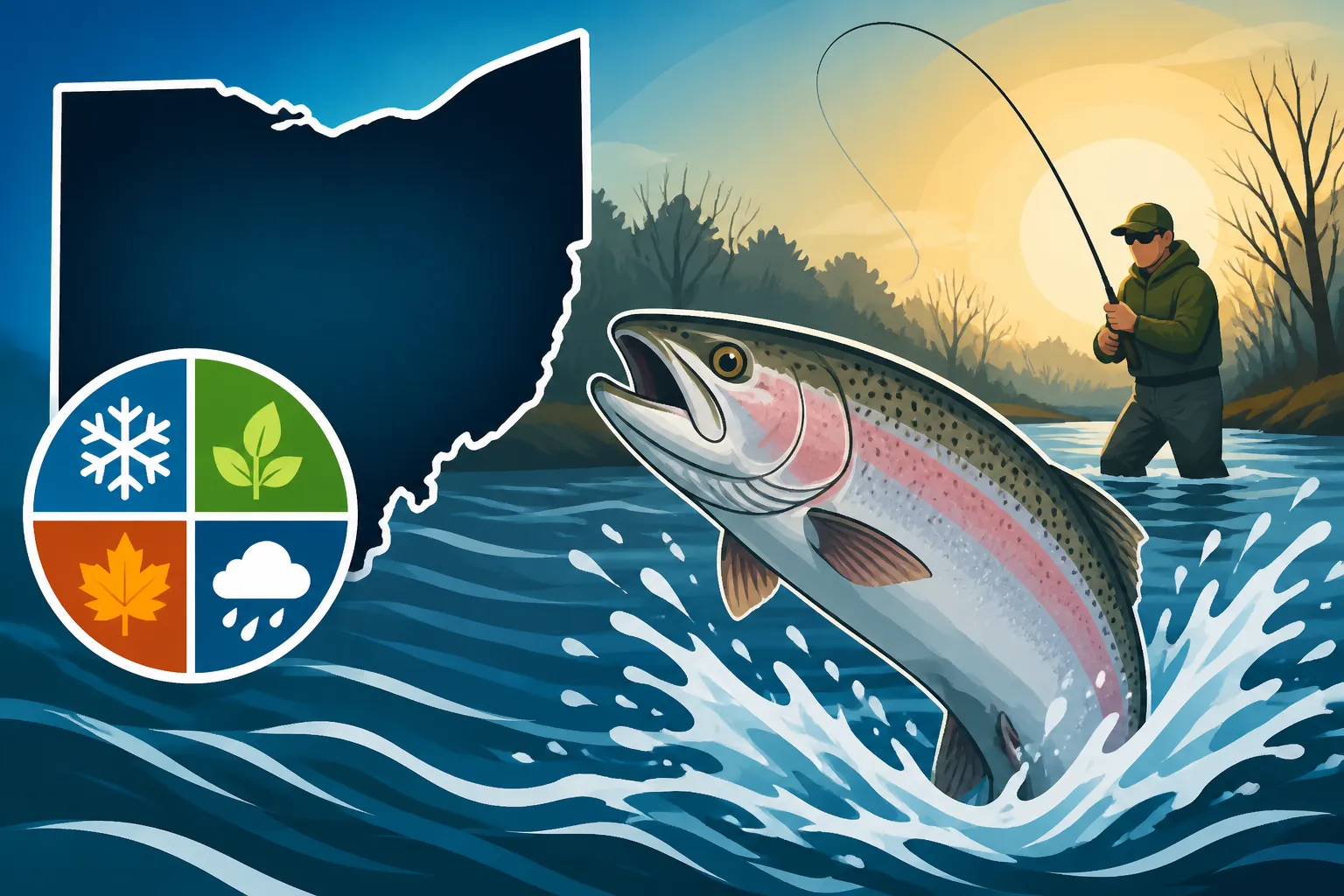
The most significant factors kicking off the steelhead run are dropping water temperatures and increased rainfall. Think of it as a one-two punch that signals to these chrome beauties that it's time to head upstream.
As the long, warm days of summer fade into fall, Lake Erie's water temperatures begin to cool. When the nearshore temperatures dip consistently into the mid-50s Fahrenheit, usually around 50-55°F, it's like a siren call to the staging steelhead. This temperature change is the primary biological trigger. However, temperature alone isn't always enough to get a substantial number of fish moving far up the rivers. That's where rainfall comes in. A good, soaking rain event after a dry spell is crucial. When rain hits, it raises the water levels in the creeks and rivers, increasing flow and often reducing clarity. This surge of fresh, cool water creates an inviting pathway for the steelhead, making it easier for them to navigate upstream, avoid predators, and find refuge in deeper pools. Without sufficient water flow, fish might stage at the river mouths but be hesitant to push further inland. A warm, dry fall will significantly delay the start of the true runs, while a cool, wet autumn can have fish pushing into the rivers much earlier and more aggressively.
General Timeline for Ohio's Steelhead Runs
While nature doesn't follow a calendar with perfect precision, there's a general timeline you can follow for Ohio's steelhead runs. The phenomenon often begins with what anglers affectionately call "the trickle."
The earliest signs of steelhead entering the rivers can sometimes be observed in late September, especially in the western tributaries like the Rocky River or Vermilion River, if conditions are just right. These are usually smaller pushes, often driven by the first significant cold fronts and rain events of the season. The peak of the fall run typically occurs from mid-October through November. This is when the main body of fish, often larger and more aggressive, floods into the rivers. This period often offers some of the most consistent and exciting fishing. As winter truly sets in during December and January, the run continues, but fish tend to hold in deeper, slower pools, conserving energy in the colder water. Many anglers mistakenly believe the run ends with the freeze, but resilient steelhead are still there, often requiring different techniques and a good understanding of winter conditions. Then, as spring approaches in March, a renewed push of steelhead enters the rivers for their spawning rituals, followed by "drop-back" fish that have completed spawning and are heading back to Lake Erie. This multi-season activity is why this region is famously known as "Steelhead Alley: Where It Is and What It Means".
Seasonal Breakdown of Steelhead Activity in Ohio's Tributaries
Understanding the general timeline is one thing, but knowing how steelhead behave and where they'll be throughout the different seasons can make all the difference in your fishing success. Each phase of the run presents unique opportunities and challenges.
Early Fall Runs: September to October
The early fall is all about anticipation. You're constantly checking weather forecasts for rain and watching those river gauges like a hawk. When those first significant cold fronts roll through and bring some much-needed precipitation, that's when you'll start to see the initial waves of steelhead. These early fish are often quite feisty and aggressive, eager to push upstream after spending the summer gorging themselves in Lake Erie. They haven't been pressured much, making them receptive to a variety of presentations.
During this period, focus your efforts closer to the river mouths and in the lower sections of the rivers. The fish won't have had a chance to spread out too far yet. Look for them holding in deeper pools, behind logjams, or in areas with current breaks. Small presentations, like trout beads, small jigs tipped with maggots, or brightly colored egg patterns, can be highly effective. The water might still be relatively clear, so lighter fluorocarbon leaders are often key. Early season anglers might even find success with small spoons or spinners fished in faster runs. It's a great time to experiment and enjoy the beautiful fall foliage while you're out there.
Peak Fall and Winter Runs: November to February
This is the bread and butter for many Ohio steelhead enthusiasts. As November arrives, the runs typically hit their stride. Consistent cold temperatures and regular rainfall keep a steady flow of fish moving into and holding in the rivers. These fish are generally larger and more numerous than the early season trickles. They've traveled further and are committed to their journey.
In November and December, you'll find steelhead spread throughout the middle and upper sections of the major tributaries like the Grand River, Chagrin River, and Conneaut Creek, as well as the more western rivers like the Rocky River Steelhead Fishing Access Points and Vermilion River Steelhead Fishing Access. They'll hold in deep pools, under cut banks, and in slower, oxygenated pockets of water. As winter progresses and water temperatures plummet, steelhead become more lethargic. They'll stack up in the deepest, slowest pools available, minimizing energy expenditure. This means you need to slow down your presentations. Drifting natural baits like spawn sacs, wax worms, or even tiny jigs under a float becomes extremely effective. The key is to get your offering right on the bottom, moving at the same speed as the current. Don't be afraid of heavy split shot to ensure your bait is in the strike zone. On sunny winter days, fish might move into slightly shallower, sun-warmed riffles for short feeding windows, but generally, deep and slow is the name of the game.
Spring Spawning Runs: March to May
Just when you think the steelhead action might be winding down, spring brings a resurgence! As ice breaks up and water temperatures slowly begin to rise, a new wave of steelhead enters the rivers, driven by the urge to spawn. These "spawners" are often brilliantly colored, vibrant fish, ready to complete their life cycle.
The spring run often starts in March and continues through April, sometimes even into early May, depending on how quickly the rivers warm. You'll find these fish staging in shallower gravel runs and riffles, preparing to deposit their eggs. Fresh-run spring steelhead can be incredibly aggressive, and post-spawn "drop-backs" – fish that have already spawned and are heading back to Lake Erie – are often ravenous as they try to regain lost energy. Many anglers find the drop-back bite particularly exciting. For these actively spawning and post-spawn fish, bright egg patterns, nymphs, and small jigs are excellent choices. Fly anglers will have a field day with stoneflies, caddis, and even small streamer patterns. The rivers can become quite crowded during this time, especially on weekends, so showing respect to fellow anglers and understanding proper "Ohio Steelhead Fishing Techniques" is crucial. Remember to handle spawning fish with care and release them quickly to ensure the health of future runs.
Key Ohio Steelhead Rivers and Their Unique Timings
Ohio's Lake Erie tributaries are collectively known as "Steelhead Alley," a fantastic resource for anglers. While the general timing principles apply to all, there can be subtle differences between the individual rivers. Knowing these nuances can help you pick the best spot for your fishing adventure. For a broader overview, check out the article on the Best Ohio Rivers for Steelhead.
Western vs. Eastern Tributaries: Slight Differences
Ohio's steelhead streams can generally be divided into western and eastern basins, and this geographical distinction can sometimes lead to slight differences in run timing and fish behavior.
The western tributaries, such as the Rocky River, Vermilion River, and Huron River, are often the first to see significant steelhead activity in the fall. Being closer to the western basin of Lake Erie, which can sometimes cool faster, these rivers tend to get the initial pushes of fish. They are also generally shorter and have steeper gradients in their lower sections, meaning rain events can bring quick rises and drops in water levels. This can make them more dynamic and require anglers to be adaptable. On the other hand, the eastern tributaries like the Grand River Steelhead Fishing in Ohio, Chagrin River Steelhead Fishing in Ohio, and Conneaut Creek Steelhead Fishing, while also experiencing great runs, might see their peak activity a little later or have a more prolonged fall and winter run. These rivers are often larger and have more extensive river systems, which can mean more stable flows for longer periods, even through significant cold spells. However, during periods of heavy rain, they can also become blown out and unfishable more quickly due to their larger watersheds. Understanding these subtle differences and checking local reports for specific rivers will give you a significant advantage.
Reading River Conditions for Optimal Timing
The biggest "secret" to consistent steelhead fishing isn't a magical lure or a hidden spot; it's knowing how to read the river conditions. The steelhead will tell you when they're there and when they're biting, if you know how to listen.
There are several resources available to help you monitor river conditions. The United States Geological Survey (USGS) maintains real-time stream gauges on most major steelhead rivers in Ohio. These gauges provide up-to-the-minute information on water levels (stage height), discharge (flow rate), and sometimes even water temperature. A sudden rise in stage height after a rain, followed by a gradual drop and clearing, is often a prime window. You're looking for that "green" or "steelhead green" water color – slightly stained but not muddy. Too high and muddy, and the fish won't be able to see your bait; too low and clear, and they become extremely spooky. You can also monitor local weather patterns using apps on your smartphone or even dedicated weather stations. Many anglers also follow social media groups or online forums where fellow fishermen share daily reports from rivers like the Vermilion, which can be invaluable. Being flexible with your fishing days and targeting those ideal windows after a rain event can dramatically increase your chances of success. It means paying attention, sometimes daily, but that dedication often pays off with a bent rod.
Essential Gear and Preparedness for the Steelhead Season
Going after Ohio steelhead isn't just about timing; it's about being prepared for the conditions and having the right tools for the job. These fish are powerful, and the environments you'll encounter can be challenging.
Tackle for Early and Peak Runs
Having the right tackle is fundamental to enjoying your time on the water and successfully landing these hard-fighting fish. For steelhead, you'll want a rod that offers a good balance of sensitivity for detecting subtle bites and backbone for fighting strong fish in current.
A medium-light to medium power spinning rod, typically 8 to 10 feet in length, is a popular choice for drift fishing with floats or bottom bouncing. Longer rods help with line management, especially when wading in current or needing to mend line over distant seams. Pair this with a reliable spinning reel in the 2500-4000 size range, spooled with 8-10 pound monofilament or fluorocarbon main line, or 10-15 pound braided line with a fluorocarbon leader. For detailed guidance on leader choices, refer to our guide on Best Line Weight for Ohio Steelhead Fishing. Many anglers find great deals on quality rods, reels, and lines on Amazon, where you can read reviews and compare specs before committing. Your tackle box should include an assortment of terminal tackle: split shot, pencil weights, swivels, and sharp, strong hooks in sizes #8 to #12. Popular baits include trout beads, egg sacs (roe bags), small jigs (often tipped with wax worms or maggots), and soft plastic worms. Don't forget a quality landing net with a rubberized mesh – essential for safely landing and releasing these beautiful fish, especially if you're practicing catch and release.
Staying Warm and Safe on the Water
Steelhead season in Ohio often coincides with cold, wet, and sometimes icy conditions. Your personal comfort and safety are just as important as your fishing tackle. Nothing ruins a trip faster than being cold, wet, and miserable.
Layering is absolutely critical. Start with a moisture-wicking base layer, add insulating mid-layers (fleece or down are great), and top it off with a waterproof and windproof outer shell. A good pair of breathable chest waders is non-negotiable for wading in Ohio's rivers; they not only keep you dry but also provide a crucial layer of insulation. For a comprehensive look at wading gear, see our article, "Do You Need Waders for Ohio Steelhead Fishing?" Warm, waterproof socks, a quality hat, and gloves are also essential. Look for gloves that offer dexterity for tying knots but still provide warmth, or consider fingerless options. Many reputable brands offer excellent cold-weather gear, and you can often find good options for waterproof gloves or thermal base layers on Amazon at competitive prices. Beyond comfort, safety is paramount. Always tell someone where you're going and when you expect to return. Be aware of changing river conditions, especially rising water levels or ice formation. Consider wearing a wading belt tightly to minimize water intrusion if you take an accidental dip. A collapsible wading staff can also be a lifesaver in slippery, unknown river bottoms. And of course, make sure you have your Ohio Fishing License Guide for Residents and Nonresidents and are familiar with all Ohio Fishing Regulations Every Angler Should Know before heading out.
Ohio Steelhead Run Timetable
To give you a clearer picture, here's a general timetable for steelhead activity in Ohio's Lake Erie tributaries. Remember, these are approximate, and Mother Nature always has the final say!
| Season | Months | Water Temperature (F) | River Flow | Steelhead Activity | Tactics |
|---|---|---|---|---|---|
| Early Fall | Late Sept – Mid-Oct | 55-65° | Low to Med | First "trickle" of aggressive fish, staging at mouths | Small jigs, beads, egg patterns, small spoons; lighter lines |
| Peak Fall | Mid-Oct – Nov | 45-55° | Med to High | Main migration waves, fish spreading upstream | Egg sacs, larger jigs, spawn patterns; drift fishing |
| Early Winter | Dec | 38-45° | Med to Low | Fish holding in deeper pools, still actively feeding | Slower drifts, deeper presentations, live bait |
| Mid-Winter | Jan – Feb | 32-38° | Low (potential ice) | Fish lethargic, concentrated in deepest holes | Very slow drifts, small baits, sensitive bites |
| Early Spring | Mar | 38-45° | Med to High | Pre-spawn pushes, fish staging on gravel | Bright egg patterns, nymphs, jigs; covering water |
| Peak Spring | Apr – Early May | 45-55° | Med to Low | Active spawning and post-spawn "drop-backs" | Nymphs, streamers, egg patterns; targeting spawning beds |
Note: This table provides general guidelines. Always check real-time river conditions and local reports before your trip, and consult the official Ohio Fishing Season Calendar.
Disclaimer
Fishing conditions and regulations in Ohio can change. Always consult the latest official Ohio Department of Natural Resources (ODNR) regulations before heading out on the water. This guide is for informational purposes only and should not be considered a substitute for official legal or safety advice. Be safe, respect the resource, and tight lines!