Leesville Lake Muskie Fishing Guide
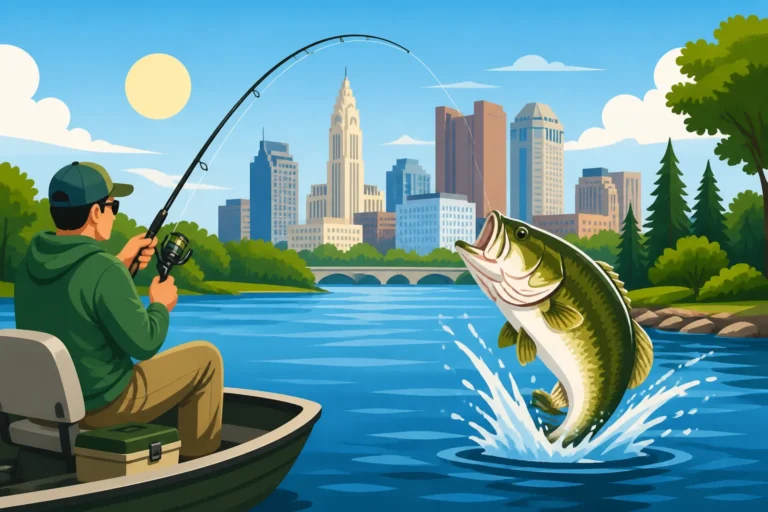
There’s nothing quite like the thrill of chasing muskie, especially when you’re talking about a true freshwater apex predator in Ohio. Many anglers find themselves intimidated by the sheer challenge of landing one of these "fish of 10,000 casts," and Leesville Lake, while renowned, can certainly present its own set of puzzles. This comprehensive guide is here to break down everything you need to know, from the lake's unique features to the very best techniques, helping you unlock the secrets to successful muskie fishing on Leesville Lake.
Leesville Lake: A Premier Muskie Fishery Overview
Leesville Lake is often whispered about in hushed, reverent tones among muskie fanatics, and for good reason. Tucked away in Carroll County, this beautiful reservoir offers prime habitat for those toothy giants. It’s part of the Muskingum Watershed Conservancy District (MWCD) lakes, and it's managed with muskie in mind, making it a true jewel for anyone hoping to tangle with a trophy.
Lake Characteristics and Muskie Habitat
Leesville Lake spans approximately 1,000 acres, and while it might not be the largest lake in Ohio, its depth and structure are perfectly suited for muskie. You'll find areas dropping down to about 40 feet in the deepest basins, but it's the diverse shallower structure that truly makes it a muskie haven.
Imagine a submerged forest: that's often what Leesville feels like. The lake features extensive standing timber, especially in the upper arms and coves. These dead trees provide critical ambush points and cover for muskie, allowing them to hide and dart out at unsuspecting prey. Beyond the timber, you'll encounter a mix of rocky points, gravel bottoms, and healthy weed beds, particularly as the water warms up in the spring and summer. These weed lines, especially coontail and pondweed, are magnets for baitfish and, consequently, for muskie. The lake's water clarity can vary, but it generally holds a moderate stain, which muskie often prefer for their ambush hunting style. Knowing these key features is the first step in understanding where these elusive fish might be lurking.
Why Leesville Lake is Ideal for Muskie
Leesville Lake has earned its reputation as a top muskie destination due to a combination of factors, primarily its robust forage base and dedicated stocking program. The Ohio Department of Natural Resources (ODNR) Division of Wildlife actively manages Leesville for muskie, stocking thousands of muskie fingerlings annually. This consistent stocking effort ensures a healthy population of muskie, giving anglers a real shot at success.
The lake's ample supply of prey fish, like gizzard shad, suckers, and various panfish, provides the muskie with a rich diet, allowing them to grow to impressive sizes. It’s not uncommon for anglers to report muskie in the 40-inch range, with genuine trophy fish exceeding 50 inches making headlines now and then. This combination of strategic stocking, a rich food chain, and diverse, muskie-friendly habitat makes Leesville Lake one of the Best Ohio Lakes for Muskie Fishing Overall and a must-visit for any serious muskie angler.
Essential Gear and Tackle for Leesville Lake Muskie
Chasing muskie on Leesville Lake isn't for the faint of heart, and it certainly isn't a job for your standard bass tackle. These powerful fish demand specialized gear that can withstand brutal strikes and powerful runs. Having the right setup isn't just about catching fish; it's about being prepared and ensuring the safety of both yourself and the fish.
Rods, Reels, and Line Selection
When it comes to muskie fishing on Leesville, think heavy-duty. You'll want a heavy or extra-heavy power baitcasting rod, typically ranging from 8 to 9.5 feet in length. The extra length provides leverage for casting large baits and for fighting big fish, especially when you're trying to steer them out of heavy cover like standing timber. Look for rods with a fast action, which means the tip bends easily but the backbone is stiff, allowing for powerful hooksets.
Pair your rod with a high-quality baitcasting reel designed for muskie. These reels feature a strong drag system and a high line capacity, essential for those long, surging runs. Gear ratios around 5.0:1 to 6.0:1 are versatile, offering a good balance of power for retrieve and speed for working lures. Popular brands like Abu Garcia, Daiwa, and Shimano offer excellent muskie-specific reels.
For line, braided superline is the standard. It has virtually no stretch, which is crucial for solid hooksets with big lures and powerful fish. Most muskie anglers on Leesville opt for 80 to 100-pound test braided line. While the line is strong, muskie have razor-sharp teeth, so a heavy-duty leader is non-negotiable. A 100 to 150-pound test fluorocarbon leader, about 12-18 inches long, connected with a strong knot (like a Palomar or a properly tied crimp), will provide the necessary abrasion resistance. You'll also want to use high-quality, heavy-duty snap swivels (around 150-200 pound test) to connect your lures, making quick changes easy and secure.
Top Lures and Baits for Leesville Muskie
Muskie are opportunistic feeders, but certain lures consistently produce on Leesville Lake. Variety is key, as conditions and fish preferences can change quickly.
Here’s a breakdown of some go-to options:
- Bucktails: These are classic muskie killers. The flash and vibration of bucktails, especially those with tandem blades, are incredibly effective. Sizes range from smaller #8 blades to massive #10s or even larger. Experiment with colors, but on Leesville’s moderately stained water, brighter colors like chartreuse, orange, or firetiger, as well as darker colors like black and purple, often perform well.
- Jerkbaits: Both glide baits (like the Hellhound or Salmo Slider) and true jerkbaits (like the Suick or Depth Raider) are excellent. These lures mimic injured baitfish with their erratic, side-to-side action. They are particularly effective when retrieved with a "rip-pause" cadence, allowing the lure to suspend or slowly sink, giving the muskie time to strike. Learning How to Work a Jerkbait for Ohio Muskie effectively can make a huge difference.
- Crankbaits: Large crankbaits, especially those that dive to various depths, are fantastic for covering water, particularly when trolling. Deep-diving crankbaits can reach those muskie holding near drop-offs or in deeper timber. Shallow-running models are great for weed edges or over submerged structure.
- Soft Plastics: Large soft plastics, such as soft jerkbaits (like the Medussa or Bull Dawg), can be incredibly versatile. Rigged on heavy jig heads or weighted hooks, they can be worked through cover or along deeper contours, providing a more subtle presentation when muskie are finicky.
When choosing lures, consider the time of year and water temperature. Larger, faster-moving baits often excel in warmer water, while smaller, slower presentations might be better in cooler conditions.
| Lure Type | Best Conditions/Location | Key Presentation | Typical Size Range |
|---|---|---|---|
| Bucktails | Open water, weed edges, fast retrieve | Steady retrieve, "figure-eight" at the boat | #8 to #10 blades, 8-12 inches |
| Jerkbaits | Around structure, slower presentation, cooler water | Rip-pause, erratic action | 6-10 inches |
| Crankbaits | Trolling, covering open water, various depths | Consistent retrieve, depth-dependent | 6-12 inches |
| Soft Plastics | Heavy cover, deep structure, subtle presentation | Jigging, slow retrieve, twitching | 8-14 inches |
| Topwaters | Low light, calm water, over shallow weeds (summer) | Walk-the-dog, chugging, popping | 6-10 inches |
This table provides a quick reference, but remember, experimentation is key on any given day.
Proven Techniques for Targeting Leesville Muskie
Muskie fishing is as much an art as it is a science. It requires patience, persistence, and a willingness to adapt. On Leesville Lake, understanding how to effectively present your chosen lures and knowing the seasonal movements of muskie will significantly increase your chances of success.
Trolling and Casting Strategies
Both trolling and casting are highly effective methods for muskie on Leesville Lake, and often, anglers will employ a combination of the two.
Casting:
Casting is generally preferred when you're targeting specific pieces of structure or cover. Think about those extensive standing timber fields, submerged humps, weed lines, or rocky points. When casting, you're trying to hit these high-percentage areas repeatedly. Fan cast around a target, working your lure from different angles. Use bucktails for covering water quickly, especially along weed edges or shorelines. Jerkbaits and glide baits excel when worked slowly around dense cover, enticing strikes from muskie lurking in ambush. The Best Lure Colors for Muskie in Stained Water can make a difference, so don't be afraid to switch it up based on the lake's current clarity. Remember the importance of the "figure-eight" maneuver at the boat – many muskie follow right up to the boat and strike at the last second.
Trolling:
Trolling is an excellent strategy for covering large expanses of water, especially in the deeper main lake basins or along lengthy contours. It allows you to present multiple baits at different depths and speeds, effectively scouting for active fish. Large crankbaits and deep-diving stickbaits are staples for trolling. Pay close attention to your electronics to identify baitfish schools, thermoclines, and underwater structure where muskie might be holding. Trolling speeds typically range from 2.5 to 5 mph, but again, experiment to find what the fish prefer on a given day. Use planer boards to spread your lines out, covering a wider swath and increasing your chances of interception.
Seasonal Tactics for Success
Muskie behavior on Leesville Lake changes dramatically with the seasons, largely dictated by water temperature and spawning cycles. Understanding these shifts is crucial for developing effective strategies.
- Spring: As the ice melts and water temperatures begin to rise (typically from 40-55°F), muskie become more active after a long winter. They will often be found shallower, especially in northern bays and coves that warm up first, looking for food and preparing to spawn. Post-spawn muskie can be notoriously difficult to catch for a short period as they recover, but once they're active again, they'll feed aggressively. Focus on slower presentations with jerkbaits or large soft plastics near emerging weed growth and shallow cover.
- Summer: This is a prime time for muskie on Leesville. As water temperatures climb (65-75°F), muskie will often relate to deeper weed lines, points, and offshore humps. They'll also use the shade and cover of the standing timber. Early morning and late evening, or overcast days, are often the best times. Fast-moving bucktails and large crankbaits are highly effective, as muskie are actively chasing prey. Topwater lures can also provide explosive strikes during low-light conditions over shallow weeds.
- Fall: Many muskie anglers consider autumn the absolute When Muskie Fishing Peaks in Ohio. As water temperatures cool down (50-65°F and dropping), muskie go on a major feeding binge to pack on weight for winter. They will often be found on deeper main lake points, breaklines, and suspended over open water following schools of baitfish. Large, slow-moving baits like glide baits, large jerkbaits, and big soft plastics are excellent choices, often worked more deliberately. Trolling with large crankbaits at various depths can also be incredibly productive as muskie relate to different parts of the water column.
The Importance of the Figure-Eight
This technique is so critical to muskie fishing that it deserves its own spotlight. Many times, a muskie will follow your lure all the way to the boat, inspecting it without committing. This is where the figure-eight comes in. Instead of simply lifting your lure out of the water, smoothly guide your rod tip into the water and begin drawing a wide "figure-eight" pattern next to the boat. The idea is to keep the lure moving, changing direction, and appearing like an injured baitfish trying to escape.
This maneuver often triggers a follow to strike. Don't rush it; make the loops wide and fluid. Keep your eyes peeled on the lure, because when a muskie strikes right next to the boat, it's an exhilarating and often shocking experience! Having a good, long rod helps you execute a proper figure-eight more effectively.
Navigating Leesville Lake: Access and Considerations
Getting your boat in the water and understanding the rules is just as important as knowing your lures. Leesville Lake is well-equipped for anglers, but a little preparation goes a long way.
Boat Ramps and Access Points
Leesville Lake offers several public boat ramps managed by the MWCD, making it fairly accessible. The most popular ramps include:
- Petersburg Marina: Located on the northern side of the lake, offering good access to the upper arms and more timbered areas. This is often a go-to for many muskie anglers.
- North Fork Boat Launch: Provides access to the western side of the lake.
- South Fork Boat Launch: Serves the southern part of the lake.
Most of these ramps are well-maintained and suitable for launching various sizes of fishing boats. There are also smaller, unimproved access points suitable for kayaks or smaller johnboats if you prefer a more stealthy approach or want to explore shallower, hard-to-reach coves. Before heading out, it's always a good idea to check the MWCD website or call ahead for any current ramp conditions or potential closures.
Safety and Regulations
Fishing on Leesville Lake, like any body of water, comes with important safety considerations and regulations.
- Boating Regulations: Leesville Lake has a 10 horsepower motor restriction, which means no large outboard motors. This keeps the lake quieter and creates a more peaceful fishing environment, but it's crucial to be aware of this limitation before you arrive. Always have proper safety equipment on board, including life jackets for everyone (children 10 and under must wear one while underway), a fire extinguisher, and a sound-producing device. Be mindful of other boaters, especially kayakers and canoes.
- Fishing Regulations: Of course, you need to be aware of the Ohio Fishing Regulations Every Angler Should Know, especially those pertaining to muskie. For muskie in inland lakes like Leesville, there is a strict Ohio Muskie Minimum Length Limit on Inland Lakes of 42 inches. The Ohio Muskie Daily Bag Limit is one fish per person. These regulations are in place to protect the muskie population and ensure a sustainable fishery for future generations. Always carry your valid Ohio Fishing License Guide for Residents and Nonresidents with you; wildlife officers frequently patrol Leesville Lake.
Maximizing Your Leesville Muskie Experience
Beyond the technical skills, there are a few extra tips and considerations that can elevate your Leesville Lake muskie trip from good to unforgettable. It’s about being prepared, staying informed, and respecting the incredible fishery you’re enjoying.
When to Go
Choosing the right time to hit Leesville Lake can greatly influence your success. As mentioned, the fall often provides the most consistent action for bigger fish due to their aggressive feeding patterns. However, prime conditions can also be found throughout the summer, especially during periods of stable weather or when an approaching front stimulates feeding.
- Time of Day: Muskie are often most active during low-light conditions, such as dawn and dusk. Overcast days can also provide excellent fishing throughout the day, as the reduced sunlight allows muskie to be more comfortable in shallower water. However, don't rule out bright, sunny days, especially if you're targeting deeper structure or trolling.
- Weather Patterns: A stable weather pattern, or the period leading up to a cold front, can trigger strong feeding activity. Rapidly changing conditions, especially severe cold fronts, can often shut down the bite. Keep an eye on the barometer – a rising barometer often indicates increased fish activity.
Working with a Guide and Charter Services
If you're new to muskie fishing, new to Leesville Lake, or simply want to maximize your chances of catching a trophy, considering a professional fishing guide is an excellent idea. An experienced muskie guide who specializes in Leesville Lake will have an intimate knowledge of the lake's nuances, current fish patterns, and the best techniques for the prevailing conditions. They often have top-of-the-line gear and can teach you invaluable tips and tricks.
Finding a reputable guide is easier than ever. Platforms like FishingBooker allow you to browse and book Ohio Muskie Guide Services directly, see reviews from other anglers, and compare prices. They can provide all the specialized equipment, baits, and local knowledge needed for a successful trip, significantly cutting down on your learning curve. Even seasoned muskie anglers sometimes opt for a guide to tap into hyper-local expertise or simply enjoy a hassle-free day on the water.
Catch and Release Best Practices
Muskie are revered for their fighting spirit and trophy potential, and practicing proper catch and release is paramount to preserving the Leesville Lake fishery. These fish grow slowly and are a valuable resource, so handling them with care is essential.
Here are some critical tips:
- Minimize Fight Time: Use appropriate heavy tackle to land the fish quickly, reducing stress on the muskie.
- Use a Large Net: A large, rubberized landing net is crucial. Rubberized mesh prevents damage to the fish's protective slime coat and fins. Check out guides like Best Landing Net for Ohio Muskie Fishing for recommendations.
- Tools Ready: Have long-nosed pliers, bolt cutters (for cutting hooks if necessary), and a hook-out tool easily accessible.
- Keep it in the Water: Whenever possible, keep the muskie in the net and in the water for unhooking and measuring. Minimize its time out of the water, especially during warmer months.
- Support the Fish: If you must lift the fish for a quick photo, support its body horizontally with two hands – one under the gill plate (but not in the gills) and one under the belly/tail. Never hold a muskie vertically by the jaw; this can severely damage its spine and internal organs.
- Revival: If the fish seems sluggish after release, gently hold it upright in the water by the tail and jaw, moving it back and forth to force water over its gills until it swims away under its own power. Learning How to Revive a Muskie Before Release is a crucial skill.
- Barbless Hooks: Consider using barbless hooks or crushing the barbs on your trebles. This makes hook removal much easier and quicker, reducing stress and injury to the fish.
By following these best practices, you're not just ensuring the survival of your catch; you're contributing to the health and longevity of Leesville Lake as a world-class muskie destination.
Disclaimer
Fishing inherently carries risks, including but not limited to adverse weather, equipment malfunction, and personal injury. Always prioritize safety, wear appropriate personal flotation devices, and be aware of your surroundings. This guide provides general information and recommendations; local conditions and regulations can change. It is your responsibility to consult the most current Ohio Department of Natural Resources (ODNR) fishing regulations before engaging in any fishing activity.