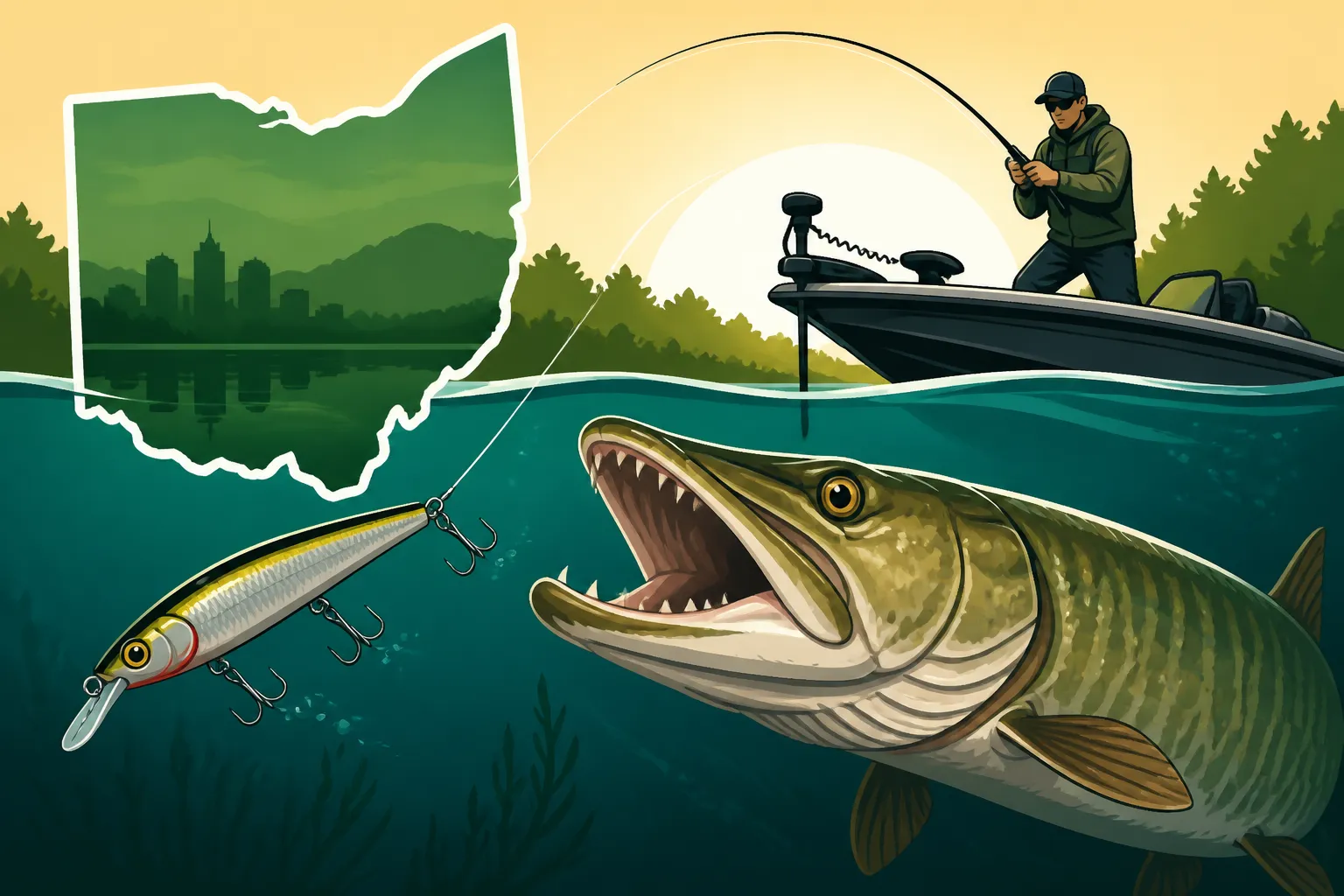
How to Work a Jerkbait for Ohio Muskie
Many Ohio muskie anglers, myself included, have stood on the water, throwing countless casts with a jerkbait, only to feel that familiar pang of frustration when nothing bites. It’s easy to feel like you’re just chunking and winding, hoping for a miracle. The truth is, working a jerkbait for these apex predators is less about luck and more about a calculated, nuanced approach. This guide will peel back the layers, showing you exactly how to wield a jerkbait effectively in Ohio’s diverse muskie waters, transforming those "no-bite" days into memorable encounters.
The Irresistible Dance: Understanding Jerkbaits and Muskie Behavior
Landing a muskie on a jerkbait isn’t just about having the right lure; it’s about understanding why a muskie attacks it. These lures aren't just pretty pieces of plastic or wood; they're designed to mimic an injured or confused baitfish, and that erratic, vulnerable presentation is often what pushes a muskie over the edge to strike.
What Makes Jerkbaits So Effective for Muskie
Unlike spinnerbaits or bucktails that offer a continuous, flashy retrieve, a jerkbait’s magic lies in its stop-and-go action. You give it a twitch, it darts erratically; you pause, and it hangs tantalizingly, sometimes even slowly rising or sinking depending on its buoyancy. This creates a "wounded baitfish" profile that's incredibly difficult for a predatory muskie to ignore.
Think about it from the muskie's perspective. It's an opportunistic hunter, often lying in wait. A creature frantically swimming by might catch its eye, but a creature struggling, pausing, then darting wildly? That's a clear signal of weakness, an easy meal. This combination of sudden movements and vulnerable pauses taps directly into their hunting instincts, often triggering a strike where a consistent retrieve might not. For a deeper dive into overall strategies, check out our comprehensive Ohio Muskie Fishing Guide.
Decoding Muskie Ambush Tactics in Ohio Waters
Muskie are masters of ambush. They’re not usually chasing baitfish across open water for long distances. Instead, they position themselves strategically near cover or structure, waiting for the perfect moment to strike. This behavior directly informs how you should present your jerkbait.
In Ohio’s muskie lakes and reservoirs like Alum Creek Lake or Piedmont Lake, you’ll find them tucked into distinct ambush points. Picture dense weed lines, fallen timber, sharp drop-offs, or rocky points. A muskie will sit patiently, often camouflaged, until an unsuspecting meal swims within striking distance. Your jerkbait, with its erratic darting and hanging, needs to mimic a struggling fish that has strayed too close to their lair. The pause in your retrieve becomes critical here, allowing the muskie to zero in and make its move without having to expend too much energy in a long chase.
Selecting the Perfect Jerkbait for Ohio's Muskie
With so many jerkbaits on the market, choosing the right one can feel overwhelming. It’s not about finding the single "best" jerkbait, but rather understanding how different features interact with Ohio’s varied fishing conditions and, most importantly, muskie behavior.
Size, Shape, and Material: Making the Call
Muskie are big fish, and they prefer a substantial meal. In Ohio, you’re generally looking at jerkbaits ranging from 6 to 12 inches, sometimes even larger. Don't be shy about throwing a big bait – it often intimidates smaller fish, but screams "easy meal" to a muskie.
- Hard Plastic vs. Wood: Many jerkbaits are made of hard plastic, offering consistent action and durability. However, wooden jerkbaits, often hand-carved, have a unique buoyancy and action. Wood tends to be a bit lighter and often has a slower, more natural rise or fall during pauses, which can be critical in cold water. Plastic baits, on the other hand, might have more aggressive dives and tighter wiggles.
- Lipless vs. Lipped: Lipless jerkbaits, like the popular Suick Thriller or Grandma baits, tend to glide and dive with a pronounced side-to-side action when twitched. They excel at covering water and imitating larger baitfish. Lipped jerkbaits, similar to large crankbaits, will dive on the retrieve and have a more defined wobbling action, often with a more subtle glide. They can be great for reaching deeper fish or working specific depths.
- Buoyancy: Some jerkbaits are suspending (stay at depth), some float, and some slow-sink. Suspending baits are fantastic for long pauses, especially in colder water when muskie are lethargic. Floating baits are great for working over shallow weeds, while slow-sinkers allow you to count them down to precise depths. You can find a huge variety of these options easily on platforms like Amazon.
Color Selection for Variable Ohio Conditions
Color isn’t just about aesthetics; it’s about visibility and mimicry. What works on a sunny day in clear water might be completely ignored in murky conditions.
- Clear Water / Sunny Days: Opt for natural baitfish patterns like perch, cisco, shad, or sucker. Silver, gold, and white with subtle patterns also work well, mimicking the flash of real forage. Translucent baits can also be deadly, especially when the sun is high.
- Stained / Murky Water or Cloudy Days: You need something that stands out. Bright, contrasting colors like firetiger, chartreuse, orange, or black and orange combinations are excellent choices. These colors create a stronger silhouette and are easier for muskie to detect in low visibility. When fishing on Lake Erie or other large bodies, understanding Best Lure Colors for Muskie in Stained Water can significantly boost your success.
- Seasonal Shifts: In colder water, muskie might prefer more subdued or natural colors, whereas in warmer water, brighter, more aggressive patterns can trigger a reaction strike.
Matching the Hatch: Baitfish Imitations
Muskie are experts at identifying their local prey. While not always critical, trying to match the primary forage in the lake you're fishing can give you an edge. In Ohio, common muskie forage includes gizzard shad, emerald shiners, various suckers, and yellow perch.
Before heading out to a spot like Alum Creek Lake Muskie Fishing Tips or Piedmont Lake Muskie Fishing Guide, do a quick search on what baitfish are prevalent there. Then, select jerkbaits that closely resemble those species in size and color. Sometimes, a general "perch" or "shad" pattern is all you need, but hyper-local imitation can be a game-changer.
Mastering the Retrieve: Techniques for Ohio Muskie
The real art of jerkbait fishing for muskie lies in your retrieve. It’s a dynamic, active technique that requires focus and feel, transforming a piece of plastic into a struggling meal.
The Classic Jerk-Jerk-Pause Cadence
This is the bread and butter of jerkbait fishing and it’s where many anglers either shine or struggle. The key is to impart a sharp, short twitch of the rod tip, often pointed downward, followed by a pause.
- Cast it Out: Make a long, accurate cast to your target.
- Engage and Slack: As soon as the bait hits the water, engage your reel, take up any slack, and point your rod tip towards the water or slightly to the side.
- The Jerk: Give your rod tip a sharp, downward or sideways jerk. This makes the bait dart. Don't reel while jerking – you want to move the bait with the rod, not the reel.
- Take Up Slack: Immediately after the jerk, reel in just enough to take up the slack created by the lure's movement. This keeps you in contact with the bait.
- The Pause: This is perhaps the most critical part. Stop reeling, hold your rod still, and let the bait suspend or slowly rise/fall. Muskie often strike on this pause, so be ready!
- Repeat: Experiment with a "jerk-jerk-pause" or "jerk-pause" rhythm.
The duration of the pause is crucial. In warmer water with active fish, your pauses might be short (1-3 seconds). In colder water or when muskie are pressured, lengthen those pauses significantly (5-10+ seconds). It can feel excruciatingly long, but that extended vulnerability often triggers a strike from a hesitant muskie.
Incorporating the Figure-Eight at the Boat
This is a non-negotiable technique for muskie fishing, especially with jerkbaits. Many muskie will follow a lure all the way to the boat, only deciding to strike at the last second. The figure-eight capitalizes on this.
As your lure approaches the boat, instead of simply reeling it in, smoothly guide your rod tip to draw a large figure-eight pattern in the water beside the boat. Make the turns wide and fluid, keeping the lure moving just subsurface. A muskie following your bait will often become agitated by this sudden, frantic movement and smash the lure right at your feet. It’s an adrenaline rush like no other. For a detailed breakdown of this vital maneuver, refer to our guide on the Figure-Eight Retrieve for Muskie Fishing.
Adjusting Retrieve for Specific Scenarios
No two muskie days are the same, and your retrieve needs to be adaptable.
- Aggressive Fish (Warm Water, Active): Speed up your retrieve, use sharper jerks, and shorten your pauses. Mimic frantic prey trying to escape.
- Lethargic Fish (Cold Water, Post-Front): Slow everything down. Use softer jerks and significantly longer pauses. A suspending jerkbait shines here, letting it hang for an eternity to tempt a hesitant bite.
- Working Structure: When fishing tight to a weed line or submerged timber, use precise casts and shorter, controlled jerks to keep the bait in the strike zone longer. When you pull the bait off the edge, pause it right there – that's often when a muskie will pounce.
Advanced Jerkbait Tactics and Gear Considerations
Beyond the basics, a few refined tactics and the right gear can make a noticeable difference in your muskie jerkbaiting success.
Reading Water and Structure for Jerkbait Success
Knowing where to throw your jerkbait is just as important as how you throw it. Muskie are structure-oriented, so understanding their preferred habitats in Ohio is key.
- Weed Lines: These are classic ambush points. Muskie will sit just inside or on the edge of dense weeds, darting out to strike. Cast parallel to the weed line or retrieve your jerkbait so it occasionally ticks the top of the weeds, then pauses.
- Drop-offs and Humps: Changes in depth are highways for baitfish, and muskie patrol these areas. Position your boat over deeper water and cast up onto the shallower flat or hump, working your jerkbait down the break.
- Fallen Timber and Rock Piles: These provide excellent cover and structure. Cast beyond the structure and work your jerkbait right through the heart of it, being mindful of snags. The erratic movement around these obstacles often triggers strikes. Our articles on Alum Creek Lake Muskie Fishing Tips and Piedmont Lake Muskie Fishing Guide offer specific insights into finding these features on those popular waters.
- Using Electronics: A good fish finder can reveal hidden structure, depth changes, and even baitfish schools, helping you identify prime muskie holding areas that aren't visible from the surface.
Essential Gear for Jerkbaiting Muskie
You can’t tame a muskie with flimsy gear. Jerkbaiting requires specialized equipment to handle the heavy lures, powerful retrieves, and the sheer force of a muskie strike.
- Rod: Look for a heavy or extra-heavy power muskie rod, typically 8 to 9.5 feet long, with a fast action tip. This combination gives you the backbone to cast heavy jerkbaits and fight large fish, while the fast tip allows you to impart that crucial erratic action.
- Reel: A heavy-duty baitcasting reel with a low to medium gear ratio (e.g., 5.x:1 or 6.x:1) is ideal. The lower gear ratio provides more torque for retrieving heavy lures and battling powerful fish, while still allowing you to take up slack quickly. Shimano Tranx or Abu Garcia Revo Toro Beast are popular choices that can be purchased from retailers like Amazon.
- Line: Spool up with 80-100 lb braided line. Its no-stretch properties are essential for feeling those subtle bites and setting the hook on tough muskie mouths. Always use a heavy fluorocarbon leader (100-150 lb test) to prevent bite-offs from their razor-sharp teeth.
- Snaps and Split Rings: Ensure all your connections are heavy-duty. Replace flimsy split rings on lures with strong, muskie-grade ones, and use robust snaps designed for muskie to quickly change baits without compromising strength. For detailed recommendations, check out our guide on the Best Rod and Reel Setup for Ohio Muskie.
Seasonal Strategies for Jerkbaiting Ohio Muskie
Muskie behavior, and thus jerkbait effectiveness, shifts with the seasons.
- Spring (Pre-spawn/Post-spawn): Water temperatures are cool, and muskie can be lethargic. Focus on slower retrieves with longer pauses. Suspending jerkbaits are excellent now. Target shallow bays warming up first or rocky areas where muskie may be staging or recovering.
- Summer: As water warms, muskie become highly active and aggressive. You can speed up your retrieve, use more erratic jerks, and target deeper weed lines or cooler main lake points. Early morning and late evening bites are often best as muskie seek cooler water.
- Fall (Prime Time): This is often considered the peak season for muskie, as they feed heavily before winter. Known as the "fall turnover" or "feedbag" period, muskie are often found in various depths and will respond well to large jerkbaits with varying retrieves. They’re putting on weight, and big meals are appealing. Our guide on When Muskie Fishing Peaks in Ohio offers a detailed look at this crucial season.
Handling Your Catch Responsibly
Muskie are magnificent creatures, and responsible handling is paramount for their survival after release. Most Ohio muskie fishing is catch-and-release, and proper care ensures these fish can grow to trophy sizes (check out Muskie Growth Rate in Ohio Lakes for more on that).
- Large Net: Invest in an oversized, knotless rubberized landing net. This protects the fish's fins and slime coat. See our recommendations in Best Landing Net for Ohio Muskie Fishing.
- Tools: Have long-nosed pliers, jaw spreaders, and bolt cutters (for cutting hooks if necessary) readily available.
- Minimize Air Exposure: Keep the fish in the water as much as possible. Unhooking in the net while submerged is ideal.
- Support the Fish: If you must lift a muskie for a quick photo, support its body horizontally with one hand under the gill plate (not in the gills!) and the other under the belly. Never hold a muskie vertically by the head or jaw alone, as this can severely damage its spine and internal organs.
- Revival: If the fish seems stressed, hold it gently in the water by its tail and under its belly, facing into any current, until it kicks strongly and swims away on its own. Learn more about How to Revive a Muskie Before Release.
Remember, while the thrill of the catch is immense, the future of Ohio’s muskie fishing depends on every angler’s commitment to conservation and ethical practices. Respecting Ohio Muskie Size and Bag Limits is a critical part of this responsibility.
| Jerkbait Characteristic | Clear Water / Sunny Day | Stained Water / Cloudy Day | Cold Water (Spring/Fall) | Warm Water (Summer) |
|---|---|---|---|---|
| Color | Natural (perch, cisco), silver, white, translucent | Bright (firetiger, chartreuse), black/orange, white | Natural, muted, slower retrieve patterns | Flashy, aggressive, baitfish patterns |
| Size | Standard (6-8 inches) | Larger (8-12+ inches) | Larger, slow-sinkers | Standard to large (8-10 inches) |
| Action | Erratic, darting, gliding | Wider wobble, displacement | Slow, subtle glide | Aggressive darting, quick snaps |
| Retrieve Speed | Moderate to fast | Moderate | Slow, long pauses (5-10+ sec) | Fast, sharp jerks, short pauses |
Disclaimer
Fishing conditions and regulations in Ohio can change. Always consult the latest Ohio Department of Natural Resources (ODNR) fishing regulations before heading out. This guide is for informational purposes only and does not supersede official regulations.