Best Techniques for Catching Channel Catfish at Night
There's nothing quite like the cool, quiet solitude of fishing after the sun dips below the horizon, especially when you're targeting those powerful channel catfish. Many anglers find themselves frustrated trying to catch these whiskered beauties during the day when they're often less active, but the night offers a completely different ballgame. This guide will walk you through the most effective techniques and strategies to successfully land channel catfish under the cover of darkness in Ohio's diverse waters.
Why Night Fishing Unlocks Channel Catfish Action
Let's be real, daytime fishing can be tough, especially in the heat of an Ohio summer. The sun beats down, recreational boaters are everywhere, and often, the fish just aren't as eager to bite. Channel catfish, being largely nocturnal feeders, use the night to their advantage, and so should you! Understanding why they become more active after dark is key to consistent success.
Cooler Temperatures and Increased Comfort
One of the biggest factors driving channel catfish activity at night is the drop in temperature. Just like us, fish can get uncomfortable in scorching daytime heat. As the air and water temperatures cool down after sunset, catfish become more active and willing to roam from their daytime hiding spots. This metabolic boost means they're out searching for food with renewed vigor. You'll often find them moving into shallower areas that would be too warm or bright during the day, making them more accessible to shore anglers or those in smaller boats. This shift means less competition from other anglers and generally more comfortable fishing conditions for you, especially during those muggy summer nights that are so common in places like southern Ohio.
Low Light for Ambush Predators
Channel catfish are equipped with incredible senses that thrive in low-light conditions. Their highly sensitive barbels, often called whiskers, are packed with taste buds and allow them to detect food items in murky water or complete darkness with ease. Their lateral line system helps them pick up vibrations from struggling baitfish or crustaceans, even if they can't see them. This superior sensory ability gives them an edge over many prey species at night, making them confident and aggressive hunters. When the moonlight is minimal or there's heavy cloud cover, their advantage is even greater, often leading to explosive bites. It’s a primal hunt unfolding right before you, or rather, around you in the dark.
Essential Gear for Night Catfish Success
Fishing after dark requires a bit more preparation and specialized gear than your typical daytime excursion. You’ll want to ensure you have everything you need for safety, comfort, and, of course, to successfully land those big cats. Don't skimp on these items; being prepared means a more enjoyable and productive night.
Rods, Reels, and Line Built for Battle
For channel catfish, you need a setup that can handle powerful runs and the occasional trophy fish. A medium-heavy to heavy action rod, typically 7 to 9 feet long, is ideal. This length gives you good casting distance from shore or a boat and enough backbone to steer a strong fish away from snags. Pair it with a sturdy spinning reel in the 4000 to 6000 size range, or a baitcasting reel designed for heavier lines. Many experienced anglers prefer baitcasters for their cranking power and control when battling larger fish in current.
For line, 15 to 30-pound monofilament is a popular choice for its shock absorption and abrasion resistance, especially around rocks and logs. However, if you're fishing exceptionally heavy cover or targeting truly enormous cats, 30 to 50-pound braided line offers superior sensitivity and strength. Just remember that braid has almost no stretch, so you'll need to be mindful of your drag settings. Whatever you choose, make sure it's fresh and in good condition before your trip; a snapped line on a big fish in the dark is a frustrating experience you want to avoid! You can find a wide selection of durable fishing line options on Amazon to suit your needs.
Lighting and Safety Essentials
This is perhaps the most critical category for night fishing. A reliable headlamp is non-negotiable, allowing you to keep both hands free for baiting hooks, tying knots, or handling fish. Look for one with a red light setting, which helps preserve your night vision and is less disruptive to fish. In addition to a headlamp, a portable lantern can provide ambient light for your fishing station, making it easier to see your tackle box or cooler. For your fishing presentation, lighted bobbers are fantastic for watching strikes when fishing shallower water or over structure.
Beyond lighting, safety should always be your top priority. Always fish with a buddy, especially at night. Inform someone of your plans and expected return time. Bring a fully charged cell phone, a first-aid kit, and enough drinking water. If fishing from a boat, ensure all navigation lights are functional and that you have enough PFDs (personal flotation devices) for everyone on board. These simple precautions can make all the difference in an emergency.
Comfort and Convenience Items
Night fishing often means long stretches of waiting, so comfort is key. A comfortable folding chair is a game-changer, allowing you to relax while waiting for a bite. Don't forget bug spray – mosquitoes and other biting insects can be relentless after dark, especially near water. A good cooler stocked with drinks and snacks will keep you energized, and a separate cooler or livewell for your bait (if using live bait) is also essential. Layered clothing is a smart move, as temperatures can drop significantly from early evening to late night. Lastly, a sharp fillet knife, a sturdy cutting board, and heavy-duty pliers or hook removers will be invaluable for bait preparation and safely unhooking fish. Having these items organized in a tackle bag or box will prevent fumbling around in the dark. For specialized items like compact lanterns or high-quality fillet knives, Amazon often has competitive prices.
Prime Locations and How to Find Them in the Dark
Successfully targeting channel catfish at night hinges on knowing where they're likely to be and how to identify those spots even when you can't see them clearly. Ohio offers a wealth of diverse waters, from expansive lakes and reservoirs to winding rivers, each with its own nocturnal hotspots.
River Systems: Current Breaks and Deep Holes
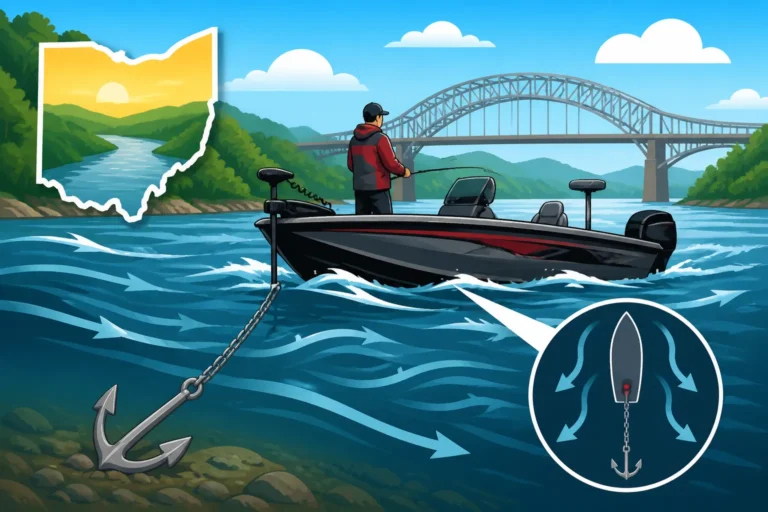
Ohio's river systems, like the mighty Ohio River, the Muskingum River, and the Scioto River, are fantastic for night catfishing. Channel catfish in rivers are often structure-oriented and will gravitate towards areas where they can ambush prey without fighting strong currents all the time. Look for current breaks caused by submerged log jams, rock piles, bridge pilings, or sharp bends in the river. The "seams" where fast water meets slack water are prime feeding lanes. Catfish will often sit just out of the main current, waiting for food to drift by.
Deep holes, especially those downstream from riffles or rapids, also hold a lot of fish. These areas provide cover and cooler water, and food often settles in these depressions. To find these spots in the dark, rely on your knowledge from daytime scouting or a good fish finder with GPS if you're on a boat. On shore, listen to the river – the sound of rushing water indicates current, and quieter spots often signal deeper, calmer water or current breaks. Setting up near known baitfish congregating areas, like under lights from bridges, can also draw in hungry cats. For more in-depth knowledge, check out our guide on the Ohio River Fishing Guide.
Lakes and Reservoirs: Points, Humps, and Channels
When fishing Ohio's lakes and reservoirs at night, such as Buckeye Lake, Indian Lake, or Hoover Reservoir near Columbus, focus on similar principles: structure and food. Points extending into the lake, especially those with rock or timber, are excellent ambush spots for catfish. Submerged humps or islands can also attract baitfish and, consequently, hungry cats. Look for sudden depth changes or old creek channels that wind through the lake bed. These provide highways for catfish to travel between deeper resting areas and shallower feeding grounds.
During the daytime, these fish might be scattered or holding tight to deep cover. But as night falls, they'll often push into shallower flats adjacent to these structures, following baitfish that are also moving up to feed. Using a good contour map of the lake beforehand is invaluable for identifying these features. Mark potential hotspots during the day, and then return to them after dark. Pay attention to wind direction, as it can push baitfish and warm surface water towards certain shores, creating ideal feeding conditions.
Mastering Night Fishing Techniques and Baits
Once you've identified your spots and gathered your gear, it's time to talk tactics. Night fishing for channel cats often involves a more patient approach than daytime fishing, but with the right rigs and baits, you'll be well on your way to a memorable night.
Rigging for Success in the Dark
Simplicity is often best when fishing at night, as tying complex rigs in low light can be a challenge. Two staple rigs for channel catfish are the slip sinker rig and the three-way rig.
-
Slip Sinker Rig (Carolina Rig): This is arguably the most popular and effective rig for channel catfish. It consists of a sliding sinker (egg sinker or bullet sinker) above a swivel, followed by a leader (12-24 inches of fluorocarbon or monofilament) and a strong circle hook. The slip sinker allows the line to pass freely, so a biting fish won't feel the weight of the sinker, giving them time to fully commit to the bait. This is crucial for circle hooks, which are designed to hook the fish in the corner of the mouth as it swims away, requiring little to no hookset from the angler. Just let the rod load up! This setup is fantastic for both still water and moderate currents. Make sure your hook size (usually 2/0 to 5/0, depending on bait size) matches your target fish and bait.
-
Three-Way Rig (Santee Cooper Rig): When fishing in stronger currents or wanting to present your bait slightly off the bottom, the three-way rig shines. You tie your main line to one eye of a three-way swivel, a short leader (6-12 inches) with a pyramid or bell sinker to the second eye, and a longer leader (12-36 inches) with your hook and bait to the third eye. This rig keeps your bait suspended just above the bottom, preventing it from getting buried in muck or weeds, and allows it to drift enticingly in the current. It’s particularly effective in places like the Ohio River where you're dealing with significant flow. When building your tackle box for a night outing, ensure you have plenty of swivels and sinkers, which are easily purchased from Amazon or your local bait shop.
Remember to consider how many fishing lines you can use in Ohio. Most inland waters allow up to two rods per angler, but always check local regulations before you go.
The Allure of Stinky Baits After Dark
Channel catfish are primarily scavengers and opportunistic feeders, meaning they're drawn to strong scents. This is especially true at night when their visual senses are diminished.
- Cut Bait: Fresh cut bait is hands down one of the best options. Shad, skipjack herring (if you can find them), bluegill, or even pieces of carp work exceptionally well. The fresher, the better, as the blood and oils leak out, creating an irresistible scent trail. Cut your bait into chunks that fit your hook, ensuring a good amount of skin and scales are exposed for maximum scent dispersion.
- Chicken Liver: This classic catfishing bait is readily available and highly effective. Its soft texture means it disperses scent quickly, but also means it can come off the hook easily. Use a bait holder hook or wrap it with a small piece of mesh or thread to keep it secure.
- Prepared Baits: There are numerous commercial "stink baits" on the market designed specifically for catfish. Brands like Catfish Charlie, Sonny's Super Sticky Baits, or even simple dough balls often work wonders. These baits are formulated with powerful attractants that catfish find irresistible. They come in various forms, from punch baits to dip baits, each with its own application. Experiment to see what works best on your local waters.
- Worms and Nightcrawlers: While not as "stinky" as cut bait, a big wad of nightcrawlers can be very effective, especially for smaller channel cats or if you're also targeting other species like bullheads or even larger panfish. Their wiggling action can also attract attention.
When baiting up at night, take your time. Ensure your hook point is exposed for a solid hookset (unless using circle hooks). Cast out to your desired spot, engage your reel, and place your rod in a sturdy rod holder. Many night anglers use rod bells or electronic bite alarms that clip to their rod tip. These are invaluable for detecting subtle bites in the dark. Now, it's just a waiting game, so sit back, enjoy the peace of the night, and be ready to grab that rod when the bell rings! For a deeper dive into bait selection, our guide on Best Baits for Ohio Catfish offers plenty more ideas.
Handling and Releasing Your Catch at Night
Once you've got a channel catfish on the line, the battle isn't over. Handling these fish, especially in the dark, requires a bit of care to ensure both your safety and the well-being of the fish.
Safe Landing and Unhooking
When you bring a channel catfish to shore or boatside, a sturdy landing net with a deep basket is your best friend. Catfish have sharp pectoral and dorsal fins that can inflict painful wounds, so avoid grabbing them directly by the body if possible. If you must handle them by hand, wear puncture-resistant gloves. Many anglers use a lip gripper tool to safely secure the fish's mouth, giving them better control while unhooking.
Circle hooks are generally recommended for catfishing, as they tend to hook the fish in the corner of the mouth, making unhooking much easier and reducing gut-hooking. If you're using J-hooks and a fish is deeply hooked, use a long-nosed pliers or a de-hooking tool to minimize trauma. If the hook is swallowed and difficult to remove without causing significant damage, it's often best to cut the line as close to the hook as possible. The hook will often rust out or be expelled naturally.
Understanding Regulations and Responsible Release
Before you even cast a line, make sure you're familiar with the local Ohio fishing regulations. This includes understanding the Ohio Catfish Daily Bag Limit and any specific size restrictions for the body of water you're fishing. It's a good idea to keep a measuring tape handy.
If you plan to release fish, especially larger breeding-size channel cats, do so quickly and carefully. Hold the fish gently, supporting its body, and try to keep it in the water as much as possible, especially its gills. If it's a hot night, try to revive it by gently moving it back and forth in the water to help oxygen flow over its gills. This gives the fish the best chance of survival. Always remember, responsible angling ensures healthy fish populations for years to come.
| Night Catfishing Bait Comparison | Pros | Cons | Best for |
|---|---|---|---|
| Fresh Cut Bait (Shad, Bluegill) | Strong scent, natural, effective for large cats | Can be messy, requires baitfish | Large channel cats, strong currents |
| Chicken Liver | Intense scent, easily available, inexpensive | Messy, comes off hook easily, attracts smaller fish | All sizes, moderate currents, still water |
| Prepared Stink Baits | Very strong attractant, easy to use | Can be messy, some fish prefer natural baits | All sizes, especially smaller to medium channel cats |
| Nightcrawlers | Readily available, appeals to many species | Less scent, attracts smaller fish, less durable | Smaller channel cats, panfish, calm waters |
Conclusion
Night fishing for channel catfish in Ohio is an incredibly rewarding experience, offering a unique blend of peace, excitement, and the chance to land some truly impressive fish. By understanding their nocturnal habits, equipping yourself with the right gear, scouting prime locations, and employing effective techniques and baits, you'll significantly increase your chances of success. So, next time the sun goes down, don't pack up your rods; instead, grab your headlamp, a bucket of stinky bait, and get ready to experience the thrilling world of night catfishing. It’s a completely different rhythm, and once you get into it, you might just find it's your new favorite way to fish.
Disclaimer
Fishing regulations and conditions can change. Always consult the latest Ohio Department of Natural Resources (ODNR) fishing regulations before heading out, and prioritize safety on the water. This guide is for informational purposes only and does not guarantee fishing success.