How to Fish a Jig and Pig for Largemouth Bass
If you've ever found yourself frustrated by stubborn largemouth bass hiding deep within tangled cover, refusing to budge for flashy spinnerbaits or speedy crankbaits, you're not alone. It’s a common scenario across Ohio’s diverse lakes and ponds. But there’s a classic, highly effective technique designed specifically for these challenging situations: fishing a jig and pig. This comprehensive guide will walk you through everything you need to know to confidently present this irresistible offering and consistently pull those big bass out of their hiding spots.
Understanding the Jig and Pig Combination
When seasoned bass anglers talk about a "jig and pig," they're referring to a time-tested, powerhouse lure combination that’s deadly effective, especially for larger, more elusive largemouth. It’s not just a lure; it’s an entire system designed to penetrate heavy cover and trigger aggressive strikes.
What Exactly is a Jig and Pig?
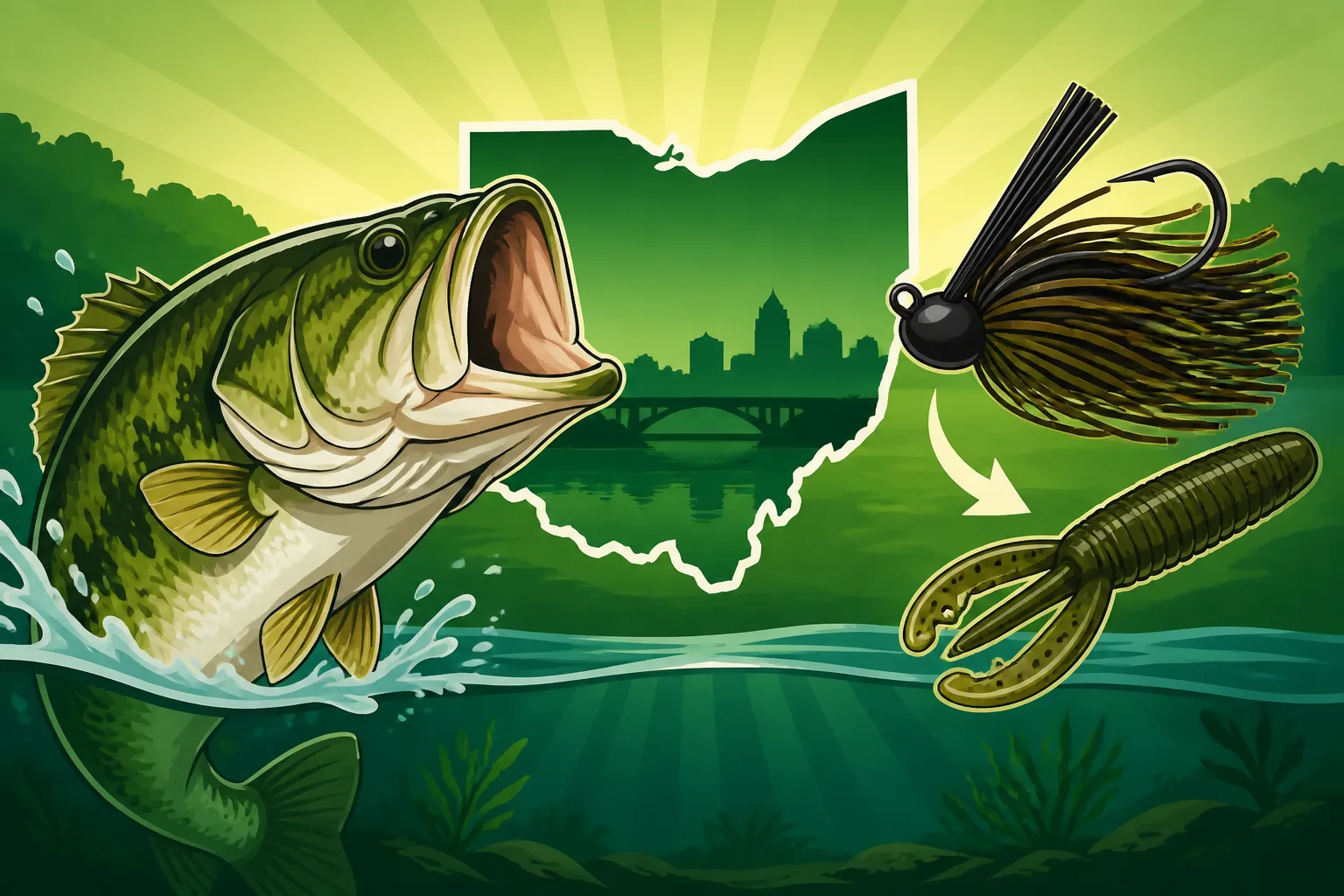
At its heart, a jig and pig is two distinct components working in harmony. First, you have the jig itself. This typically consists of a lead head molded onto a hook, often adorned with a silicone or natural hair skirt. Many bass jigs also feature a fiber weed guard, which is absolutely crucial for navigating thick vegetation, brush, and timber without constantly snagging. The skirt pulses and flares in the water, giving the jig an enticing, lifelike action.
The "pig" part historically referred to a piece of pork rind, usually a chunk or strip, that was added to the jig's hook as a trailer. This natural material offered unparalleled durability, buoyancy, and a unique action in the water. While traditional pork rind still has its devotees, today, the term "pig" most commonly refers to a soft plastic trailer that mimics crawfish, small baitfish, or even amphibians. These soft plastic alternatives come in an endless array of shapes, sizes, and colors, providing anglers with immense versatility. Whether you opt for a flapping craw, a subtle creature bait, or a streamlined minnow imitation, the trailer adds bulk, profile, and irresistible movement that often makes all the difference. You can find a vast selection of both traditional pork rind and modern soft plastic trailers on Amazon.
Why it's a Largemouth Bass Magnet
The jig and pig combination is a proven largemouth bass magnet for several key reasons. Firstly, it offers a substantial profile that mimics common forage items like crawfish, bluegill, or even small frogs. Larger bass, especially, are looking for a meal that offers a good return on their energy investment, and a bulky jig and pig fits the bill perfectly. When that jig and its trailer slowly descends or hops along the bottom, it looks like a vulnerable prey item trying to escape or hide, often provoking a territorial strike from a lurking bass.
Secondly, its weedless design is a game-changer. The fiber weed guard, coupled with a Texas-rigged soft plastic trailer, allows the lure to slip through dense cover – submerged wood, lily pads, matted grass, and thick brush – where other lures would simply snag. This means you can put your bait right into the bass's living room, rather than having to fish around the edges. Bass feel safe and secure in heavy cover, and by being able to present a tempting meal directly to them, you significantly increase your chances of a bite. This ability to penetrate dense structure makes it an essential technique for fishing many of Ohio's diverse waterways, from farm ponds to larger reservoirs. You'll find that having the right tackle for these situations is covered in our Best Ohio Fishing Gear and Tackle Guide.
When to Reach for this Power Combo
While versatile, the jig and pig truly shines in specific situations. It's often most effective when bass are relating to heavy cover or are feeding on larger prey. Think about those hot summer days when bass retreat to shaded, oxygen-rich pockets within thick weed beds, or during cooler periods when they hunker down in dense submerged brush or around fallen trees.
It's also a fantastic choice when the water is stained or murky, as its bulk and vibrations can be detected by bass even in low visibility. The slower, more deliberate presentation of a jig and pig can be key when bass are less aggressive or when they need more time to locate and commit to a strike. Many anglers find it particularly effective in spring and fall, when crawfish are active or bass are staging in thicker cover before or after their spawn. Knowing the optimal Ohio Fishing Season Calendar can really help you dial in your jig and pig efforts.
Essential Gear for Jig and Pig Fishing
Using a jig and pig effectively isn't just about how you present the lure; it's heavily dependent on having the right tools for the job. You're often fishing in challenging conditions, which demands robust, specialized equipment.
Rod, Reel, and Line Selection
Fishing a jig and pig requires serious tackle because you’re not just casting a lure; you’re often pulling a hefty bass out of dense, abrasive cover. For your rod, you'll want something with a heavy or extra-heavy action and a fast tip. This combination provides the backbone necessary to drive a stout hook through a bass's jaw and then winch that fish out of thick vegetation or timber. The fast tip allows for precise casting and pitching, crucial for accurately targeting small pockets in the cover, and also helps you feel those subtle "thumps" and "ticks" that indicate a bass has picked up your bait. A rod in the 7-foot to 7-foot 6-inch range is a good starting point, offering a balance of casting distance and leverage.
Pair this robust rod with a high-quality baitcasting reel. Look for a reel with a strong drag system and a relatively fast gear ratio, typically in the 7.1:1 to 8.1:1 range. A faster gear ratio is vital for quickly picking up slack line, which helps in getting a solid hookset and maintaining control of the fish once it's hooked, preventing it from burying itself deeper into the cover. Many anglers prefer models from brands known for their durable components, which can be found readily on Amazon.
When it comes to line, you need strength and abrasion resistance. Braided line is often the top choice for jig and pig fishing, especially in extremely heavy cover. Its zero-stretch properties provide maximum sensitivity, allowing you to feel every subtle bite, and it delivers unparalleled hook-setting power. Furthermore, braid slices through vegetation much more effectively than monofilament or fluorocarbon. Opt for a braid in the 40-65 pound test range. If you're fishing lighter cover or clear water, or prefer a bit more stealth, a heavy fluorocarbon line (17-25 pound test) can also be effective. Fluorocarbon offers excellent abrasion resistance and low visibility underwater, which can be critical in highly pressured waters. Learn more about choosing the right line in our guide on Choosing the Right Ohio Fishing Line.
Choosing the Right Jig
The jig itself is the foundation of this technique, and selecting the right one involves considering several factors:
- Weight: Jig weights typically range from 1/4 ounce up to 1 ounce or even heavier. The ideal weight depends on the depth you're fishing, the density of the cover, and the wind. Lighter jigs (1/4-3/8 oz) are great for shallower water (under 5 feet) or when bass are finicky and a slower fall is desired. Heavier jigs (1/2-3/4 oz) are essential for punching through thick mats of vegetation, fishing deeper structure, or maintaining bottom contact in windy conditions. For specific applications like flipping heavy wood, a 1/2 oz or 3/4 oz jig is often the go-to.
- Color: Jig color can be crucial. In clear water, natural patterns like green pumpkin, brown, or black and blue tend to be very effective, mimicking crawfish or bluegill. In stained or muddy water, bolder colors like black and blue, straight black, or even junebug can stand out better and create a more distinct silhouette. On bright, sunny days, a jig with some flash, perhaps strands of metallic flake in the skirt, can sometimes entice a bite, while on overcast days, darker, more muted tones might be preferred. Always carry a variety of colors to match the conditions.
- Hook Size and Guard: Ensure the jig has a strong, sharp hook appropriate for the size of bass you're targeting. A heavy-duty, super-sharp hook is non-negotiable for penetrating bone. The weed guard is equally important; it should be stiff enough to prevent snagging but flexible enough to collapse when a bass bites, allowing for a solid hookset. Some jigs have a thicker, more robust weed guard for extreme cover, while others are lighter for less dense vegetation.
Picking Your "Pig" Trailer
The trailer is what gives the jig its final profile, action, and attraction. This is where you can truly customize your presentation.
- Pork vs. Soft Plastic: As mentioned, traditional pork rind trailers are still around. They excel in cold water because they remain soft and pliable, offering a very natural action. Their durability is also unmatched, often lasting through many fish. However, they can be messy and require brining to stay supple. Soft plastic trailers are far more common today due to their convenience, huge variety, and scent-impregnated options. They come in countless shapes and sizes, mimicking everything from crawfish to various creature baits and even small panfish.
- Color Matching/Contrasting: A common approach is to match your trailer color closely to your jig skirt. For example, a green pumpkin jig with a green pumpkin craw trailer. However, sometimes a contrasting color can provoke strikes, especially in stained water. A black and blue jig with a bright blue trailer, or a brown jig with an orange or chartreuse trailer, can sometimes make the difference. Experimentation is key.
- Action: Consider the action you want. Trailers with large claws or appendages will displace more water and offer a lot of flapping, swimming action, ideal for aggressive bass or when you want to create a strong vibration. More subtle trailers, like smaller chunks or straight-tail worms, provide a more streamlined, natural descent and less commotion, which can be better for pressured fish or colder water. For specific lure recommendations, check out our Best Lures for Ohio Fishing guide.
| Jig & Pig Component | Key Considerations | Ideal Scenarios |
|---|---|---|
| Jig Weight | Depth, Cover Density, Wind | 1/4-3/8 oz (Shallow, slow fall); 1/2-3/4 oz (Heavy cover, deep, windy) |
| Jig Color | Water Clarity, Light Conditions | Natural (Clear water); Dark/Bold (Stained water, overcast); Flash (Sunny) |
| Trailer Type | Pork vs. Soft Plastic | Pork (Cold water, durability); Soft Plastic (Versatility, scent, convenience) |
| Trailer Action | Appendage size, profile | High-action (Aggressive bass, vibration); Subtle (Pressured bass, natural look) |
| Line Type | Strength, Abrasion Resistance, Sensitivity | Braided (Heavy cover, maximum feel); Fluorocarbon (Lighter cover, clear water, stealth) |
| Rod Action | Hookset Power, Leverage | Heavy/Extra-Heavy (Pulling fish from cover) |
| Reel Gear Ratio | Slack pickup, Control | Fast (7.1:1-8.1:1) (Quick hooksets, fish control) |
Mastering Jig and Pig Presentation Techniques
The real art of fishing a jig and pig lies in its presentation. It’s not a cast-and-retrieve lure; it requires precision, patience, and feel. How you get the bait to the fish and how you work it once it's there will dictate your success.
Flipping and Pitching into Cover
These are perhaps the most essential techniques for jig and pig fishing. Flipping and pitching allow for quiet, accurate presentations into tight spots where bass love to hide.
- Flipping: This technique is used for very short distances, typically less than 20 feet. Hold your rod with one hand and strip out enough line (say, 10-15 feet) with the other. Let the jig hang from the rod tip. With a pendulum-like motion, swing the jig forward and use your free hand to guide the line, allowing the jig to softly land exactly where you want it – often a tiny hole in a mat of weeds or a tight spot next to a submerged log. The key is minimal splash and maximum accuracy. As the jig falls, keep a close eye on your line; any twitch or sudden movement could indicate a bite.
- Pitching: Pitching is similar to flipping but used for slightly longer distances, up to around 40-50 feet. Hold the jig in your off-hand while holding the rod tip low. Use a soft, underhand wrist flick, releasing the jig, and then simultaneously thumb the spool and raise your rod tip to guide the lure. The goal is to make the jig enter the water with a soft, quiet entry, mimicking something natural falling into the water. Again, watch that line like a hawk as it falls.
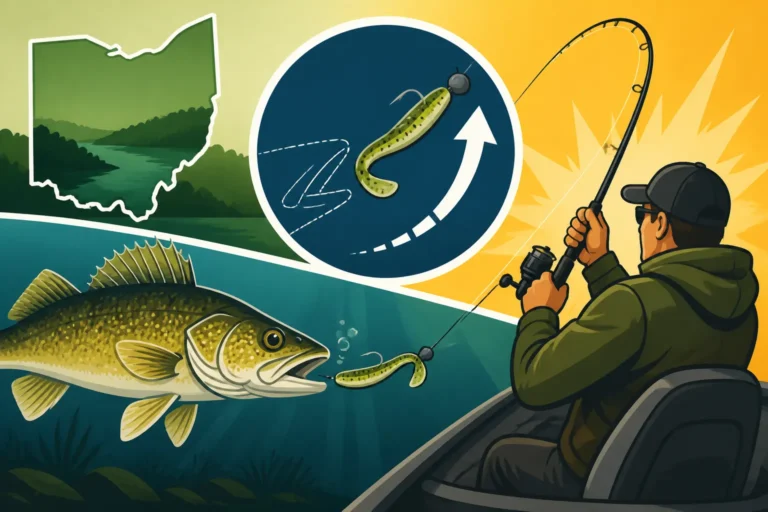
Once the jig is in the cover, let it sink to the bottom on a semi-slack line. Many strikes occur on the initial fall. After it settles, gently lift your rod tip to hop or drag the jig a few inches, then let it fall again. Remember, you're trying to imitate a crawfish scuttling or a creature stirring. These precise presentations are critical when you're targeting specific pieces of cover in Ohio's numerous lakes, especially those known for their bass populations. For more insight into effective casting, you might find our Casting Techniques for Steelhead useful, as some principles apply across species.
Dragging and Hopping on the Bottom
While flipping and pitching target specific pieces of visible cover, dragging and hopping are excellent for covering larger areas of bottom structure, such as submerged humps, rock piles, or deeper weed lines.
- Dragging: After casting your jig and pig, let it sink to the bottom. Instead of actively twitching the rod, simply drag the jig along the bottom using your reel. Make a slow, steady retrieve for a few feet, then pause. During the pause, the jig's skirt and trailer will settle and flare, often triggering a strike. This technique is incredibly effective when bass are lethargic or simply holding tight to the bottom. It mimics a crawfish slowly moving along the substrate. Maintain light tension on the line so you can feel changes in bottom composition or the subtle pick-up of a bass.
- Hopping: This is a more active retrieve than dragging. Once the jig is on the bottom, lift your rod tip sharply, perhaps 1-2 feet, to make the jig hop off the bottom. Immediately drop your rod tip, allowing the jig to fall back down on a semi-slack line. The key here is to control the fall. Most bites will occur as the jig descends. Repeat this hopping motion, covering the area methodically. The erratic "hop and fall" action can be very enticing, especially when bass are a bit more active. This method is particularly useful when fishing near drop-offs or over rocky bottoms in search of bass.
Whether dragging or hopping, always pay attention to the feel of your line. Bass bites on a jig and pig are often subtle – a slight tick, a feeling of "mushiness," or simply the line going slack when it should be tightening.
Reading the Bite and Setting the Hook
This is where many anglers struggle with a jig and pig. Unlike a spinnerbait that might get slammed, a jig bite can be incredibly nuanced.
- Identifying Strikes: A bite might feel like a gentle "tick" or "thump" as the bass inhales the lure. Sometimes, the line will just stop moving when it should be falling, or it might move sideways inexplicably. Occasionally, you'll feel nothing at all, only to realize your line is slack when it should be taut. It takes practice and focus to distinguish between a bite and the jig bumping against cover. Always err on the side of caution: if something feels "different," set the hook!
- The Power Hookset: Because you're often fishing with heavy line and a stout hook, and the bass might be in dense cover, your hookset needs to be powerful and assertive. When you feel a bite, drop your rod tip slightly to gather any slack, then reel down until you feel resistance. With a quick, powerful sweep, drive the rod upwards and to the side, maintaining constant pressure. It’s not a gentle wrist flick; it’s a full body movement. Keep reeling through the fight, not letting the bass gain any slack. You want to turn the fish's head as quickly as possible and get it moving out of the cover. This strong hookset is also crucial when employing other techniques like How to Fish a Texas Rig in Heavy Cover, as the principles of penetrating a plastic and a fish's mouth remain the same.
Ohio-Specific Considerations for Jig and Pig
Ohio offers a fantastic variety of fishing environments, and adapting your jig and pig approach to these local nuances can significantly boost your success rate. From the sprawling reservoirs to countless smaller farm ponds, largemouth bass are abundant, and the jig and pig is a universal weapon.
Prime Ohio Largemouth Habitats
Largemouth bass in Ohio, just like anywhere else, love cover. When fishing with a jig and pig, you're specifically looking for those dense, hard-to-reach places where bass feel safe and can ambush prey.
- Lakes and Reservoirs: Ohio boasts many excellent bass fishing lakes and reservoirs where the jig and pig excels. Places like Alum Creek Lake, Hoover Reservoir, and Caesar Creek Lake offer abundant opportunities. Look for submerged timber, brush piles, rock veins, and deep weed lines. Laydowns (fallen trees) along the bank are absolute magnets for bass, and flipping a jig and pig into the thickest parts of these structures can often produce trophy-sized fish. On larger bodies of water, pay attention to points and humps that offer a transition from shallow to deep water, especially if they have some form of cover.
- Farm Ponds and Small Lakes: Don't overlook Ohio's countless farm ponds and smaller public lakes. These often have abundant lily pads, cattails, brushy shorelines, and sunken Christmas trees or pallets. The jig and pig is incredibly effective for picking apart these smaller, often shallower, pieces of cover. A well-placed pitch into a small opening in a lily pad field can be instantly rewarded. For more details on where to find these fish, check out our Best Ohio Lakes for Largemouth Bass.
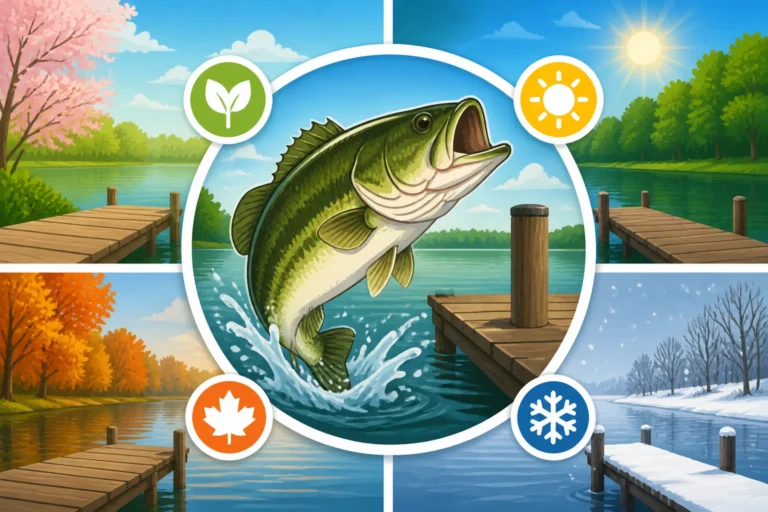
Seasonal Adjustments for Ohio Bass
Ohio’s four distinct seasons mean that bass behavior, and thus your jig and pig strategy, will need to adapt.
- Spring: As water temperatures rise into the 50s and 60s, bass move shallow to spawn. This is an excellent time for a jig and pig. They'll be relating to thicker cover in spawning pockets, and a crawfish-imitating jig slowly dragged through these areas can draw vicious strikes. Early spring, when bass are still staging, also finds them concentrated around deeper cover adjacent to spawning flats. Our guide on Best Spring Fishing Techniques in Ohio offers more insights.
- Summer: This is prime time for jig and pig fishing in Ohio. With warm water, bass often retreat to the thickest, shadiest cover they can find – dense weed mats, deep brush piles, boat docks, and submerged trees. Punching a heavy jig through matted vegetation or slowly working it through shaded dock pilings can be incredibly productive. The slower, more methodical presentation can coax bites from lethargic bass seeking refuge from the heat. For summer strategies, our Best Summer Fishing Techniques in Ohio provides great tips.
- Fall: As water temperatures begin to drop in the fall, bass become highly active, feeding aggressively in preparation for winter. This is another fantastic jig and pig period. Bass will often move shallower, congregating around main lake points, channel swings, and still-green weed beds. A jig and pig worked along these structures can catch many fish. The foraging patterns of bass during this time often involve crawfish, making the jig and pig a perfect imitation. You can find more targeted advice in Best Fall Fishing Techniques in Ohio.
- Winter: While less common, the jig and pig can still catch bass in winter, particularly during warmer spells or on deeper, main-lake structures. The key here is an extremely slow presentation. Think of simply dragging it slowly on the bottom, barely moving it. Bass are less active, and a subtle, easy meal is often what it takes.
Maximizing Success in Ohio's Diverse Waters
To truly master the jig and pig in Ohio, you'll want to fine-tune your approach based on specific water conditions.
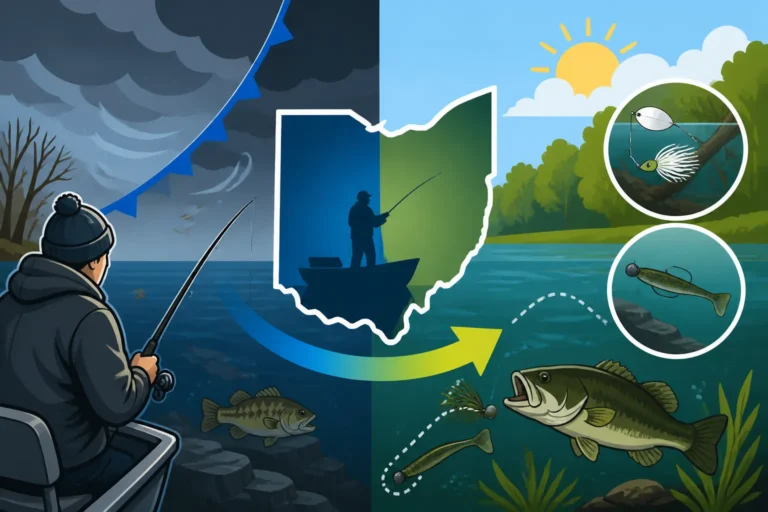
- Water Clarity: In clearer lakes like many in northeast Ohio, go for more natural jig colors (green pumpkin, brown, natural craw patterns) and more subtle trailers. Fluorocarbon leader on braided line might be beneficial for stealth. In stained or murky waters, which are common in many central and western Ohio lakes and rivers, use bolder colors (black and blue, black, junebug) and bulkier trailers to create a stronger silhouette and more vibration. The jig's profile and movement become even more critical here.
- Structure Specifics:
- Wood (Laydowns, brush piles): A medium-heavy to heavy jig (1/2 oz is often perfect) with a robust weed guard is essential. Pitch or flip into the densest parts, letting it fall, then gently shake it. Be prepared for a fight, as bass will instantly try to bury you.
- Weed Beds (Lily pads, milfoil, hydrilla): Use a jig with a good weed guard and a streamlined trailer to slide through the vegetation. For matted weeds, a heavier jig (3/4 oz or 1 oz) with a flat head might be needed to punch through the mat. Let it fall into the open pockets or drag it over the top of submerged weeds.
- Docks: Docks provide shade and structure. Skip your jig under pontoons or into the darkest recesses of cribs and pilings. The quiet entry of a skipped jig is often irresistible to bass holding under these structures.
- Reading the Conditions: Always pay attention to environmental factors. Barometric pressure changes can affect bass aggression, and a jig and pig can be a great choice when bass are less active. Wind can make pitching difficult, but it can also create current and oxygenation that activate bass. Experiment with retrieve speeds and jig weights to find what the bass are reacting to on any given day. You'll often find that even if a lake has a good population of crappie, as detailed in Best Time of Year for Ohio Crappie Fishing, the bass will still be present and relating to similar cover.
Remember, patience and persistence are key with the jig and pig. It's a technique that rewards methodical fishing and a keen eye for subtle bites. Practice your presentations, feel for the feedback your lure gives you, and you'll soon be confidently pulling big largemouth bass from the toughest cover Ohio has to offer.
Disclaimer
This article is for general informational purposes only and does not constitute professional advice. Laws, prices and regulations vary by location and change over time. Consult a qualified professional for guidance on your specific situation.