How Thick Ice Should Be Before Fishing in Ohio
When that first true cold snap hits Ohio, bringing with it the promise of hard water, the excitement for ice fishing can be absolutely palpable. But let's be real, that thrill comes with a very serious undercurrent: safety. The biggest, most nerve-wracking question on every ice angler's mind is always the same: "Is the ice thick enough?" You're not just wondering if you'll catch fish; you're wondering if you'll make it home, and that's a perfectly valid concern that deserves a detailed answer. This guide is here to cut through the guesswork and give you the solid information you need to make safe decisions on Ohio's frozen lakes and ponds.
The Crucial Question: Why Ice Thickness is Your #1 Safety Measure in Ohio
Before you even think about drilling that first hole or setting up your shanty, you need to understand that ice thickness isn't just a suggestion; it's the fundamental measure of your personal safety on the ice. Ignore it, and you're gambling with more than just a ruined fishing trip. The consequences of misjudging ice conditions can be severe, even fatal, and no fish is worth that risk.
Beyond the Chill: The Real Dangers of Thin Ice
It might sound obvious, but the risks associated with thin or unstable ice go far beyond just getting wet and cold. Falling through can quickly lead to hypothermia, which is a rapid and dangerous drop in body temperature. The shock of the cold water can cause involuntary gasping, leading to water inhalation, and the weight of your winter clothing can drag you down. Even if you manage to pull yourself out, the extreme cold can quickly incapacitate you, making it hard to walk or even call for help.
Beyond your personal well-being, there's the very real danger of losing expensive gear. Imagine your ice auger, rods, tackle box, or even your ice shanty disappearing into the icy depths. That’s a financial hit no one wants. More importantly, if you’re fishing alone, the lack of immediate assistance can turn a bad situation into a catastrophic one. This is why understanding the ice, and treating it with the utmost respect, is the absolute bedrock of a safe and enjoyable outing on Ohio’s frozen waters. For a broader overview of how to stay safe, take a look at our Ohio Winter Fishing and Ice Safety guide.
Your First Line of Defense: Minimum Thickness Guidelines for Safe Activities
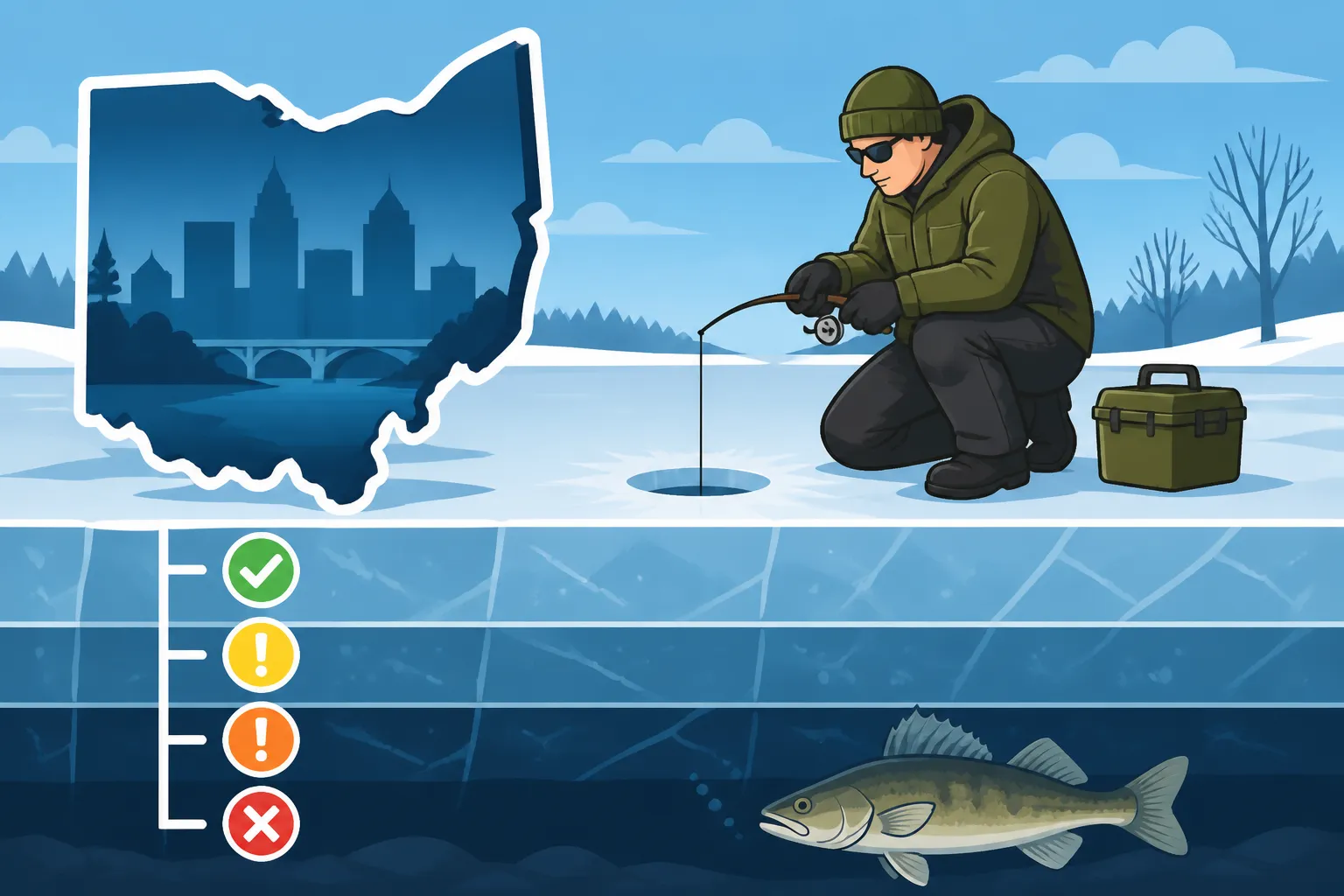
So, what's the magic number? While there's no single "safe" thickness that applies to every situation, common guidelines are widely accepted. These are based on years of experience and countless incidents, so they’re a good starting point for any angler. Always remember, these are minimums, and more ice is always better.
Here’s a general breakdown of recommended minimum ice thicknesses for different activities:
| Activity | Minimum Ice Thickness (Clear, Hard Ice) | Important Considerations |
|---|---|---|
| Foot travel, ice fishing | 4 inches (10 cm) | Distribute weight, walk in groups, carry safety gear. |
| Snowmobile, ATV | 5-7 inches (12.5-18 cm) | Check local regulations for vehicle use on ice. |
| Small car, light truck | 8-12 inches (20-30 cm) | Rarely recommended; avoid unless absolutely necessary. |
| Medium truck | 12-15 inches (30-38 cm) | Never recommended on natural ice. |
It's crucial to understand that these guidelines refer to clear, hard ice. Slushy, cloudy, or "rotten" ice can be significantly weaker, even if it appears to be of adequate thickness. Always err on the side of caution. If in doubt, don't go out!
Navigating Ohio's Icy Waters: Factors That Deceive and Endanger
While those minimum thickness guidelines are a solid foundation, the reality of ice fishing in Ohio is that conditions are rarely uniform. The ice on one part of a lake might be perfectly safe, while just a few yards away, it could be dangerously thin. It's like trying to navigate a minefield if you don't know what to look for, and the weather here in Ohio loves to throw curveballs.
The Ohio DNR's Golden Rule and Regional Differences
The Ohio Department of Natural Resources (ODNR) consistently advises a minimum of 4 inches of clear, solid ice for foot traffic. This is the golden rule, the absolute baseline for any angler venturing out on foot for ice fishing. This recommendation applies to most inland lakes and ponds across the state, from the smaller community lakes to larger reservoirs like Alum Creek Lake or Mosquito Creek Lake.
However, when you start talking about a massive body of water like Lake Erie, things get a lot more complex. Is Lake Erie Safe for Ice Fishing? is a question with a nuanced answer. While the 4-inch rule still applies for foot traffic in sheltered bays and nearshore areas, the sheer size, currents, and unpredictable nature of Lake Erie often mean that ice fishing far offshore is typically done with specialized, heavy-duty shanties, ATVs, or even hovercraft by very experienced and well-equipped anglers, and even then, conditions can change in an instant. Always consult local reports and the ODNR before venturing onto Lake Erie's ice.
Hidden Weaknesses: How Conditions Undermine Ice Strength
Many factors can compromise ice strength, even if the general measurement seems adequate. You need to become a detective, constantly looking for clues that could signal danger.
- Moving Water and Currents: This is perhaps the biggest culprit for inconsistent ice thickness. Rivers, inlets, outlets, and even underwater springs can create currents that erode ice from underneath, making it dangerously thin in specific spots. The Ohio River, for example, is rarely safe for ice fishing due to its constant flow and commercial traffic. Always be wary around bridges, culverts, and areas where water flows in or out.
- Snow Cover: While a blanket of snow can look beautiful, it acts as an insulator, slowing down ice formation and often concealing weak spots. More importantly, heavy snow can weigh down existing ice, causing slush pockets to form, which then refreeze into weaker, porous "snow ice." Snow also makes it difficult to visually assess ice conditions.
- Fluctuating Temperatures: A few days of extreme cold followed by a warm spell can severely weaken ice. Thawing and refreezing cycles create a honeycombed structure that lacks the integrity of solid, clear ice. Pay close attention to recent weather patterns, not just the temperature on the day you plan to fish.
- Pressure Cracks and Seams: These are common on larger bodies of water as the ice expands and contracts. While not always dangerous, they represent areas of stress and can be weak points. Crossing a major pressure ridge in a vehicle is extremely risky.
- Submerged Objects: Docks, rocks, logs, and even weed beds can absorb sunlight and radiate heat, causing thinner ice around them. Be extra cautious when fishing near any visible or suspected submerged structures.
Ice, Ice Baby: Understanding Different Ice Types and Their Risks
Not all ice is created equal, and knowing the difference can literally save your life.
- Clear or "Black" Ice: This is the strongest type of ice. It forms rapidly in calm, very cold conditions, and you can often see right through it to the water below. When the ODNR recommends 4 inches, they're talking about this kind of ice. It's dense, hard, and offers the most reliable support.
- White or "Snow" Ice: This forms when wet snow freezes or when slush refreezes. It looks opaque and white because it contains air bubbles. Snow ice is only about half as strong as clear ice, meaning 8 inches of snow ice might only have the strength of 4 inches of clear ice. It's tricky because it can look thick but be structurally unsound.
- Slush Ice: This is partially melted or unconsolidated ice, often found under a layer of snow. It offers virtually no weight-bearing capacity and is a clear indicator of unsafe conditions.
- Candle Ice (Rotten Ice): This forms during spring thaws when ice starts to melt from the surface down. It develops a columnar, vertical structure that resembles candles standing side by side. It's incredibly weak, unpredictable, and can give way without warning, even if it appears thick. This is often seen later in the Ohio Fishing Season Calendar when warmer weather returns.
Your Ice Fishing Playbook: Measuring, Preparing, and Staying Safe
Given the variables at play, simply guessing the ice thickness is a recipe for disaster. Proactive measures, accurate measurements, and proper gear are your non-negotiables for a safe Ohio ice fishing trip.
Tools of the Trade: Accurately Checking Ice Thickness
You absolutely need reliable ways to measure ice thickness, and relying on someone else's tracks or holes isn't enough.
- Spud Bar: This is an essential safety tool, especially when venturing onto new ice. A spud bar is a heavy, chisel-like tool used to strike the ice ahead of you. If the ice gives easily after a few strikes, it's too thin. It’s also great for sounding out potential weak spots as you move. Don't be shy about using it every few steps!
- Ice Auger: Once you've spudded your way to what appears to be safe ice, drill a test hole with your ice auger. A good, sharp auger, whether a hand auger or a powerful electric model like those from Amazon, will make quick work of it.
- Tape Measure or Ruler: After drilling your test hole, use a tape measure or a dedicated ice ruler to accurately gauge the thickness from the top of the ice to the bottom. Don't just eyeball it. It's crucial to measure at multiple spots, especially as you move across the ice. The first hole you drill might be 6 inches, but the next one 20 feet away could be 3.
Always drill holes close to shore first, working your way out. If the ice is less than 4 inches, turn back. No exceptions.
More Than Just Ice: Essential Safety Gear for Every Angler
Beyond knowing the ice, carrying the right safety gear is paramount. Think of it as your personal safety net.
- Ice Picks: These are small, sharp tools connected by a cord, designed to be worn around your neck or easily accessible. If you fall through, you can use them to gain purchase on the ice and pull yourself out. They are surprisingly effective and can be purchased for a reasonable price on Amazon or at local sporting goods stores.
- Flotation Suit or PFD: An ice fishing suit with built-in flotation or a personal flotation device (PFD) worn over your winter gear can be a lifesaver. It provides buoyancy and insulation, buying you critical time in cold water.
- Rope and Whistle: A 50-foot length of sturdy rope, preferably with a throwable bag, can be used to rescue someone else or be thrown to you. A whistle can help you signal for help if you're in distress.
- Headlamp/Flashlight: If you plan on fishing near dawn or dusk, or after dark, a reliable light source is essential. It helps you see hazards and for others to see you.
- Change of Dry Clothes: Pack a complete change of clothes, socks, and a towel in a waterproof dry bag. If you do get wet, having dry clothes can prevent severe hypothermia once you're out of the water.
- First-Aid Kit: A basic kit for cuts, scrapes, and other minor injuries.
Remember, having the gear is one thing; knowing how to use it is another. Practice with your ice picks and understand how to throw a rescue rope. For more gear insights, check out our Best Ohio Fishing Gear and Tackle Guide.
The Buddy System and Smart Habits for Ohio Ice Fishing
Even with all the right gear and knowledge, the single most important safety rule is this: Never ice fish alone.
- Go with a Buddy: The "buddy system" is non-negotiable for ice fishing. If one person falls through, the other can assist with rescue or call for help.
- Tell Someone Your Plans: Before heading out, inform a responsible person where you're going, your planned route, and when you expect to return. Stick to your plan as much as possible.
- Spread Out: When fishing in a group, avoid congregating in one small area, especially if you're on a vehicle. Spreading out distributes weight more evenly.
- Avoid Alcohol and Drugs: Impaired judgment significantly increases your risk on the ice.
- Mark Hazards: If you find a dangerously thin spot or an open hole, mark it with a branch or flagging tape to warn others.
- Stay Informed: Check local fishing reports and ice conditions from reliable sources, including the ODNR, before you go. Talk to other local anglers who have recently been on the ice.
When the Unexpected Happens: Ice Emergency Response and Prevention
Despite all precautions, accidents can happen. Knowing what to do in an ice emergency, both for yourself and for others, is critical. Being prepared mentally for the worst can make all the difference.
Self-Rescue: Getting Yourself Out of a Sticky (and Icy) Situation
If you find yourself in the terrifying position of having fallen through the ice, staying calm is your top priority, as difficult as that may be. Panic is your greatest enemy.
- Don't Dive: Don't try to climb straight up onto the ice at the point where you fell in. The ice there is likely unstable and will just break under your weight.
- Turn Towards Where You Came From: The ice you just walked on held you, so it's likely stronger than the ice ahead. Turn around to face the direction you approached from.
- Break Ice to Solid Edge: If necessary, use your fists or elbows (while protecting your face) to break ice until you reach a solid, stable edge that doesn't break when you press down on it.
- Use Ice Picks: Drive your ice picks into the solid ice ahead of you. Use them to pull yourself forward, kicking your legs vigorously to help propel yourself onto the ice. This is often called the "seal crawl" or "roll-out" method, spreading your weight out.
- Roll Away: Once you're out of the water, don't stand up. Roll or crawl away from the hole, continuing to spread your weight. You’re still on potentially unstable ice.
- Seek Warmth: Get to a warm shelter immediately. Change into dry clothes and get medical attention for potential hypothermia.
Helping Hand: Safely Assisting Others in Distress
Witnessing someone fall through the ice is harrowing, but rushing in without thought can turn one victim into two. Remember the "reach, throw, row, go" principle for safe rescues:
- Call for Help (and Emergency Services): Immediately call 911 or local emergency services. Give them your exact location. Do this before attempting a rescue.
- Reach: If the person is very close to shore and you can maintain a safe position on solid ground, extend a branch, pole, or even your ice auger for them to grab.
- Throw: If they are further out, throw them a rope, a buoyant cushion, or anything that floats and they can hold onto. This is where that throwable rescue bag comes in handy.
- Row: If you have a small boat, canoe, or even a large cooler that can be pushed across the ice, use it to get closer to the victim while still distributing your weight.
- Go (as a Last Resort): Only go out onto the ice yourself if you are properly trained, have a flotation device, and are tethered to shore by a strong rope held by others. This should be a last resort, as it puts the rescuer at extreme risk.
Always prioritize your own safety. A failed rescue attempt means two people in trouble.
The Best Defense: Proactive Measures to Prevent Ice Accidents
Ultimately, the best way to handle an ice emergency is to prevent it from ever happening. It boils down to respecting the ice and making informed decisions every single time you head out.
- Stay Informed, Stay Vigilant: Always check ice conditions and weather forecasts. Don't assume. Conditions change rapidly in Ohio.
- Invest in Quality Gear: Those ice picks, a good spud bar, and a flotation suit aren't luxuries; they're investments in your life. Many items are readily available on Amazon or at local shops.
- Err on the Side of Caution: If you have any doubt about the ice, don't go out. There will always be another day to go Ice Fishing Rules on Ohio Lakes or Ohio Ice Fishing Guide. No fish is worth risking your life.
- Educate Others: Share what you know about ice safety with friends, family, and fellow anglers. We’re all part of the same community, and looking out for each other is just good practice.
By understanding how thick ice should be before fishing in Ohio, what affects its strength, and how to prepare for the unexpected, you can enjoy the incredible opportunities that Ohio's hard water season has to offer, safely and responsibly.
Disclaimer
Fishing conditions, including ice thickness, can change rapidly and unexpectedly. The information provided in this guide is for general informational purposes only and should not be considered a substitute for personal judgment, local knowledge, or official warnings from the Ohio Department of Natural Resources (ODNR) or other authorities. Always exercise extreme caution, use appropriate safety gear, and check current conditions before venturing onto the ice. The author and publisher are not responsible for any accidents or injuries that may occur.