Best Lighted Bobber Setup for Night Walleye Fishing
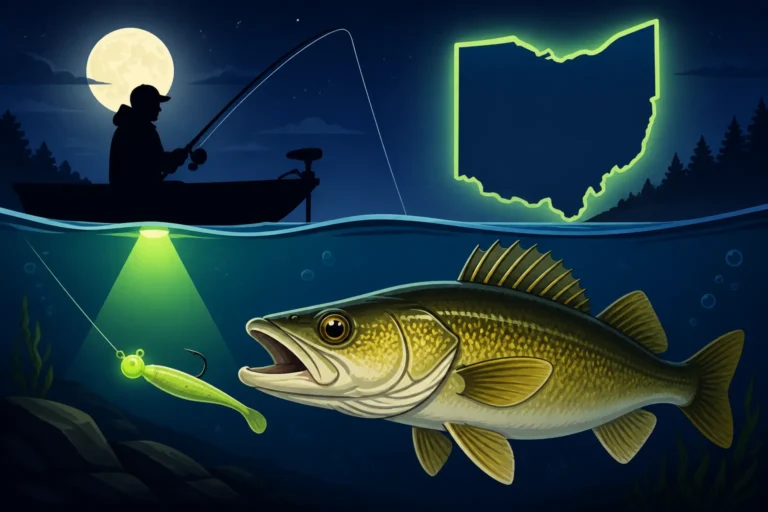
There’s a unique kind of frustration that settles in when you’re out on the water after sunset, chasing those elusive Ohio walleye, and you can barely see your rod tip, let alone the subtle twitch of a bite. You know the fish are there, feeding actively in the cooler, darker hours, but without being able to detect those strikes, it feels like you're just casting into a void. This guide is all about cutting through that darkness, showing you how a simple yet incredibly effective lighted bobber setup can transform your night walleye fishing experience from guesswork to confident strikes.
Why Night Fishing for Walleye Demands a Lighted Bobber
Fishing for walleye after the sun dips below the horizon can be incredibly productive. These predatory fish, known for their large, light-sensitive eyes, often move into shallower feeding grounds under the cover of darkness. But as advantageous as the night can be for walleye, it presents significant challenges for us anglers.
The Veil of Darkness: Missed Bites and Muddled Lines
Imagine this: You’re on the calm waters of a quiet Ohio reservoir, the stars are brilliant, and you're confident walleye are lurking. You cast your line out, feeling hopeful. Then, you wait. And wait. Was that a bite? Or just the current? You strain your eyes, trying to discern any movement in the dark water where your line disappears. Often, those tentative walleye bites — sometimes just a slight "thump" or a gradual weight — go completely unnoticed until the fish has either spit the bait or swallowed it too deep.
Beyond the missed opportunities, the darkness brings other headaches. Tying knots, re-baiting, or untangling a backlash becomes a frustrating exercise in fumbling. Your sense of where your line is, how deep your bait is presenting, or if it's drifting into a snag is severely hampered. This isn't just an inconvenience; it can mean the difference between a successful night of catching and packing up frustrated and empty-handed. We've all been there, swearing we felt something but just couldn't tell.
Walleye's Nocturnal Nature: A Prime Opportunity
Walleye are perfectly adapted for low-light conditions. Their large eyes have a reflective layer called the tapetum lucidum, which allows them to see incredibly well in dim light, giving them a distinct advantage over their prey, and often, over us anglers during the day. As the sun sets and light levels drop, walleye frequently move from deeper, daytime haunts to shallower points, humps, and weed edges to ambush baitfish. This makes night fishing not just an option, but often the absolute Best Time of Day to Catch Walleye on Lake Erie
This shift in behavior means that if you can overcome the challenges of visibility, you're tapping into a golden hour that many fair-weather anglers miss. A well-presented bait in the right spot after dark can yield some of the biggest and most aggressive walleye of the season. It’s about being there when they're most active, and a lighted bobber setup ensures you're not missing the show.
Anatomy of the Perfect Lighted Bobber Rig for Ohio Walleye
Building a successful lighted bobber setup involves more than just sticking a glow stick on any old bobber. Each component plays a vital role in presentation, bite detection, and overall efficiency, especially when you're targeting sensitive walleye in the dark.
Selecting Your Luminous Beacon: Types and Features
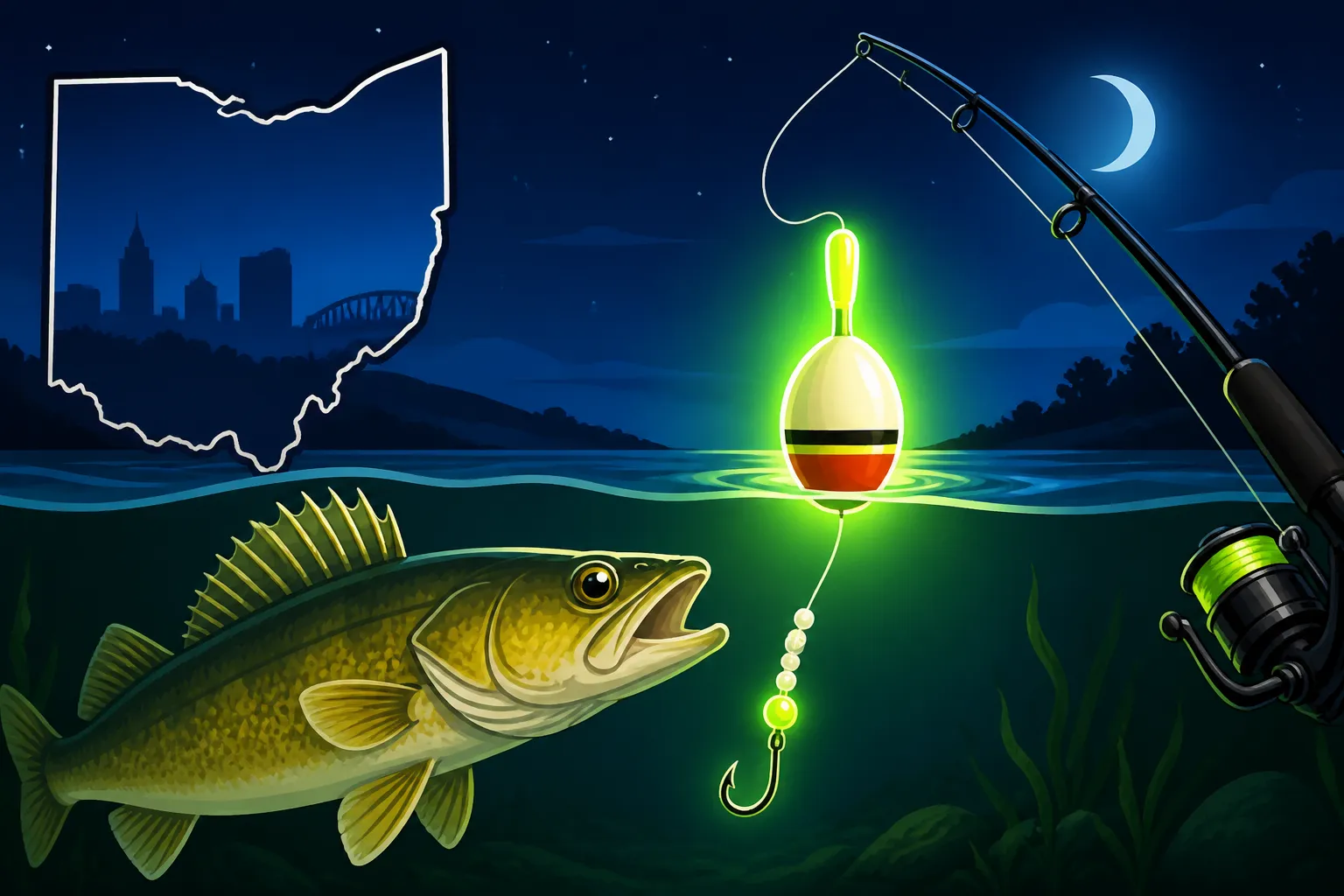
When it comes to lighted bobbers, you generally have two main types: those that use chemical glow sticks and those that are battery-powered, typically with LEDs. Both have their merits, and your choice will often come down to personal preference, convenience, and desired performance.
Chemical Glow Stick Bobbers: These are usually a more traditional bobber design with a slot or clip to insert a small, disposable glow stick. They're often very affordable, and the light is usually quite visible. The glow stick needs to be "cracked" to activate the chemical reaction, providing light for several hours. The downside is that they are one-time use, and the brightness can dim over time. They're a fantastic entry-level option, easy to use, and you can usually find multipacks on platforms like Amazon.
LED Lighted Bobbers: These bobbers integrate a small LED light, powered by a tiny battery. Many are designed as slip bobbers, which we’ll discuss in more detail, and some even have sensors that activate the light only when wet or when a fish strikes. The advantages here are consistent brightness, reusability (just change the battery!), and often a more focused, intense light. They tend to be a bit more expensive upfront, but their longevity can make them more economical in the long run. Look for options that offer different light colors, as some anglers prefer green for clarity in dark water, while others like red or orange. Brands like Betts and Thill often offer reliable options in this category.
Consider the size and buoyancy of the bobber too. You want it to be large enough to be easily seen but sensitive enough not to impede a walleye taking the bait. A good rule of thumb is to match the bobber's size to the weight of your bait and any added sinkers, ensuring it floats upright with just the right amount of resistance.
| Feature | Chemical Glow Stick Bobbers | LED Lighted Bobbers |
|---|---|---|
| Light Source | Chemical reaction (disposable glow stick) | Battery-powered LED |
| Cost | Generally lower per unit (one-time use) | Higher initial cost, but reusable |
| Brightness | Good initially, may dim over several hours | Consistent and often brighter, until battery dies |
| Lifespan | Single-use per glow stick | Reusable, just replace batteries |
| Activation | "Crack" the glow stick | Twist on/off, magnet, or water-activated |
| Visibility Colors | Limited to glow stick colors (green, red, etc.) | Often multiple LED color options |
| Environmental | Disposable plastic, less eco-friendly | Batteries need proper disposal, more sustainable |
Rod, Reel, and Line: The Unsung Heroes of Sensitivity
While the lighted bobber gets all the glory at night, the rest of your setup is crucial for detecting those subtle bites and successfully landing fish. Walleye, especially larger ones, can be surprisingly gentle takers, often just mouthing the bait before committing.
The Rod: For bobber fishing, a medium-light to medium action spinning rod, typically 6'6" to 7'6" in length, is ideal. The key characteristic is a sensitive tip that can telegraph even the slightest movement to your hand. This sensitivity, combined with the visual cue of the bobber, creates a powerful detection system. The rod should also have enough backbone to set the hook firmly and fight a strong walleye. Many anglers prefer a slightly longer rod for easier casting and better line control, especially when fishing from shore or a stationary boat.
The Reel: A good quality spinning reel in the 2500-3000 size range with a smooth, consistent drag is essential. You don't want a sticky drag when a trophy walleye decides to make a run in the dark. A smooth retrieve is also important for managing slack line, which can make a huge difference in bite detection. You should be able to operate it effortlessly, even in low light.
The Line: Your choice of fishing line can significantly impact your success.
- Monofilament: Often a great choice for bobber fishing because its slight stretch acts as a shock absorber, helping to prevent hooks from tearing out of a walleye's mouth. Its buoyancy also helps keep your line on the surface, which can be advantageous with slip bobbers. A 6-10 lb test monofilament is a versatile option.
- Braided Line: Offers superior sensitivity and no stretch, which means you feel everything. However, braid can be less forgiving if a walleye makes a sudden lunge. If you opt for braid, consider a 10-20 lb test main line with a fluorocarbon leader. The leader provides invisibility (as walleye can be line-shy, especially in clear water) and some stretch.
- Fluorocarbon: Excellent for leaders due to its near invisibility underwater and good abrasion resistance. While a full spool of fluorocarbon can be used, its low stretch characteristics might require a more precise drag setting.
Essential Terminal Tackle: Hooks, Weights, and Stops
The small components that connect your line to your bait are often overlooked but are absolutely critical. They need to be matched to your bait, target species, and fishing conditions.
Hooks: For live bait, snelled hooks are a fantastic choice, ensuring your bait swims naturally. Octopus hooks or Kahle hooks in sizes #4 to #1/0 are popular for walleye when using minnows or nightcrawlers. The size should be appropriate to hold your chosen bait without overpowering it, allowing for natural movement. Always ensure your hooks are sharp – a dull hook in the dark is a recipe for missed fish.
Weights: You’ll need just enough weight to get your bait down to the desired depth and to properly load your bobber, making it stand upright. Split shot sinkers are convenient and easy to add or remove. A small egg sinker or bullet weight can be used above a swivel for a slip-sinker rig, which allows the line to run freely through the weight, transmitting the bite directly to your rod. However, for a bobber setup, small split shots spaced a few inches apart above your bait or a single small crimp-on weight directly above your swivel are generally preferred. This setup helps to keep your bait from drifting too far from the bobber and creates a natural fall.
Bobber Stops and Beads: For slip bobber fishing, you absolutely need a bobber stop. These small pieces of string or plastic, typically found on Amazon or at any tackle shop, are tied onto your main line and slide up and down, allowing you to easily adjust your fishing depth. A small bead is then threaded onto the line below the bobber stop, preventing the stop from pulling through the bobber. Another bead is typically placed below the bobber and above your weight/swivel, protecting the knot from the sliding action of the bobber. These tiny components are vital for maintaining your desired depth precisely.
Rigging for Success: Your Step-by-Step Guide to a Lighted Slip Bobber
The beauty of a lighted slip bobber setup for night walleye fishing lies in its versatility and precise depth control. Unlike fixed bobbers, a slip bobber allows your bait to descend to any depth below the bobber stop, which is perfect for targeting walleye that might be suspended or holding close to structure at varying depths.
Mastering the Slip Bobber Technique for Depth Control
Rigging a slip bobber is straightforward once you get the hang of it, and it's a technique that will serve you well for many species, not just walleye. Here’s a step-by-step breakdown:
- Tie on your Bobber Stop: First, take a bobber stop (the small string or plastic kind) and thread your main line through the wire loop it comes with. Pull the bobber stop off the wire and cinch it gently onto your main line. Don't pull it too tight yet, as you'll want to adjust it later. This stop is what determines how deep your bait will go.
- Add a Bead: Slide a small plastic or glass bead onto your main line, immediately below the bobber stop. This bead acts as a buffer, preventing the bobber stop from getting jammed inside your slip bobber.
- Thread Your Slip Bobber: Now, thread your lighted slip bobber onto the line. Most slip bobbers have a small hole running through their center. Make sure it slides freely.
- Add Another Bead: Place a second bead onto your line, immediately below the slip bobber. This bead protects the knot you're about to tie from the constant friction of the bobber sliding against it.
- Tie on a Swivel: Tie a small barrel swivel or a high-quality snap swivel to the end of your main line. Use a strong knot like a Palomar or an Improved Clinch knot. This swivel serves multiple purposes: it prevents line twist, and it acts as the attachment point for your leader.
- Attach Your Leader: To the other end of the swivel, tie a leader of 12-24 inches of fluorocarbon line, typically 6-8 lb test. Fluorocarbon is excellent here because it’s nearly invisible underwater, which is a big plus for wary walleye.
- Tie on Your Hook: Finally, tie your chosen walleye hook to the end of your fluorocarbon leader. Again, a Palomar or Improved Clinch knot will serve you well.
- Add Weight: Depending on your bait, you'll want to add one or two small split shot sinkers to your leader, a few inches above the hook. This gets your bait down and helps the bobber stand upright. Start with just enough weight to properly load the bobber, and adjust as needed. The idea is for the bobber to stand vertical with just the tip showing, offering minimal resistance to a biting fish.
To adjust your depth, simply slide the bobber stop up or down your main line. This allows you to fish just above weed beds, along drop-offs, or at specific depths where you’re seeing fish on your electronics. Learning How to Read a Fish Finder for Suspended Walleye can really help pinpoint those optimal depths, even in the dark.
Choosing the Right Nighttime Bait Presentation
Walleye rely heavily on their senses of smell, vibration, and lateral line detection at night. This means live bait often reigns supreme, but there are some artificial options that can be surprisingly effective when presented correctly.
Live Bait:
- Minnows/Shiners: These are walleye staples. A lively shiner hooked lightly through the back (above the lateral line) or through the lips will swim enticingly, sending out vibrations that attract hungry walleye. Keep them fresh and active! You can often find a good selection of aerators and minnow buckets on Amazon.
- Nightcrawlers: Presented on a snelled hook or a small harness, a wiggling nightcrawler is irresistible to many walleye. The scent trail they put out is a huge draw in low visibility. Sometimes a piece of nightcrawler, rather than a whole one, can be just enough to get a bite from a finicky fish.
Artificial Options: While not always the first choice for bobber fishing at night, certain artificials can work:
- Jigs Tipped with Scent: A small jig (1/16 to 1/8 oz) tipped with a Berkley Gulp! Alive! minnow or a scented soft plastic can be suspended under a lighted bobber. The scent is key here, as the movement might be less pronounced than with live bait.
- Small Crankbaits (Suspended): In some scenarios, very slowly retrieved suspending crankbaits could work, but this strays from a traditional bobber setup. However, the idea of a lure that sits still and can be seen with the help of a light source is intriguing. For the purpose of a bobber, live bait remains king.
The key is often a slow, natural presentation. Walleye at night are often cruising, looking for easy meals. A bait suspended naturally under a lighted bobber, gently drifting or barely moving, perfectly mimics an easy target.
Fine-Tuning Your Setup: Balance and Sensitivity
Achieving the right balance in your lighted bobber setup is critical for detecting those subtle walleye bites. Too much weight, and the bobber will be sluggish; too little, and it won't stand properly or get your bait to depth effectively.
Bobber Sensitivity: The ideal setup has your bobber sitting upright with just a small portion of its top visible above the water. When a walleye takes the bait, even gently, the bobber should dip, lay flat, or pull slightly under the surface. If your bobber is lying flat on the water with too much line exposed, it indicates insufficient weight. If it’s sinking slowly on its own, it’s likely too heavy. Adjust your split shot sinkers incrementally until you find that sweet spot.
Leader Length: Your fluorocarbon leader length can be adjusted. A longer leader (up to 24 inches) gives your live bait more freedom to swim naturally, which can be enticing. A shorter leader might keep your bait closer to a specific depth if you're pinpointing a very narrow strike zone. Experiment with leader lengths to see what the fish prefer on any given night.
Light Color: While not a "sensitivity" factor in terms of bite detection, the color of your lighted bobber can sometimes make a difference in how well you see it, especially against different backgrounds (like shore lights or a moonlit sky). Green is often a popular choice for its visibility, but try different colors if your bobber allows for it. Some nights, one color just pops better than others. Remember, the goal is for you to see the bite clearly, not necessarily for the fish to notice the light (they're interested in the bait!).
Tactics and Considerations for Effective Night Walleye Angling
A good lighted bobber setup is only part of the equation. Understanding walleye behavior and incorporating smart fishing tactics will greatly increase your chances of success during those darker hours.
Understanding Walleye Movement After Dark
As mentioned, walleye often exhibit a fascinating shift in behavior once the sun goes down. They become more aggressive and frequently move into shallower water to feed. This is a crucial piece of the puzzle for night fishing with lighted bobbers.
Shallow Water Migration: Many walleye will move from deep water where they spent the day to depths as shallow as 5-15 feet, sometimes even shallower, to hunt. Look for areas with access to deeper water nearby, such as points, humps, offshore reefs, or the edges of weed beds. These transitional zones are prime ambush points. In larger bodies of water like Lake Erie, walleye might move closer to the shorelines or over shallow rock reefs.
Structure is Key: Even at night, walleye relate to structure. Focus your lighted bobber presentations around underwater features that provide cover or concentrate baitfish. This could be submerged timber, rock piles, drop-offs, or the deep edges of aquatic vegetation. Use a silent approach when moving into these areas, as loud noises can spook fish, especially in shallow water.
Ambient Light Influence: Walleye are highly sensitive to light. On bright moonlit nights, they might feed a bit deeper or be more spread out. On darker, overcast nights, they might be more aggressive and closer to the surface. Pay attention to the moon phase and cloud cover; it can influence where and how aggressively walleye feed. Sometimes, the low light around boat docks with subtle illumination can attract baitfish, and thus, walleye.
Integrating Electronics and Safety Gear
While night fishing requires a different approach, modern electronics and essential safety gear remain invaluable tools.
Fish Finders and GPS: Even in the dark, your fish finder can be a powerful ally. Use it to locate structure, baitfish schools, and even individual walleye before you deploy your lighted bobber. While you might not be able to precisely "spot lock" on a single fish, understanding the contours and presence of bait can inform your casting decisions. Your GPS is crucial for navigating safely in the dark, marking productive spots, and ensuring you can return to your launch point without issues. Mark any potential hazards (like shallow rocks) during daylight hours if possible. How to Read a Fish Finder for Suspended Walleye becomes even more important in low light when you can't rely on visual cues.
Headlamps and Handheld Lights: These are non-negotiable for night fishing. A good headlamp with a red-light option (to preserve your night vision) is essential for tying knots, baiting hooks, and generally moving around. Have a powerful handheld spotlight for scanning the water for buoys, hazards, or even to momentarily illuminate your line if needed. Just remember to use them sparingly, as direct light on the water can spook walleye.
Landing Net and Pliers: A large, rubber-coated landing net is crucial for safely landing walleye in the dark. It prevents hooks from getting tangled and protects the fish if you plan to release it. Long-nosed pliers or a hook remover are also a must for safely extracting hooks, especially if a walleye swallows the bait deeply. This is particularly important when dealing with sharp walleye teeth in low light.
Safety First: Beyond the fishing gear, prioritize safety. Always wear a life jacket, especially if you're in a boat. Tell someone where you're going and when you expect to return. Be aware of weather changes, as conditions can deteriorate rapidly, and navigating rough water at night is incredibly dangerous. Consider bringing a first-aid kit, a fully charged cell phone, and extra batteries for all your lights.
Best Ohio Waters for Night Walleye with a Lighted Bobber
While many Ohio waters hold walleye, some are particularly renowned for their nighttime action or lend themselves well to this technique.
Lake Erie's Western Basin: This is arguably the walleye capital of the world, and for good reason. The western basin, particularly around the Toledo and Port Clinton areas, offers vast shallow reefs and mud flats where walleye congregate after dark. Casting lighted bobbers from break walls, piers, or a quietly anchored boat can be very effective here. Remember to check local regulations, as Lake Erie Walleye Daily Bag Limit and minimum length limits apply.
Inland Reservoirs: Many of Ohio's larger inland reservoirs are stocked with walleye and offer excellent night fishing opportunities.
- Alum Creek Lake: Known for its walleye and saugeye population, especially around main lake points and submerged humps.
- Mosquito Creek Lake: Another fantastic walleye fishery, with plenty of submerged structure to explore after dark.
- Hoover Reservoir: While often popular for crappie, Hoover also holds walleye, particularly along its deep contours and creek channels.
- Pleasant Hill Lake, Dillon Lake, or Senecaville Lake: These, and similar reservoirs, often have good walleye populations that become more accessible at night.
When choosing a spot, consider accessibility, potential hazards, and the known presence of walleye. Look for areas with good transitions from deep to shallow water and plenty of baitfish. A little scouting during the day can save you a lot of frustration at night. Your Ohio Fishing Season Calendar can also help you determine the best times of year to target walleye in these locations.
Disclaimer
This article is for general informational purposes only and does not constitute professional advice. Laws, prices and regulations vary by location and change over time. Consult a qualified professional for guidance on your specific situation.