How to Read a Fish Finder for Suspended Walleye
There’s nothing quite as frustrating as heading out on the water, seeing a promising mark on your fish finder, and then pulling up an empty hook or, worse, a species you weren't even targeting. When walleye decide to suspend in the water column, rather than sticking close to the bottom, they can feel like ghosts on the screen, leaving many anglers scratching their heads. This guide will walk you through exactly how to interpret those tricky sonar signals, understand what your fish finder is telling you about suspended walleye, and turn those mysterious marks into successful catches.
Understanding Your Fish Finder's Display for Walleye
Before you can effectively chase suspended walleye, you first need to be fluent in the language your fish finder speaks. It's not just about seeing blobs; it's about understanding what those blobs, lines, and colors represent in the underwater world. Think of your fish finder as a powerful pair of underwater glasses, but you need to learn how to focus them correctly.
Interpreting Sonar Arches and Marks
The classic "arch" on your fish finder screen is often hailed as the holy grail, representing a fish. But it’s not always that simple, especially with suspended walleye. A true arch forms when a fish passes through your sonar cone, and the distance to the fish changes smoothly over time. A strong, thick, well-defined arch usually indicates a larger fish or a fish that stayed within the cone for a good period, which can be a promising sign for a hefty walleye.
However, walleye that are suspended and moving slowly, or if your boat is moving quickly, might not show up as perfect arches. Instead, you might see more elongated dashes, broken lines, or even just thick blobs. Don't dismiss these! Sometimes, these less-than-perfect marks are exactly what you're looking for. A walleye sitting perfectly still under your boat might appear as a vertical line or a dense blob. The key is to look for consistency and context. Are there several similar marks at the same depth? Are they near baitfish? These observations will start to paint a clearer picture.
Deciphering Depth and Temperature Readings
Walleye are extremely sensitive to depth and water temperature, and understanding these readings on your fish finder is paramount, especially for suspended fish. Most modern fish finders will display the current water temperature, which is a critical piece of information. Walleye typically prefer water temperatures between 60 to 70 degrees Fahrenheit, but this can vary depending on the season. In summer, for instance, when surface temperatures soar, walleye might move deeper into the water column to find cooler, more oxygenated water. Your fish finder will show you not only the surface temperature but often also the depth of the thermocline – that invisible boundary where warm surface water meets cooler, deeper water.
When walleye are suspended, they are often congregating just above, within, or just below this thermocline, seeking comfort and abundant food. Pay close attention to your depth readings and how fish marks correlate with temperature changes. If your screen shows a distinct thermocline at, say, 25 feet, and you're seeing marks clustered around 20-30 feet, that’s a huge clue that those are likely walleye relating to that temperature break. Different species of fish react differently to temperature, so knowing the walleye's preferred range helps you rule out other marks.
The Role of Sensitivity and Gain Settings
This is where many anglers either hit a home run or strike out. Your fish finder’s sensitivity or gain setting controls how much detail your unit displays. Too low, and you'll miss faint signals, like a solitary walleye subtly suspended in open water. Too high, and your screen will be cluttered with noise, making it impossible to distinguish a fish from plankton or suspended debris. It’s a delicate balance, and it often requires adjustment throughout the day or as you move to different areas.
When you're actively searching for suspended walleye, a good starting point is to increase your sensitivity until you start seeing a little bit of "noise" or speckle on the screen, then dial it back just slightly. This maximizes your chances of detecting those faint signals that a suspended walleye might produce. You'll want to experiment. If you’re trolling slowly, you might be able to use a higher sensitivity. If you’re zipping across the lake, too much sensitivity will just blur everything. Knowing how to adjust these settings on your specific unit, whether it's a popular Humminbird Helix or a Garmin Echomap, will greatly enhance your ability to read the water column. Many detailed manuals are available through retailers like Amazon, offering specific guidance for different models.
Locating Suspended Walleye Specifics
Once you're comfortable with the basics of your fish finder, the next step is to hone in on the specific patterns that suspended walleye exhibit. It's like going from reading individual words to understanding complex sentences – you're looking for the story the sonar is telling you.
Identifying Baitfish Schools
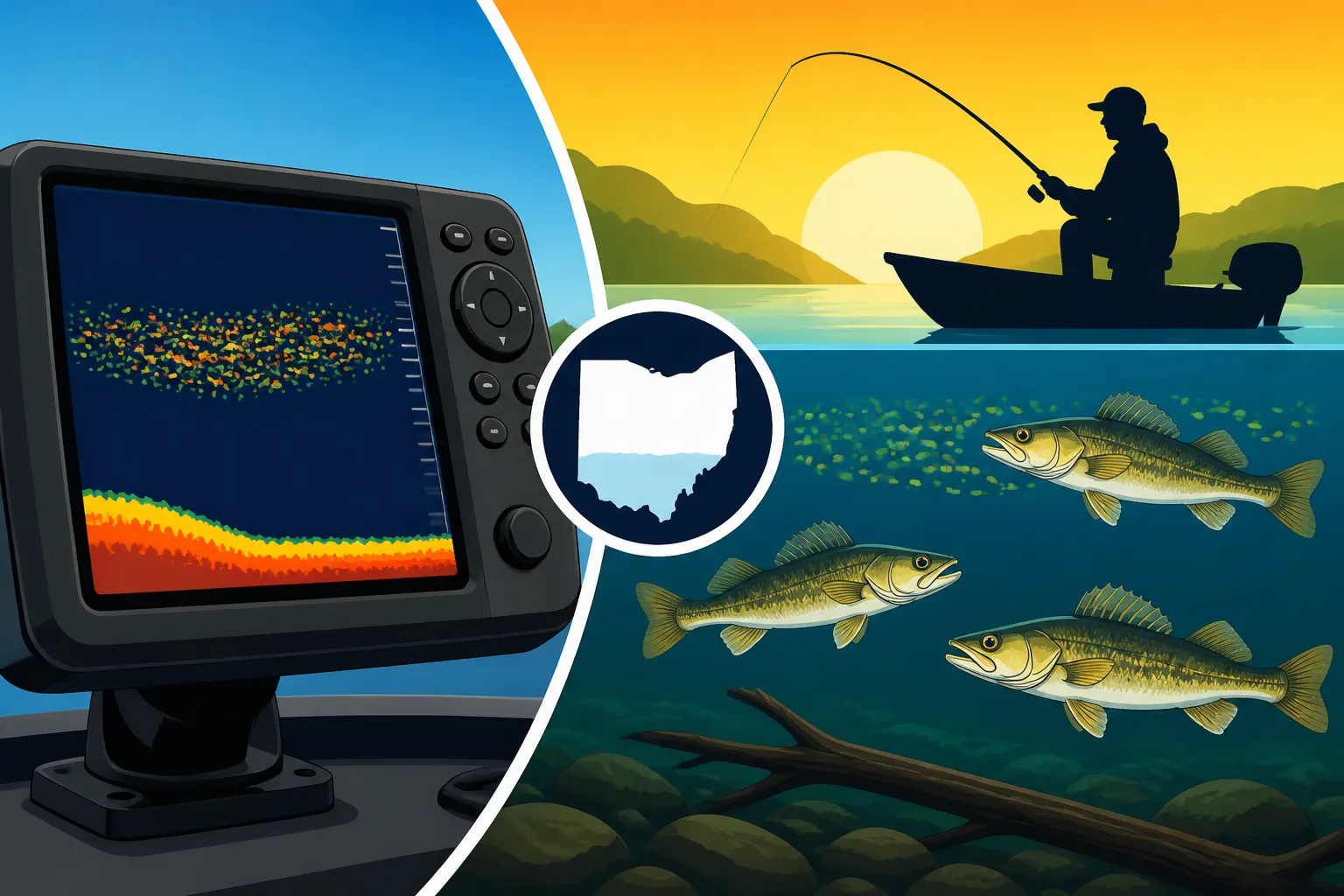
Walleye, like most predatory fish, are almost always found where their food source is. For suspended walleye, this means locating schools of baitfish. On your fish finder, baitfish schools typically appear as dense, amorphous clouds or balls of tiny dots. These can range from small, tight clusters to massive, widespread blankets depending on the species and behavior of the bait. Shad, alewives, and emerald shiners are common forage for walleye in Ohio waters, and they often suspend in the water column.
The size and density of these baitfish schools are important clues. A truly massive bait ball can obscure individual walleye that might be feeding within it, but it also signifies a high probability of predators nearby. When you mark a bait ball, pay close attention to its edges, as walleye will often patrol the perimeter, picking off stragglers. If you're seeing these clouds without any larger marks, try circling the area or adjusting your speed to see if you can isolate larger fish marks. Finding How to Locate Baitfish Schools on Lake Erie is often the first step to finding walleye.
Pinpointing Individual Walleye Near Bait
This is the moment of truth. Once you’ve located baitfish, you’re looking for the distinct, larger marks that indicate walleye. These might appear as stronger, thicker arches or lines, often positioned directly below, above, or within the baitfish schools. A common pattern is to see distinct, solid arches either tightly grouped at the bottom of a bait ball, or perhaps a few feet above it, indicating walleye driving the bait upwards.
Sometimes, you might even see what looks like a "feeding lane" – a clear gap or disruption in the bait ball where walleye are actively chasing. These individual walleye marks will typically be more distinct and solid than the speckle of the baitfish, and their color (if you're using a color unit) might be brighter, indicating a stronger return signal due to their larger size and density. Don’t just mark the bait; mark the individual fish in relation to that bait. This is where a good GPS plotter on your unit, often found in models available on Amazon, becomes invaluable, allowing you to save waypoints on these specific fish marks.
Understanding Thermoclines and Structure
As mentioned earlier, the thermocline is a huge factor. Walleye will often suspend precisely at this depth, finding their optimal temperature and oxygen levels. Your fish finder can show this as a distinct, solid line across the screen where the temperature changes sharply. Any fish marks directly on or just above/below this line are highly likely to be walleye. This is particularly true in deeper lakes and reservoirs during the warmer months, such as those found on Best Ohio Reservoirs for Walleye and Saugeye.
Beyond the thermocline, even suspended walleye relate to structure. While they might not be hugging the bottom, they could be suspended over deep rock piles, underwater points, submerged humps, or even standing timber. Your fish finder's mapping and sonar can reveal these deeper structures. Imagine a massive drop-off, and you see walleye suspended 10 feet off the bottom, but still directly over the deepest part of that drop-off. They might be waiting for baitfish to move off the edge or simply using it as a reference point. The ability to overlay your sonar returns with detailed contour maps, a feature common in higher-end Lowrance or Raymarine units, helps tremendously in identifying these subtle relationships.
Advanced Tips for Walleye Anglers
Mastering your fish finder for suspended walleye is an ongoing journey. There are always more tricks and techniques to learn to get an even clearer picture of what's happening beneath your boat.
Using Zoom and Split-Screen Views
Many modern fish finders offer incredibly useful zoom and split-screen functions that can drastically improve your ability to target suspended walleye. The zoom feature allows you to magnify a specific portion of the water column, often the lower half or a custom depth range. This makes smaller fish marks more apparent and helps you better distinguish individual walleye from dense baitfish. If you've identified a promising depth range for suspended walleye, zooming in on that segment can reveal crucial details you might otherwise miss.
Split-screen views are equally powerful. You can run traditional 2D sonar on one side of the screen and, for example, a zoomed-in view of the water column on the other. Or, even better, display traditional sonar alongside Down-Imaging or Side-Imaging views (more on those next). This allows you to process multiple types of information simultaneously, providing a more comprehensive understanding of the underwater environment. Perhaps your 2D sonar shows a fuzzy cloud, but your Down-Imaging shows clear individual fish marks within that cloud – a strong indicator of actively feeding walleye.
Leveraging Side-Imaging and Down-Imaging
If your fish finder boasts Side-Imaging (often called SideScan by Garmin or Mega Side Imaging by Humminbird) or Down-Imaging (DownScan or ClearVü), you have some serious advantages for finding suspended walleye.
- Down-Imaging: This technology provides a picture-like view directly beneath your boat, with photographic clarity. Instead of arches, fish appear as bright, often elongated "blobs" or "cigars." For suspended walleye, Down-Imaging excels at distinguishing individual fish within bait balls and providing a much clearer image of how they relate to the thermocline or subtle structure. You can often discern the shape of the fish itself, making identification much easier.
- Side-Imaging: This is a game-changer for covering vast amounts of water quickly. Side-Imaging sends sonar beams out to the sides of your boat, scanning up to hundreds of feet in either direction. This means you can spot suspended bait balls and the walleye lurking around them without having to drive directly over them. Imagine trolling along a deep contour line; your Side-Imaging can show you schools of walleye suspended 50 feet to your left or right. It's fantastic for locating those hidden fish that aren't directly under your boat's path. Many professional anglers rely heavily on these features, and units offering them can be found on retailers like Amazon. This technology dramatically increases your search efficiency, especially when targeting larger areas of open water like those found on Ohio Walleye Fishing Guide.
Correlating Sonar Data with On-Water Observations
Your fish finder is an amazing tool, but it's not the only tool. The most successful walleye anglers combine what they see on the screen with what they observe in the real world. This means paying attention to subtle cues like:
- Bird Activity: Diving gulls or terns often indicate baitfish being driven to the surface by predatory fish, including walleye. If your sonar shows suspended bait in that area, it's a strong confirmation.
- Water Color and Clarity: Murky water can affect sonar returns and also influence where walleye suspend. Clearer water might mean they're deeper or more scattered.
- Wind and Current: These factors can push baitfish into certain areas or concentrate them, which in turn attracts walleye. A strong current near a river mouth, for example, might create seams where walleye sit, waiting for food.
- Fishing Success: When you do catch a walleye, immediately check your fish finder. What did that fish look like on the screen? At what depth? How was it relating to bait or structure? This instant feedback loop is incredibly valuable for learning and refining your interpretation skills. For example, if you're jigging, check Jigging Techniques for Lake Erie Walleye and see how those fish relate to your lure on the screen.
By consistently comparing your sonar readings with these real-world observations, you’ll start to develop an intuitive understanding of where and why walleye are suspending, transforming you from a passive observer to an active hunter. Remember that your Best Rod and Reel Setup for Lake Erie Walleye should also be adjusted to match the depths and techniques you're using for these suspended fish.
Common Sonar Interpretations for Walleye Anglers
Here’s a quick reference to help you decode what you’re seeing on your fish finder for suspended walleye.
| Sonar Display | Common Interpretation | Actionable Insight |
|---|---|---|
| Dense, amorphous clouds of dots | Baitfish school | Walleye are likely nearby, check edges/bottom of school. |
| Strong, distinct arches (or elongated blobs on DI) | Individual larger fish (likely walleye) | Mark the spot, adjust lure depth to match. |
| Arches/blobs near or within baitfish schools | Walleye actively feeding or staging around bait | Target that specific depth within or around the bait. |
| Solid, horizontal line across the screen | Thermocline | Walleye often suspend at or just above/below this depth. |
| Marks appearing at a consistent depth over varied bottom | Suspended walleye using the water column | Focus your presentation (trolling, drifting) at that depth. |
| Faint, broken lines | Smaller fish, or fast-moving fish, or low sensitivity | Increase sensitivity slightly, or verify with slower boat speed. |
| Fish marks over deep structure (e.g., humps, drop-offs) | Walleye relating to structure from above | Target the water column directly above the key structural element. |
Remember, practice makes perfect. The more time you spend on the water with your fish finder, learning its quirks and correlating its readings with your catches, the better you'll become at finding those elusive suspended walleye. Knowing Best Ohio Walleye Fishing Techniques and where to apply them, like in the Western Basin of Lake Erie, will tie all your sonar knowledge together.
Disclaimer
The information provided in this guide is for general informational purposes only and is not intended as legal, financial, or professional advice. Fishing regulations and conditions can change rapidly. Always consult the latest Ohio Department of Natural Resources (ODNR) fishing regulations before heading out on the water. User discretion is advised.