Best Jig Color for Ohio Crappie
We've all been there, standing by the water's edge or out on the boat, a tackle box full of jigs, wondering which one the crappie will actually bite today. It's incredibly frustrating to spend hours with no luck, only to find out later a simple color change might have made all the difference. This guide is here to cut through the confusion and help you confidently pick the best jig colors for Ohio crappie, considering everything from water clarity to the time of year.
Understanding Crappie Vision and Behavior
Before we even dive into specific colors, it's really helpful to understand the world through a crappie's "eyes," so to speak. These fish don't see the underwater environment the same way we do, and what looks vibrant to us on the surface might be invisible a few feet down. Understanding their perception helps us make smarter choices in our jig selection.
How Crappie See Color Underwater
Crappie, like most fish, have eyes that are adapted to low-light conditions and can perceive certain wavelengths of light better than others. Their vision is generally quite good, especially for detecting movement and contrast. However, the colors you choose will dramatically change in appearance as they descend through the water column. The deeper your jig goes, or the murkier the water, the more specific light wavelengths are absorbed or scattered.
For instance, red is often the first color to disappear underwater, quickly looking dull gray or black at even shallow depths. Orange and yellow follow suit, becoming muted. Blue and green, on the other hand, penetrate much deeper and retain their vibrancy longer. This is why you often hear anglers swear by blues and greens in deeper water. While crappie can distinguish colors, it's often the contrast of the jig against its surroundings, and the silhouette it creates, that truly grabs their attention, especially when light is scarce. Think about it: a bright yellow jig in clear shallow water might look entirely different than that same jig in a dark, muddy reservoir.
Impact of Water Clarity on Color Choice
Water clarity is, without a doubt, one of the most critical factors influencing your jig color decision. It dictates how much light penetrates the water and, consequently, how visible and vibrant your chosen color will appear to a crappie. Ignoring water clarity is like trying to yell quietly in a noisy room – your message just won't get through.
In crystal clear water, which you might find in some of Ohio's deeper quarries or smaller, clean lakes, natural and subtle colors often excel. Think light blues, grays, clear, or even lightly speckled patterns. The crappie here have excellent visibility, and anything too bright or unnatural can spook them. They can discern fine details, so you'll want something that mimics their natural prey, like a minnow or small insect. Subtle flash can be an advantage here, but overt glitter might be too much.
When you're fishing in stained or slightly murky water, which is common in many Ohio reservoirs like Alum Creek Lake or Hoover Reservoir, you need colors with a bit more punch. This water has some particulate matter that diffuses light, making colors less distinct. Chartreuse, lime green, bright orange, and even some light pinks start to shine here. These colors offer enough contrast to be seen without being overly aggressive. White or pearl jigs can also be very effective, as they offer a strong silhouette against the diffused light.
Finally, in heavily muddy or turbid water, often seen after heavy rains or in shallower, silty areas, visibility is extremely low. Here, forget about realism; you need maximum visibility and contrast. Bright, fluorescent colors like chartreuse, hot pink, or electric chicken are absolute go-tos. Black jigs can also be surprisingly effective by creating a very defined silhouette against the low ambient light. Sometimes, even glow-in-the-dark jigs come into play, especially if you're fishing at dawn, dusk, or night in these conditions. The goal isn't to perfectly imitate, but to simply be seen and detected.
The Role of Forage and Natural Patterns
Crappie are opportunistic predators, and their diet primarily consists of smaller baitfish like shad and minnows, along with various invertebrates such as insects, small crustaceans, and larvae. Understanding what crappie are actually eating at any given time can give you a significant advantage in selecting your jig color and style. The classic "match the hatch" principle applies perfectly here.
If crappie are actively feeding on schools of silver-sided shad, then a jig that mimics that appearance – perhaps a silver flake, pearl white, or a light gray soft plastic with some shimmer – is a fantastic choice. Similarly, if they're keyed in on golden shiners or fathead minnows, a jig with a light brown, tan, or subtle yellow hue could be deadly. You'll often see this behavior reflected in their schooling patterns, making it easier to target them. Many anglers swear by a simple, effective technique like "How to Rig a Live Minnow for Crappie" when they want to truly match the forage, but jigs can do an excellent job too.
Beyond baitfish, consider the insect life. In spring and early summer, crappie might be gorging on emerging insect larvae. In these scenarios, darker, more subtle colors like black, brown, or olive green can mimic these aquatic insects. A small black jig under a bobber can often fool crappie that are inspecting the water column for insect activity. Some jigs even incorporate realistic insect patterns or colors designed to blend in with natural underwater vegetation, where crappie often ambush their prey. Always observe your fishing environment; if you see minnows darting around or insects buzzing near the surface, there's a good chance crappie are paying attention to similar food sources.
Top Jig Colors for Ohio Crappie and When to Use Them
When it comes to crappie fishing in Ohio, certain jig colors have proven themselves time and again. These aren't just random preferences; they're colors that work under specific conditions because of how crappie see and react to them. Having a solid understanding of these go-to options will significantly increase your success rate, whether you're fishing Lake Erie or a local pond.
Classic and Proven Colors
These are the tried-and-true workhorses that every crappie angler in Ohio should have in their tackle box. They consistently produce, often because they hit a sweet spot in crappie vision and behavior across a range of conditions.
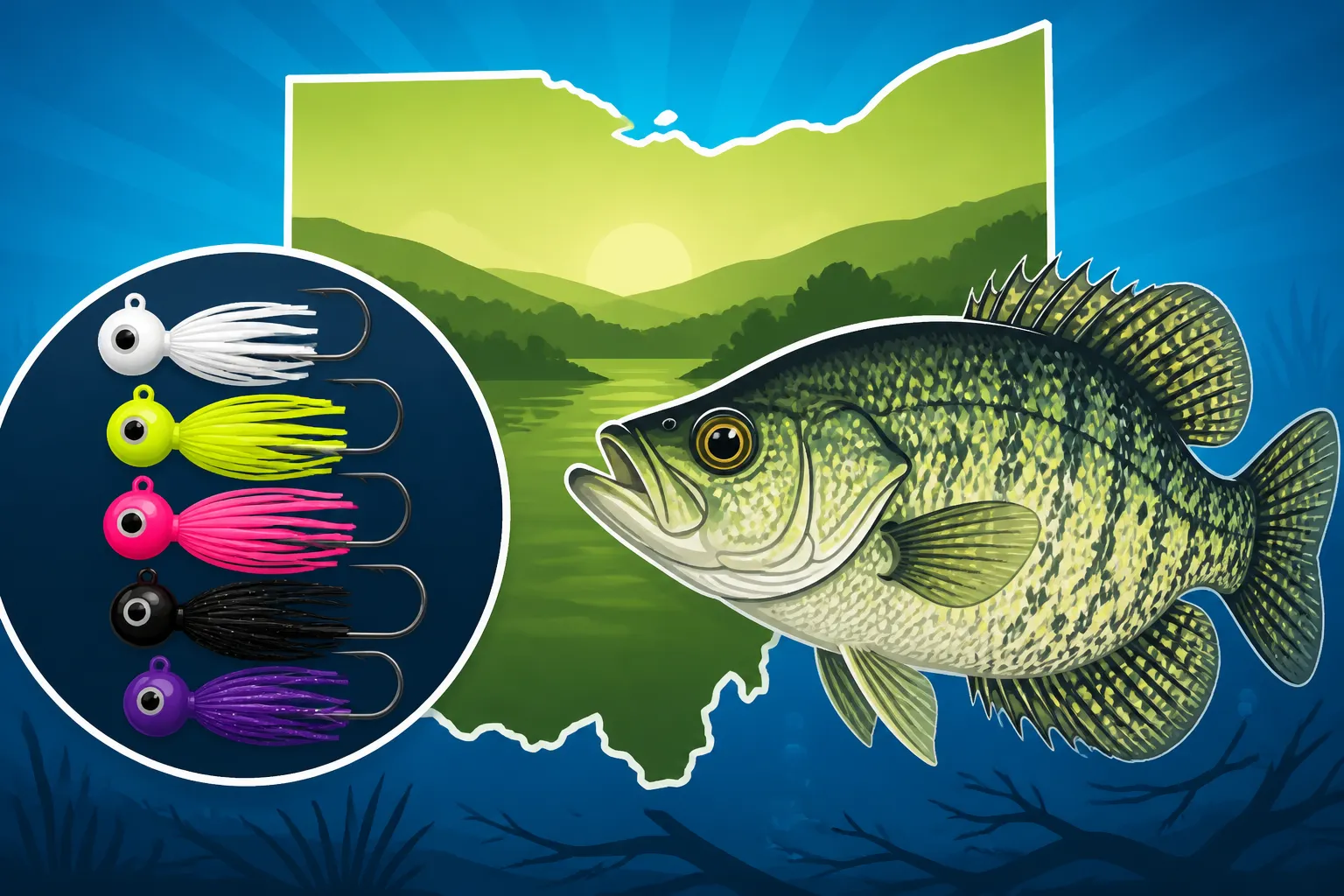
White/Pearl: You absolutely cannot go wrong with white or pearl-colored jigs. They are arguably the most versatile crappie jig color out there. Why? Because white creates a strong contrast in almost any water condition, from clear to muddy. In clear water, it can mimic a frightened minnow. In stained water, it provides enough visibility to be seen from a distance. And in dark or cloudy conditions, its bright appearance still stands out. Many anglers favor a simple white jig head with a pearl-colored tube or grub tail. Brands like Bobby Garland's "Baby Shad" in "Pearl" are perennial favorites among Ohio anglers. If you're looking to stock up on a variety of jig colors without breaking the bank, places like Amazon offer a massive selection from various reputable manufacturers.
Chartreuse: If white is the king of versatility, chartreuse is the undisputed queen of visibility. This electric green-yellow color is a crappie magnet, especially in stained, murky, or deep water. It's highly fluorescent, meaning it reflects UV light, which can be seen by fish even when other colors appear dull. When the bite is tough, or you're fishing after a cold front where crappie are less active, a chartreuse jig can often trigger a reaction strike when nothing else will. It's particularly effective in early spring when waters are often still a bit cloudy, and during overcast days. Many anglers pair a chartreuse soft plastic body with a brightly colored jig head, like pink or orange, to maximize its attracting power.
Pink/Orange: These warmer colors are surprisingly effective, particularly when crappie are aggressive or when fishing in slightly warmer, clearer water with good light penetration. Pink can mimic certain types of insect larvae or small aquatic creatures. Hot pink, often combined with chartreuse (electric chicken), is fantastic in murky conditions where you need maximum visibility. Orange, especially in a brighter, fluorescent shade, can be a great attractant. It's often used effectively during the spawn when crappie are highly focused on territorial defense or feeding aggressively, especially in popular spring crappie spots. You might also find these colors to be effective on sunny days, as their brighter hues can really pop.
Darker and Natural Hues
While bright colors get a lot of attention, there are plenty of situations where a more subtle, darker presentation is precisely what the crappie want. These colors often mimic natural prey in low-light conditions or when crappie are being particularly finicky.
Black: Don't underestimate the power of a simple black jig. In very low light conditions, such as dawn, dusk, night fishing, or in extremely muddy water, a black jig creates the strongest silhouette against the minimal ambient light. This contrast makes it easy for crappie to spot, even if they can't discern its color. Many experienced anglers fishing at night or targeting deep-water crappie will tie on a black jig, sometimes paired with a tiny bit of red or blue flash. It's a fantastic choice when the fish are wary of brighter, more aggressive presentations.
Blue/Black and Blue/Chartreuse: These combinations offer the best of both worlds: the strong silhouette of black with the added visibility of blue or chartreuse. A blue-and-black jig can be incredibly effective in moderately clear to stained water, mimicking many types of natural forage while providing a subtle pop of color. The blue penetrates deeper than red or orange, making it a good choice for targeting those deeper crappie. Blue/chartreuse, often called "bluegill" color, is fantastic when crappie are feeding on panfish or other smaller fish that have blue and yellow hues. These patterns are particularly useful in various Ohio lakes known for healthy crappie populations.
Green Pumpkin/Watermelon Seed: These are primarily bass colors, but they can be incredibly effective for crappie, especially in clear water with heavy vegetation. They perfectly mimic crayfish, insect larvae, or small baitfish hiding in the weeds. When crappie are holding tight to cover, a natural green pumpkin jig can appear very lifelike and non-threatening. They offer a subtle, natural presentation that can entice bites from finicky crappie that are ignoring brighter, more artificial-looking baits. These are excellent choices for finesse presentations, perhaps on lighter line with a slow, gentle retrieve, when you're fishing in relatively clear water.
Bright and Flashy Options
Sometimes, you need to shout, not whisper, to get a crappie's attention. These bright and flashy options are designed to do just that, creating visual commotion that can trigger aggressive strikes, especially when conditions call for maximum visibility or provocation.
Yellow: Bright yellow, often a vibrant canary or sunshine yellow, is another high-visibility color that works wonders in stained or slightly murky water. It's not as common as chartreuse but can be a real secret weapon, especially on overcast days or when you're trying to draw attention from a distance. Yellow jigs often provoke a curious strike from crappie. Pair it with a white or clear jig head for a vibrant, eye-catching presentation.
Glow-in-the-Dark: While not a "color" in the traditional sense, glow-in-the-dark jigs are a powerful tool for extreme low-light conditions. When fishing at night, in very deep water where almost no light penetrates, or even under ice fishing conditions, a charged glow jig can be seen from a surprising distance. It acts as a beacon, drawing crappie in to investigate. Remember to "charge" them with a flashlight or camera flash every few minutes to maintain their luminescence. This can be a game-changer when crappie are suspended in dark water and need a visual cue to locate your bait. For more on cold weather fishing, check out our Ohio Ice Fishing Guide.
Multi-Color Combinations
Sometimes, one color just isn't enough. Multi-color jigs, often with two distinct colors on the body or a contrasting head, can offer a unique appeal that a single color can't replicate. These combinations can provide both visibility and a natural element, or simply a dynamic contrast that crappie find irresistible.
Two-Tone Jigs (e.g., Black/Chartreuse, Blue/Pearl): These jigs are designed to offer maximum appeal by combining the best features of two colors. A black head with a chartreuse body, for instance, provides a strong silhouette up top with a highly visible, attention-grabbing tail. This can be particularly effective in stained water, where the black provides contrast and the chartreuse provides flash. Another popular combination is blue and pearl, which often mimics small baitfish or even juvenile bluegill, a common crappie meal. These multi-color patterns are often what makes a difference when "Crappie Schooling Behavior" has them bunched up and selective. Experimenting with these combinations can unlock bites when single colors are falling short.
Speckled or Flake Jigs: Jigs with small flecks of glitter or different colored specks embedded in the plastic are also a form of multi-color attraction. These specks catch and reflect light, adding a subtle shimmer that can imitate fish scales or the natural iridescence of small baitfish and insects. In clear to moderately stained water, a pearl jig with silver flakes or a green pumpkin jig with red flakes can be incredibly effective. The added flash can trigger strikes without being overly aggressive or unnatural. You can find a wide array of these specialized jig bodies from brands like Crappie Magnet on Amazon, perfect for building a diverse crappie arsenal.
Beyond Color: Jig Size, Shape, and Presentation
While jig color is paramount, it's just one piece of the crappie fishing puzzle. Even the perfect color won't catch fish if the size, shape, or presentation of your jig is off. These elements work in concert to create a complete package that convinces a crappie to bite.
Matching the Hatch with Jig Size
Just like color, the size of your jig needs to match what the crappie are feeding on. A large jig might be completely ignored if crappie are keying in on tiny aquatic insects, while a tiny jig could be overlooked by aggressive, trophy-sized slabs looking for a meal.
Crappie primarily feed on small forage, so most crappie jigs range from 1/32 ounce to 1/8 ounce, though 1/16 ounce is often considered the sweet spot. When crappie are particularly finicky, perhaps after a cold front or in heavily pressured waters, downsizing to a 1/32 or even 1/64 ounce jig can make a huge difference. This "finesse" approach perfectly mimics smaller insects or newly hatched baitfish, which are often what the crappie are cautiously feeding on. Smaller jigs also tend to have a more natural, subtle fall rate.
Conversely, when crappie are aggressive, maybe during the pre-spawn bite, or if you're targeting larger "slab" crappie, don't be afraid to go a bit bigger. A 1/8 ounce jig can offer a more substantial profile, suggesting a bigger meal and often attracting larger fish. It also casts further and sinks faster, which can be an advantage when covering water or fishing deeper structures. Ultimately, observe what the crappie are eating if possible, and adjust your jig size to mimic that forage. This is particularly crucial when targeting "Ohio's Crappie Daily Limit" in a hurry.
Jig Head Styles and Soft Plastic Bodies
The actual jig head, with its weight and hook, dictates how your lure sinks and moves. The soft plastic body attached to it provides the visual appeal and action. Together, they create the irresistible dance that crappie can't ignore.
Jig Head Styles: Different jig head styles impart different actions. A classic round head jig provides a straightforward fall and a subtle bobbing motion when jigged. This is the most common and versatile choice. A specialized "stand-up" jig head is designed to keep the soft plastic body upright on the bottom, mimicking a feeding minnow or insect. This can be deadly when crappie are bottom-oriented. Other heads, like "spider jigs" or "road runner" heads with an underspin blade, add flash and vibration, which can be excellent attractants in murky water or when crappie are aggressive. The weight of the jig head (1/32 oz, 1/16 oz, 1/8 oz) directly impacts its sink rate and how easily you can maintain depth control.
Soft Plastic Bodies: The variety of soft plastic bodies available for crappie jigs is staggering.
- Tube Jigs: These hollow, multi-tentacled plastics are incredibly popular. Their tentacles undulate enticingly on the fall and when jigged, mimicking a variety of small aquatic creatures. They're very versatile and come in a huge range of colors and sizes.
- Grub Tails: Single or double-tail grubs offer a distinct curling tail action that creates vibration and visual appeal. They're excellent for casting and retrieving or slow trolling.
- Minnow Imitations: These realistic bodies, often shaped like a small shad or minnow, are fantastic when crappie are feeding heavily on baitfish. Their sleek profile often allows for a more natural swimming action. Brands like Johnson Crappie Buster and Berkley PowerBait offer excellent options for jig bodies that can be found on Amazon.
- Creature Baits: These might include tiny worms, insect larvae imitations, or multi-legged plastics designed to look like smaller invertebrates. They often have a subtle action that works well for finicky fish.
Presentation Techniques for Optimal Results
Even the best jig color and size won't catch crappie if you're not presenting it correctly. Crappie are often suspended at specific depths or relating to particular structures, so getting your jig into their strike zone with the right movement is paramount.
Vertical Jigging: This is a classic crappie technique, especially when fish are schooled up or holding tight to structure like brush piles, submerged trees, or dock pilings. You drop your jig directly down to the desired depth, then use subtle lifts and drops of your rod tip to make the jig dance. The key is to keep it in the strike zone and impart just enough action to entice a bite without spooking them. This is often the go-to technique when you locate "Crappie Schooling Behavior" on your fishfinder.
Casting and Retrieving: When crappie are more scattered or actively foraging, casting your jig and retrieving it can be effective. A slow, steady retrieve with occasional pauses or twitches can mimic a swimming baitfish. Experiment with different retrieve speeds and depths until you find what the fish are reacting to. This technique is excellent for covering a lot of water quickly and locating active schools.
Under a Bobber (Float Fishing): For suspended crappie or when fishing in shallower water, a jig suspended under a bobber is incredibly effective. This allows you to precisely control the depth of your jig and keep it in the strike zone for extended periods. A small, sensitive bobber will indicate even the lightest bites. This is a very natural presentation, allowing the jig to drift subtly with the current or wind, mimicking a dying baitfish or insect. It's often one of the "Best Ohio Fishing Techniques for Beginners" as it's easy to learn and incredibly effective.
Remember that crappie bites can be incredibly subtle – sometimes just a slight "thump," a feeling of weightlessness, or your line suddenly moving sideways. Always be vigilant and set the hook at the slightest sign of a bite.
| Jig Color | Ideal Water Clarity | Preferred Conditions | Key Presentation Notes |
|---|---|---|---|
| White / Pearl | Clear to Murky | All-around, versatile, sunny or overcast | Mimics minnows, strong silhouette. Good for vertical jigging. |
| Chartreuse | Stained to Muddy | Overcast, deep water, aggressive fish | High visibility, UV reflective. Use with active retrieve. |
| Hot Pink / Orange | Stained to Muddy | Aggressive bite, spawning season, low light | Provokes reaction strikes. Good for faster retrieves. |
| Black | Muddy, Low Light | Night fishing, deep water, very dark days | Strong silhouette, non-threatening. Slow, subtle movements. |
| Blue / Bluegill | Clear to Stained | Mimicking panfish, deeper water | Natural forage imitation. Vary retrieve speed. |
| Green Pumpkin | Clear, Vegetated | Finesse, mimicking insects/crayfish | Subtle, natural look. Slow, gentle jigging. |
| Yellow | Stained, Overcast | Drawing attention, curious strikes | Brighter than chartreuse but less aggressive. |
| Glow-in-the-Dark | Extreme Low Light | Night fishing, ice fishing, deep water | Beacon effect, requires charging. Very slow, deliberate jigging. |
Disclaimer
Fishing conditions can change rapidly, and local regulations are always subject to updates. While this guide provides comprehensive information on crappie jig colors and techniques, it is crucial to consult the Ohio Department of Natural Resources (ODNR) official resources for the most current Ohio Fishing Regulations Every Angler Should Know and specific Ohio Fishing Season Dates and Effective Periods. Always prioritize safety when on the water.