Figure-Eight Retrieve for Muskie Fishing
There’s nothing quite like the heart-stopping moment when a massive muskie appears out of nowhere, tailing your lure right to the side of the boat. It’s a mix of adrenaline, excitement, and sometimes, sheer panic. That feeling of watching a true "fish of 10,000 casts" staring down your offering, only to turn away at the last second, is one of the most frustrating experiences in muskie fishing. This comprehensive guide will walk you through the art of the figure-eight retrieve, a critical technique designed to turn those frustrating follow-ups into unforgettable strikes, ensuring you’re ready when that monster decides to make its move right next to your boat.
Understanding the Essence of the Figure-Eight Retrieve
Many anglers, especially those new to muskie fishing, are tempted to lift their lure out of the water as soon as it reaches the boat or kayak. But that’s precisely where many trophy muskie are lost! The figure-eight retrieve is a fundamental, almost sacred, technique in muskie fishing because it capitalizes on the muskie's predatory nature and its tendency to follow a lure for a long time before deciding to strike. Ignoring this last-ditch effort means you're leaving countless opportunities on the water.
Why the Figure-Eight is a Game Changer
Muskie are notorious for their "follow-up" behavior. You'll often retrieve a lure all the way to the boat, only to find a colossal fish trailing right behind it, sometimes just inches away. This isn't just a random occurrence; it's a testament to their calculated, often cautious, hunting style. They're observing, assessing, and deciding if your offering is worth the energy expenditure of a strike. A muskie might follow a lure for an entire retrieve across a weed bed, and then, just as you're about to lift it out, it might still be debating its next move.
The figure-eight extends this critical decision-making window. By keeping the lure in the water and executing a fluid, continuous motion, you're essentially offering the fish a few more seconds of presentation – seconds that often prove to be the difference between a disappointing follow and a thrilling hook-up. It mimics a disoriented baitfish trying to escape, or perhaps even one trapped near an object (your boat), triggering a primal, opportunistic strike instinct. Think of it as pushing the muskie's "commit" button right at the very last moment.
The Basic Mechanics: What It Looks Like
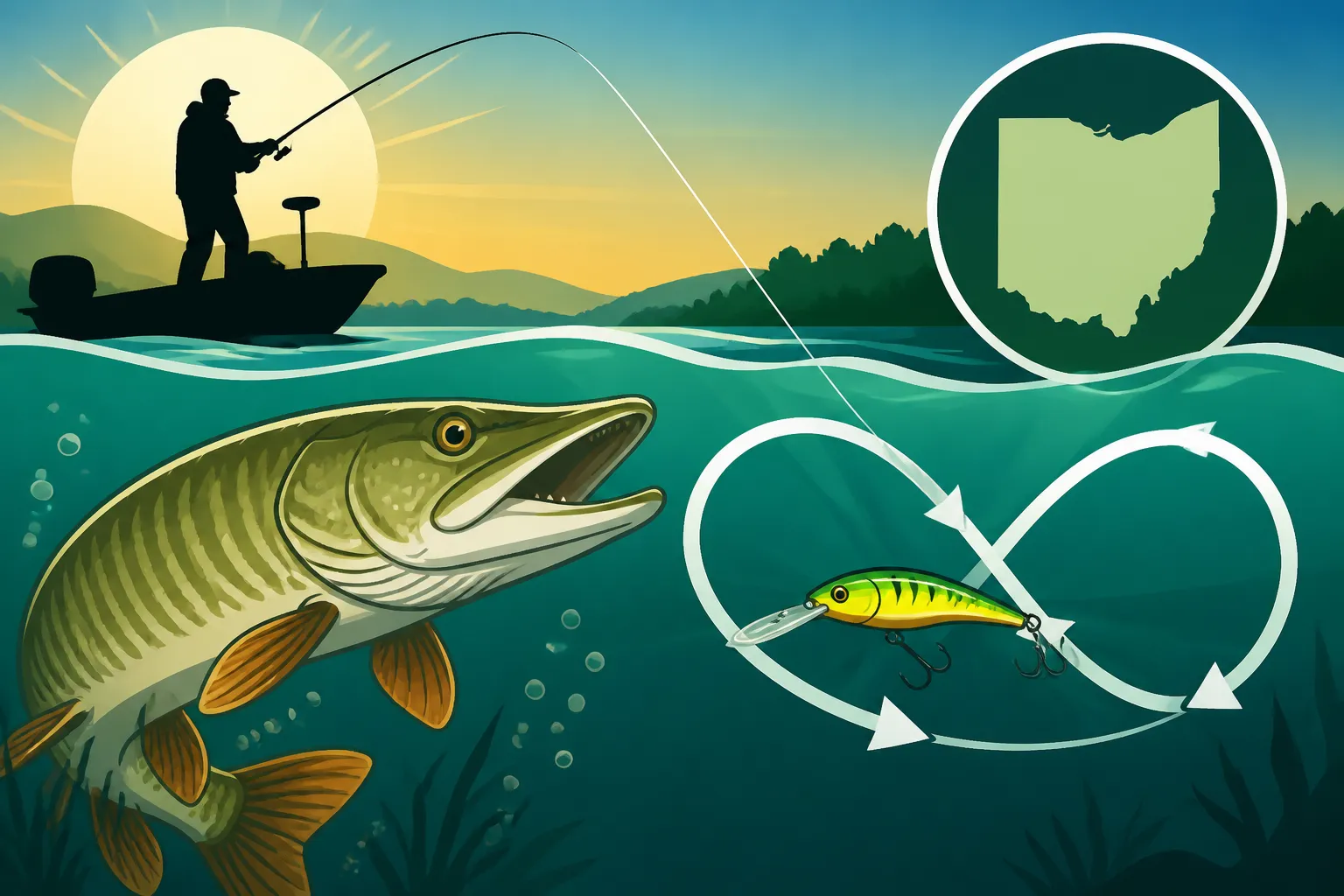
At its core, the figure-eight retrieve is exactly what it sounds like: a continuous, sweeping motion of your fishing rod and lure in the shape of a figure eight, or sometimes a large "L" or "C," right alongside your boat. Instead of pulling your lure straight up out of the water when it hits the boat, you plunge your rod tip into the water, typically about 12-18 inches deep, and begin to "draw" large, smooth figures with the rod tip.
The goal is to keep the lure moving fluidly, without interruption, mimicking an erratic baitfish. The motion should be wide enough to give the muskie room to maneuver and strike, usually extending out from the boat a few feet. It's a dance between you and the fish, an intense staredown where the angler maintains constant tension and focus, anticipating the explosion that could happen at any second. Remember, the key is continuity and a natural flow, making sure the lure never breaks the surface or pauses.
Mastering the Technique: Step-by-Step Execution
Executing a proper figure-eight isn't just about waving your rod around. It requires precision, focus, and a deep understanding of what the muskie is reacting to. It’s a technique that becomes second nature with practice, but initially, it needs deliberate attention to detail to make sure you’re not making common mistakes.
The Setup: Before You Start the Figure-Eight
The preparation for a successful figure-eight actually begins well before your lure reaches the boat. As your lure approaches, maintain a steady retrieve, keeping your eyes peeled for any signs of a follow. Muskie often appear seemingly out of nowhere, so don't be caught off guard. When the lure is about a rod's length from the boat, start slowing your retrieve slightly, preparing for the transition.
Crucially, as the lure gets within a foot or so of your boat, do not lift your rod tip out of the water. Instead, plunge the rod tip down into the water, usually 12 to 18 inches deep, parallel to the boat. This ensures the lure remains submerged and continues its forward momentum. You want to maintain line tension and be ready to instantly shift into the sweeping motion. Your body position is also important; stand firm, legs spread for balance, and ensure you have enough room to swing your rod freely without hitting anything or anyone.
Executing the Figure-Eight: Motion and Speed
Once your rod tip is submerged and the lure is at the side of the boat, it's time to initiate the actual figure-eight. Start by making a wide, smooth sweep, often an "L" shape or a large half-circle, moving the rod tip away from the boat and then back towards it, creating the first loop of your "8." The size of your "8" should generally be generous, perhaps 4-6 feet in diameter, allowing plenty of room for a large muskie to turn and engulf the lure.
Varying your speed and direction slightly can be incredibly effective. Sometimes a smooth, consistent pace works best; other times, a sudden acceleration or a tighter turn can trigger that instinctual strike. The key is to watch the fish. If it's following intently but not striking, try a slightly faster, more erratic motion. If it seems hesitant, a slower, smoother turn might entice it. Make sure your body turns with the rod, keeping the motion fluid and powerful. For specific actions, techniques like a well-executed How to Work a Jerkbait for Ohio Muskie or a perfectly presented How to Fish a Bucktail for Muskie often transition seamlessly into a figure-eight.
The Critical Turn and Follow-Through
The "turns" in your figure-eight are arguably the most critical points. As you complete one half of the "8" and transition into the next, this change in direction often mimics a panicked baitfish trying to escape, and it’s frequently when the muskie commits. Make these turns sharp but smooth, keeping the lure moving without snagging on the boat or motor. Keep your eyes glued to the muskie throughout the entire process. You need to see its mouth open, its fins flare, its body commit to the strike.
Once the muskie strikes, don't set the hook with a violent upward snap like you might for a bass. Muskie mouths are incredibly hard and bony. Instead, perform a "sweep set." This means continuing the forward motion of your rod, perhaps a long, powerful sweep to the side, maintaining constant pressure and driving the hooks home. Your follow-through should be aggressive and decisive. After a powerful sweep, maintain tension and begin to work the fish, but be ready for it to make another run, especially if it didn’t fully commit on the first pass.
Variations and Advanced Tips for Ohio Muskie
The figure-eight isn't a one-size-fits-all maneuver. Experienced muskie anglers in Ohio know how to adapt their technique to the lure they're throwing, the mood of the fish, and the specific conditions of the day. It’s about being versatile and knowing when to tweak your approach.
Adapting to Different Lures and Conditions
The type of lure you're using will significantly influence how you execute your figure-eight. A large bucktail, for instance, will have more drag and require a wider, more powerful sweep to keep its blades spinning. Crankbaits and jerkbaits, especially those with aggressive diving lips, might require you to really plunge your rod tip deep to maintain their running depth. Understanding your lure's unique action and adapting your figure-eight to complement it is crucial. Many anglers find high-quality muskie lures on platforms like Amazon, offering a vast selection for every condition.
Consider the muskie’s size and aggression, too. A smaller, more aggressive muskie might be triggered by a tighter, faster "8," while a true giant might prefer a slower, wider, more deliberate presentation. If the water is particularly clear, you might need to make larger, more encompassing turns to keep the lure in the muskie’s strike zone without spooking it. Wind, current, and even boat traffic can also impact how you need to maneuver your lure and your boat during the retrieve. Familiarize yourself with the Best Lures for Ohio Muskie and how each behaves at the boat side.
Reading the Muskie: When and How to Strike
The true art of the figure-eight lies in your ability to read the muskie's body language. Is it a "hot" muskie, actively pursuing with flared gills and locked-on eyes? Or is it a "curious" follower, just casually inspecting your lure? If the muskie is hot, often a sudden acceleration or a sharp, unexpected turn will trigger the strike. For a curious fish, a slower, more deliberate, almost teasing presentation might be more effective. The goal is to aggravate them into striking.
The moment of the strike is chaotic, but your reaction needs to be controlled. Resist the urge to yank the rod back immediately. Wait until you feel the weight of the fish and see the lure disappear into its mouth. Then, apply that powerful sweep set. You need to drive those large, heavy-gauge hooks deep into the muskie's bony maw. Learning how to properly set the hook is a skill in itself, often compared to a modified version of how you might How to Set the Hook on a Soft-Biting Walleye, but with much more force.
Safety First: Gear and Precautions
Muskie fishing, especially at the boat, can be exhilarating but also dangerous if you're not prepared. These fish are powerful, equipped with razor-sharp teeth, and often thrash violently when hooked close to the boat. Always have the right gear easily accessible. A long-handled, large-hoop net like those from Frabill or Beckman is essential for safely landing and securing the fish. You can often find great deals on these essential tools on Amazon.
Beyond the net, a sturdy pair of long-nosed pliers or jaw spreaders, and heavy-duty bolt cutters or hook removers, are non-negotiable for hook removal. Never try to unhook a muskie with your bare hands. Eye protection is also highly recommended, as hooks can snap or lures can become projectiles. Many seasoned anglers also switch to single, barbless hooks on their lures to facilitate easier and safer releases, prioritizing the well-being of these magnificent creatures. Always remember to quickly and safely handle your catch, following guidelines like those found in How to Handle and Release an Ohio Muskie. For those looking for the right tools, check out resources like Best Landing Net for Ohio Muskie Fishing.
Common Mistakes and How to Avoid Them
Even experienced anglers can sometimes falter in the heat of the moment, especially when a monster muskie is circling the boat. Recognizing and consciously avoiding these common pitfalls will significantly increase your success rate with the figure-eight retrieve.
Lifting the Lure Too Soon
This is, by far, the most common and most detrimental mistake anglers make. It’s an almost involuntary reaction: the lure hits the boat, and your brain tells you to lift it out of the water. But for muskie, that’s often the exact moment they decide to strike! By lifting the lure, you’re pulling it away from the fish at the crucial moment, effectively ending the presentation just as it might have committed.
To combat this, develop the habit of plunging your rod tip into the water before the lure even reaches the boat. Practice this motion even when you don't have a fish following, making it muscle memory. Consciously tell yourself, "Don't lift, plunge!" Every second your lure is in the water and moving in a figure-eight is an opportunity. Don't let anticipation or habit rob you of that chance.
Inconsistent Speed or Motion
Another common error is performing a figure-eight that is jerky, uneven, or inconsistent in speed. A muskie that has followed your lure across a significant distance is looking for a continuous, fleeing presentation. Any sudden, unnatural stop, start, or change in rhythm can be a red flag, causing the fish to lose interest or become spooked.
Strive for a smooth, fluid, and uninterrupted motion. Imagine you're drawing a perfect '8' with your rod tip. While varying speed and direction can be effective, it needs to be done with purpose and control, not as a result of hesitation or awkwardness. Practice the motion at home, get comfortable with the feel, and then apply it on the water. A consistent, confident retrieve speaks volumes to a muskie.
Not Being Prepared for the Strike
The strike of a muskie at the boat is explosive and sudden. It happens in an instant, often without warning, turning a calm moment into a flurry of activity. Many anglers, even seasoned ones, can be caught off guard, leading to missed hook-sets or fumbled opportunities. The shock and surprise can cause you to react incorrectly.
Always fish with the expectation that a strike will happen on every figure-eight. Maintain intense focus on your lure and any following fish. Keep your rod in a position where you can immediately sweep-set. Have your net and release tools ready and within arm's reach. Don't be chatting with a buddy or looking away from the water during this critical part of the retrieve. The moment a muskie opens its mouth, your heart will race, but your actions must remain calm and decisive. Being prepared mentally and physically is paramount.
Where and When to Employ the Figure-Eight in Ohio
Ohio offers some fantastic muskie fishing opportunities, and knowing where and when to apply the figure-eight retrieve can significantly boost your chances of success. It's a versatile technique that shines in specific locations and under certain conditions.
Prime Ohio Muskie Waters
Ohio is home to several excellent muskie fisheries, each with its own character. Lakes like Clear Fork Reservoir, Leesville Lake, West Branch Reservoir, and Alum Creek Lake are renowned for their muskie populations, often producing trophy-sized fish. Piedmont Lake and Lake Dillon also offer fantastic opportunities. In these waters, the figure-eight is a daily ritual for dedicated muskie anglers. For a deeper dive, explore Best Ohio Lakes for Muskie Fishing Overall or the comprehensive Ohio Muskie Fishing Guide.
The figure-eight is especially effective around prominent structure. Think weed lines, fallen timber, rock piles, drop-offs, and even boat docks. Muskie often relate to these areas, using them as ambush points. When you're retrieving your lure along the edge of a weed line, for example, and a muskie follows, the figure-eight gives you a chance to keep the lure in its "comfort zone" near that structure, often drawing the strike. It’s a great way to probe those last few feet of water around cover.
Seasonal Considerations
While muskie can be caught year-round in Ohio (within regulation), different seasons bring different muskie behaviors that influence the effectiveness of the figure-eight. Spring sees muskie shaking off winter lethargy, often feeding aggressively in shallower waters. Summer means they might move deeper, but the figure-eight is still crucial for those follow-ups around thermoclines or deep structure, especially during dawn and dusk.
Fall, however, is often considered the prime time for muskie fishing, and certainly for the figure-eight. As the water cools, muskie enter a "feeding frenzy" to bulk up for winter, becoming incredibly aggressive. This is when you'll see some of the most intense follows and violent boat-side strikes. For more on seasonal patterns, check out When Muskie Fishing Peaks in Ohio. Even in the cold, clear water of late fall, a well-executed figure-eight can often convince a hesitant muskie.
Gear Considerations for Figure-Eighting
Having the right equipment makes a huge difference in executing a powerful and effective figure-eight. A long, heavy-action rod, typically 8 to 9 feet in length, is essential. The extra length provides leverage, allowing you to make wide, sweeping motions while keeping the rod tip submerged. It also helps control the fish once it's hooked. Pair this with a robust baitcasting reel spooled with heavy braided line, usually 80-100 lb test, to handle the stress of powerful strikes and large lures. Many anglers find reliable muskie gear, from rods to reels, available through online retailers like Amazon.
A strong fluorocarbon or wire leader is also non-negotiable to prevent bite-offs from those toothy critters. The leader should be at least 12-18 inches long, connected to your main line with a strong knot or connection. The right gear not only helps you perform the figure-eight effectively but also ensures you have the power to control and land a big muskie once it commits. For detailed recommendations, consult our guide on the Best Rod and Reel Setup for Ohio Muskie.
| Lure Type | Recommended Figure-Eight Motion | Key Considerations |
|---|---|---|
| Bucktails | Wide, smooth, consistent sweeps | Maintain blade spin; vary speed slightly to create flash and vibration. |
| Crankbaits | Deeper rod tip, wider turns | Keep diving lip engaged; vary retrieve speed to make it "wiggle" erratically. |
| Jerkbaits | Erratic, stop-and-go with tight turns | Mimic wounded bait; use sharp rod snaps followed by pauses in the figure-eight. |
| Glide Baits | Smooth glides with sudden changes | Emphasize side-to-side action; subtle rod tip movements for maximum effect. |
| Soft Plastics | Natural, undulating motions | Keep jig head in constant motion; imitate struggling prey; vary depth. |
Disclaimer
Fishing regulations, license requirements, and local conditions can change. Always consult the latest Ohio Department of Natural Resources (ODNR) fishing regulations booklet or website before heading out on the water. This information is for general guidance and educational purposes only.