Ohio Bass Daily Limit on Inland Lakes
It’s easy to get excited for a day out on the water, rods packed, tackle box ready, only to realize you’re not entirely sure about the daily catch limits for your favorite bass species. The rules can sometimes feel like a maze, especially with different regulations for various lakes and species across Ohio. This comprehensive guide is here to clear up that confusion, detailing the specific daily limits for bass on Ohio's inland lakes and helping you stay compliant while enjoying your fishing adventures.
Understanding Ohio's Inland Bass Regulations
When it comes to fishing for bass in Ohio, especially on our inland lakes, it’s not always a one-size-fits-all situation. While there are statewide regulations that apply to most waters, individual lakes can sometimes have unique rules designed to manage their specific fisheries. This variation can be a real head-scratcher, leaving anglers wondering if their planned catch is actually within legal bounds.
Statewide Daily Limit for Bass Explained
For the vast majority of Ohio's inland waters, the Ohio Department of Natural Resources (ODNR) has a standard daily bag limit for what they collectively call "black bass." This category includes the ever-popular largemouth bass, the feisty smallmouth bass, and occasionally, spotted bass, though spotted bass aren't as prevalent in Ohio as their cousins.
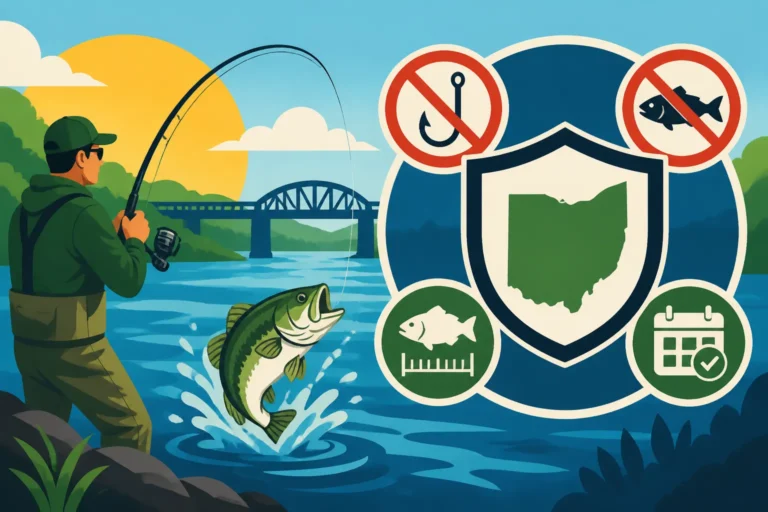
The statewide regulation dictates that you can keep a maximum of six (6) black bass per day. This isn't six of each species; it's a combined total. So, if you catch three largemouth and three smallmouth, you've hit your daily limit. It's crucial to remember this combined limit to avoid inadvertently breaking the rules. Along with the daily bag limit, there's also a statewide minimum length limit of 12 inches for black bass. This means any bass you intend to keep must measure at least 12 inches from the tip of its snout to the end of its tail, pressed together. This regulation is in place to allow younger fish to grow and reproduce, ensuring healthy bass populations for future generations of anglers. You can dive deeper into the general rules with our guide on Ohio Fishing Regulations Every Angler Should Know.
Why Bag Limits Matter for Bass Conservation
Bag limits aren't just arbitrary numbers set by a governing body; they are a vital tool in fisheries management, designed with the long-term health of our fish populations in mind. Imagine if every angler kept every bass they caught, regardless of size or number. Our lakes would quickly become depleted, and the quality of fishing would decline dramatically.
Conservation through bag limits helps in several key ways:
- Preventing Overfishing: This is the most obvious benefit. By limiting the number of fish an angler can keep, the ODNR helps ensure that enough fish remain in the system to reproduce and maintain a stable population.
- Protecting Spawning Stock: Minimum length limits, in particular, protect younger fish, allowing them to reach sexual maturity and contribute to the next generation of bass. This is particularly important during critical periods, like the bass spawning season, which generally occurs in spring when water temperatures rise.
- Maintaining a Healthy Age Structure: A diverse age structure, with fish of various sizes, contributes to a more resilient ecosystem. Bag limits, alongside length limits, help ensure a balance, preventing one age class from being completely harvested.
- Enhancing the Fishing Experience: Ultimately, these regulations lead to better fishing for everyone. Healthy populations mean more opportunities to catch quality fish, whether you're keeping them for dinner or practicing catch and release. It’s all about sustainable angling.
Specific Bass Regulations for Ohio's Inland Waters
While the statewide regulations provide a solid baseline, Ohio's diverse array of inland lakes means there are often specific nuances for different bodies of water. Understanding these detailed rules is paramount for a successful and compliant fishing trip.
Largemouth Bass Regulations for Inland Lakes
The largemouth bass is arguably Ohio’s most popular freshwater game fish, found in nearly every pond, lake, and slow-moving river throughout the state. As mentioned, the general rule for largemouth bass on inland lakes is a six-fish daily limit with a 12-inch minimum length. This applies to the vast majority of public fishing areas.
However, anglers need to be vigilant and always check the current year’s Ohio Fishing Regulations booklet or the ODNR website. There are instances where a specific lake might have a different regulation. For example, some smaller, intensively managed lakes might have a slot limit, where fish within a certain size range must be released, but fish smaller or larger than that range can be kept. Or, a lake might have no minimum length limit at all, allowing anglers to keep bass of any size up to the daily bag limit. These special regulations are usually designed to address specific population dynamics or management goals unique to that body of water.
Smallmouth Bass Regulations for Inland Lakes
Smallmouth bass, known for their powerful fights and preference for clearer, cooler water, are also subject to the statewide daily limit of six fish and a 12-inch minimum length on most inland lakes. You'll often find smallmouth in deeper, rockier lakes with good current or oxygen levels, or in certain reservoirs.
Similar to largemouth, specific lakes might have deviations. For instance, a lake that is primarily managed for smallmouth might have a higher minimum length limit to promote the growth of trophy-sized fish, or even a reduced daily bag limit to conserve the population. Knowing How to Tell a Largemouth From a Smallmouth Bass is not just academic; it's essential when regulations might differ or when you're trying to meet a specific limit. Always confirm the regulations for your chosen fishing spot before you cast your line.
Exceptions and Special Regulations on Certain Lakes
This is where things can get a little tricky, but it’s crucial to pay attention. Ohio has a number of inland lakes and reservoirs that operate under special regulations for bass. These exceptions are often noted directly on signage at public access points, in the annual Ohio Fishing Regulations booklet, and on the ODNR website.
Here are some hypothetical examples of how regulations might differ (always check current ODNR data for actual rules):
- No Minimum Length Limit: On a lake like Knox Lake, for example, you might find that while the six-fish daily limit still applies, there's no minimum length limit for bass. This could be a management strategy to encourage harvest of smaller fish, which helps to reduce competition and allows the remaining bass to grow larger faster.
- Increased Minimum Length Limit: Conversely, a lake known for producing trophy-sized bass, perhaps Piedmont Lake for its muskie but also potentially its bass, might have an increased minimum length limit, say 15 or 18 inches, to protect larger breeding stock and foster a "big fish" reputation.
- Slot Limits: A slot limit is a bit more complex. For instance, on a lake like Deer Creek Lake, a regulation might state that all bass between 12 and 15 inches must be immediately released, but you can keep fish under 12 inches and over 15 inches, up to the daily limit. This encourages anglers to release medium-sized, reproductively active fish, while allowing harvest of smaller fish (to reduce competition) and larger, older fish (which might be less reproductively viable but make great table fare).
It’s your responsibility as an angler to be aware of these localized rules. Before heading out, especially to a new-to-you lake, take a few minutes to look up its specific regulations. This simple step can save you from potential fines and ensures you’re contributing to sustainable fishing practices. The ODNR website is your best friend here, or pick up a hard copy of the regulations wherever fishing licenses are sold. Many anglers will even keep a digital copy of the regulations on their phone or tablet for quick reference on the water, easily accessible even if you purchased some gear from Amazon for your trip.
Factors Influencing Bass Limits and Best Practices
Understanding the numbers is just one part of the equation. To be a truly effective and responsible bass angler, you need to consider how various factors, from the time of year to your angling approach, can impact your success within the established limits.
Seasonal Considerations for Bass Anglers
Bass behavior changes dramatically throughout the year, and smart anglers adjust their strategies accordingly. While the daily limits themselves generally remain constant across seasons (unless specified by a special regulation), the likelihood of hitting that limit, and the types of bass you encounter, can vary.
- Spring: As water temperatures rise, bass move into shallower waters for their spawning ritual. This is often a prime time to catch a lot of fish, including larger ones as they prepare to spawn. Anglers targeting bass during this period must be extra mindful of their impact, as disturbing spawning beds can negatively affect reproductive success. While catch and release is always a good practice, it's particularly important during the spawn, even if you are within your legal limit.
- Summer: Bass typically move to deeper, cooler water or seek refuge in heavy cover as summer progresses. Early mornings and late evenings often offer the best opportunities. During the heat of the day, they might be lethargic, making it harder to fill your limit.
- Fall: As water temperatures drop and baitfish schools gather, bass enter a "feeding frenzy" to bulk up for winter. This can be an incredibly productive time for anglers, often yielding both good numbers and larger fish. It's a great time to practice Best Ohio Bass Fishing Techniques that involve chasing baitfish.
- Winter: Bass become less active in cold water, often holding in deep-water structures. Ice fishing for bass is possible on some inland lakes, but it requires specialized techniques and equipment. Catch rates are typically lower, so hitting the daily limit is less common.
No matter the season, remember that bass are a precious resource. Consider what you truly need for a meal versus what you could release to fight another day.
Responsible Angling: Catch and Release within Limits
Even when you know the daily limit, a crucial part of being a good steward of our fisheries is practicing responsible angling. This includes understanding when to keep a fish and when to release it. Many anglers, especially those targeting trophy bass, practice catch and release exclusively.
Here's how to ensure you're doing your part:
- Proper Handling: If you plan to release a fish, handle it as little as possible. Wet your hands before touching the fish to protect its slime coat, which is vital for disease prevention. Support its body horizontally, avoiding vertical holds by the jaw if it's a large fish, as this can damage its internal organs.
- Quick Release: Have your camera ready if you want a photo, but minimize the time the fish is out of water. Get it back into the water quickly and allow it to recover before letting it swim away.
- Barbless Hooks: Consider using barbless hooks, or crimping down the barbs on your hooks. This makes hook removal much easier and less damaging to the fish, significantly increasing its chances of survival.
- Know When to Keep: If you’re keeping fish for dinner, only keep what you and your family will realistically eat. There’s no need to harvest your entire limit if you won't consume it all. Furthermore, if a fish is deeply hooked or severely injured, it’s often more humane to keep it (if it's legal size and you're within your limit) than to release it to likely die.
Remember, the goal is to enjoy the sport today while ensuring it's vibrant for tomorrow. Many resources are available online to learn more about fish care and proper catch and release techniques.
Essential Gear for Bass Fishing within Limits
Having the right gear isn't just about catching fish; it's also about managing your catch responsibly and staying within legal limits.
- Measuring Device: A reliable measuring board or tape measure is absolutely non-negotiable for bass fishing in Ohio. Since a 12-inch minimum length limit applies to most inland waters, you need to be able to accurately measure your catch. Don’t just guess! A flexible measuring tape or a dedicated fish ruler, often sold for around $10-$20 on Amazon, can save you from a costly mistake.
- Weighing Scale: While not strictly required for daily limits, a digital scale can be incredibly useful for bragging rights and tracking personal bests, especially if you’re into the challenge of catching a true trophy bass.
- Net with Rubberized Mesh: If you plan on keeping bass, a good landing net makes it easier to bring the fish into your boat or onto shore. Opt for nets with rubberized, knotless mesh. This type of mesh is much gentler on fish, reducing damage to fins and slime coat, which is important whether you're keeping the fish or releasing it.
- Cooler and Ice: For any fish you intend to keep, proper storage is vital. A cooler filled with ice will keep your catch fresh and prevent spoilage. Never just toss fish into a bucket of warm water.
- Appropriate Tackle: Using the right Best Lures for Ohio Fishing and tackle can also influence your ability to target fish of a certain size. For instance, larger baits might deter smaller fish, helping you selectively target those above the minimum length limit.
Being prepared with the right tools demonstrates respect for the regulations and the fish themselves. It makes the entire experience more enjoyable and responsible.
Enforcement and How to Stay Compliant
Nobody wants to have their fishing trip cut short by a wildlife officer, or worse, face fines and penalties. Understanding how regulations are enforced and making it a habit to check current rules are essential steps for every Ohio angler.
Penalties for Violations
Fishing without a license or exceeding bag and length limits are serious offenses in Ohio. Wildlife officers, who are highly trained and have full law enforcement authority, patrol our lakes and rivers regularly. They are there to protect our natural resources and ensure fair play among anglers.
If you’re caught violating fishing regulations, the consequences can be significant:
- Fines: The most common penalty is a monetary fine. These fines can vary depending on the severity of the offense and whether it’s a first-time or repeat violation. For example, Ohio Wildlife Officer Fishing Violation Fine Schedule outlines specific penalties, and an illegally harvested fish might carry a restitution value on top of the base fine.
- Court Appearances: Many violations will require a mandatory court appearance. This means taking time off work and potentially incurring court costs, which can quickly add up.
- License Revocation: Repeat offenders, or those committing serious violations, risk having their fishing privileges suspended or even permanently revoked. Imagine not being able to enjoy fishing in Ohio for years!
- Confiscation of Gear: In some cases, officers may confiscate illegally caught fish, and sometimes even fishing gear, boats, or vehicles involved in the violation.
These aren’t just scare tactics; they are real consequences designed to deter illegal activity and protect the state's valuable fisheries. A simple check of the regulations beforehand is always preferable to a run-in with the law. Knowing What Happens If You Fish Without a License in Ohio is just as important as knowing the bass limits.
How to Confirm Current Regulations
The best defense against unintentional violations is knowledge. Regulations can and do change, typically on an annual basis. What was legal last year might not be this year, or a special regulation for a specific lake might have been added or removed.
Here's how you can always ensure you have the most up-to-date information:
- Ohio Fishing Regulations Booklet: Every year, the ODNR publishes a comprehensive fishing regulations booklet. These are available for free wherever fishing licenses are sold (like bait shops, sporting goods stores, and many county clerk offices). You can also find them online as a downloadable PDF on the official ODNR website. It's wise to grab a new one each year, or at least check the digital version.
- ODNR Website: The official Ohio Department of Natural Resources website is an invaluable resource. They typically have a dedicated section for fishing regulations, which is updated promptly with any changes. A quick search for "Ohio fishing regulations" will usually lead you straight there.
- Local Bait Shops: The folks who run your local bait and tackle shop are often incredibly knowledgeable about the specific regulations for nearby lakes. Don’t hesitate to ask them for advice, especially if you're fishing a body of water for the first time. They might even have local tips on Best Time of Year to Fish Lake Erie for Walleye or Best Lakes for a Guided Ohio Bass Trip!
- Signs at Public Access Points: Many state parks, wildlife areas, and public boat launches will have signs posted detailing the specific regulations for that body of water. Always take a moment to read these, as they will often highlight any special rules or exceptions to the statewide limits.
Making it a habit to confirm the rules before each trip is a mark of a truly responsible and respectful angler. Don't rely on old information or hearsay. Take the extra minute to verify, and you’ll ensure your time on the water is enjoyable and completely free of worry. You can even find things like official fishing licenses on Amazon through authorized resellers, or gear up with a new set of waders if you’re planning on doing some wade fishing for bass in shallower areas.
Disclaimer
The information provided in this guide is intended for general informational purposes only and is subject to change. While we strive to provide accurate and up-to-date information, fishing regulations can be complex and are regularly updated by the Ohio Department of Natural Resources (ODNR). It is the angler's sole responsibility to consult the official, current Ohio Fishing Regulations booklet or the ODNR website (ohiodnr.gov) before engaging in any fishing activity to ensure compliance with all applicable laws and regulations. Failure to do so may result in penalties.