How Fast Muskie Grow in Their First Year
It's incredibly exciting to think about the powerful muskie, Ohio's apex freshwater predator, and ponder just how quickly these magnificent fish develop from tiny hatchlings into the formidable sportfish we all love to pursue. Many anglers wonder, often with a mix of awe and practical curiosity, what kind of growth spurt these fish experience in their crucial first year. This guide will dive deep into the fascinating initial growth phase of Ohio's muskie, helping you understand the factors that drive their development and what you can realistically expect to see.
From Tiny Larvae to Voracious Predators: The Muskie's First Year Journey
The life of an Ohio muskie begins much smaller and more vulnerable than most anglers imagine. They don't just appear as mini versions of the toothy giants we chase; their early life is a rapid transformation driven by instinct and environment. Understanding this journey can give you a deeper appreciation for every muskie you encounter.
The Hatch and Fry Stage
Muskie typically spawn in the shallow, vegetated areas of lakes and reservoirs in spring, often when water temperatures are still quite cool. After hatching, the muskie larvae, or fry, are incredibly tiny and delicate, often less than an inch long. For a brief period, they rely on a yolk sac for sustenance, attaching themselves to vegetation or debris to conserve energy. This initial stage is fraught with danger; predation from other fish, birds, and even insects is a constant threat, and fluctuating water levels or harsh weather can decimate entire broods.
Once their yolk sac is absorbed, these tiny muskie fry become active hunters. Their diet quickly shifts to microscopic organisms, then small insect larvae and zooplankton. This transition is critical because it marks the start of their active feeding period. The availability of abundant, easy-to-catch prey during this time is paramount for their survival and initial growth. Think of it as their first critical growth spurt, where every calorie counts.
Becoming a Fingerling
As muskie fry consume more food, they rapidly grow into what we call fingerlings. This term generally refers to fish that are roughly finger-sized, typically a few inches long. This stage is where their predatory instincts truly start to kick in. They transition from eating primarily invertebrates to targeting other small fish. This shift to a piscivorous (fish-eating) diet is a game-changer for their growth rate.
The speed at which a muskie fingerling can find and consume small fish is a huge determinant of its early development. In waters rich with schools of minnows, young panfish, or other baitfish, a muskie fingerling can grow at an astonishing pace. Conversely, in waters with scarce forage, growth can be stunted. It's a competitive world out there, and the muskie's aggressive nature and quick growth are essential tools for survival. You might find resources on Amazon detailing early muskie development or even specific rearing practices that highlight this crucial feeding transition.
Key Factors Influencing Muskie Growth in Their First Year
While muskie are genetically programmed for rapid growth, their environment plays a colossal role in how much they actually achieve during that pivotal first year. It's a complex interplay of biology and external conditions.
Water Temperature and Oxygen Levels
Like all cold-blooded fish, a muskie's metabolism is directly linked to water temperature. Optimal water temperatures allow them to digest food efficiently and grow quickly. In Ohio, muskie thrive in a range of temperatures that support robust metabolism, especially during the warmer months of late spring, summer, and early fall when their feeding is most active. Consistent, warm (but not excessively hot) water allows for continuous feeding and growth.
However, extreme temperatures, either too cold or too hot, can slow their metabolism, reduce their appetite, and increase stress. Poor oxygen levels, often a byproduct of high temperatures or excessive aquatic vegetation decomposition, can also severely impact their ability to thrive. Lakes and rivers that maintain stable, well-oxygenated conditions, especially in their shallower spawning and nursery grounds, give young muskie a significant advantage. Ohio Fishing Season Calendar can help you understand these seasonal changes.
Forage Availability and Quality
This is arguably the single most critical factor in a muskie's first-year growth. Muskie are opportunistic predators, and their diet evolves quickly. Initially, they need easily digestible small insects and zooplankton. As they grow, they require an abundant supply of small baitfish such as minnows, shiners, or even juvenile panfish like bluegill or crappie. The more high-quality protein they can consume, the faster they will grow.
Waters that support a healthy baitfish population, not just in terms of numbers but also in species diversity, will inevitably produce faster-growing muskie. Think of a thriving ecosystem where the muskie doesn't have to work too hard to find its next meal. Lakes that have a good balance of predator and prey species are often the ones where anglers report seeing exceptionally healthy, fast-growing muskie. Ohio Muskie Fishing Guide provides insights into muskie habitats that often boast excellent forage.
Genetics and Population Density
While environmental factors are crucial, genetics also play a part. Some muskie strains or individuals within a population may simply be predisposed to grow faster or larger due to their genetic makeup. This is something fisheries managers consider when stocking programs are implemented.
Additionally, the density of the muskie population itself can influence individual growth rates. In lakes with a very high density of young muskie, competition for food and habitat can become intense. This increased competition can lead to slower growth rates for all individuals as resources are spread thinner. Conversely, in waters where the muskie population is at a healthy, manageable level, individual fish often have better access to food and space, allowing for more robust growth. Understanding these dynamics is part of what makes fisheries management so fascinating.
Typical First-Year Growth Expectations in Ohio Waters
So, what does all this mean for the actual size of a muskie after its first trip around the sun in Ohio? It's not a one-size-fits-all answer, but we can establish some general ranges based on average conditions found in our state's diverse waterways.
Average Growth Rates
In ideal conditions – meaning stable water temperatures, abundant high-quality forage, and relatively low competition – muskie in Ohio can exhibit impressive growth in their first year. It's not uncommon for a muskie to grow from a tiny fry to a length of anywhere from 8 to 15 inches, or even slightly more, within its first 12 months. Some particularly productive systems might even see fish pushing close to 18 inches in exceptional circumstances.
This initial burst of growth is critical because it helps them quickly escape the "prey" category for many other fish and solidify their position as a predator. Keep in mind that this is an average; a muskie hatched in a smaller, less fertile pond with fewer baitfish might be on the lower end of that spectrum, while one from a vast, rich reservoir could be on the higher end.
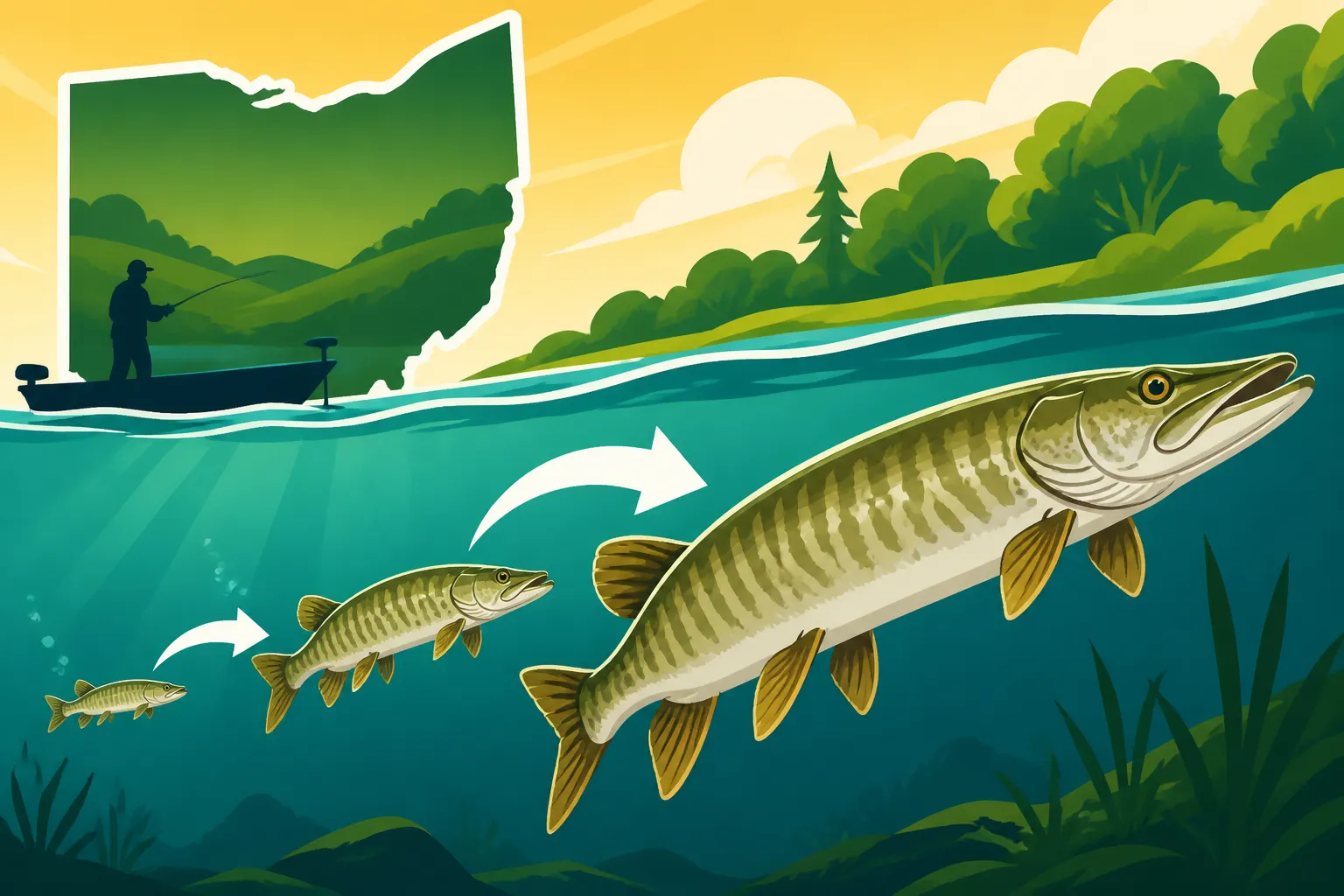
Here's a generalized look at muskie growth stages in their first year:
| Stage | Approximate Length (inches) | Primary Diet | Key Activity/Characteristics |
|---|---|---|---|
| Larvae/Fry | < 1 | Yolk sac, microscopic organisms | Cling to vegetation, very vulnerable |
| Early Fingerling | 1-4 | Zooplankton, insect larvae | Start active hunting, transition to small prey |
| Late Fingerling | 4-8 | Small baitfish, juvenile panfish | Rapid growth phase, strong predatory instincts |
| Yearling | 8-18+ | Fish (minnows, shiners, etc.) | Established predator, continues rapid growth |
These are approximations, of course, but they illustrate the fast track these fish are on.
Ohio's Productive Muskie Lakes and Their Impact
Ohio is fortunate to have some excellent muskie fisheries, and the productivity of these lakes directly correlates to the growth rates of their muskie populations. Lakes like Piedmont, Leesville, West Branch, and Alum Creek are known for producing not only numbers of muskie but also healthy, fast-growing specimens. These bodies of water often have stable temperatures, diverse habitat, and, crucially, a robust forage base of species like gizzard shad, suckers, and various panfish.
Anglers targeting these lakes often encounter muskie that seem to be ahead of the curve in terms of size and condition, even at a young age. It's a testament to the health of the entire aquatic ecosystem. You can learn more about specific water bodies in Best Ohio Reservoirs for Walleye and Saugeye, which often overlap with good muskie habitat, or Alum Creek Lake Muskie Fishing Tips.
Why Understanding Muskie Growth Matters to Anglers
Knowing how fast muskie grow isn't just an academic exercise; it has real-world implications for how we fish, how we think about conservation, and how we manage our expectations on the water.
Conservation and Catch & Release Implications
Muskie are revered sportfish, and many anglers practice catch and release to preserve these populations. Understanding their rapid early growth highlights just how valuable each successfully raised muskie is to the fishery. A muskie that survives its first year and reaches that 8-15 inch mark has overcome significant odds. Protecting these juvenile fish, even if they're not yet "trophy" size, is essential for the future of muskie fishing.
When you're out on the water, even if you accidentally hook a smaller muskie, treating it with care for release is vital. This means using appropriate landing nets that support the fish's body, minimizing its time out of water, and ensuring it's revived before release. Things like a good, large rubberized net (which you can find on Amazon) and specialized release tools can make a huge difference in the survival rate of these young, fast-growing fish. How to Revive a Muskie Before Release offers detailed tips for safe handling.
Informing Fishing Strategies
While you might not be specifically targeting one-year-old muskie (who would, really?), understanding their early growth patterns can inform your overall strategy. For instance, knowing that they rely heavily on dense baitfish populations means focusing your efforts on areas where baitfish are abundant and vulnerable. Think about fishing around weed lines, submerged structure, or creek channels where smaller fish congregate.
Even knowing that cooler, well-oxygenated water is ideal for their metabolism can influence when and where you decide to fish. If you're looking for areas that consistently produce healthy muskie year after year, these are the factors you're looking at, even if subconsciously. When Muskie Fishing Peaks in Ohio often aligns with periods of optimal growth and feeding.
Patience and Realistic Expectations
Finally, understanding muskie growth cycles fosters patience and realistic expectations. A "trophy" muskie pushing 40, 50, or even 60 inches represents many, many years of successful growth and survival. These giants didn't get that way overnight; they survived numerous challenges, consumed countless meals, and grew consistently over a decade or more. The fish you catch today, even a "small" one, could be that future trophy if given the chance to continue its journey. How Big Muskie Get in Ohio Lakes provides more context on just how long that journey can be. Every single one-year-old muskie is a step towards that incredible potential.
Disclaimer
This article is for general informational purposes only and does not constitute professional advice. Laws, prices and regulations vary by location and change over time. Consult a qualified professional for guidance on your specific situation.