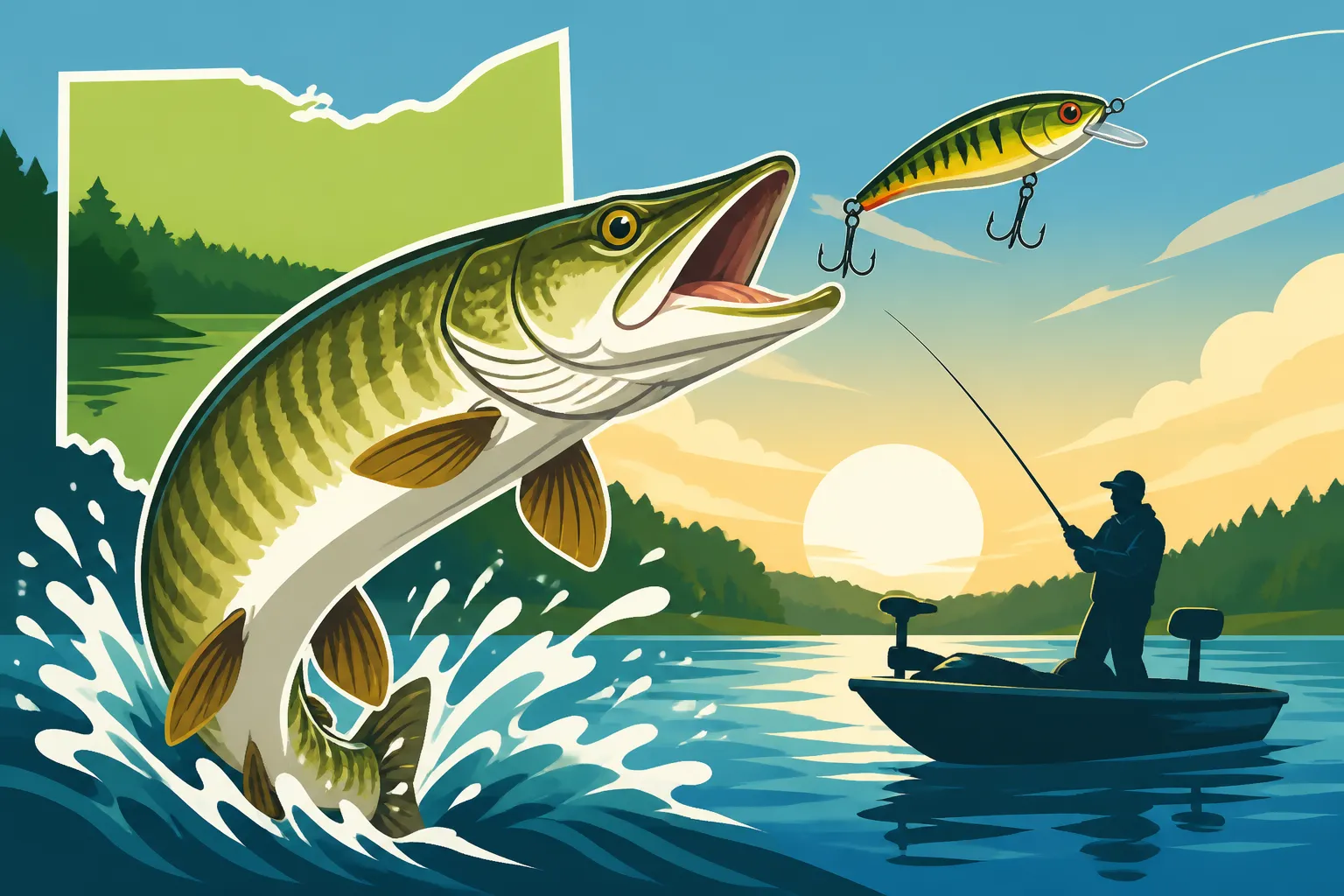
Alum Creek Lake Muskie Fishing Tips
Muskie fishing at Alum Creek Lake can feel like chasing a ghost – these elusive giants demand serious dedication, the right approach, and a whole lot of patience. It’s easy to get discouraged when hours turn into days without a strike, but with the right knowledge, you can significantly increase your chances of tangling with one of Ohio’s most thrilling freshwater predators. This guide is dedicated to equipping you with the specific Alum Creek Lake muskie fishing tips you need to turn those frustrating outings into triumphant tales.
Understanding Alum Creek Lake for Muskie
Alum Creek Lake, nestled north of Columbus, isn't just a pretty face; it's a premier muskie fishery in Ohio, regularly producing impressive catches. But to consistently find success here, you really need to understand the nuances of the lake itself and how muskie interact with its unique environment. It’s not enough to just cast a big lure; you need to understand where and why that lure should be.
Lake Characteristics and Muskie Habitat
Alum Creek Lake is a massive reservoir, sprawling over 3,387 acres with a good mix of deep basins, extensive shallow flats, and intricate submerged structures. Its maximum depth hovers around 60 feet, but you’ll find plenty of areas ranging from 10 to 30 feet, which are often key for muskie. What really sets Alum Creek apart, and makes it such a muskie magnet, is its rich forage base. The lake is absolutely teeming with gizzard shad, various carp species, and ample suckers, providing a buffet that allows muskie to grow to impressive sizes.
When you're out on the water, pay close attention to the standing timber, which is particularly prevalent in the northern arms of the lake. These submerged trees provide excellent ambush points for muskie, offering both cover and shade. Old roadbeds, which crisscross the lake floor from its pre-impoundment days, create subtle yet significant breaks in the bottom contour. Muskie will often patrol these areas, especially where they intersect with channels or drop-offs. Submerged humps, sometimes just a few feet higher than the surrounding bottom, can also hold fish, acting as underwater islands where baitfish congregate. Don't overlook weed lines, especially coontail and pondweed beds, which provide dense cover for both baitfish and the muskie hunting them. Understanding these habitat preferences is critical for your success, as it helps you narrow down the vastness of the lake into manageable, fishable zones.
Prime Seasons for Alum Creek Muskie
Timing is everything when it comes to muskie fishing, and Alum Creek is no exception. While these fish can be caught year-round, certain seasons offer distinct advantages and require different strategies. Knowing when and where to focus your efforts can drastically improve your odds. If you're looking for a general overview, our Ohio Muskie Fishing Guide has broader insights, but for Alum Creek specifically, let's dive into the details.
Spring, particularly from late April through May, marks the post-spawn period when muskie are actively recovering and feeding. Water temperatures are rising, and these fish will often move into shallower bays and flats, especially those with warmer water, seeking easy meals. This is an excellent time for targeting them with slower presentations or suspending jerkbaits. As summer progresses, the muskie tend to move to deeper, cooler water, often relating to the thermocline if one forms, or suspending over deep main lake basins near baitfish schools. Night fishing can be incredibly effective during the summer months when the sun is off the water and muskie are more inclined to move into shallower feeding areas.
However, many seasoned anglers consider fall to be the absolute prime time for Alum Creek muskie. From September through November, as water temperatures drop, muskie enter a "feeding frenzy" phase. They are bulking up for winter, and their metabolism is in high gear. This means aggressive strikes and a willingness to chase larger baits. Big bucktails, oversized crankbaits, and glide baits are particularly effective during this period. The fish will be more active and less hesitant to strike. Keep in mind that these general patterns can shift based on specific weather conditions, cold fronts, and baitfish movements, so always stay flexible and observant when you’re out on the water.
Essential Gear and Tackle for Alum Creek Muskie
Muskie fishing isn't for the faint of heart, and it's certainly not for light tackle. These fish are powerful, unpredictable, and can put a serious strain on your equipment. Trying to land a trophy muskie on insufficient gear is a recipe for broken lines, lost lures, and heartbreak. Investing in the right tools isn't just about catching fish; it's also about ensuring you can safely handle and release these magnificent creatures.
Rods, Reels, and Line
When it comes to muskie fishing at Alum Creek, your rod and reel setup needs to be robust. You'll want a heavy-action baitcasting rod, typically between 8 to 10 feet in length. The longer length helps with casting those heavy muskie lures a significant distance and also provides better leverage when fighting a powerful fish or executing a proper "figure-eight" retrieve at the boat. Brands like St. Croix, Shimano, and Abu Garcia offer excellent muskie-specific rods that can withstand the abuse. Paired with your rod should be a high-quality baitcasting reel with a high gear ratio (something in the 6.0:1 or higher range is often preferred). A fast retrieve allows you to quickly take up slack line, which is critical for hook sets and for keeping up with a surging muskie. Look for reels with strong drags and a large line capacity to handle those long runs.
For line, heavy braided line is non-negotiable. Most Alum Creek muskie anglers opt for 80 to 100-pound test braid. This incredibly strong line provides superior abrasion resistance, minimal stretch for solid hook sets, and the power needed to pull big baits through heavy cover. However, braid is visible, so you’ll always need to tie on a heavy fluorocarbon or wire leader. Fluorocarbon leaders, usually 80 to 130-pound test, offer a balance of stealth and abrasion resistance, which is perfect for most applications. For toothy critters like muskie, a steel or titanium leader might be necessary, especially when using single-strand wire to prevent bite-offs. Ensuring every component of your setup is up to the task will give you the confidence to tackle any muskie that decides to bite. You can find more detail on proper setups in our Best Rod and Reel Setup for Ohio Muskie article.
Top Lures and Baits
Muskie are opportunistic predators, but they can also be incredibly finicky. Having a diverse selection of lures is crucial for adapting to changing conditions and fish moods at Alum Creek. While there are countless options out there, a few categories consistently produce. Bucktails are arguably the most iconic and effective muskie lures. Their pulsating blades and flowing skirts mimic fleeing baitfish, and they come in various sizes and blade configurations. Double-bladed bucktails, especially those with large Colorado or Magnum blades, are particularly popular on Alum Creek for their strong vibration and ability to move a lot of water.
Crankbaits are another cornerstone of any muskie angler's tackle box. You’ll want a mix of deep-diving crankbaits that can reach depths of 15-25 feet for trolling or casting over deeper structure, and shallower running models for targeting weed edges or flats. Colors often depend on water clarity and forage, with natural baitfish patterns (shad, perch) being reliable, and brighter colors (firetiger, chartreuse) excelling in stained water. Jerkbaits, both hard and soft, are excellent for eliciting reaction strikes with their erratic, darting action. Learning How to Work a Jerkbait for Ohio Muskie is a skill that will pay off handsomely. Glide baits, which sashay from side to side with a smooth retrieve, offer a different presentation that can entice hesitant fish. Finally, don't forget large soft plastics like paddle tails or swimbaits, which can be fished slowly or aggressively, mimicking larger prey. Carrying a variety of these lure types, and being willing to experiment, is key to cracking the code on Alum Creek's muskie.
Proven Alum Creek Muskie Fishing Techniques
Catching muskie isn't just about having the right gear; it's about employing the right strategies. These fish are often called "the fish of 10,000 casts," and while that's an exaggeration, it highlights the need for persistence and precision in your techniques. At Alum Creek, you'll want to master both active casting and strategic trolling to cover water and present your lures effectively.
Casting and Retrieval Strategies
Casting for muskie is a physically demanding but incredibly rewarding pursuit. The goal is to efficiently cover water and present your lure to as many potential muskie holding areas as possible. Start by fan casting, systematically working an area from one side to the other, ensuring you hit every piece of structure, every depth change, and every potential ambush point. Don't be afraid to cast right into heavy cover, as muskie are ambush predators and will often hide deep within weeds or submerged timber. Your retrieve speed and cadence are critical. Sometimes a fast, erratic retrieve triggers a strike, while other times a slow, deliberate presentation is what it takes. Experiment with pauses, jerks, and changes in speed until you find what the fish prefer on a given day.
One of the most crucial elements of casting for muskie, especially on a lake like Alum Creek where these fish can follow a lure right to the boat, is the "figure-eight" maneuver. This technique involves tracing a large figure-eight pattern with your rod tip as your lure reaches the end of its retrieve, just beside the boat. Many muskie will follow a lure all the way in but hesitate to strike until this last-ditch effort simulates an escaping baitfish. This final, frantic movement often triggers a reaction strike from a hesitant fish. Mastering the Figure-Eight Retrieve for Muskie Fishing could be the difference between a frustrating follow and a landed trophy. Always be ready to drop your lure back into the water if the fish turns away, sometimes a second chance is all you need. Persistence is your best friend when muskie fishing; keep casting, keep working your lures, and eventually, your efforts will pay off.
Trolling for Alum Creek Muskie
While casting is highly effective, especially when targeting specific structures, trolling can be an incredibly efficient way to cover vast amounts of water and locate active muskie, particularly in larger reservoirs like Alum Creek. Trolling allows you to present multiple lures at different depths and speeds simultaneously, increasing your chances of finding a pattern. This technique is especially productive during the warmer summer months when muskie might be suspended in open water or relating to deeper, expansive structures that are difficult to reach with casting alone.
When trolling, pay close attention to your speed; typically, muskie are targeted at speeds between 2.5 and 5 miles per hour, but this can vary depending on the lure and the fish's mood. Use your electronics to monitor your speed over ground and adjust accordingly. Lure depth is another critical factor. You’ll want a selection of deep-diving crankbaits that can reach specific depths, sometimes with the aid of lead core line or downriggers. Use your fish finder to identify baitfish schools, thermoclines, and submerged features like humps or old roadbeds, and then deploy your lures to run at those precise depths. Alum Creek has many deep points and main lake channels that are ideal for trolling. For those who want to ensure they're hitting the right spots or just starting out, considering an Ohio Muskie Guide Services trip could be invaluable. Experienced guides know the optimal trolling runs and lure combinations for Alum Creek, and a service like FishingBooker can help you find a reputable guide to show you the ropes, saving you years of trial and error. They can connect you with captains who specialize in this specific lake and its muskie patterns.
Safety, Conservation, and Best Practices
Muskie fishing isn't just a sport; it's a passion that demands respect for the fish and the environment. These incredible predators take a long time to grow to trophy sizes, and their survival largely depends on responsible angling practices. Ensuring their well-being is paramount for the future of Alum Creek's muskie fishery.
Muskie Handling and Release
Muskie are notoriously powerful, and their mouth is armed with a formidable array of sharp teeth. Proper handling and release techniques are not just good sportsmanship; they are essential for the survival of the fish and the safety of the angler. Always have the right tools on hand: a large, rubberized landing net (a cradle net is ideal for big muskie), long-nosed pliers, and a pair of bolt cutters. The bolt cutters are crucial for quickly severing hooks on deeply hooked fish, which is often the quickest and safest way to get the fish back in the water. Minimize the fish's time out of the water; ideally, it should be less than 60 seconds.
When landing a muskie, use the net to secure it completely while it's still in the water. Avoid lifting the fish by its gills or jaw. Instead, support its belly with one hand while holding the base of its tail with the other, keeping its body as horizontal as possible. Remove hooks quickly and gently, ideally with the fish still in the net or partially submerged. If you must take a photo, do it quickly, holding the fish horizontally with both hands. Before releasing, ensure the fish is fully revived. This often means holding it gently in the water, facing into any current, until it can swim away under its own power. Our comprehensive guide on How to Revive a Muskie Before Release can provide even more detailed steps to ensure these magnificent fish swim away strong. Remember, these are catch-and-release fish for most dedicated anglers, and their survival ensures future generations can experience the thrill of muskie fishing at Alum Creek.
Planning Your Alum Creek Muskie Trip
A successful muskie trip to Alum Creek starts long before you launch the boat. Careful planning can make all the difference, transforming a hopeful outing into a memorable adventure. First, always check the weather forecast, including wind direction and speed, and water temperatures. High winds can make boat control difficult and create unsafe conditions, especially on a large body of water like Alum Creek. Also, keep an eye on water levels and clarity, as these can impact muskie behavior and location. Reviewing recent fishing reports can also offer valuable insights into what techniques are currently working and where fish are being caught.
Consider the time of year and the associated Ohio Fishing Season Dates and Effective Periods to align your trip with peak muskie activity. For anglers new to Alum Creek or muskie fishing in general, hiring a professional guide can be an excellent investment. A guide specializing in Alum Creek will have intimate knowledge of the lake's hot spots, current patterns, and the right tackle to use. Services like FishingBooker make it easy to find and book experienced muskie guides who can accelerate your learning curve and dramatically increase your chances of success. They can provide all the specialized equipment, boat you to the best spots, and teach you the nuances of muskie fishing. Before heading out, make sure your Ohio Fishing License Guide for Residents and Nonresidents is current and that you understand all the specific Ohio Fishing Regulations Every Angler Should Know, including the Ohio Muskie Minimum Length Limit on Inland Lakes and the Ohio Muskie Daily Bag Limit. Proper preparation ensures not only a more productive day on the water but also a safe and legal one.
| Lure Type | Best Use Cases at Alum Creek | Typical Depth Range | Notes |
|---|---|---|---|
| Bucktails | All-around, great for active fish, covering water, aggressive retrieves | 0-15 ft (varies by size) | Fast retrieve, figure-eight essential, multiple blade types |
| Deep Crankbaits | Trolling open water, targeting deep humps/channels, suspended fish | 15-30+ ft | Vary speed, match colors to forage, good for summer |
| Jerkbaits | Reaction strikes, working breaks, weed lines, colder water | 5-20 ft (suspending) | Erratic retrieve, long pauses, effective in spring/fall |
| Glide Baits | Slower retrieve, targeting wary fish, working visible structure | 5-20 ft | Subtle "s-turn" action, good for follows, calm conditions |
| Soft Plastics | Slow presentations, pitching into heavy cover, jigging | All depths (rig dependent) | Mimics natural prey, can be very versatile, weedless options |
Disclaimer
The information provided in this guide is for informational purposes only and should be used as a general reference. Fishing conditions, regulations, and fish behavior can change rapidly. Always consult the latest official Ohio Department of Natural Resources (ODNR) fishing regulations before heading out on the water. Exercise caution and practice safe boating and fishing techniques at all times.