Mosquito Creek Lake Walleye and Saugeye Size Limit
It can be incredibly frustrating to head out to your favorite fishing spot, like Mosquito Creek Lake, armed with all your gear and a good sense of how to catch some fish, only to realize you’re not entirely sure about the specific size and bag limits for certain species. Ohio's fishing regulations, while generally straightforward, can have unique twists for individual bodies of water, and trying to remember every single detail for every lake is a tall order. This guide is here to clear up any confusion you might have about the walleye and saugeye size limits specifically for Mosquito Creek Lake, so you can fish with confidence and stay on the right side of the law.
The Nuances of Ohio's Fishing Regulations
Before we dive into the specifics of Mosquito Creek Lake, it's really helpful to understand why Ohio's fishing regulations can sometimes seem a bit complex. It’s not just to make your life harder, I promise! These rules are carefully crafted by the Ohio Department of Natural Resources (ODNR) to protect fish populations, ensure sustainable fishing for future generations, and even enhance the quality of fishing in certain areas. Different lakes and rivers have unique ecosystems, varying fish growth rates, and distinct fishing pressures, which often necessitate special management strategies beyond the general statewide rules.
The Statewide Baseline for Walleye and Saugeye
Generally speaking, when you're fishing most inland lakes and rivers across Ohio, there's a baseline set of regulations for popular species like walleye and saugeye. For walleye, the statewide minimum length limit is usually 15 inches, with a daily bag limit of six fish. Saugeye often follow a similar pattern, also commonly having a 15-inch minimum length and a daily bag limit of six. These are the "default" rules that you should commit to memory because they apply to a vast majority of Ohio's waters. However, it's always critical to double-check, especially if you're venturing to a new spot, because exceptions are more common than you might think. Getting caught off guard can lead to fines, which is a headache no one wants. To truly grasp the breadth of these rules, it's worth taking a look at the comprehensive guide on all the important Ohio Fishing Regulations Every Angler Should Know.
Why Specific Lakes Have Different Rules
So, why would a lake like Mosquito Creek Lake have its own specific rules that differ from the statewide norms? It all comes down to conservation and biology. Fish populations are dynamic, and factors like water quality, food availability, spawning success, and angling pressure can vary significantly from one lake to another. For instance, some lakes might have a slower growth rate for walleye due to less nutrient-rich water or a higher density of fish competing for food. In such cases, the ODNR might implement a higher minimum length limit to allow fish more time to grow and reproduce before they can be harvested. Conversely, some lakes might have an overabundance of smaller fish, leading to a "stunted" population, where a reduced minimum length or an increased bag limit might be used to thin out the population and promote healthier growth among the remaining fish. These targeted regulations are a testament to the ODNR's efforts to manage each fishery for its unique potential, and it's why anglers need to be vigilant about checking local rules.
Decoding Mosquito Creek Lake's Specific Walleye and Saugeye Limits
Mosquito Creek Lake, nestled in northeastern Ohio's Trumbull County, is a fantastic fishery, particularly known for its walleye and saugeye. It's a large reservoir, often hosting fishing tournaments, and its popularity means it receives considerable angling pressure. Because of this, and the specific dynamics of its fish populations, the ODNR has put in place regulations that deviate from the statewide minimums to ensure the lake remains a prime fishing destination.
Current Walleye Regulations at Mosquito Creek Lake
For walleye anglers targeting Mosquito Creek Lake, there's a crucial difference to be aware of compared to many other Ohio waters. The minimum length limit for walleye at Mosquito Creek Lake is 15 inches. This is consistent with the statewide minimum, so if you're accustomed to that, you're in good shape. However, the daily bag limit is also important. Anglers are permitted to keep a daily bag limit of six walleye from Mosquito Creek Lake.
This regulation is designed to maintain a healthy walleye population in the lake, allowing enough fish to reach maturity and spawn, while still providing ample opportunity for anglers to harvest their catch. When you're out there, having a reliable measuring device is key. Many anglers find compact, waterproof measuring boards that easily fit in a tackle box, or even retractable tape measures, helpful for quickly checking their fish. You can find a good selection of these on platforms like Amazon. Remember, keeping an undersized walleye, even by accident, can result in a Penalty for Exceeding the Daily Walleye Limit in Ohio, so always measure twice! If you're looking for more general walleye wisdom, our Ohio Walleye Fishing Guide has plenty of tips.
Current Saugeye Regulations at Mosquito Creek Lake
Now, let's talk about saugeye. This hybrid species, a cross between a walleye and a sauger, is also a prized catch in Mosquito Creek Lake, and its regulations are identical to those for walleye here. The minimum length limit for saugeye at Mosquito Creek Lake is also 15 inches. And just like walleye, the daily bag limit is six saugeye.
It's important to remember that these limits apply to saugeye as well. Sometimes anglers might mistakenly think saugeye, being a hybrid, might have different or more lenient rules, but that's not the case at Mosquito Creek Lake. The unified regulation simplifies compliance for anglers, as they don't have to juggle different numbers for two very similar-looking species. Mosquito Creek Lake is one of Ohio's premier locations for these robust hybrids, and understanding these limits is part of ensuring its continued success as a fishing hotspot. For more details on catching this exciting species, check out our dedicated Ohio Saugeye Fishing Guide.
The Importance of Knowing the Difference
While the size and bag limits for walleye and saugeye are currently the same at Mosquito Creek Lake, it’s still incredibly valuable for anglers to be able to tell these two species apart. Why? Because regulations can change, and in other bodies of water, their limits often differ. Knowing the key identification features ensures you’re always compliant, no matter where you fish in Ohio.
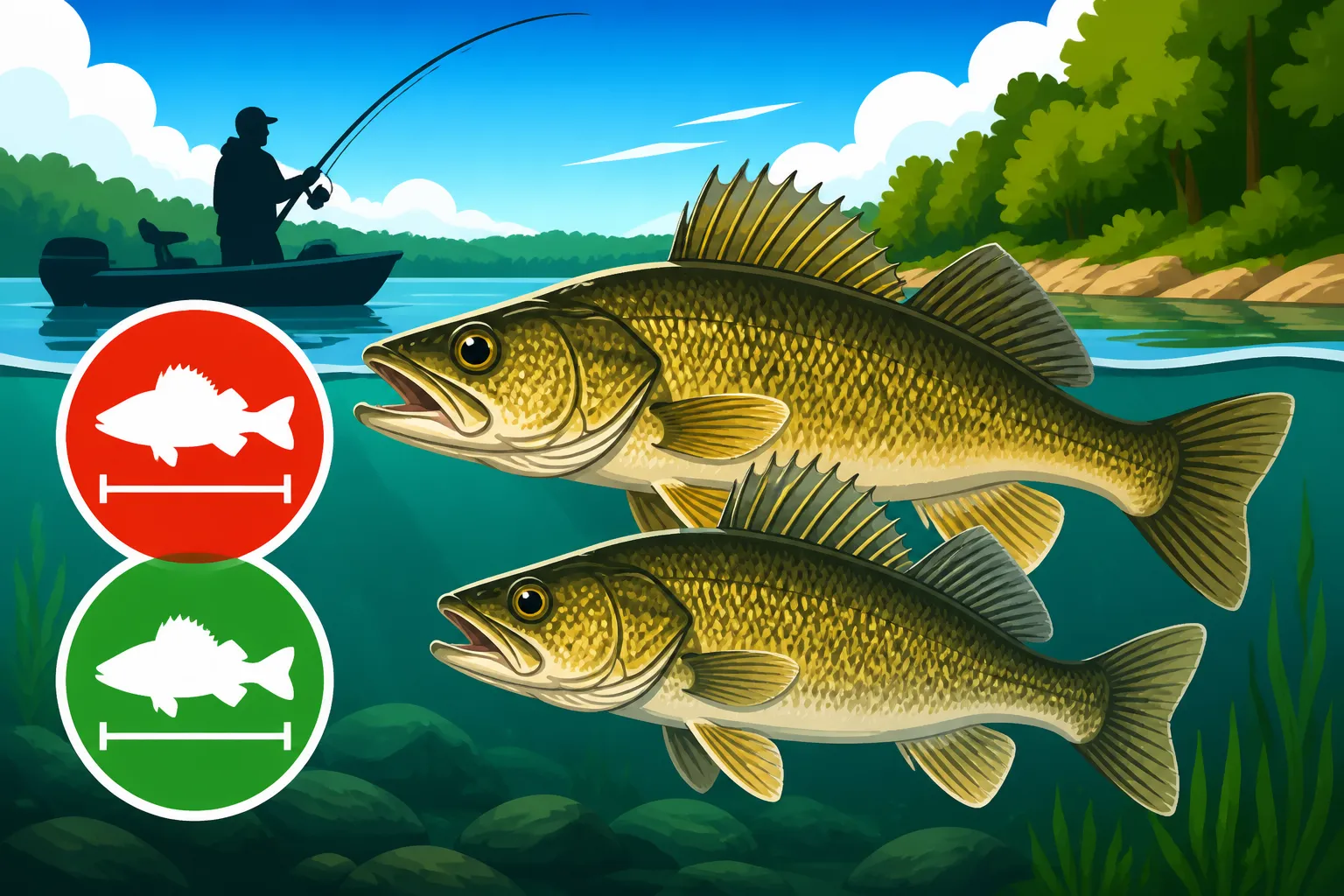
The main distinction often lies in their markings. Walleye typically have a distinct white tip on the lower lobe of their tail fin and tend to be more uniformly colored, often olive-green to gold. Saugeye, on the other hand, usually lack the prominent white tail tip and often have more distinct dark spots or blotches on their dorsal fin and sometimes across their body, giving them a more mottled appearance. Their overall body shape can also be slightly different, with saugeye sometimes appearing a bit more slender. It's truly beneficial to study up on Ohio Saugeye vs Walleye Identification before your next trip, as it can save you a lot of guesswork on the water.
Here’s a quick overview of the current walleye and saugeye regulations for Mosquito Creek Lake compared to the common statewide inland limits:
| Species | Statewide Inland Minimum Length | Statewide Inland Daily Bag Limit | Mosquito Creek Lake Minimum Length | Mosquito Creek Lake Daily Bag Limit |
|---|---|---|---|---|
| Walleye | 15 inches | 6 | 15 inches | 6 |
| Saugeye | 15 inches | 6 | 15 inches | 6 |
Note: These regulations are current as of the time of writing but can change. Always verify with the latest ODNR regulations.
Practical Tips for Anglers at Mosquito Creek Lake
Beyond just knowing the numbers, there are some practical steps you can take to make sure your fishing trip to Mosquito Creek Lake is both enjoyable and fully compliant with all the rules.
Measuring Your Catch Correctly
When you land a walleye or saugeye that you think might be a keeper, the first thing you need to do is measure it accurately. The official way to measure a fish in Ohio is by placing it on a flat surface and measuring from the tip of its snout to the end of its tail, with the tail compressed. Don't eyeball it, and don't measure along the curve of the fish's body! A dedicated fish measuring board or a flat ruler is your best friend here. Many anglers use a durable, waterproof measuring board that can handle being wet and dirty, often found at bait shops or through online retailers like Amazon. It's a small investment that provides huge peace of mind. Make sure you lay the fish flat, pinch the tail so it's fully extended, and get a clear reading. When in doubt, it’s always better to release a fish than risk a citation for being a quarter-inch short.
Safely Releasing Undersized Fish
Even when you're targeting keepers, you're bound to catch fish that are under the 15-inch minimum. Practicing proper catch and release techniques is not just good sportsmanship; it’s vital for the health of the fishery. When handling fish you intend to release:
- Minimize Air Exposure: Keep the fish in the water as much as possible. If you must remove it, do so quickly.
- Handle with Wet Hands: Dry hands can remove the fish's protective slime layer, making it more susceptible to disease.
- Support the Fish: Hold the fish horizontally, supporting its belly, especially if it’s a larger fish. Avoid holding it by the jaw vertically, as this can damage its internal organs.
- Use Proper Tools: Long-nosed pliers or hemostats are excellent for quickly removing hooks, especially if the fish has swallowed the bait. Barbless hooks can also make removal much easier.
- Revive If Necessary: If a fish seems sluggish, gently hold it in the water, facing into the current, until it regains its strength and can swim away on its own.
Taking these steps ensures that the future of Mosquito Creek Lake's walleye and saugeye population remains strong.
Staying Up-to-Date on Regulations
Ohio's fishing regulations, while generally stable, can and do change. The ODNR regularly reviews data on fish populations, angler harvest rates, and environmental conditions, and they adjust rules as needed. This means that what was true last year, or even last season, might not be true today.
The absolute best way to stay informed is by checking the official Ohio Department of Natural Resources (ODNR) website or picking up a physical copy of the current fishing regulations booklet. These booklets are usually available at most bait and tackle shops, ODNR district offices, and online. You can often find the Where to Find the Ohio Fishing Regulations Booklet with a quick search, or even view a PDF version directly on the ODNR's site. Before any trip, especially to a new body of water or after the start of a new calendar year, take a few minutes to confirm the current regulations. This diligence protects you from violations and contributes to responsible angling.
And while we're on the topic of regulations, don't forget about your fishing license! Make sure you have a valid Ohio fishing license. Our guide on the Ohio Fishing License Guide for Residents and Nonresidents covers everything you need to know, from different license types to where and How to Buy an Ohio Fishing License Online.
Disclaimer
The information provided in this guide is for general informational purposes only and is based on publicly available data at the time of writing. Fishing regulations, including size and bag limits, are subject to change by the Ohio Department of Natural Resources (ODNR). It is always the angler's responsibility to consult the most current official Ohio fishing regulations prior to fishing to ensure compliance. The author and publisher are not responsible for any errors or omissions, or for any actions taken based on the information provided herein.