Ohio Saugeye vs Walleye Identification
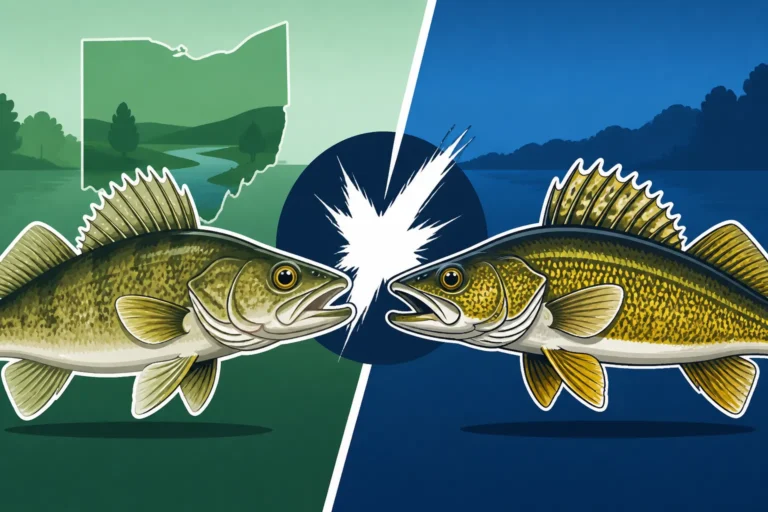
There's a question that echoes across Ohio's lakes and rivers more often than you might think, a question that can leave even seasoned anglers scratching their heads: "Is this a walleye or a saugeye?" It's a genuinely tricky identification challenge, and believe me, you're not alone if you've ever felt that moment of uncertainty. These two fish, while sharing many similarities, have key distinctions that are not only fascinating from a biological standpoint but crucial for staying within Ohio's fishing regulations. This guide is dedicated to unraveling that mystery, offering you clear, practical ways to confidently tell your walleye from your saugeye every time you reel one in.
The Genetic Jumble: Understanding Saugeye and Walleye in Ohio
Ohio is a fantastic state for fishing, offering a diverse range of species that call our waters home. Among the most prized catches for many anglers are walleye and saugeye. They're both delicious, strong fighters, and incredibly fun to pursue. But the confusion between them isn't just a casual observation; it's rooted in their very biology. Understanding their origins is the first step in learning how to tell them apart. It's like trying to tell two siblings apart without knowing their parents – a bit tougher!
What Exactly is a Walleye?
Let's start with the classic, the revered walleye. This fish is a true native of many of Ohio's natural waters, including the crown jewel of our fishing scene, Lake Erie. Walleye are scientifically known as Sander vitreus, and they belong to the perch family. They are sleek, predatory fish known for their keen eyesight, especially in low light conditions, which is why you often hear of folks having great success fishing for them at dawn, dusk, or even through the night.
Walleye have evolved over eons to thrive in cooler, deeper waters with good oxygen levels. Their habitat preferences often dictate where you'll find them. Think of the vast expanses of Lake Erie or some of our larger, deeper reservoirs. They feed primarily on smaller fish like shad and shiners, and their presence is often a sign of a healthy aquatic ecosystem. Many anglers consider a walleye fillet to be the pinnacle of freshwater dining. To learn more about targeting these fantastic fish, check out our Ohio Walleye Fishing Guide.
Unpacking the Saugeye's Hybrid Nature
Now, let's talk about the saugeye, the fish that often gets mistaken for its walleye cousin. The saugeye (Sander vitreus x canadensis) isn't a naturally occurring species in the same way the walleye is. Instead, it's a hybrid, a cross between a female walleye and a male sauger. Sauger are another close relative in the perch family, a bit smaller and typically found in murkier, riverine environments.
The Ohio Division of Wildlife has been actively stocking saugeye in many inland lakes and reservoirs across the state for decades. Why, you ask? Because saugeye possess some truly desirable traits that make them an excellent sport fish for these specific environments. They grow quickly, are quite adaptable to a variety of water conditions (even those less pristine than a walleye might prefer), and offer a fantastic fighting experience on the end of your line. They're often a bit easier to catch from shore or in smaller boats than their open-water walleye counterparts, making them incredibly popular. You can explore more about these tenacious hybrids in our Ohio Saugeye Fishing Guide.
Why This Identification Matters to Anglers
Beyond simply knowing what you've caught (which is satisfying in itself!), accurately identifying a walleye versus a saugeye carries real weight when you're out on the water in Ohio. The primary reason for this importance boils down to regulations. While they look similar, the Ohio Division of Wildlife often has different size and bag limits for walleye and saugeye, especially depending on the specific body of water you're fishing.
Imagine you've had an incredible day on the water, pulling in several fish. If you misidentify a saugeye as a walleye (or vice-versa) and keep it when it's under the legal length limit for that species or if you exceed the bag limit, you could find yourself facing a conversation with a wildlife officer – and a potential fine. It's a totally understandable mistake given their similarities, but ignorance of the law is rarely an excuse. Taking the time to learn these identification keys will not only boost your confidence but also ensure you're a responsible and compliant angler. Always consult the current Ohio Fishing Regulations Every Angler Should Know before heading out.
Distinctive Features: The Visual Cues for Identification
Alright, let's get down to the nitty-gritty, the visual clues that will help you differentiate these two fantastic fish. When you pull a fish out of the water, it's those immediate, obvious characteristics that you'll notice first. Think of them as the "big picture" differences before we zoom in on the finer details.
Dorsal Fin Differences
One of the most reliable and often easiest ways to tell a walleye from a saugeye is to look at their spiny dorsal fin. This is the fin on their back, closest to their head, which has sharp rays.
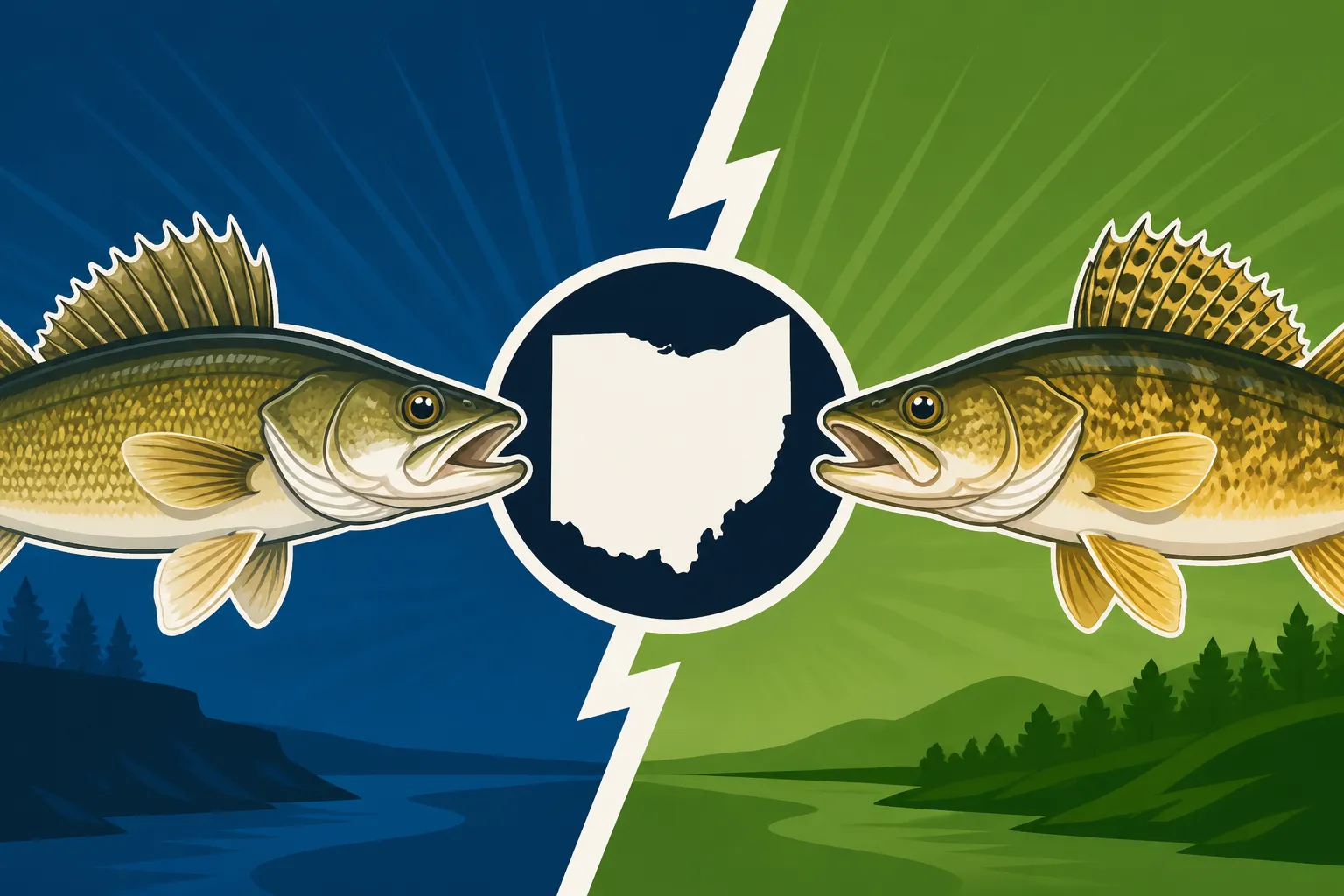
For a true walleye, you'll typically see a distinct, dark spot at the very base of the last few spines on the posterior (rear) part of this spiny dorsal fin. It's usually quite prominent, almost like a thumbprint. The rest of the fin might be somewhat mottled, but that single dark blotch is a hallmark of the walleye. It's one of those features that, once you see it a few times, becomes instantly recognizable. When you're quickly trying to identify a fish on the boat or shore, this is often the first place to look.
Now, switch your gaze to the saugeye. This is where things get interesting. A saugeye will almost always have distinct, dark spots or streaks arranged in neat rows across the entire spiny dorsal fin. Instead of one big dark blotch at the back, you'll see a more uniform pattern of small spots or bands running along the length of the fin. It's a much busier pattern, almost like a series of dashes. This difference is often the quickest visual tell and frequently the most accurate. If you see those clear rows of spots, you're almost certainly holding a saugeye.
Tail and Caudal Fin Patterns
Moving further back on the fish, another excellent indicator lies in the caudal fin, which is simply the tail fin. This feature might not be as universally distinct as the dorsal fin, but it provides strong corroborating evidence.
With a walleye, the lower lobe of the tail fin usually has a noticeable milky white tip. It can be quite striking, especially on a freshly caught fish. This white tip is a consistent characteristic for most walleye, regardless of size or geographic location within Ohio. It's like a little beacon saying, "Hey, I'm a walleye!" The rest of the tail fin will often be a darker, more uniform color, sometimes with faint barring but lacking any significant spotting.
A saugeye, on the other hand, will generally lack that pronounced white tip on the lower lobe of its caudal fin. Instead, the saugeye's tail fin will often be more heavily mottled or have distinct dark spots or bands, much like its dorsal fin. The overall impression is usually a darker, more patterned tail, without that signature splash of white. While you might occasionally find a very faint lighter edge, it will not be the stark, milky white found on a walleye. This absence, combined with the presence of more pattern on the fin itself, helps solidify your identification.
Body Shape and Coloration
While less definitive than fin patterns, general body shape and coloration can offer helpful clues, especially once you've seen enough of both species. These are more subtle indicators and can sometimes be influenced by water clarity, diet, and habitat, but they're worth noting.
Walleye tend to have a sleeker, more torpedo-like body, often appearing a bit more streamlined. Their overall coloration is typically an olive-green to golden-brown on their backs, fading into a creamy white belly. The sides often have subtle, darker vertical bars that can be quite faint or more pronounced. The "golden" aspect of their name comes from this beautiful sheen they often display. They feel quite smooth to the touch, owing to their smaller, embedded scales.
Saugeye, due to their sauger parentage, often exhibit a slightly stockier build compared to a walleye. They can sometimes appear a bit thicker or chunkier for their length. Their coloration tends to be more brassy or brownish-gold, often with more distinct, blotchy, or saddle-shaped dark markings along their sides. These markings are typically more pronounced than the faint bars on a walleye. The saugeye’s scales can also feel a bit rougher to the touch, another characteristic inherited from the sauger. Think of it as a slightly more "river-dwelling" appearance, even if you're catching them in a lake.
Head-On Analysis: Mouth, Eyes, and Gill Plates
Once you've looked at the fins and overall body, it's time to get a bit more detailed, almost like a fish detective examining specific features. The head of the fish, particularly the cheeks and eyes, holds some of the most reliable clues for a definitive identification.
Cheek Scales: The Telltale Sign
This feature is arguably the most consistent and definitive way to distinguish a walleye from a saugeye. It requires a close look, so make sure you're handling the fish safely and gently. The cheek area is located just behind the eye and above the gill plate.
When you examine a walleye's cheek, you'll find that it is largely scaled, usually with fully developed, rough ctenoid scales covering most of the surface. You can often feel these scales with your finger or easily see them. There might be a small, unscaled area right behind the eye, but the majority of the cheek will be covered. This gives the walleye a slightly more uniform texture on its head.
Now, for the saugeye, the story is quite different. Look closely at the cheek, and you'll typically notice that a significant portion of it is either unscaled or has only a few scattered, embedded scales. There will be a noticeable patch of smooth, unscaled skin on the posterior (rear) part of the cheek. This is a characteristic inherited from the sauger, which has fully unscaled cheeks. The saugeye, being a hybrid, shows this intermediate trait. If you gently run your finger over the cheek area and feel a smooth, slick patch, that's a very strong indication you have a saugeye. This particular detail is often what turns a "maybe" into a "definitely."
Eye Characteristics and Size
Both walleye and saugeye are known for their large, distinctive eyes, which are adapted for low-light vision. They have a reflective layer in their eyes called the tapetum lucidum, which helps them see in the dimmest conditions, much like a cat's eyes. This is why their eyes often appear cloudy or glow when hit by a flashlight beam.
While both have prominent eyes, there isn't a significant, easily discernible difference in their appearance that reliably distinguishes one from the other. However, some experienced anglers might observe subtle nuances. Walleye often appear to have slightly larger eyes in proportion to their head size, possibly giving them a more "bug-eyed" look. This is a very subjective observation, though, and shouldn't be your primary identification method.
Instead, understand that the large, reflective eye is a shared trait that highlights their predatory nature. It’s what makes them such effective hunters during twilight hours and in murky water. So, while impressive, don't rely solely on eye size or color for a definitive ID.
Teeth and Mouth Structure
Both walleye and saugeye are formidable predators, and their mouths reflect this. They both possess a mouthful of sharp, conical teeth, designed for grasping and holding onto their slippery prey. These teeth are quite sharp, so always exercise caution when handling these fish, especially if you're attempting to remove a hook. A good pair of long-nosed pliers from a brand like AmazonBasics can be a real hand-saver here, keeping your fingers safe from those rows of pearly whites!
You'll find teeth not just along their jaws, but also on the roof of their mouth (the vomer). This is another shared characteristic that underscores their effectiveness as predators. In terms of overall mouth size, walleye generally have a larger mouth that extends further back, often past the middle of their eye. Saugeye also have a large mouth, but it might be proportionally a touch smaller or not extend quite as far back as a walleye's. Again, this is a subtle difference that can be hard to judge accurately without having both fish side-by-side. Focus on the cheek scales and dorsal fin patterns for a more reliable identification.
Habitat and Behavior Clues: Where and How They Live
Beyond their physical appearance, understanding where walleye and saugeye prefer to live and how they behave can offer additional context to help you with identification. While not foolproof on its own, knowing the typical habitat of each species can narrow down the possibilities when you land a fish.
Walleye's Preferred Haunts
Walleye are true cool-water fish. In Ohio, their stronghold is undoubtedly Lake Erie, where they thrive in the vast, open waters, often associating with deep reefs, drop-offs, and structures. They prefer clear to moderately turbid water, and their sensitive eyes make them adept at hunting in deeper water or during low-light conditions. While you can certainly catch walleye in some of Ohio's larger inland reservoirs, their populations are often more prominent and self-sustaining in the more natural, larger, and deeper water bodies.
They are generally thought of as more "pelagic" when they are in open water, meaning they might suspend in the water column following baitfish. When fishing for walleye, especially in Lake Erie, anglers often use trolling techniques with crankbaits or crawler harnesses to cover large expanses of water. Their preferences for certain water temperatures are well-documented, making timing your trip crucial. Water Temperature That Triggers Walleye Spawning is a fascinating read if you want to understand their seasonal movements better.
Saugeye's Adaptability in Ohio Waters
Saugeye, on the other hand, are the workhorses of Ohio's inland fishing program. They are incredibly adaptable and tolerant of a wider range of environmental conditions, including waters with warmer temperatures and more turbidity (cloudiness) than a pure walleye might prefer. This makes them perfectly suited for many of Ohio's inland lakes and reservoirs, especially those that might be shallower or have more variable water quality. The Ohio Division of Wildlife strategically stocks saugeye in these waters because they provide excellent fishing opportunities where walleye might struggle to establish a strong population.
You'll find saugeye thriving in places like Hoover Reservoir, Alum Creek Lake, and Mosquito Creek Lake. They tend to be a bit more structure-oriented than open-water walleye, often hanging around submerged timber, rock piles, humps, and points. This makes them a prime target for shore anglers or those fishing from smaller boats using jigging techniques or casting various lures. For some of the best spots to target these hybrids, check out Best Ohio Reservoirs for Walleye and Saugeye.
Feeding Habits and How They Differ
Both species are aggressive predators, but their typical feeding habits can sometimes reflect their preferred habitats.
Walleye are opportunistic feeders, preying on whatever baitfish are abundant in their environment. In Lake Erie, this often means emerald shiners, gizzard shad, and smelt. They will also eat insect larvae, leeches, and crayfish. Their low-light vision gives them an edge, making them highly effective hunters during twilight and nighttime hours, as well as in deeper, darker water. Their tendency to suspend and chase bait in open water often leads to them being caught on moving baits like crankbaits or spinner rigs.
Saugeye also feed primarily on baitfish, but their diet might also include a higher proportion of invertebrates like crayfish, especially in some of the shallower, more structured inland lakes. Because they often relate more closely to structure and the bottom, they can be readily caught on jigs tipped with minnows or plastics, as well as crankbaits fished closer to cover. Their willingness to bite in a broader range of conditions and during daylight hours makes them a popular target for many Ohio anglers. Understanding these nuances in feeding can sometimes give you a hint, but remember that a hungry fish will hit a bait regardless of its species!
Why Misidentification Can Bite You (and the Fish)
It might seem like a small detail, but incorrectly identifying your catch can lead to bigger issues than just a friendly debate with your fishing buddies. In the world of responsible angling, knowing your fish is paramount for adhering to regulations and contributing to conservation efforts.
Regulation Differences: Bag and Size Limits
This is where the rubber meets the road. Ohio's fishing regulations are carefully crafted to manage fish populations sustainably, and those regulations often differ for walleye and saugeye. For example, a particular lake might have a minimum length limit of 15 inches for walleye but no minimum length limit for saugeye, or vice versa. Or, the daily bag limit could be different for each species.
Let's say you're fishing a reservoir known for saugeye, and you catch a fish that measures 14 inches. If you mistakenly believe it's a walleye and the walleye minimum length limit for that water is 15 inches, you might release a perfectly legal saugeye. Conversely, if you keep that 14-inch fish thinking it's a legal saugeye, but it's actually a walleye that's under the limit, you're now in violation. The fines for exceeding limits or possessing undersized fish can be substantial, not to mention the potential for confiscation of your catch and equipment. It's a truly avoidable headache if you take the time to learn the key ID features. You'll find specific details on limits in Ohio Statewide Bag and Size Limits or Ohio Saugeye Minimum Length Limit.
Conservation and Responsible Angling
Beyond avoiding legal trouble, accurate identification plays a vital role in conservation. Each species has different population dynamics, growth rates, and reproductive strategies. When biologists set bag and size limits, they do so based on extensive research into the health and sustainability of each specific species.
If anglers consistently misidentify their catches, it can skew the data collected through creel surveys or angler reports, potentially leading to inaccurate assessments of fish populations. For example, if too many undersized walleye are kept because they were mistaken for saugeye with a lower limit, it could negatively impact future walleye spawning success. Being able to confidently identify your fish means you're contributing to better data, more effective management, and ultimately, healthier fisheries for everyone to enjoy for years to come. It's part of being a good steward of our natural resources.
Reporting Your Catch Accurately
Many states, including Ohio, encourage anglers to participate in citizen science programs or report unusual catches. Some anglers meticulously keep fishing logs, noting species, size, and location. If you're passionate about fishing and contribute to these efforts, accurate identification is absolutely essential.
Imagine a scenario where a new walleye population is establishing itself in a lake previously only known for saugeye. Accurate angler reports of walleye catches could be invaluable to fisheries biologists tracking this development. Or, conversely, if saugeye numbers are declining, precise reporting helps highlight the issue. Even if you're just sharing your catches on social media or with friends, correctly naming your fish promotes accurate information sharing within the angling community. This level of precision elevates your standing as a knowledgeable angler and helps maintain a shared understanding of our aquatic environments.
Practical Tips for Anglers: Confirming Your Catch on the Water
So, you've just landed a beautiful fish, and you're thinking, "Walleye or saugeye?" Don't panic! With a few quick checks and the right mindset, you can usually make a confident identification right there on the boat or shore.
The Quick Check: Dorsal Fin & Cheek Scales
When you first bring a suspect fish aboard, this is your immediate go-to. Gently hold the fish, being mindful of those sharp teeth and spines.
- Look at the Dorsal Fin: Is there a distinct, dark blotch on the very back of the spiny dorsal fin? If yes, it's almost certainly a walleye. If, instead, you see clear rows of small, dark spots or streaks across the entire fin, it's pointing strongly toward a saugeye. This is usually the quickest visual test.
- Feel the Cheek: After checking the dorsal fin, gently (and carefully!) touch the cheek area just behind the eye and above the gill. Do you feel distinct scales covering most of it? That's a walleye. Do you feel a smooth, unscaled patch of skin, especially towards the rear of the cheek? That's a saugeye. This tactile check is incredibly reliable.
If both these indicators align, you've likely got your answer. This quick combination often solves the mystery on the spot.
Photography and Reference Guides
Sometimes, even with the best intentions, the fish is flopping, the light isn't great, or you just want to double-check. This is where modern technology comes in handy. Many anglers carry their phones with them, and a quick, clear photo can be a lifesaver.
Take a picture of the fish, focusing especially on the dorsal fin and the cheek area. You can then refer back to it, or even consult a digital field guide or the Ohio Division of Wildlife's online resources. There are even apps available that can help with fish identification, although it's always good to cross-reference. You might even want to keep a laminated copy of a species identification chart in your tackle box or boat, perhaps a sturdy one you found on Amazon, for quick reference. Having these resources readily available can turn a moment of doubt into a learning opportunity.
When in Doubt, Release or Consult
Let's be realistic: sometimes, despite all your efforts, you'll encounter a fish that just seems to defy easy classification. Maybe it's a smaller specimen, or the markings aren't as clear as typical examples. What then?
The safest and most responsible course of action is to err on the side of caution. If you are truly unsure whether your fish meets the legal size and bag limits for either walleye or saugeye, especially if one has stricter rules, it's best to gently release the fish. It's a small sacrifice to ensure you're compliant and contributing to the health of the fishery. Alternatively, if you're fishing with experienced anglers, don't hesitate to ask for their opinion. A second pair of eyes or a seasoned perspective can often provide the confirmation you need.
Remember, the goal is to enjoy your time on the water, respect the resource, and stay within the rules. Learning these identification techniques will empower you to do just that.
Here's a quick reference table to summarize the key differences:
| Feature | Walleye | Saugeye |
|---|---|---|
| Spiny Dorsal Fin | Distinct dark blotch at the rear base | Distinct rows of dark spots/streaks across entire fin |
| Caudal (Tail) Fin | Milky white tip on lower lobe | Lacks prominent white tip; more mottled or spotted |
| Cheek Scales | Mostly scaled; rough to touch | Large unscaled patch at rear; smooth to touch |
| Body Shape | Sleeker, more streamlined | Slightly stockier, chunkier build |
| Body Coloration | Olive-green/golden-brown; faint bars | Brassy/brownish-gold; more distinct blotchy markings |
| Preferred Habitat | Cooler, clearer, deeper water (e.g., Lake Erie) | Warmer, more turbid inland lakes/reservoirs |
Disclaimer
This article is for general informational purposes only and does not constitute professional advice. Laws, prices and regulations vary by location and change over time. Consult a qualified professional for guidance on your specific situation.