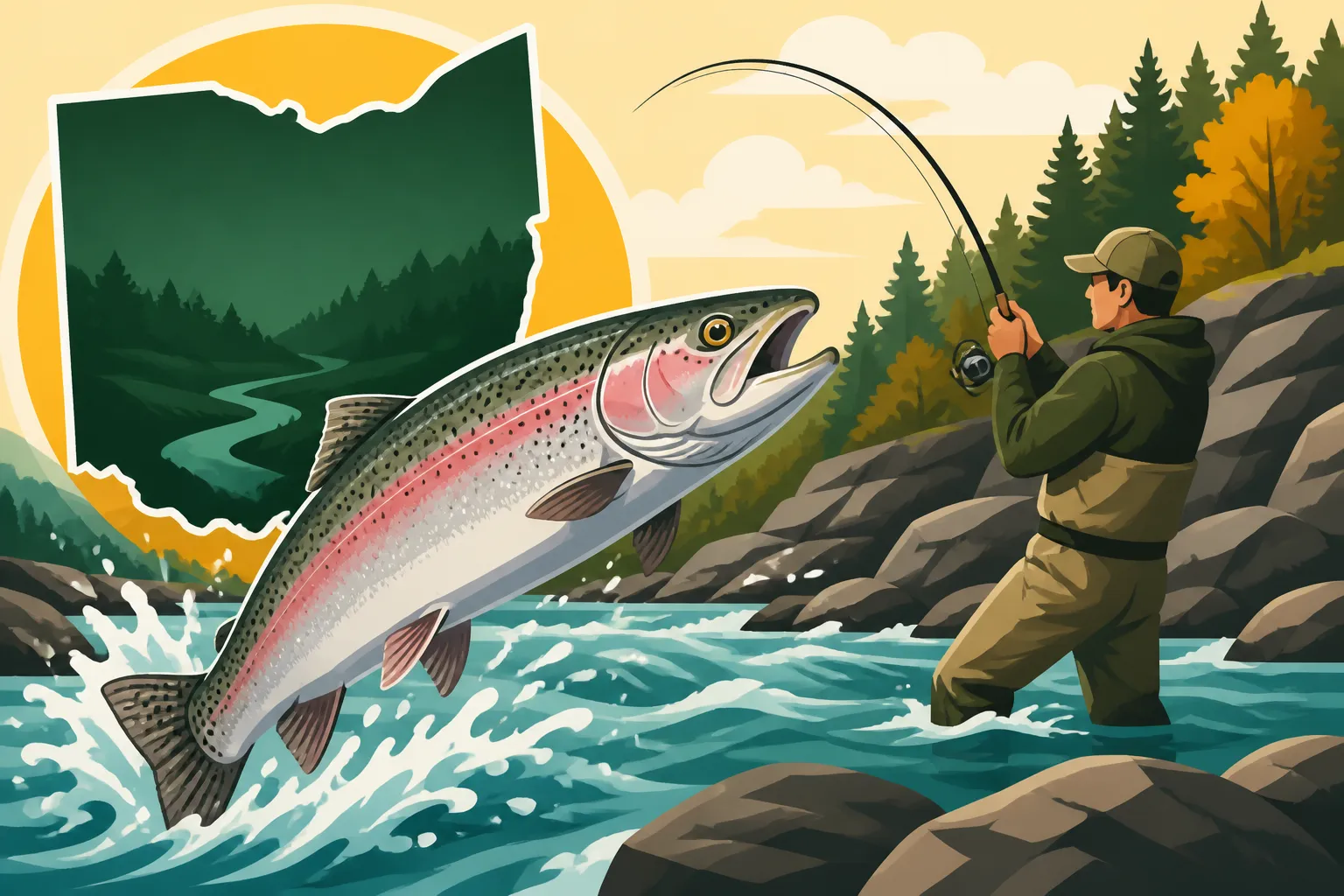
Fishing Rocky River for Steelhead
The Rocky River in Ohio presents both a thrilling challenge and immense reward for anglers targeting steelhead, especially when those chrome beauties are running hard. It’s a fishery that demands respect, patience, and a nuanced understanding of its ever-changing conditions. This comprehensive guide is here to walk you through everything you need to know, from timing your trip perfectly to mastering the techniques that will put a gorgeous Ohio steelhead in your net.
Understanding the Rocky River Steelhead Run
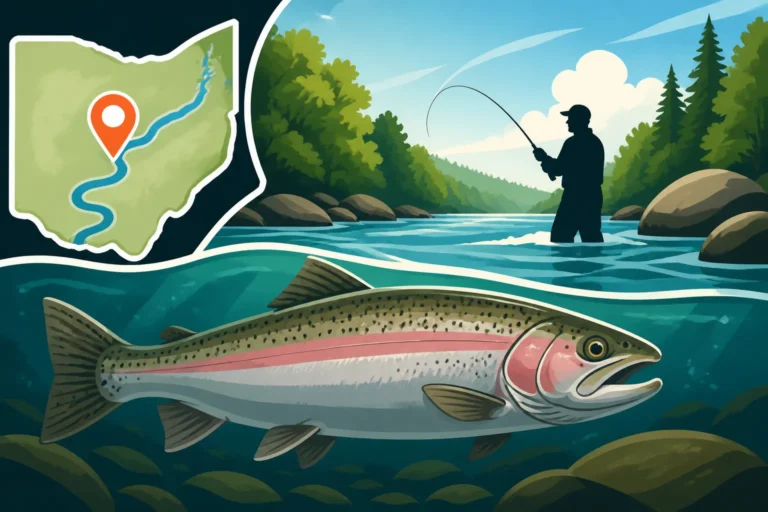
The Rocky River, a gem of the Cleveland Metroparks system, is one of Ohio’s premier destinations for steelhead trout. These powerful, anadromous rainbow trout migrate from Lake Erie into the river system to spawn, offering anglers incredible opportunities throughout much of the year. But understanding when and why they move is critical to success.
When Steelhead Enter the River
Steelhead typically begin their upstream migration into the Rocky River with the first significant rains and cooling water temperatures in the fall. We’re talking late September into October when the leaves start turning those vibrant colors. These early arrivals are often referred to as "fall fish" or "skaters" due to their aggressive nature and willingness to chase swung flies or quickly retrieved lures. They’re still fresh from Lake Erie, full of fight, and often quite spread out throughout the system. As fall progresses, more fish push in, especially after strong west winds on Lake Erie that create a "suck" effect, drawing fish into tributary mouths.
This initial push can be highly dependent on water levels. If the river is too low, fish will stage in the deeper pools of the lower river or just off the mouth in Lake Erie, waiting for a bump in flow. A good rain event, often referred to as a "freshet," is usually the trigger. You can check local stream gauges (like the USGS gauge near Berea) to monitor water levels, which will tell you if the river is low, rising, or falling. Knowing When Ohio Steelhead Runs Start is key to planning your autumn adventures.
Peak Season and Water Conditions
The peak steelhead season on the Rocky River generally spans from late fall (November) through winter and into spring (March and April). Each of these periods has its own unique characteristics and challenges. Winter fishing, while requiring more resilience from the angler, can offer some of the most consistent catches, especially during warmer spells or thaws that bring a slight rise in water temperatures. The fish are often more concentrated in deeper, slower pools during the coldest months.
Spring is perhaps the most famous time, with large numbers of "drop-back" steelhead that have finished spawning and are now heading back to Lake Erie. These fish are often hungry and eager to feed, making them prime targets. However, spring also brings highly variable weather, with rapid fluctuations in water levels and clarity due to snowmelt and rain. Understanding the ideal Best Time to Fish for Steelhead After Rain can make or break a spring outing. For many, the absolute peak runs for consistency often hit between late November and early December, and again from late March into April, but this can shift wildly year to year based on weather.
The Rocky River's Unique Character
The Rocky River is unique among Lake Erie tributaries due to its size and the diverse range of habitats it offers. Flowing through the Cleveland Metroparks, it boasts a mix of bedrock shelves, gravel runs, deep pools, and clay banks. This variety means steelhead can be found in different areas depending on water levels, clarity, and temperature. The Metroparks system ensures relatively good public access, but navigating the dense wooded banks and often steep terrain requires sturdy footing and awareness.
Unlike some smaller, faster-flowing creeks, the Rocky River can hold a lot of fish in its larger pools, especially after a fresh stocking or a big push from the lake. Its sheer volume means it can handle a lot of angling pressure, though certain popular spots can still get crowded. The river's character also makes it suitable for a variety of techniques, from fly fishing to spinning gear, catering to different angler preferences. Checking the Rocky River Steelhead Fishing Access Points before you go can help you plan your day.
Essential Gear for Rocky River Steelhead
You wouldn't head into battle without the right armor, and steelhead fishing on the Rocky River is certainly a battle of wits and strength. Having the correct gear isn't just about comfort; it's about efficiency, safety, and ultimately, success.
Rod, Reel, and Line Selection
For conventional spin fishing, a medium-light to medium power rod, typically 9 to 10.5 feet long, is ideal. This length provides the leverage needed for long drifts, helps manage line in current, and absorbs the shock of a hard-fighting steelhead. Paired with a quality spinning reel in the 2500-3000 size range, spooled with 8 to 10-pound test monofilament or fluorocarbon main line, you'll have a versatile setup. Many anglers prefer a braided mainline (10-15 lb test) with a 6-8 lb fluorocarbon leader for increased sensitivity and castability, especially when drifting small baits. This allows you to feel even the most subtle takes.
Fly anglers will typically opt for a 9 to 10-foot, 6 to 8-weight rod. The longer rod aids in line control and mending on drifts, while the heavier line weight is necessary to cast larger flies and subdue powerful steelhead. A sturdy large-arbor reel with a smooth drag system is non-negotiable, spooled with a weight-forward floating line and plenty of backing (at least 100 yards of 20-pound dacron). Your leader system will depend on your technique, but often involves a heavier butt section tapering down to 6-8 pound fluorocarbon tippet. Getting the Best Rod and Reel Setup for Ohio Steelhead is crucial for minimizing break-offs.
Terminal Tackle and Baits
When it comes to terminal tackle, simplicity and effectiveness are key. For drift fishing, a selection of small, sharp hooks (size 8 to 12) is essential. Gamakatsu, Owner, and Mustad are popular brands. You'll also need a variety of split shot or slinky weights to get your bait down to the fish. The amount of weight will vary greatly depending on current speed and water depth. A selection of small floats or bobbers (Thill, Drennan, or Raven floats are common) will complete your drift setup.
For baits, natural offerings are often king. Cured salmon eggs or imitation egg sacs are a perennial favorite. Maggots, waxworms, and small emerald shiners can also be deadly, especially in clearer water. For artificials, small jigs (1/32 to 1/8 oz) tipped with a maggot or plastic grub, trout beads, and small inline spinners (like Mepps or Rooster Tail) are effective. Fly anglers should stock up on egg patterns, stonefly nymphs, sucker spawn flies, and various streamer patterns (e.g., Woolly Buggers, Sculpzillas). Always remember to check the Ohio Fishing Regulations Every Angler Should Know for any bait restrictions or special rules.
Waders and Safety Gear
Steelhead fishing on the Rocky River often means getting in the water, so a good pair of chest waders is non-negotiable. Neoprene waders offer warmth in colder months, while breathable waders are more comfortable for warmer fall and spring days, often paired with insulating layers underneath. Always wear wading boots with felt soles or studded rubber soles for grip on slippery rocks. A wading belt is crucial for safety, preventing water from filling your waders if you happen to take a tumble.
Beyond waders, consider polarized sunglasses to cut glare and spot fish, a good hat for sun protection and warmth, and layered clothing. A net with a rubberized mesh is preferred for safe fish handling, as it's less damaging to their slime coat and fins. A pair of hemostats or pliers for hook removal is also essential. And never underestimate the value of a small first-aid kit, a whistle, and knowing how to access help in case of an emergency, especially when fishing alone or in remote areas.
Top Techniques for Rocky River Steelhead
Successfully landing a steelhead on the Rocky River often comes down to mastering a few core techniques and knowing when to deploy them. Steelhead can be fickle, and adapting your approach to conditions is paramount.
Drift Fishing with Spawn and Beads
Drift fishing, whether with a float (bobber) or by bottom-bouncing, is arguably the most common and effective method for Rocky River steelhead. The idea is to present your bait naturally with the current, mimicking loose eggs or nymphs drifting downstream. For float fishing, a properly weighted float allows your bait to tumble along the bottom, presenting it directly to fish holding in seams, pools, and runs. The key is to achieve a "dead drift" where your float moves at the same speed as the current, without dragging.
When using spawn sacs, ensure they are tied tightly and present a natural egg-like appearance. For trout beads, which are popular for mimicking single salmon eggs, rig them a few inches above a bare hook. Color choice can be critical; natural tones like peach, chartreuse, and roe-orange often work best, but sometimes a bright, aggressive color will trigger a strike. It's often helpful to carry a variety of sizes and colors to experiment with. Knowing How to Fish a Bead Under an Indicator for Steelhead is a fundamental skill.
Fly Fishing for Steelhead
Fly fishing for Rocky River steelhead is a deeply rewarding pursuit that offers a direct connection to the fish and the environment. Nymphing with an indicator is the most prevalent method, similar to float fishing but with flies. Anglers use a strike indicator to detect subtle takes as their weighted nymphs drift along the bottom. Popular nymph patterns include stoneflies (Hexagenia, golden stones), caddis larvae, and attractor patterns like the Prince Nymph or Copper John.
Swinging flies, particularly streamers, can be incredibly effective, especially for aggressive fish in colder water or during high flows. This involves casting across or slightly downstream and allowing the fly to swing through the current, enticing fish that are actively feeding or defending territory. Patterns like Woolly Buggers, Zonkers, and various sculpin imitations are go-to choices. For those seeking expert instruction, exploring local guides on platforms like FishingBooker can provide invaluable hands-on learning for Fly Fishing Techniques for Ohio Steelhead.
Indicator Nymphing and Swinging Flies
Indicator nymphing demands precision and constant attention to the drift. Your line should be free of slack, allowing the indicator to move naturally and giving you the best chance to see the slightest hesitation or dip that signals a take. It's not always a violent tug; sometimes it's just a subtle pause. Setting the hook immediately is crucial. Mending your line frequently to control the drift and prevent drag is a skill that takes practice but significantly increases your success rate.
Swinging flies, on the other hand, is a more active technique. It’s about covering water and presenting a fly that mimics a baitfish or large invertebrate moving through the current. Varying your retrieve, pauses, and swing angles can elicit strikes. This technique is particularly exciting because the strikes are often aggressive and unmistakable. Both methods require an understanding of how steelhead hold in the current and where they feed, which comes from experience and careful observation of the water.
Key Fishing Access Points and Strategies
The Rocky River winds through extensive parkland, offering numerous access points. Knowing where to go and what to expect in different sections of the river is vital for planning a successful trip. The Cleveland Metroparks provides excellent resources, including maps and real-time conditions.
Upper River (Above Detroit Road)
The upper stretches of the Rocky River, generally upstream from the Detroit Road bridge, tend to be shallower and rockier, with more riffles and runs interspersed with deeper pools. This area can be excellent for early season steelhead, especially after a good rain, as fish push upstream to escape pressure or find cooler water. Access points here include areas near the Lagoon, the Rocky River Nature Center, and various pull-offs along Valley Parkway.
Strategy in the upper river often involves covering water, casting into runs, and carefully approaching pools to avoid spooking fish. Smaller baits and lighter line might be beneficial in these clearer, shallower sections. During periods of lower flow, steelhead might be concentrated in the deeper pockets and behind larger rocks. It’s a great area for wading, but watch your footing on the slippery bedrock.
Middle River (Between Detroit and Lorain Roads)
This stretch of the Rocky River, encompassing popular spots around the marina, the high bridges, and the Rocky River Reservation, offers a mix of faster runs and deeper, broader pools. This is often where a significant concentration of steelhead will hold, particularly during the peak of the run. Access is abundant, with parking lots at the marina, under the high bridges, and various points along Valley Parkway.
Fishing strategies in the middle river often center around drift fishing the seams of the deeper pools and runs. Target areas where the current slows down, behind boulders, or where two currents merge. These areas offer fish a place to rest out of the main current while still being able to ambush passing food. The "Emerald Necklace Trail" provides easy walking access along much of this section. This is a great area to learn How to Read Steelhead Holding Water.
Lower River (Below Lorain Road to Lake Erie)
The lowest section of the Rocky River, from Lorain Road downstream to its mouth on Lake Erie, is characterized by wider, slower-moving water, especially closer to the lake. This area is crucial for staging fish – steelhead that have just entered the river or are waiting for higher water to push further upstream. The mouth of the river and the area around the Coast Guard station can be excellent, especially after strong northwesterly winds on Lake Erie that push baitfish and steelhead into the river.
Shore anglers often do well along the rocky banks near the mouth, casting spoons, spinners, or drifting bait under a float. Boaters can also access this lower section, sometimes even venturing into Lake Erie itself to target steelhead just off the river mouth. This section is often productive during periods of low flow upstream, as fish will hold here before moving into the faster currents. When the river is high and muddy, fish often stack up in the lower, slower sections, making it a good target.
Reading the Water and Adapting to Conditions
Steelhead fishing on the Rocky River is less about brute force and more about finesse and keen observation. The river's conditions change constantly, and the most successful anglers are those who can quickly read the water and adapt their approach.
Understanding Water Flow and Clarity
Water flow is perhaps the single most important factor determining steelhead activity and location. High, muddy water after a heavy rain typically means steelhead will be holding tight to the banks, seeking slower currents and cover. They might also be more willing to hit larger, brighter baits or flies that create more vibration. As the water begins to drop and clear, fish will spread out into runs and pools, becoming more receptive to natural presentations. You need to know What Water Flow Is Too High to Fish Ohio Steelhead Rivers?
Conversely, very low and clear water conditions can make fish extremely spooky. In these situations, longer, lighter leaders (6-pound test or even 4-pound test fluorocarbon), smaller baits or flies, and a stealthy approach are critical. You'll need to cast further, stay low, and minimize disturbances. Always check the USGS real-time stream gauge data for the Rocky River before heading out; it's an invaluable tool for understanding current flow rates and historical averages.
Identifying Holding Water and Travel Lanes
Steelhead, like most fish, are energy-efficient predators. They'll hold in areas where they can rest out of the main current while still having easy access to passing food. These "holding lies" often include the seams where fast and slow water meet, behind large boulders, in deep pools, under cut banks, or near fallen trees and log jams. Look for depressions in the riverbed or changes in substrate.
"Travel lanes" are the paths fish use to move upstream or downstream. These are typically deeper channels or areas with moderate current that offer cover. When the fish are actively migrating, understanding these lanes is key to intercepting them. Pay attention to how the river flows, looking for natural current breaks and eddies. Often, the best spots will be at the head or tail of a pool, or along a consistent run where the current is just right.
Post-Rain and Cold Front Strategies
After a heavy rain, the river will likely be high and muddy. This is a time when many anglers stay home, but it can be surprisingly productive if you know where to look. Target the slowest water you can find – eddies, slack water near the banks, and deep pockets. Steelhead will often hug the shoreline, seeking refuge from the strong current. Use larger, darker baits or flies that create a strong silhouette in the murky water. Bright colors like chartreuse or hot pink can also stand out.
Cold fronts, on the other hand, can shut down steelhead activity. Fish often become lethargic and less willing to chase. In these conditions, a slower, more subtle presentation is usually best. Focus on dead-drifting small nymphs or spawn sacs through the deepest parts of pools. Patience becomes even more critical. During these challenging times, sometimes trying a local guide service found on FishingBooker can teach you the nuances of these tough conditions. They know how to adapt when the fish get lockjaw.
| Water Condition | Typical Depth | Recommended Technique(s) | Lure/Bait Suggestions |
|---|---|---|---|
| High & Muddy | Banks, Eddies | Drift (heavy weight) | Large spawn sacs, jigs with bright plastics, dark streamers |
| High & Stained | Seams, Pools | Drift (medium weight) | Spawn sacs, trout beads, brightly colored nymphs/jigs |
| Medium & Green | Runs, Pools | Drift, Nymphing, Swinging | Trout beads, natural spawn, stonefly nymphs, smaller jigs |
| Low & Clear | Deep Pools | Stealth Nymphing | Small nymphs, tiny trout beads, light line, natural spawn |
| Dropping/Clearing | All Areas | All techniques | Variety, match water clarity |
| Rising | Banks, Eddies | Drift (aggressive) | Bright eggs, large jigs, scented baits |
Conservation and Etiquette on the Rocky River
The Rocky River fishery thrives thanks to healthy practices and respectful angler behavior. Being a responsible angler means more than just following regulations; it means contributing to the sustainability and enjoyment of the resource for everyone.
Catch and Release Practices
While Ohio regulations allow for the harvest of steelhead within specific limits, many anglers on the Rocky River practice catch and release, especially for larger, wilder-looking fish. If you do plan to release a fish, handle it with extreme care. Keep the fish in the water as much as possible, use a rubberized landing net, and minimize handling. Wet your hands before touching the fish to protect its delicate slime coat.
Remove hooks quickly and gently. Barbless hooks greatly aid in this process. If a fish is deeply hooked, consider cutting the line as close to the hook as possible rather than tearing tissue. Allow the fish to recover in the current, holding it gently until it's strong enough to swim away on its own. Remember, healthy released fish ensure future generations of anglers can enjoy this incredible fishery.
Respecting Fellow Anglers and Property
The Rocky River, especially during peak steelhead runs, can draw a crowd. Courtesy and respect for other anglers are paramount. Give others ample space, typically 30-50 feet if possible, and avoid crowding into someone else's spot. If you want to fish a spot where someone else is, politely ask if it's okay to share the water. Respect private property boundaries and only fish where you have legal access. The Cleveland Metroparks is public land, but be mindful of signage.
Never litter. Pack out everything you pack in, and if you see trash, consider picking it up. Keeping the river clean is a shared responsibility. Avoid making excessive noise or splashing, which can spook fish for everyone in the vicinity. A little common sense and kindness go a long way in ensuring a positive experience for all. For an in-depth look at Ohio Fishing Regulations Every Angler Should Know, always consult the official ODNR guide.
Reporting Poaching and Violations
Unfortunately, not everyone adheres to the rules. Poaching, exceeding bag limits, fishing with illegal gear, or fishing without a valid Ohio Fishing License Guide for Residents and Nonresidents are serious offenses that harm the fishery. If you witness a violation, do not confront the individual. Instead, gather as much information as possible (location, time, description of individuals, vehicle license plate, specific violation) and report it immediately to the Ohio Department of Natural Resources (ODNR) at 1-800-POACHER.
ODNR wildlife officers patrol the Rocky River regularly, but they can't be everywhere at once. Your vigilance plays a crucial role in protecting this valuable resource. By working together, anglers can help ensure the Rocky River remains a fantastic destination for steelhead fishing for years to come.
Disclaimer
Please remember that fishing conditions and regulations can change rapidly. Always consult the latest Ohio Department of Natural Resources (ODNR) fishing regulations before heading out on the water. This guide is for informational purposes only and does not constitute legal advice.