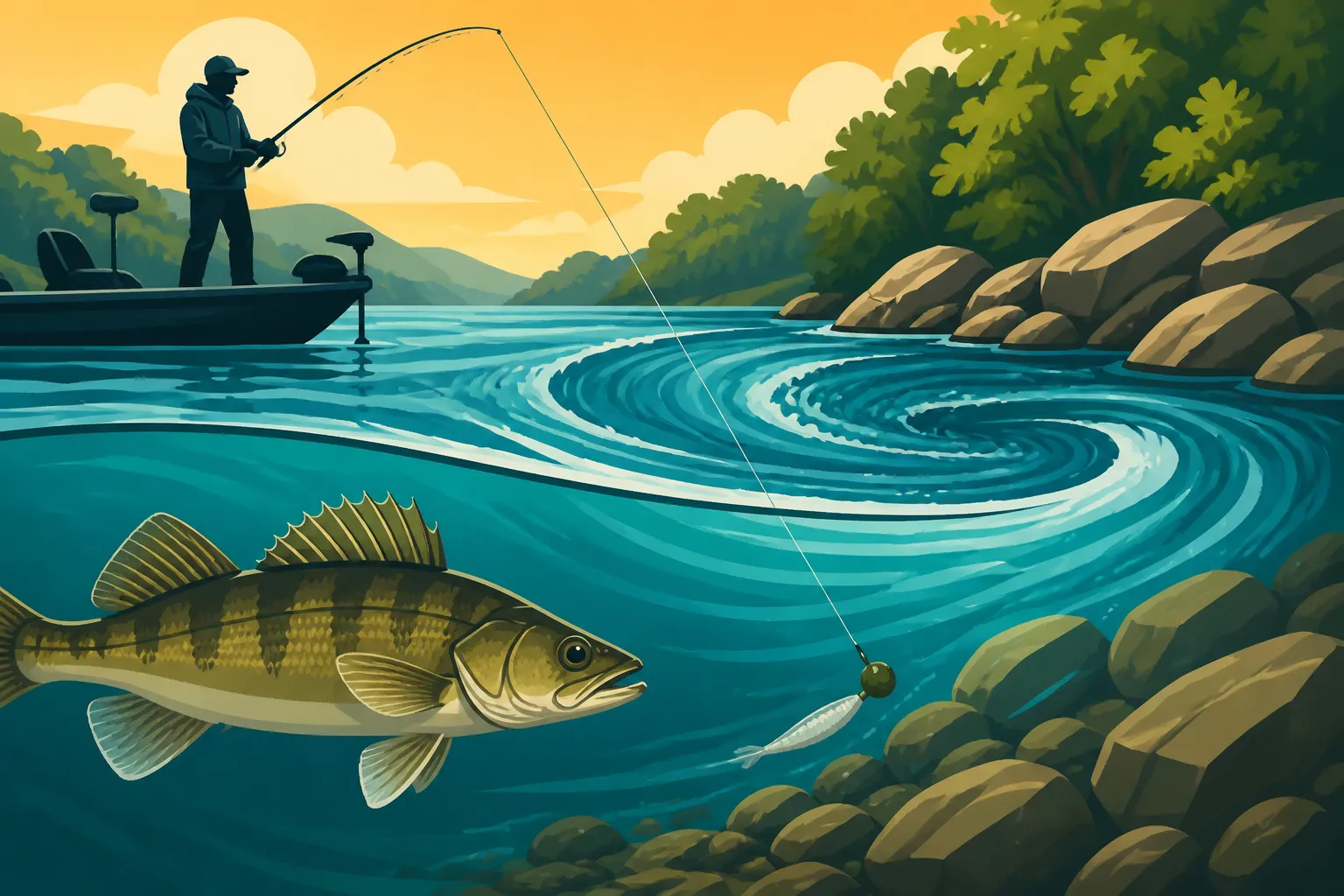
How to Fish an Ohio River Eddy for Sauger
Fishing the mighty Ohio River can be an incredible experience, but its powerful currents and vast expanses can make finding fish feel like searching for a needle in a haystack. Many anglers get frustrated trying to pinpoint where sauger might be holding, especially when faced with conflicting advice about current seams and slack water. This guide is here to demystify the process, helping you understand precisely how to locate and effectively fish an Ohio River eddy for sauger, turning those frustrating days into successful outings.
Deciphering the Ohio River Eddy
Before you can catch sauger in an eddy, you've got to understand what makes an eddy tick and why these elusive fish are drawn to them. It's more than just a swirling patch of water; it's a micro-habitat within the river's dynamic flow.
The Anatomy of a Sauger-Holding Eddy
An eddy is essentially a pocket of slower, often swirling water, formed by obstructions or changes in the riverbank that deflect the main current. Think of a large rock, a bridge pilings, a downed tree, or a sharp bend in the riverbank. These structures create a "current break" where the water downstream or behind them slows considerably or even reverses direction. But it's not just about the slow water; it's about what that slow water interacts with. Sauger are structure-oriented fish, meaning they like to hang around features on the bottom or along the banks. This could be anything from rocky ledges, gravel bars, old log piles, or even subtle depressions. When an eddy forms over or around these types of bottom structure, it creates a prime sauger hangout. The riverbed in these areas often features scour holes where the current has dug out deeper pockets, offering even more comfort and cover for fish.
These areas are essentially safe havens from the relentless push of the main river channel. Sauger, like many fish, are opportunistic predators, but they're also energy conservators. They don't want to fight the current any more than they have to, especially when they can find a spot where food comes to them.
Why Eddies Attract Sauger
Sauger are absolute connoisseurs of current breaks, and eddies are the perfect buffet line and resting spot rolled into one. First, they allow sauger to conserve energy. Instead of constantly battling the strong main current, they can tuck into the calmer water of an eddy, expending minimal effort. This is crucial for their survival, especially in a large, powerful river like the Ohio. Second, eddies act as natural ambush points. As baitfish, like shad or minnows, get swept downstream by the main current, they often get disoriented or pushed into the slower, swirling water of an eddy. For a sauger waiting just on the edge of the current break, it's like having dinner delivered right to their doorstep. The turbulent water on the edge of the eddy often churns up sediment and baitfish, making them easier targets.
Furthermore, eddies often concentrate food sources. Insects, small crustaceans, and even dislodged worms and larvae get caught in the swirling currents, accumulating in these slower areas. This steady supply of sustenance means sauger don't have to travel far or work hard to feed. The somewhat murkier water often associated with river eddies, especially after rain or during higher flows, also benefits sauger, which have excellent low-light vision and prefer less light than their walleye cousins. Understanding these dynamics is key to anticipating where sauger will position themselves within the eddy, giving you a huge advantage when you're trying to fish for them.
Essential Tackle for Eddy Sauger Success
Having the right gear makes all the difference when you're targeting sauger in the often challenging conditions of the Ohio River. You need tackle that offers sensitivity, power, and durability.
Rods, Reels, and Line for River Currents
When it comes to fishing for sauger in Ohio River eddies, your rod, reel, and line choices are paramount. You're looking for a setup that provides excellent sensitivity to detect those notoriously subtle sauger bites, coupled with enough backbone to handle a strong fish in current. A medium-light to medium power spinning rod, typically 6'6" to 7' in length, with a fast action tip, is an excellent starting point. The fast action tip allows for quick, accurate hook sets, while the sensitive tip helps you feel those light taps that often signify a sauger. Pair this with a reliable 2000 or 2500 series spinning reel, known for its smooth drag and consistent line retrieve. Many anglers find a good balance of quality and affordability in a wide range of products available on Amazon, where you can compare different brands and features.
For line, a low-stretch option is critical. Many successful sauger anglers opt for a braided main line, typically 8-10 pound test, due to its exceptional sensitivity and strength-to-diameter ratio. This allows you to feel even the faintest bite, even in deep water or strong current. However, sauger have sharp teeth and can be line-shy, so it's wise to tie a 2-4 foot leader of 6-8 pound fluorocarbon to your braid. Fluorocarbon is nearly invisible underwater and is more abrasion-resistant than mono, protecting against nicks from rocks or fish teeth. If you prefer mono, a high-quality 8-10 pound test monofilament can work, but you'll sacrifice some sensitivity compared to braid. When fishing the Ohio River, you might consider thicker line if you're consistently snagging, but always check the Ohio River Sauger Regulations to ensure your methods are compliant.
Lures and Baits That Get a Sauger's Attention
Sauger in Ohio River eddies respond well to a variety of presentations, but certain lures and baits tend to outshine others. The key is often to get your offering right on the bottom, or very close to it, where sauger prefer to hold.
- Jigs: This is arguably the most consistent producer. ¼ oz to ¾ oz lead head jigs, tipped with a live minnow, a soft plastic grub, or a scented plastic, are deadly. Colors like chartreuse, orange, white, and black are often effective, especially in the typically murkier water of the Ohio. The weight of the jig needs to be heavy enough to maintain bottom contact without constantly snagging. You can find a huge array of jig heads and soft plastics on platforms like Amazon, allowing you to experiment with different sizes and colors to match local conditions.
- Blade Baits: These vibrating metal lures are excellent for sauger, especially when jigged vertically. Their flash and vibration can draw strikes from a distance. Silver, gold, and firetiger patterns are popular. Brands like Vibe Lures or Cicada Blade Baits are common choices.
- Crankbaits: For aggressive sauger, especially in slightly warmer water or when covering ground, deep-diving crankbaits can be effective. Look for baits that dive to the depth of the eddy and have a tight wobble. Perch, shad, and crawfish patterns are good starting points.
- Live Bait: There's just something about a live minnow that sauger can't resist. Hooking a minnow through the lips or dorsal fin on a jig or a simple three-way rig with a bell sinker can be incredibly effective. Small shiners or fathead minnows are often preferred. Even if you're primarily a lure angler, keeping some live bait on hand can turn a slow day around.
Remember that sauger are often light biters, so choose baits that you can feel effectively, and be prepared to experiment with size and color until you find what they're hitting on that particular day. The availability and variety of lures and baits found on Amazon make it easy to stock up on different options before your trip.
Mastering Sauger Presentation in Eddies
Getting your bait to the fish and enticing a strike in a river eddy requires precision and a good understanding of how current influences your presentation.
Strategic Positioning: Boat and Bank
Whether you're fishing from a boat or the bank, strategic positioning is critical when targeting sauger in Ohio River eddies.
- From a Boat: If you're in a boat, the goal is often to position yourself slightly upstream of the eddy's prime holding water. This allows you to present your bait naturally into the eddy. Use your trolling motor or anchor precisely to hold your position. Sometimes, anchoring directly in the main current, but just upstream of the eddy, gives you the perfect casting angle. Other times, you might position yourself on the slower side of the eddy, casting into the heart of it. Pay close attention to current seams – the visible lines where fast and slow water meet. Sauger will often be right on these seams, looking for an easy meal. Experiment with different boat angles and casting distances until you find the sweet spot where your lure consistently drifts into the strike zone. Remember, boat control is paramount on a river like the Ohio, especially with fluctuating flows.
- From the Bank: Bank anglers also need to be strategic. Look for natural current breaks such as bridge pilings, rock jetties, or points where eddies form. Casting upstream and allowing your bait to drift naturally into the eddy is often effective. You might need to use heavier jigs or sinkers to get your bait down quickly before the main current sweeps it away. Walking the bank and making short, targeted casts into different parts of the eddy can help you locate active fish. Think about how the current is flowing and where baitfish might naturally get funneled into the calmer water. Sometimes, a long cast isn't necessary; the fish might be holding just off a submerged log right at your feet. For a more comprehensive understanding of local access, checking out resources like the Ohio River Fishing Guide can provide valuable insights into good bank fishing spots.
Vertical Jigging and Controlled Drifting
Once you're positioned, the method of presentation is key. Sauger are typically bottom-oriented fish, especially in eddies, so keeping your bait near the riverbed is crucial.
- Vertical Jigging: This is a highly effective technique, particularly from a boat. Position your boat directly over or just upstream of the eddy's prime holding water. Drop your jig or blade bait straight down until it hits the bottom. Then, use short, sharp lifts and drops of your rod tip – maybe 6-12 inches – while maintaining constant contact with the bottom. The goal is to hop or drag your lure along the bottom, creating puffs of silt and mimicking a struggling baitfish. The beauty of vertical jigging is the direct line to your lure, maximizing sensitivity. You'll feel every tap and bottom contour. This technique is especially potent in deeper eddies or when sauger are tightly schooled.
- Controlled Drifting: If you're covering a larger eddy area, controlled drifting can be excellent. Whether from a boat or bank, cast your jig or baited rig upstream into the current and allow it to drift naturally into the eddy. The key is to keep your line relatively taut, feeding out just enough slack to allow your bait to bounce along the bottom. You want your bait to move at roughly the speed of the current in the eddy, not faster or slower. This often requires adjusting your retrieve speed or using your trolling motor to match the flow. This technique works well with a three-way rig where a sinker bounces bottom and a short leader allows your bait or lure to waft enticingly just above it. Paying attention to how the current moves your line and bait will dramatically increase your success rate. Understanding how to read currents, and how different water levels affect them, is crucial for effective controlled drifting, and it can be especially helpful to consult guides on Ohio Fishing Season Calendar to understand when river flows might be higher or lower.
The Elusive Sauger Bite and Hookset
Sauger bites are often incredibly subtle, especially in the turbulent environment of an Ohio River eddy. Unlike the aggressive strike of a bass, a sauger bite can feel like a slight "tick," a spongy weight, or simply a cessation of the jig's movement. The current can also mask these subtle takes, making it feel like your lure is just bumping the bottom. This is where the sensitivity of your rod and line truly shines.
Pay close attention to anything that feels different from your regular jigging or drifting cadence. If your line suddenly goes slack, or if you feel a tiny tap followed by increased weight, set the hook! Don't delay. Sauger can inhale and exhale a lure in a split second. Your hookset should be a swift, firm upward sweep of the rod, rather than a violent jerk. Because they have relatively soft mouths, a gentle but powerful sweep is often more effective and reduces the chance of pulling the hook. After setting the hook, keep constant pressure on the fish, especially if it's fighting in the current, to prevent it from shaking free. Knowing the specific Ohio Statewide Bag and Size Limits for sauger will help you quickly identify legal fish and make responsible release decisions for smaller ones.
Seasonal Factors for Ohio River Sauger
The Ohio River is a living, breathing system, and its conditions — and thus sauger behavior — change dramatically with the seasons. Understanding these shifts is vital for consistent success.
Fall and Winter: The Peak Season
When the cooler weather rolls into Ohio, many anglers start thinking about their annual ice fishing plans, but for Ohio River sauger, fall and winter truly mark the peak fishing season. As water temperatures drop, sauger become incredibly active and often school up in large numbers, making them more predictable and easier to target. In the fall, they'll start moving out of their scattered summer patterns and congregate in deeper holes, around prominent structures within eddies, and along current seams where there's still a good flow of baitfish. They're actively feeding to pack on weight for the colder months. This is often the best time to find them stacked up in those prime eddy locations.
As winter settles in, and river temperatures hover in the low 40s to upper 30s, sauger metabolism slows, but they still feed. They typically move to the very deepest parts of eddies and channel bends, seeking stable water temperatures. Vertical jigging with jigs tipped with minnows or scented plastics, or working blade baits slowly and deliberately on the bottom, becomes incredibly effective. The bites can be even more subtle in the cold, so extreme focus on your line and rod tip is crucial. It’s also important to be mindful of river conditions; winter can bring fluctuating water levels and ice floes that affect safety and access. Checking for the Ohio Fishing Season Dates and Effective Periods can provide useful context on how regulations might align with these seasonal patterns.
Adapting to Spring and Summer Conditions
While fall and winter are prime, you can absolutely catch sauger in Ohio River eddies during spring and summer, but you'll need to adjust your approach.
- Spring: As water temperatures begin to rise, sauger become highly active, often moving into shallower eddies for spawning. High water flows from spring rains can push them into flooded backwaters and calmer pockets. During this time, they're often more aggressive. Lures like crankbaits or larger jigs with plastics can be very effective as they're looking for substantial meals. The key is to find those eddies that offer some protection from strong spring currents and also have access to shallow spawning grounds. Keep an eye on water clarity, as excessively muddy water can push sauger into clearer tributaries or force them to hug the bottom even tighter.
- Summer: Summer sauger fishing on the Ohio River can be challenging due to higher water temperatures and often lower, clearer flows, which can make sauger spread out more and become more nocturnal. They'll often retreat to the deepest, coolest parts of eddies or into shaded areas near structure. Early morning and late evening, or even night fishing, can be productive. Downsizing your baits and slowing your presentation can be effective. Use sensitive gear to detect those very light bites from lethargic fish. Live bait, such as minnows or nightcrawlers, fished on a three-way rig, can also be a game-changer during the summer doldrums. Even with the challenge, a persistent angler can find success by targeting those cooler, deeper eddy pockets.
Remember, the Ohio River is a big waterway, and local conditions can vary significantly. Always observe the water, current, and clarity, and adjust your tactics accordingly.
Here's a quick reference table for common sauger baits and their ideal conditions:
| Bait/Lure Type | Best Conditions | Presentation Tips |
|---|---|---|
| Jig (with soft plastic/minnow) | All seasons, especially cold water & low light | Vertical jigging, slow drag, subtle hops on bottom |
| Blade Bait | Cold water, vertical jigging, aggressive fish | Lift and drop sharply, let it flutter on the fall, maintain bottom contact |
| Deep-Diving Crankbait | Warmer water, active fish, covering water | Retrieve steadily to get to depth, occasional pauses, target current seams |
| Live Minnow (on jig/rig) | All seasons, especially when fish are finicky | Slow drift, minimal movement, allow minnow to swim naturally, maintain bottom contact |
Disclaimer
This article is for general informational purposes only and does not constitute professional advice. Laws, prices and regulations vary by location and change over time. Consult a qualified professional for guidance on your specific situation.