Ohio Blue Catfish Identification
It can be incredibly frustrating to reel in a magnificent catfish in Ohio, only to stare at it and wonder, "Is this a blue cat, a channel cat, or something else entirely?" The truth is, distinguishing between these whiskered beauties can be a real head-scratcher, even for seasoned anglers, and misidentification can sometimes lead to inadvertently breaking a regulation. This comprehensive guide is here to clear up the confusion, walking you through the definitive characteristics of the Ohio Blue Catfish so you can confidently identify your catch, every single time.
Why Accurate Catfish Identification is Crucial for Ohio Anglers
Before we dive into the nitty-gritty of what makes a blue cat a blue cat, let's talk about why this even matters. It's not just about bragging rights (though those are nice!). Accurate identification is absolutely vital for several practical and ethical reasons when you're out on Ohio's waters. From adhering to fishing laws to understanding the ecology of our waterways, knowing your catfish is a fundamental part of responsible angling.
Understanding Species-Specific Regulations
The most immediate reason to correctly identify your catfish is because fishing regulations in Ohio can vary significantly by species. You might find different bag limits, size restrictions, or even specific seasons for different types of catfish. Imagine you're having an incredible day, pulling in several impressive whiskered fish, only to discover later you've exceeded the limit for one species because you mistook it for another. That's a headache no one wants, and it can lead to hefty fines from a wildlife officer. Ohio Fishing Regulations Every Angler Should Know can be a real eye-opener in this regard.
For example, while some catfish species might have generous daily limits, others, particularly larger, less common ones, might be more restricted to protect their populations. If you think you’ve caught a channel catfish but it’s actually a small blue cat that's under a specific minimum length, keeping it could land you in trouble. These rules are in place to ensure healthy fish populations for future generations of anglers, and respecting them starts with knowing what you’ve caught. Always double-check Catfish Regulations by Species for the latest information before you hit the water.
Contributing to Conservation Efforts
Beyond individual regulations, accurate identification plays a role in broader conservation. Wildlife biologists rely on accurate angler reports and surveys to monitor fish populations and make informed management decisions. If everyone misidentifies their catches, the data becomes skewed, making it harder for experts to understand the health and distribution of specific species. Your correct identification, whether reported through creel surveys or simply by adhering to species-specific limits, provides valuable information.
Being able to tell a blue cat from a channel cat helps ensure that management efforts for each species are effective. For instance, if blue catfish populations are struggling in a particular river system, knowing that anglers are correctly identifying them helps biologists focus their research and conservation efforts where they're most needed. It’s all part of being a responsible steward of Ohio’s natural resources, ensuring that the fantastic fishing opportunities we enjoy today will still be there tomorrow.
The Distinctive Features of an Ohio Blue Catfish
Now, let's get down to business. How do you tell if that fish on your line is truly a magnificent Ohio Blue Catfish? They have several key features that, once you know them, make them stand out from their catfish cousins. It's all about looking for a combination of traits rather than relying on just one.
Body Coloration and Shape
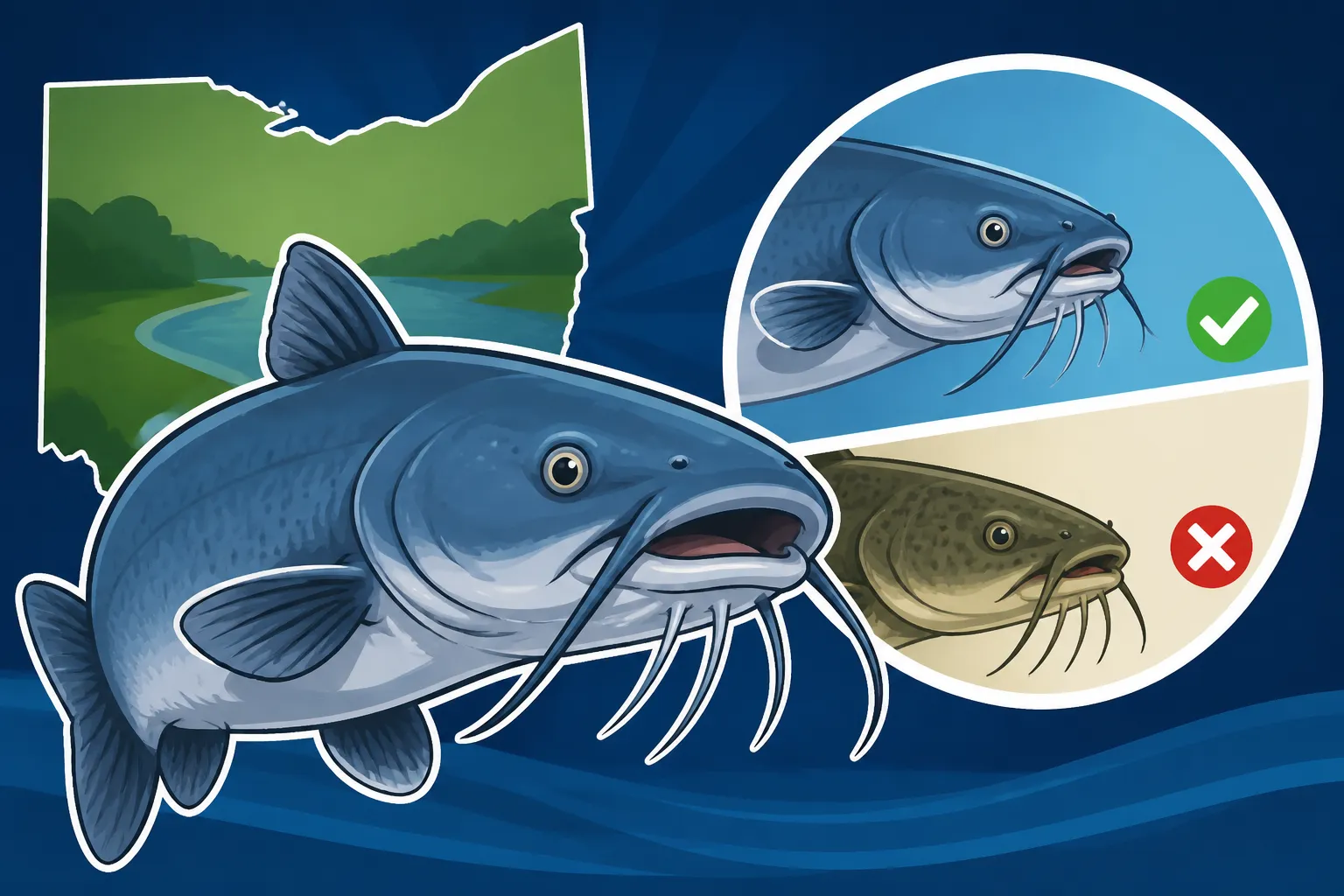
The first thing many anglers notice about a blue catfish is its namesake color. They typically have a sleek, silvery-blue to slate-gray coloration on their backs and sides, fading to a lighter, often white, belly. This isn't always a hard and fast rule, as water clarity and diet can subtly influence color, but it’s a strong indicator. They also possess a distinctly streamlined, almost torpedo-shaped body, which gives them incredible power in current.
Unlike the often mottled or spotted appearance you might see on some other catfish, the blue catfish usually has a uniform, unblemished skin tone. Their head is relatively small in proportion to their body, which tapers smoothly from head to tail. This muscular, hydrodynamic build is perfectly adapted for life in large, flowing rivers and deep, expansive reservoirs, helping them navigate strong currents and ambush prey.
The Tell-Tale Anal Fin
This is arguably the most reliable and consistent identifier for blue catfish, and it's something every angler should learn to spot. The anal fin (the fin located on the underside of the fish, between the anus and the tail) of a blue catfish is long and straight along its base, containing a high number of rays. Counting these rays can sometimes be tricky on a wiggling fish, but you can usually get a good visual.
A blue catfish's anal fin will appear relatively straight and have between 30 and 36 rays. This long, straight-edged fin, combined with a deeply forked tail, creates a distinct profile. Compare this mentally to other catfish species, and you'll quickly see the difference. This feature alone can often confirm your suspicions, even if the coloring isn't perfectly "blue."
Distinctive Tail and Barbel Placement
Beyond the anal fin, the tail of a blue catfish is another crucial characteristic. They have a deeply forked tail, more pronounced and V-shaped than most other catfish species. This isn't just for show; that powerful, forked tail is what gives them their incredible speed and fighting power, especially in strong currents. If you hook into a big one, you'll feel that tail put up a serious battle!
Now, let's talk about the barbels – those whiskery appendages around their mouth. Blue catfish have four pairs of barbels, typically dark in color. Pay close attention to the placement of their upper jaw barbels. They are usually aligned in a relatively straight line across the face, originating closer to the middle of the mouth rather than curving significantly upwards or downwards. This subtle difference becomes clearer when you compare them side-by-side with other species.
Blue Catfish Lookalikes: Don't Get Fooled in Ohio Waters
It's easy to confuse blue catfish with other common Ohio catfish species, especially the Channel Catfish and, to a lesser extent, the Flathead Catfish. They share general body plans and habitats, but there are distinct differences that, once you know them, make identification much simpler. Let's break down the most common lookalikes and how to tell them apart.
Blue Catfish vs. Channel Catfish: The Most Common Mix-Up
This is where most anglers get tripped up. Blue catfish and channel catfish can look quite similar, especially when they're smaller. Both can have a grayish or bluish hue, and both have forked tails. However, a closer look reveals several key differences. The number of rays in the anal fin is your absolute best friend here. A Channel Catfish will have a noticeably shorter, more rounded anal fin with fewer rays, typically between 24 and 29. The blue cat, remember, has that long, straight-edged fin with 30-36 rays.
Coloration can also be a clue, though it's less reliable. Channel catfish often have scattered black spots on their sides, especially when younger, which blue catfish typically lack. While older channel cats can lose these spots and develop a darker, more uniform color, the anal fin remains the most consistent differentiator. Also, consider the head shape: a blue cat generally has a more pointed snout and a slight hump behind its head, while a channel cat's head can appear a bit wider and more rounded. If you're looking for gear specifically for bigger catfish, checking out robust fishing tackle on Amazon could be a good idea. Ohio Channel Catfish Identification goes into even more detail.
Blue Catfish vs. Flathead Catfish: Easy to Distinguish
While both are large, powerful river dwellers, blue catfish and flathead catfish are much easier to tell apart. The name "flathead" really says it all! Flatheads have a distinctly broad, flattened head, almost shovel-like, which is very different from the blue cat's more pointed, slightly rounded head. Their lower jaw usually protrudes beyond the upper jaw, giving them a grumpy, bulldog-like appearance.
The tail of a flathead is another dead giveaway: it's not deeply forked like the blue cat's; instead, it's typically square or only slightly notched. Flatheads also have a mottled, camouflaged coloration, often yellowish-brown with dark blotches, which helps them blend into rocky and woody cover. Their skin pattern is never the uniform silvery-blue of a true blue catfish. Furthermore, the anal fin on a flathead is quite short and rounded, with far fewer rays (14-17) than either a blue or channel cat. When fishing for them on the Ohio River, knowing the difference can be key to success. You can learn more about Ohio Flathead Catfish Identification in our dedicated guide.
Ohio Catfish Identification Table
Here's a quick reference table to help you compare the main distinguishing features of Ohio's most common large catfish species:
| Feature | Blue Catfish | Channel Catfish | Flathead Catfish |
|---|---|---|---|
| Body Color | Silvery-blue to slate-gray, uniform | Gray to olive-green, often with black spots (younger) | Mottled yellow-brown to dark brown, blotchy |
| Head Shape | Slightly pointed, relatively small | Rounded, somewhat wider | Distinctly broad and flattened, shovel-like |
| Anal Fin | Long, straight base; 30-36 rays | Shorter, rounded; 24-29 rays | Short, rounded; 14-17 rays |
| Tail Shape | Deeply forked (V-shaped) | Moderately forked | Square or slightly notched (not forked) |
| Jaw | Upper jaw slightly protrudes | Upper jaw slightly protrudes | Lower jaw usually protrudes beyond upper |
| Barbels | Usually dark; in a relatively straight line | Usually dark; can be slightly curved upward | Often darker; less prominent, sometimes yellowish |
This table should be a handy tool right there on your phone or printed out for your tackle box. It visually reinforces the key differences and can save you a lot of guesswork on the water.
Where to Find Ohio Blue Catfish: Habitat and Behavior Clues
Knowing where blue catfish prefer to hang out can also give you a strong clue about what you've hooked. These fish aren't just found anywhere; they have specific preferences that dictate their distribution in Ohio's waterways. Understanding their typical habitat and behavior can aid in identification before you even get a good look at your catch.
Preferred Waterways and Structure
In Ohio, blue catfish are primarily found in large river systems and expansive, deep reservoirs. The Ohio River, in particular, is a stronghold for big blues, known for producing some truly massive specimens. These fish thrive in strong currents and deep holes, often congregating around submerged structures like fallen trees, rock piles, or ledges where they can ambush prey or find refuge from the flow. They are rarely found in small creeks or shallow ponds where other catfish species might be abundant.
When you're fishing these larger bodies of water, especially stretches with significant current or deep scour holes, your chances of encountering a blue catfish increase dramatically. Think about the big bends in rivers, the areas downstream of dams, or deep channels in reservoirs. These are prime blue cat territories. If you’re targeting fish in shallower, slower moving water with muddy bottoms, you’re far more likely to be catching channel catfish or bullheads. You'll find excellent information on spots within our Ohio River Fishing Guide.
Dietary Habits and Their Impact on Size
Blue catfish are voracious predators and opportunistic feeders. While they will scavenge, especially as they get older, their diet primarily consists of other fish, mussels, and crayfish. Younger blue cats might consume insects and smaller aquatic invertebrates, but as they grow, they shift to a more piscivorous (fish-eating) diet. This aggressive feeding behavior, combined with their ability to live in rich, productive waters, contributes to their impressive growth rates and large maximum sizes.
Their diet impacts not only their size but also their fighting strength. A blue cat that's been feasting on shad and other baitfish in a strong current is going to be a formidable opponent on the end of your line. Knowing this helps you understand why they grow so big and fight so hard. For anglers aiming for these larger fish, using robust gear and larger baits is often key. You might find a heavy-duty catfish rod and reel combo on Amazon that’s perfect for battling these giants.
The Impressive Size of Ohio Blue Catfish
One of the most exciting aspects of fishing for blue catfish in Ohio is their potential for truly enormous size. While channel catfish and flatheads also grow large, blue catfish typically hold the records for the biggest specimens in many states, and Ohio is no exception. These are not your average pond panfish; these are true river monsters!
Average Size in Ohio Waters
While blue catfish can grow to incredible sizes, the average catch for most anglers in Ohio will likely be in the 5 to 20-pound range. Fish in this size class are still incredibly fun to catch and offer a fantastic fight, particularly on appropriate tackle. They're strong, determined, and will test your angling skills. This average size is also why they are a popular target for many anglers, providing a rewarding experience without requiring specialized heavy-duty gear every single time.
However, don't let the average fool you; blues have a reputation for getting much, much larger. The health and productivity of Ohio's major river systems, especially the Ohio River, provide the perfect conditions for these fish to thrive and pack on the pounds over many years. Even catching a 30 or 40-pound blue is a distinct possibility in these waters, making every hookset a moment of anticipation.
Potential for Trophy Blues
This is where the blue catfish truly shines in the trophy department. Ohio's waters, especially the Ohio River, are known to produce blue catfish well over 50 pounds, with some truly gargantuan specimens approaching or exceeding 100 pounds. These are fish that can be decades old, apex predators of their environment. Ohio State Record Blue Catfish Weight is a testament to the incredible potential of our state's waters. Just imagine battling a fish that weighs as much as a small child!
Landing a trophy blue catfish requires specialized gear, patience, and a bit of luck. Anglers targeting these giants often use heavy-action rods, large conventional reels spooled with strong braided line, and substantial baits like whole shad or large cut bait. The fight can be prolonged and exhausting, often involving powerful runs and deep dives. It's an experience that many dedicated catfish anglers chase for a lifetime, and Ohio offers a legitimate opportunity to achieve that dream. If you're serious about chasing monsters, you might want to consider some of the heavy-duty line and hooks available on Amazon. For specific record information, check out Ohio State Record Fish by Species.
Common Misconceptions and Additional Identification Tips
Even with all the key characteristics, there are still some myths and common mistakes that can lead to misidentification. Let's clear up a few of those, and then share some extra tips to help solidify your blue catfish identification skills.
Debunking the "No Spots" Myth
A very common piece of advice circulating among anglers is that blue catfish never have spots, and if a catfish has spots, it must be a channel catfish. While it's generally true that younger channel catfish often have distinct black spots that blue catfish lack, this isn't an absolute rule. Occasionally, very small, faint spots can appear on juvenile blue catfish. More importantly, older channel catfish frequently lose their spots entirely, becoming a uniform gray or bluish color, which further blurs the lines.
This is precisely why relying solely on coloration or the presence/absence of spots can be misleading. It's crucial to use the combination of features we've discussed, with the anal fin ray count and shape being the most reliable differentiator. Don't let a lack of spots on a large, uniformly colored catfish automatically make you think it's a blue if its anal fin is rounded and short. Always confirm with the anal fin and tail shape.
Visual Cues in Live Fish and Photos
When you're dealing with a live, wiggling fish, getting a clear view of all features can be challenging. However, try to get a good look at the anal fin as soon as safely possible. You can often see its length and shape even before you bring the fish fully into the boat or onto the bank. The deeply forked tail is also usually apparent from a distance. If you're taking photos, try to capture a clear side profile of the fish, ensuring the anal fin is visible.
Another subtle cue in live fish can be their behavior. Blue catfish, especially larger ones, tend to be very powerful and streamlined, often making strong, steady runs in current. While all catfish fight hard, the sustained power of a big blue can sometimes feel different from the more thrashing fight of a flathead or the quicker bursts of a channel cat. This isn't a definitive identifier, but it can be an intuitive hint that you've hooked something truly special.
When in Doubt, Release or Seek Expert Advice
If you've gone through all the identification steps and are still genuinely unsure whether you've caught a blue, channel, or even a hybrid, the safest and most responsible course of action is to release the fish. This ensures you comply with all regulations and avoids any potential fines. Take a clear photo if possible and consult with an experienced angler or check the official Ohio Department of Natural Resources (ODNR) fishing regulations and fish identification guides. Many of these resources are available online or as pamphlets.
You can also reach out to Ohio River Catfish Guide Services or local bait shops for advice. These local experts spend countless hours on the water and are usually happy to help clarify any identification questions. Their real-world experience is invaluable. Remember, the goal is not just to catch fish, but to enjoy the experience responsibly and contribute to the health of Ohio's fisheries.
Disclaimer
This article is for general informational purposes only and does not constitute professional advice. Laws, prices and regulations vary by location and change over time. Consult a qualified professional for guidance on your specific situation.