How to Fish a Texas Rig in Heavy Cover
Anyone who's spent time trying to coax a lunker bass out of thick, gnarly cover in Ohio knows the frustration: snag after snag, lost lures, and fish that just won't bite if your presentation isn't perfect. It's enough to make you want to throw your rod in the lake! But don't despair – there's a rig that specializes in these challenging conditions, and it's a true game-changer. This guide is all about mastering the Texas Rig, your absolute best friend when fishing the densest weeds, brush piles, and submerged timber found in our beloved Ohio waters. We're going to dive deep into how to set it up, where to throw it, and the techniques that will help you land those elusive hawgs lurking in the nastiest spots.
Understanding the Texas Rig and Its Advantages for Heavy Cover
When you look at a fishing tackle box, there are countless lures and rigs designed for open water, for suspended fish, or for light cover. But what about those impossible places? The matted hydrilla that looks like a carpet, the fallen tree with a million branches, or the dense cattails along a shallow bank? That's where the Texas Rig truly shines, offering anglers a distinct advantage over more traditional presentations.
What Makes the Texas Rig So Effective?
The magic of the Texas Rig lies in its brilliant, yet simple, design that prioritizes weedlessness above all else. Unlike an exposed jig hook or a treble hook that snags on every stray leaf, the Texas Rig keeps its hook point tucked away. This is achieved by burying the hook point directly into the soft plastic bait itself, creating an incredibly streamlined and snag-free profile. Imagine trying to push a garden rake through a thick bush compared to a single, pointed stick – the Texas Rig is that pointed stick.
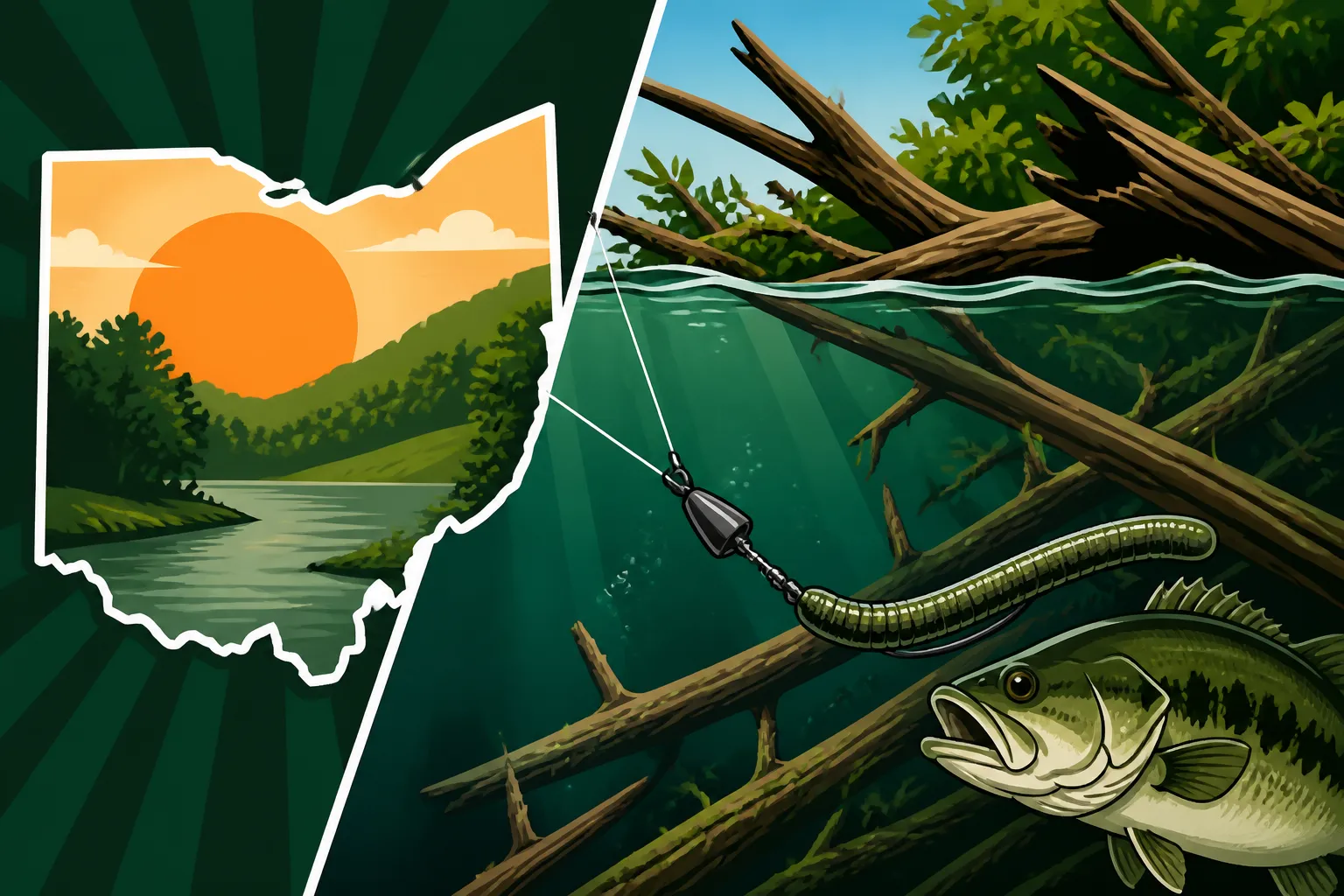
The weight, typically a bullet-shaped sinker, is threaded onto the line before the hook. This allows the weight to slide freely up and down the line, or it can be pegged in place right against the hook eye. This flexible weight placement means the rig can penetrate dense cover without hanging up. When it hits an obstacle, the weight can slip over or through, followed closely by the weedless bait. It gives a really natural, subtle presentation that doesn't scream "artificial lure" to wary fish. Whether you're working through a submerged Christmas tree brush pile or crawling over a rock ledge choked with vegetation, the Texas Rig navigates with surprising ease, letting you get your bait directly into the strike zone where other lures simply can't go. This unparalleled ability to penetrate heavy cover means you're putting your bait right where the biggest, laziest bass are hiding, waiting to ambush prey.
Components of a Texas Rig Setup
While the concept is simple, selecting the right components is crucial for success, especially in Ohio's varied heavy cover. Let's break down what you'll need:
First up, the hook. You'll primarily be looking at two styles: an Extra Wide Gap (EWG) hook or a straight shank worm hook. EWG hooks are fantastic because their wide gap allows for larger soft plastics and provides excellent hook penetration when a bass bites down. The bend gives the bait plenty of room to collapse, exposing the hook. Straight shank hooks, on the other hand, are often preferred for punching through very heavy mats due to their more compact profile and tendency to provide a slightly better hook-up ratio when you get a bite, but they require precise rigging. For most applications, especially when starting out, an EWG hook in sizes ranging from 2/0 to 5/0 (depending on your bait size) is a solid choice.
Next, the weight. This is often the unsung hero of the Texas Rig. Bullet weights are the standard, and they come in lead, tungsten, and brass. Tungsten is pricier, but it's denser than lead, meaning you get more weight in a smaller profile. This is a huge advantage for punching through thick cover and also provides incredible sensitivity, allowing you to feel every bump, twig, and subtle bite. Weights can range from 1/8 oz for light cover and shallow water all the way up to 1 oz or more for punching through truly matted vegetation.
Finally, the soft plastic bait. This is where your creativity comes into play! The options are endless, but popular choices for Texas Rigs include stick worms (like the ubiquitous Senko), creature baits (imitating craws or other critters), and soft plastic worms in various lengths and tail designs. For fishing heavy cover, you generally want a durable plastic that won't tear easily and can withstand repeated casts into dense material. Different baits will offer different actions, from subtle wiggles to aggressive flapping, and choosing the right one can make all the difference. You can find a huge variety of these options, from different manufacturers, by checking sites like Amazon for their latest selections.
Step-by-Step Rigging Your Texas Rig for Ohio's Toughest Spots
Getting your Texas Rig set up correctly is paramount. A sloppy rig will snag, twist, and ultimately deter fish. The goal is a clean, streamlined, and perfectly weedless presentation every time.
Tying the Knot and Securing the Weight
Let's start with the basics – getting that line connected. After threading your bullet weight onto your main line, you'll need to tie your hook on. Strong knots are essential, especially when you're trying to muscle a bass out of heavy cover. The Palomar knot is a fan favorite among bass anglers for its strength and reliability. Another excellent choice is the improved clinch knot, which is also very dependable. Practice these knots at home until you can tie them quickly and securely, even in low light or adverse conditions.
Once your hook is tied, you need to decide whether to "peg" your weight. Pegging means using a small rubber peg, a toothpick, or even a piece of small rubber band to keep your bullet weight snug against the eye of the hook.
- Pegged weight: This is your go-to for really thick, matted vegetation or when fishing vertically in heavy timber. The pegged weight helps the whole rig punch through the cover as a single unit, preventing the weight from separating from the bait and snagging. It also gives a more compact presentation, which can be crucial for precise drops into small pockets.
- Unpegged (free-sliding) weight: This is often preferred for sparser cover or when fishing horizontal retrieves over rocky bottoms or submerged grass. The free-sliding weight allows the soft plastic to fall more slowly and naturally after the weight hits the bottom, mimicking a baitfish or crawfish trying to escape. This can be a very enticing action for finicky bass. Consider experimenting with both options to see what works best in different situations on your favorite Ohio bass lakes.
Hooking Your Soft Plastic Correctly
This step is the make-or-break moment for your Texas Rig's weedlessness. A poorly rigged bait is just an invitation for snags and frustration. Here's how to do it right:
First, insert the point of your hook directly into the very center of the nose of your soft plastic bait. Push the hook point in about a quarter to half an inch, then bring it out through the bottom of the bait. Now, slide the bait up the shank of the hook, over the eye, until the nose of the bait sits snugly against the eye of the hook. The bait should be straight and aligned with the hook shank.
Next, hold the bait alongside the hook to measure where the hook point should re-enter the body of the plastic. You want the hook to exit the body straight, so the bait lies perfectly straight along the hook. Once you've measured, push the hook point through the body of the bait. This is the crucial part for weedlessness: bury the hook point back into the plastic, just under the surface. Don't push it all the way through, just enough so that the point is covered and cannot snag. When a fish bites, the plastic will compress, exposing the hook for a solid hookset. The goal is to make the bait and hook appear as one seamless unit. A properly rigged Texas Rig will have a straight, natural profile, and you should be able to drag it through grass and brush without getting hung up.
Mastering the Retrieve: Fishing a Texas Rig in Dense Ohio Cover
Once your Texas Rig is expertly tied and rigged, the next challenge is learning how to present it effectively. Fishing heavy cover isn't just about getting your bait in there; it's about making it look irresistible and knowing what a bite feels like.
Key Retrieve Techniques for Various Cover Types
The beauty of the Texas Rig is its versatility. You can adapt your retrieve to almost any heavy cover situation you'll encounter in Ohio:
- Crawling and Dragging (Submerged Timber & Rock Piles): When you're fishing a deep brush pile or a rocky bottom littered with snags, a slow, deliberate retrieve is often best. Cast your Texas Rig out, let it sink to the bottom, then slowly drag it along, occasionally pausing or giving it a slight twitch with your rod tip. The goal is to mimic a crawfish or other bottom-dwelling critter. You'll feel every branch and rock, and when you feel resistance, lightly lift your rod to help the bait crawl over the obstacle. This technique is deadly in places like the deep timber of Deer Creek Lake or the rocky shorelines of Lake Erie for stubborn smallmouth bass.
- Pitching and Flipping (Lily Pads & Grass Mats): This is where the pegged weight really shines. For matted vegetation, you need to punch through. Use a short, accurate pitch or flip to drop your Texas Rig into small holes or along the edges of lily pads and grass mats. Once it penetrates, let it sink, then work it slowly with subtle lifts and drops, trying to make it fall off the edges of the cover. This is a common technique for summer bass hiding in the thick vegetation of Buckeye Lake or Indian Lake. The vertical presentation allows the bait to enter tight spaces without getting tangled.
- Working Through Standing Reeds and Cattails: These shallow, vertical forms of cover are prime ambush points. Cast your Texas Rig parallel to the reed line, or pitch it into small pockets within the reeds. Use a series of short hops and pauses. The weedless nature of the rig allows it to slide past the stalks without hanging up. Pay close attention as the bait falls after a hop; often, a bass will strike as the bait is descending. This technique can be very effective in the shallow backwaters and protected coves of many Ohio reservoirs.
Detecting a bite in heavy cover can be tricky because you're constantly feeling bumps and snags. A true bite often feels like a soft "thump," a sudden weightlessness, or simply the line starting to move sideways. Don't hesitate to set the hook if something feels "off" – it's better to set on a snag than miss a fish!
When to Use a Texas Rig in Ohio Waters
The Texas Rig isn't just a niche technique; it's a fundamental tool for Ohio bass anglers. It really excels in specific situations throughout the fishing season:
- Post-Spawn to Summer: As bass transition from their spawning beds, they often move to deeper, heavier cover to recover and ambush prey. This is prime time for the Texas Rig. They'll be hiding in submerged timber, dense weed lines, and under boat docks, seeking shade and protection from predators. Fishing a Texas Rig in these areas is often the only way to reach them. Consider pitching it under docks on Alum Creek Lake or working deep brush piles in Caesar Creek Lake.
- High Water and Stained Conditions: After heavy rains, Ohio lakes and rivers can become stained or muddy, and bass often retreat to cover where they feel more secure and can ambush prey more easily. The Texas Rig's ability to get into these tight spaces, often with a larger profile soft plastic, makes it very effective. The bass are relying on lateral line senses rather than sight, and a Texas Rig presented right in their face can trigger a reaction strike.
- Targeting Specific Cover: Whenever you see visible cover – whether it's fallen trees, dense lily pads, thick grass, or even rip-rap with large rocks – the Texas Rig should be one of your first choices. It allows you to systematically pick apart these high-percentage areas, knowing you're getting your bait right where the fish live. This applies whether you're fishing the small ponds found in many Ohio State Parks, or the larger reservoirs.
- Flipping and Pitching: If your fishing strategy involves getting your bait into very specific, small targets, the Texas Rig is unbeatable. This includes flipping into tight openings in vegetation, pitching under overhanging branches, or dropping it directly into the "sweet spot" of a brush pile. Mastering this technique on your favorite bodies of water can lead to some incredible catches.
Gear and Tackle Tips for Texas Rig Success in Heavy Cover
To truly dominate heavy cover with a Texas Rig, you need the right tools for the job. You can't bring a knife to a gunfight, and you can't bring a flimsy ultralight setup to pull a five-pounder out of a thick hydrilla mat.
Rod, Reel, and Line for the Job
Your equipment selection is critical for both accurate casting and the power needed to extract fish from their lairs.
- Rod: A heavy action casting rod with a fast tip is absolutely essential. The heavy action provides the backbone to horse big bass out of dense cover and the power for strong hooksets. The fast tip, however, still gives you the sensitivity to feel subtle bites and the accuracy needed for pitching and flipping into tight spots. A rod length between 7 feet and 7 feet 6 inches is a good all-around choice for Texas Rigging, offering both casting distance and leverage. You might consider checking out options for a rod on a site like Amazon for a range of choices.
- Reel: A baitcasting reel with a high gear ratio (7.1:1 or higher) is highly recommended. This allows for quick line pickup, which is crucial for taking up slack after a cast, making fast hooksets, and rapidly reeling in a fish once you've pulled it clear of the immediate cover. A good quality reel with a strong drag system is also vital, as you'll be putting a lot of pressure on it.
- Line: This is not the place to skimp. Braided line, in the 30-65 pound test range, is the top choice for Texas Rigging in heavy cover. Its zero-stretch properties offer incredible sensitivity, allowing you to feel every nuance of the bottom and every subtle bite. The strength and abrasion resistance of braid are also unmatched, giving you the confidence to pull fish out of the nastiest stuff. Some anglers prefer to use a fluorocarbon leader (15-25 pound test) for better abrasion resistance around certain types of cover like sharp rocks or zebra mussels, and for its near invisibility in clearer water. If you go this route, ensure your leader knot is strong and reliable, such as an FG knot or an Albright knot. When considering your overall setup, you'll want to choose a fishing line that complements your rod and reel for the challenges of heavy cover. You can learn more about Choosing the Right Ohio Fishing Line for various conditions.
Selecting the Right Soft Plastics and Weights
The array of soft plastics available can be overwhelming, but a few categories consistently perform well with Texas Rigs in heavy cover:
- Creature Baits: These baits, with their flapping appendages and unique profiles, are fantastic for imitating crawfish, salamanders, or other bottom-dwelling prey. Their bulk often helps them penetrate cover more effectively when paired with a heavier weight.
- Worms (Straight-Tail and Ribbontail): Classic worms are always a good choice. Straight-tail worms offer a subtle, natural fall and are excellent for finicky bass. Ribbontail worms, with their curly tails, provide more action on the retrieve and during the fall, which can be great for attracting attention in stained water.
- Flipping Baits: These are typically compact, bulky baits designed specifically for punching through heavy vegetation. They often have solid bodies and small appendages, creating a minimal profile that slips through cover with ease.
When it comes to weight selection, match the weight to the cover density. For sparse grass or open water around cover, a 1/8 to 1/4 ounce weight might suffice. As the cover gets thicker – lily pads, matted grass, or dense brush – you'll need to step up to 1/2 ounce, 3/4 ounce, or even 1 ounce to ensure your bait penetrates efficiently. Tungsten weights, as mentioned, are a superior choice due to their density and sensitivity. For example, if you're fishing the heavy weeds of Mosquito Creek Lake, you might need a heavier weight to get through the thick stuff.
Color choices are often debated, but a good rule of thumb is to match the hatch (imitating local forage like green pumpkin or black/blue for crawfish) or go with high-contrast colors in muddy water (black/blue, junebug). For clearer water, more natural hues like green pumpkin, watermelon red, or natural browns tend to work best. Experimentation is key, and having a variety of colors and sizes in your tackle box will prepare you for any conditions you might encounter.
To give you a quick overview of popular soft plastic choices for Texas Rigs in Ohio's heavy cover, check out this table:
| Soft Plastic Type | Key Characteristics | Best Use Case | Typical Sizes (inches) | Advantages for Heavy Cover |
|---|---|---|---|---|
| Creature Baits | Bulky body, multiple flapping appendages (claws, legs) | Imitating crawfish, pitching into brush piles, punching mats | 3-5 | High profile, displaces water, good for aggressive bites |
| Straight-Tail Worms | Slim, cylindrical body, no exaggerated tail action | Finesse presentation, post-front conditions, subtle bites | 4-7 | Subtle fall, natural look, good for picky fish |
| Ribbontail Worms | Cylindrical body with a long, curly tail | Attracting attention, moderate to stained water, active fish | 7-12 | High action on retrieve and fall, strong vibration |
| Flipping Baits | Compact, dense body, minimal appendages, sometimes paddle-like | Punching through matted vegetation, heavy timber | 3-4 | Streamlined, excellent penetration, durable |
| Stick Baits | Simple, cylindrical body, subtle shimmy on the fall | Finesse presentations, docks, sparse cover | 4-6 | Natural fall, easy to rig, versatile |
By understanding these components and how to rig them properly, you'll be well on your way to successfully fishing a Texas Rig in even the nastiest cover that Ohio has to offer. Remember that a great Ohio Fishing Gear and Tackle Guide can help you refine your choices for all your fishing adventures.
Disclaimer
This article is for general informational purposes only and does not constitute professional advice. Laws, prices and regulations vary by location and change over time. Consult a qualified professional for guidance on your specific situation.