Sauger vs Walleye Identification
Oh, the age-old question that has stumped many an angler on Ohio's waters: "Is this a walleye or a sauger?" It’s a moment of truth that often leads to squinting, head-scratching, and sometimes, a frantic check of the regulations booklet. Trust me, you're not alone in this confusion. These two species, while distinct, share enough similarities to make identification a genuine challenge, especially when you're out on the water and the fish is flopping around. But getting it right isn't just about bragging rights; it’s crucial for adhering to Ohio’s fishing regulations, which can have different size and bag limits for each. This guide is here to unravel the mystery, providing you with clear, practical identification tips to confidently tell a sauger from a walleye.
Why Distinguishing Sauger from Walleye Matters in Ohio
Before we dive into the nitty-gritty of fish anatomy, let's talk about why this identification is so important. It's not just an academic exercise for ichthyologists; it directly impacts your fishing experience and your compliance with Ohio law. Many anglers have found themselves in a bind because they didn't know the difference, leading to potential fines or the unintentional keeping of an illegal fish.
The Impact on Fishing Regulations
Ohio's Division of Wildlife sets specific rules for different fish species to maintain healthy populations. Walleye, being a highly prized game fish, often have strict length and bag limits, particularly on Lake Erie where they are abundant. Sauger, while also popular, might have different regulations, especially in river systems like the Ohio River where they are more prevalent. For instance, you might be fishing a stretch of river where walleye have a certain minimum size, but sauger have none, or vice versa. Imagine catching what you think is a legal walleye, only to find out it was actually an undersized sauger, or vice-versa, when a wildlife officer checks your cooler. It's a scenario no one wants to face after a great day on the water. Understanding the nuances ensures you're fishing ethically and legally. This is especially true when you consider Ohio Fishing Regulations Every Angler Should Know.
Avoiding Costly Mistakes and Preserving Resources
Misidentification can lead to keeping a fish that should have been released, or releasing one that could have legally been kept. This isn't just about avoiding a fine; it’s also about responsible angling. Every angler plays a role in conserving Ohio's fish populations. By correctly identifying your catch, you contribute to sustainable fishing practices. Plus, knowing what you've caught allows you to accurately report your success (or lack thereof) to your fishing buddies, or even contribute to local creel surveys if you're so inclined. It adds a layer of professionalism and respect to your time outdoors.
Key Physical Characteristics for Identification
Alright, let's get down to brass tacks. While sauger and walleye share the "pike-perch" family resemblance, they have several distinct features that, once you know them, make identification much easier. Think of it like looking for subtle clues that tell a story about the fish in your hand.
Dorsal Fin Patterns: The Most Reliable Indicator
This is often the first and most reliable place to look when you’re trying to tell these two apart. Both fish have two dorsal fins: a spiny one towards the head and a soft-rayed one towards the tail.
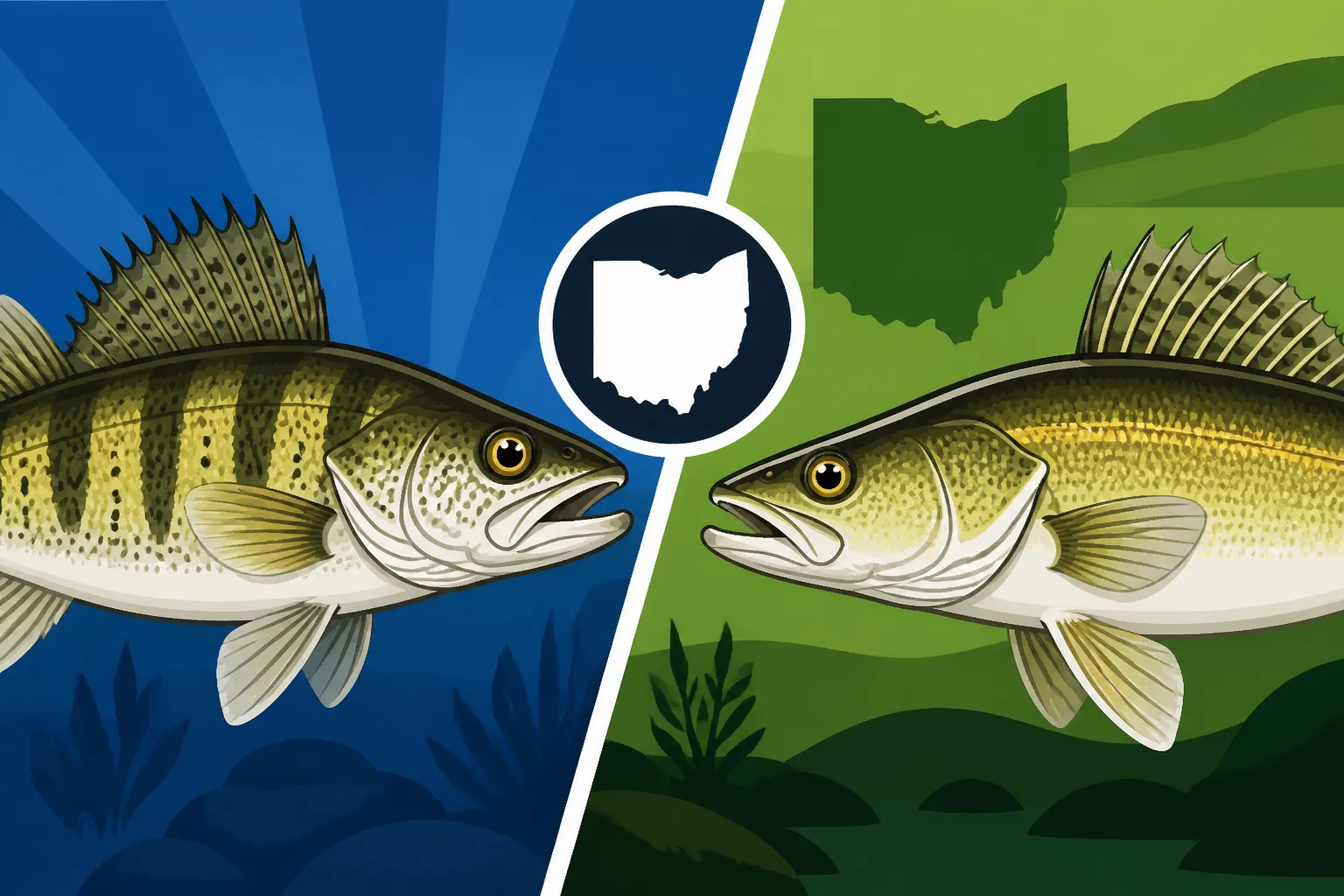
- Sauger: Take a close look at the spiny dorsal fin of a sauger. You’ll notice distinct, dark, rounded spots that form clear rows across the fin membrane. It’s like a dotted pattern that repeats itself. These spots are usually quite prominent and easy to see. Additionally, sauger usually lack a distinct dark blotch at the rear base of the spiny dorsal fin, though sometimes a faint one might be present.
- Walleye: The spiny dorsal fin of a walleye, on the other hand, typically has a more uniform, cloudy, or somewhat barred appearance. It lacks those distinct rows of spots you'd see on a sauger. Instead, the coloration is often more mottled or diffused. The key distinguishing feature here, and often the absolute giveaway, is a prominent, dark blotch (sometimes called a "thumbprint") located at the very rear base of the spiny dorsal fin. If you see that dark blotch, almost guaranteed, you've got a walleye. This is a crucial detail to remember.
Caudal (Tail) Fin: The White Tip Test
Another excellent and quick identification point is the fish's tail fin. This is often an instant "aha!" moment for many anglers.
- Walleye: The lower lobe of a walleye's caudal (tail) fin almost always has a distinct, milky white tip. It's usually quite pronounced and acts as a bright beacon on the otherwise darker fin. This white tip is a hallmark of the walleye.
- Sauger: Sauger, conversely, typically lack this prominent white tip on their tail fin. While sometimes you might see a very faint, almost imperceptible lightening on the lower lobe, it will not be the bright, distinct white patch characteristic of a walleye. If there's no clear white tip, you're likely holding a sauger.
Body Coloration and Patterns: The Camouflage Clues
While not as definitive as the fins, the overall body pattern can also offer strong hints. Both species are masters of camouflage, but their patterns differ.
- Sauger: Sauger often have more pronounced, irregular dark blotches or "saddles" running down their sides. These blotches can be quite striking and give the fish a distinctly mottled, almost leopard-like appearance against their bronze-brown or olive-brown base color. This allows them to blend in perfectly with rocky, turbid river bottoms.
- Walleye: Walleye tend to have a more uniform golden-brown to olive-green coloration, with fainter, more subtle vertical bars or mottling along their sides. These bars are usually less defined than a sauger's blotches and blend more smoothly into the body. Their overall appearance is often described as sleeker and more uniform.
Cheek Scales: A Finer Detail
This one requires a bit closer inspection, and sometimes even a gentle run of your finger, but it's another reliable differentiator.
- Walleye: Walleye typically have mostly scaleless cheeks. If you gently rub your finger over the cheek area (the operculum), it will feel smooth, or only sparsely scaled.
- Sauger: Sauger, on the other hand, usually have fully scaled cheeks. If you rub their cheek, you'll distinctly feel the texture of scales covering the area.
This is a detail that really sets them apart once you get used to feeling for it. A good, waterproof field guide available on platforms like Amazon can be a great asset for cross-referencing these finer details when you're out on the water.
Habitat and Behavior Hints
Beyond their physical appearance, where and how you catch these fish can also offer clues to their identity. While there's overlap, walleye and sauger tend to favor slightly different environments in Ohio.
Preferred Water Types and Depth
Think about the environment where you hooked your fish. This isn't a hard and fast rule, but it helps skew the odds one way or another.
- Walleye: Walleye are renowned for their presence in large, open water bodies, most notably Lake Erie. They thrive in cooler, deeper waters and are often found over gravelly or rocky bottoms, or suspended over open water in search of baitfish. They can also be found in larger inland lakes and reservoirs. If you're out on Ohio's Western Basin of Lake Erie or cruising its central basin, you're almost certainly targeting walleye.
- Sauger: Sauger tend to prefer riverine environments with more current and often more turbid (cloudy) water. The Ohio River is a prime example where sauger are frequently caught. They often hug the bottom in deeper pools, eddies, or along current breaks, feeding on smaller fish that get swept past. While they can be found in some lakes, rivers are their true domain. If you're fishing the Ohio River Fishing Guide, you should definitely be brushed up on your sauger identification!
Light Sensitivity and Activity Patterns
Both are considered low-light predators, but there can be subtle differences in their peak activity.
- Walleye: Walleye are notoriously light-sensitive, which is why they are often most active during dawn, dusk, or at night. On bright days, they’ll retreat to deeper water or shaded areas, making them a common target for Night Fishing Techniques in Ohio. They rely heavily on their excellent low-light vision to ambush prey.
- Sauger: Sauger are also light-sensitive, perhaps even more so than walleye, thriving in the typically murkier waters of rivers. This allows them to remain active throughout the day in those environments. They don’t seem to shy away from daylight as much in turbid river systems compared to walleye in clearer lakes.
Practical On-the-Water Identification Tips
So, you've just landed a fish, and now it's time for the moment of truth. Here are some practical steps and tools to help you make that confident identification.
The Quick Checklist
When that fish is in your net or on the deck, run through these points quickly:
- Check the Tail: Is there a bright white tip on the lower lobe of the tail fin?
- YES: Likely a Walleye.
- NO (or very faint): Likely a Sauger.
- Examine the Spiny Dorsal Fin: Are there distinct, dark spots forming rows? Or is it more cloudy with a prominent black blotch at the rear base?
- ROWS OF SPOTS, NO REAR BLOTCH: Likely a Sauger.
- CLOUDY/BARRED, PROMINENT REAR BLOTCH: Likely a Walleye.
- Look at the Body: Does it have strong, irregular blotches/saddles? Or is it more uniformly golden with fainter bars?
- STRONG BLOTCHES: Leans towards Sauger.
- FAINTER BARS, UNIFORM: Leans towards Walleye.
- Feel the Cheeks (If You Dare): Scaleless and smooth, or scaled and rough?
- SMOOTH/SPARSELY SCALED: Leans towards Walleye.
- FULLY SCALED: Leans towards Sauger.
Most often, the tail and dorsal fin checks alone will give you your answer.
Tools to Assist Your Identification
Sometimes, a quick glance isn't enough, especially if the fish is particularly feisty or the light is poor.
- Waterproof Field Guide: A compact, waterproof field guide specifically for Ohio fish species is an invaluable tool. You can find excellent options on Amazon. Keep it handy in your tackle box or boat. It will have clear illustrations or photos to compare your catch against.
- Camera: Snap a clear photo! Sometimes reviewing a photo on a larger screen later, or even zooming in, can reveal details you missed in the heat of the moment. Make sure you get a good shot of the dorsal fin and tail.
- Measuring Tape/Ruler: While not directly for identification, having a reliable measuring device is essential for checking length limits once you've made your identification. This is especially pertinent for species like walleye which often have minimum length requirements. Knowing your Ohio Statewide Bag and Size Limits is paramount.
When in Doubt, Release!
Here's the golden rule for situations where you're truly stumped: if you can't confidently identify a fish and confirm it meets all legal requirements, the safest and most responsible action is to release it. It's far better to let a potentially legal fish go than to risk a citation or inadvertently harm fish populations. A quick, gentle release ensures the fish has the best chance of survival.
Saugeye: The Hybrid That Adds Another Layer of Confusion
Just when you thought you had sauger and walleye sorted, Ohio throws in another curveball: the saugeye! This is a hybrid fish, a cross between a female walleye and a male sauger, and it’s stocked in many inland Ohio lakes and reservoirs because it grows quickly and thrives in warmer, murkier waters than pure walleye.
Identifying the Saugeye
Saugeye often exhibit a blend of characteristics from both parent species, making them tricky to identify. They are designed to confuse, it seems!
- Dorsal Fin: A saugeye's spiny dorsal fin will often show a mix of walleye and sauger traits. You might see some scattered spots, but usually not in the distinct rows of a sauger. Critically, saugeye will have the prominent dark blotch at the rear base of the spiny dorsal fin, just like a walleye.
- Caudal (Tail) Fin: This is another key differentiator. Saugeye typically have the prominent white tip on the lower lobe of their caudal fin, much like a walleye.
- Body Pattern: Their body coloration often shows irregular blotches or mottled patterns similar to a sauger, but usually less distinct, and on a more golden-brown base like a walleye. They can sometimes appear more elongated than a walleye, but beefier than a sauger.
- Cheeks: Saugeye usually have cheeks that are sparsely scaled, a mix between the scaleless walleye and the fully-scaled sauger.
Essentially, a saugeye often looks like a walleye with sauger-like body blotches, but always with the walleye's distinct dorsal fin blotch and white tail tip. If you’re fishing in a reservoir that is known for saugeye, like Alum Creek Lake or Hoover Reservoir, it’s worth brushing up on Ohio Saugeye Fishing Guide and also knowing Inland Walleye and Saugeye Size Limits as their regulations can vary from pure walleye.
Here's a quick comparison table to help solidify the differences:
| Feature | Walleye | Sauger | Saugeye (Hybrid) |
|---|---|---|---|
| Spiny Dorsal Fin | Cloudy/barred, prominent dark blotch at rear base | Distinct dark spots in rows, no prominent rear blotch | Cloudy/barred, prominent dark blotch at rear base (like walleye), might have scattered spots |
| Caudal (Tail) Fin | Prominent white tip on lower lobe | Lacks prominent white tip | Prominent white tip on lower lobe (like walleye) |
| Body Color/Pattern | Golden-brown to olive-green, faint vertical bars | More mottled, distinct irregular dark blotches/saddles | Golden-brown, often with irregular blotches (like sauger, but usually less defined) |
| Cheeks | Mostly scaleless (smooth) | Fully scaled (rough) | Sparsely scaled (mix of both) |
| Preferred Habitat | Large lakes (Lake Erie), deep reservoirs | Rivers, turbid waters, strong current (Ohio River) | Inland lakes, reservoirs (where stocked), adapts well to various conditions |
| Average Size | Larger (often 15-30+ inches) | Smaller (often 10-18 inches) | Intermediate (often 15-25 inches), fast growth |
The more you practice identifying these fish on the water, the more natural it will become. It's a skill that develops with experience, so don't get discouraged if you're still doing a double-take at first. Keep that field guide handy, use the tail and dorsal fin as your primary checkpoints, and always err on the side of caution. Happy fishing!
Disclaimer
This article is for general informational purposes only and does not constitute professional advice. Laws, prices and regulations vary by location and change over time. Consult a qualified professional for guidance on your specific situation.